
Annika Parance Éditeur
Livres Canada Books
View Rights Portal

Founded in 2010, the Parisian agency is a literary agency based in Paris. We represent a selected group of international writers of literary fiction such as multi-awarded Icelandic author Gudrun Eva Minervudottir and Hungarian novelist Arpad Kun, winner of the prestigious Aegon Award. We also represent the stunning illustrated books of the British and the Bodleian Library (UK) abroad. Last, we are now open to represent new lists in literary fiction, crime fiction and non fiction. Welcome to the Parisian Agency!
View Rights Portal
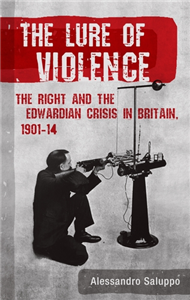
This book provides a comprehensive examination of conservative and right-wing responses to the Edwardian crisis in Britain (1901-1914). It stresses how the upsurge of right-wing extremism within and outside the Conservative party was accompanied by the crystallization of a culture of violence. The preparation, instigation or threatening of violent acts against all those who appeared to threaten the organic nature and vigour of the national community found expression in a myriad of ultra-nationalist organisations, citizen policing groups, private military associations, and paramilitary formations. The book innovatively reconstructs the belief system and the practices of those right-wing actors, which pursued the goals of military preparedness, "racial regeneration" and imperial unity, while defending the amorphous goals of authority, order and 'national efficiency' against the forces of radicalism and socialism. The book helps to cast light on the bellicose and authoritarian reflexes that traversed British conservatism in the turbulent prewar years.
By examining the PMU's self-positioning as a pillar of Iraq's defence infrastructure, this book offers a critical perspective on the prospects for Security Sector Reform (SSR) and highlights the limitations of externally driven Disarmament, Demobilisation, and Reintegration (DDR) efforts. It speaks to scholars of Iraq and the Middle East, as well as diplomats, security actors, and SSR practitioners. The book is also a valuable teaching resource for undergraduate and postgraduate courses on conflict, security, identity politics, terrorism, and peacebuilding. Its unique fieldwork methodology offers guidance for researchers engaging with armed non-state and para-state actors in post-conflict settings. Altogether, the book addresses a strong academic and policy demand for evidence-based analysis of the PMU's complex identity - offering a flexible framework for studying hybrid security actors with transnational connections and domestic ambitions.
 Trusted Partner
Trusted Partner
Trusted Partner
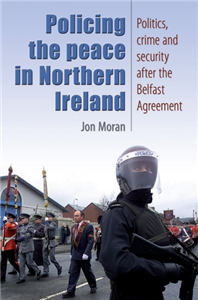
This timely and controversial book shows how crime, and the authorities' response to crime, became central to the peace process in Northern Ireland. At times, paramilitary activity threatened to destabilise the peace in Northern Ireland after 1998, but crime was central to maintaining capacity should the groups return to war. Over time, the reduction of crime was central to these groups' own attempts to reform and official judgements as to whether they were genuinely demobilising. The state's response to crime added controversy. Police reform produced the Police Service of Northern Ireland (PSNI) and the new Organised Crime Task Force signalled the importance of crime control, but the Assets Recovery Agency, supposedly the 'magic bullet' for organised crime, misfired. Law enforcement was also deeply affected by the British state's response to paramilitary crime. By 2007, peace was apparently secure and paramilitaries were 'de-criminalising', but this often chaotic process was marked with questions about the British state's adherence to the rule of law. Incorporating first-hand research in the PSNI, the book will be of interest to general readers and scholars of Irish Studies, criminology, and British and comparative politics. ;
Trusted Partner

The 'Sunningdale experiment' of 1973-4 witnessed the first attempt to establish peace in Northern Ireland through power-sharing. However, its provisions, particularly the cross-border 'Council of Ireland', proved to be a step too far. The experiment floundered amid ongoing paramilitary-led violence, finally collapsing in May 1974 as a result of the Ulster Workers' Council strike. Drawing on new scholarship from some of the top political historians working on the period, this book presents a series of reflections on how key protagonists struggled with notions of power-sharing and the 'Irish dimension', and how those struggles inhibited a deepening of democracy and the ending of violence for so long.
Trusted Partner
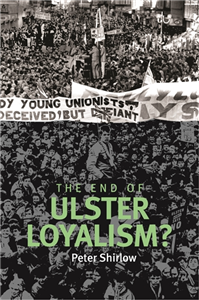
The end of Ulster loyalism? explores the dynamics and divisions within paramilitary groups since the mid-1970s. It, despite contrary public opinion, details and explains the nature of Loyalist conflict transformation. A key model of transition that is relevant to arenas beyond Northern Ireland. The book also discusses the nature and extent of loyalist violence and provides a rarely heard voice regarding State-led collusion. It locates Loyalist ideas and opinions that have been largely invisible and highlights how an extensive element of positive Loyalist renewal has been purposefully suppressed and unmentioned. It is a key text for any student of politics, criminology, human geography and conflict and conflict transformation and is particularly relevant to the scholarship of pro-State groups who are infrequently considered in academic deliberations. A book of both hope and despair that emerges from a destabilising past and a yet-to-be-decided future. ;
Trusted Partner

The Northern Ireland Experience of Conflict and Agreement presents a salutary warning to the international community against the fashionable view that there is an 'Irish model' which can be exported to cauterise ethnic troubles around the globe. The book draws on extensive archive research in London and Dublin on the 1970s power-sharing experiment, and on interviews with senior officials and political figures from the two capitals-as well as reconciliation practitioners-about the negotiation and chequered implementation of the Belfast agreement. It shows how stereotyped conceptions of the problem as a product of 'ancient hatreds', allied to solutions based on Realpolitik, have failed to transform Northern Ireland from a fragile peace, following the exhaustion of protracted paramilitary campaigns, to genuine reconciliation. The book concludes with practical proposals for constitutional reforms which would favour genuine power-sharing-rather than merely sharing power out-and set Northern Ireland on the road to the 'normal', civic society its long-suffering residents desire. It will be essential reading not only for academics and postgraduates interested in ethnic conflict but also for policy-makers who confront it in practice. ;
Trusted Partner
Trusted Partner
 Trusted Partner
 Trusted Partner
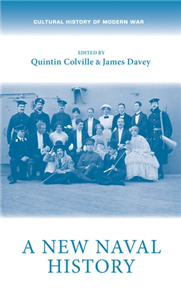
A New Naval History brings together the most significant and interdisciplinary approaches to contemporary naval history. The last few decades have witnessed a transformation in how this field is researched and understood and this volume captures the state of a field that continues to develop apace. It examines - through the prism of naval affairs - issues of nationhood and imperialism; the legacy of Nelson; the socio-cultural realities of life in ships and naval bases; and the processes of commemoration, journalism and stage-managed pageantry that plotted the interrelationship of ship and shore. This bold and original publication will be essential for undergraduate and postgraduate students of naval and maritime history. Beyond that, though, it marks an important intervention into wider historiographies that will be read by scholars from across the spectrum of social history, cultural studies and the analysis of national identity.
Trusted Partner
The Conservative Party and the Constitution examines the profound influence on Britain's constitutional framework over nearly two centuries. Through rigorous analysis, it traces how Tory leaders navigated parliamentary reform, devolution, and Brexit, balancing tradition with pragmatic adaptation. Drawing on exclusive interviews, archival records, and historical sources, the book reveals the Party's statecraft and offers fresh insights into the Conservatives' role in shaping modern governance. Essential for historians, political scientists, and those engaged with British politics, this study illuminates the dynamic interplay of power, ideology, and constitutional change, making it a vital contribution to understanding Britain's constitutional history.
Trusted Partner
 Trusted Partner


This unique guide brings together the vast experience of the author with the science and the practice of positive psychology in such a way that both new and experienced practitioners will benefit. New practitioners will learn about the core concepts of character and signature strengths and how to fine-tune their approach and troubleshoot. Experienced practitioners will deepen their knowledge about advanced topics such as strengths overuse and collisions, hot button issues, morality, and integrating strengths with savoring, flow, and mindfulness. Hands-on practitioner tips throughout the book provide valuable hints on how to take a truly strengths-based approach. The 24 summary sheets spotlighting each of the universal character strengths are an indispensable resource for client sessions, succinctly summarizing the core features of and research on each strength. 70 evidence-based step-by-step activity handouts can be given to clients to help them develop character strengths awareness and use, increase resilience, set and meet goals, develop positive relationships, and find meaning and engagement in their daily lives. Working with client’s (and our own) character strengths boosts well-being, fosters resilience, improves relationships, and creates strong, supportive cultures in our practices, classrooms, and organizations. Target Group: psychotherapists / clinical psychologists / counselors/ teachers
Trusted Partner
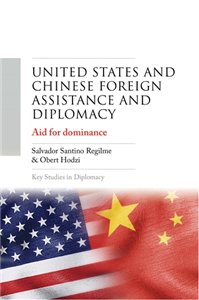
Aid for Dominance addresses the analytic weaknesses of mainstream analysis of foreign aid, which often focuses on its material dimensions. The book underscores the constitutive relationship between foreign aid as a material resource and the diplomatic discourses and practices that constitute complex bilateral relations between donor and recipient states. Written by two leading scholars of contemporary United States and Chinese foreign policies in the Global South, Aid for Dominance offers a pioneering, theoretically conscious, and empirically rich account of the two great powers' grand strategies in the global development sector. By deploying a multidisciplinary and comparative analysis, this book draws from a wide range of evidentiary materials from primary sources, including data from fieldwork interviews, government documents, local and international newspapers, speeches by high-ranking government officials and diplomats, and secondary data from scholarly publications and policy papers.
Trusted Partner
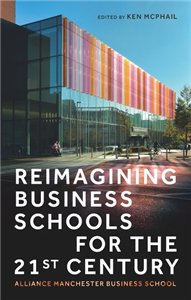
Whether it's dealing with regional economic disparities, global geopolitical upheaval, climate change, or the impact of new technologies such as artificial intelligence, we are living in pivotal times. To mark its 60th anniversary in 2025, this accessible book from Alliance Manchester Business School outlines in detail how business schools can play a significant role in confronting these huge challenges, and equip the next generation of business leaders with the skills they need to embrace them. Informing public and political debate on the role of business in both the causes and solutions to our biggest challenges the book offers a rethinking of the role of business in society. It will also discuss specific examples of how collaborations with business are leading to impact and change in society. Featuring a range of thought-provoking essays co-authored by eminent academics and business leaders, this collection will challenge the status quo and outline how business and management research is helping address grand challenges, generate economic growth, inform policy development, and define business thinking over the next generation.
Trusted Partner
In an age when engraving and photography were making artistic images available to a much wider public, artists were able to influence public attitudes more powerfully than ever before. This book examines works of art on military themes in relation to ruling-class ideologies about the army, war and the empire. The first part of the book is devoted to a chronological survey of battle painting, integrated with a study of contemporary military and political history. The chapters link the debate over the status and importance of battle painting to contemporary debates over the role of the army and its function at home and abroad. The second part discusses the intersection of ideologies about the army and military art, but is concerned with an examination of genre representations of soldiers. Another important theme which runs through the book is the relation of English to French military art. During the first eighty years of the period under review France was the cynosure of military artists, the school against which British critics measured their own, and the place from which innovations were imported and modified. In every generation after Waterloo battle painters visited France and often trained there. The book shows that military art, or the 'absence' of it, was one of the ways in which nationalist commentators articulated Britain's moral superiority. The final theme which underlies much of the book is the shifts which took place in the perception of heroes and hero-worship.
Trusted Partner
Trusted Partner
Latin America has been a complex laboratory for the development of international investment law. While some governments and non-state actors have remained true to the Latin American tradition of resistance towards the international investment law regime, other governments and actors have sought to accommodate said regime in the region. Consequently, a profusion of theories and doctrines, too often embedded in clashing narratives, has emerged. In Latin America, the practice of international investment law is the vivid amalgamation of the practice of governments sometimes resisting and sometimes welcoming mainstream approaches; the practice of lawyers assisting foreign investors from outside and within the region; and the practice of civil society, indigenous peoples and other actors in their struggle for human rights and sustainable development. Latin America and international investment law describes the complex roles that governments have played vis-à-vis foreign investors and investments; the refreshing but clashing forces that international organizations, corporations, civil society, and indigenous peoples have brought to the field; and the contribution that Latin America has made to the development of the theory and practice of international investment law, notably in fields in which the Latin American experience has been traumatic: human rights and sustainable development. Latin American scholars have been contributing to the theory of international investment law for over a century; resting on the shoulders of true giants, this volume aims at pushing this contribution a little further.
Trusted Partner
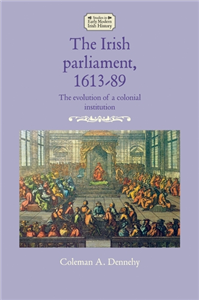
The Irish parliament was both the scene of frequent political battles and an important administrative and legal element of the state machinery of early modern Ireland. This institutional study looks at how parliament dispatched its business on a day-to-day basis. It takes in major areas of responsibility such as creating law, delivering justice, conversing with the executive and administering parliamentary privilege. Its ultimate aim is to present the Irish parliament as one of many such representative assemblies emerging from the feudal state and into the modern world, with a changing set of responsibilities that would inevitably transform the institution and how it saw both itself and the other political assemblies of the day.



