
La Pollera Ediciones
La Pollera's catalog includes narrative, essay, and chronicle of contemporary and classic authors.
View Rights Portal
La Pollera's catalog includes narrative, essay, and chronicle of contemporary and classic authors.
View Rights Portal
Polperro Heritage Press is an independent British publisher, established in 1995. Recent titles from Polperro Press have included biographies, guides and a growing list of Cornish local history titles.
View Rights Portal

This book marks an important new intervention into a vibrant area of scholarship, creating a dialogue between the histories of imperialism and of women and gender. By engaging critically with both traditional British imperial history and colonial discourse analysis, the essays demonstrate how feminist historians can play a central role in creating new histories of British imperialism. Chronologically, the focus is on the late eighteenth to early twentieth centuries, while geographically the essays range from the Caribbean to Australia and span India, Africa, Ireland and Britain itself. Topics explored include the question of female agency in imperial contexts, the relationships between feminism and nationalism, and questions of sexuality, masculinity and imperial power.
 Trusted Partner

Colonial governments, institutions and companies recognised that in many ways the effective operation of the Empire depended upon sexual arrangements. For example, nuclear families serving agricultural colonization, and prostitutes working for single men who powered armies and plantations, mines and bureaucracies. For this reason they devised elaborate systems of sexual governance, such as attending to marriage and the family. However, they also devoted disproportionate energy to marking and policing the sexual margins. In Sex, Politics and Empire, Richard Phillips investigates controversies surrounding prostitution, homosexuality and the age of consent in the British Empire, and revolutionises our notions about the importance of sex as a nexus of imperial power relations.
Trusted Partner
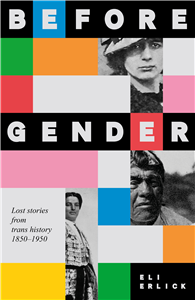
Discover the trailblazing lives of thirty trans people who will radically change everything you've been told about transgender history. Highlighting influential individuals from 1850 to 1950 who are all but unknown today, Eli Erlick shares thirty remarkable stories from romance to rebellion and mystery to murder. These narratives chronicle the grit, joy and survival of trans people long before gender became an everyday term. Organised into four parts, paralleling today's controversies over gender identity - kids, activists, workers and athletes - Before Gender introduces figures whose forgotten stories transform the discussion. These ground-breaking histories include two of the first teens to access gender-affirming medical treatment, a countess who instigated an LGBTQ+ riot forty years before Stonewall and the greatest female billiards player of the 1910s. Bold and visionary, Erlick's debut uncovers these lost stories from the depths of the archives to narrate trans lives in a way that has never been attempted before.
Trusted Partner
This book introduces a new framework for understanding how the radical right reimagines demographic change as an existential threat. Across Europe and the Americas, low birth rates, immigration, and gender equality are reframed as signs of civilisational decline. This volume explores how radical right actors mobilise fears around fertility, migration, race, family, and sexuality through narratives of crisis, ethnic purity, and control over borders, reproduction, and social norms. It examines conspiracy thinking fuelled by demographic anxiety to justify attacks on gender and sexual rights and reinforce exclusionary ideas of national belonging. Grounded in empirical case studies and interdisciplinary approaches, this book reveals how these narratives converge to reinforce dominance of a native, heteronormative, Christian population. In linking domains often treated separately, it provides a timely and critical perspective on the evolving logic of radical right politics worldwide.
Trusted Partner

This volume examines the films of Hispanic and Lusophone women filmmakers from the 1930s to the present day. It establishes productive connections between film practices across these geographical areas by identifying common areas of concern on the part of these female filmmakers. Focusing on aesthetic, theoretical and socio-historical analyses, it questions the manifest or latent gender and sexual politics that inform and structure the emerging cinematic productions by women filmmakers in Portugal, Spain, Latin America and the US. With a combination of scholars from the UK, the US, Spain and Latin America, the volume documents and interprets a fascinating corpus of films made by Hispanic and Lusophone women and proposes research strategies and methodologies that can expand our understanding of socio-cultural and psychic constructions of gender and sexual politics. An essential resource to rethink notions of gender identity and subjectivity, it is a unique contribution to Spanish and Latin American Film Studies and Film Studies.
Trusted Partner
In Straight Nation, Pavan Mano reveals the logic of straightness that sits at the heart of postcolonial nationalism in Singapore. Mano rejects the romantic notion of the nation as a haven of belonging, showing it to be a relentless force that is allied with heteronormativity to create a host of minoritized and xenologized figures. Through meticulous exploration and close reading of a swathe of texts, Mano unveils the instrumental role of sexuality in structuring the national imaginary. The book adroitly demonstrates how queerness is rendered foreign in postcolonial Singapore and functions alongside technologies of "race", gender, and class. A provocative critique of narrow contemporary identity politics and its concomitant stymying of a more ambitious political critique, Straight Nation sets out an argument that moves beyond the negativity of traditional critique into a space of (re)thinking, (re)building and (re)imagining.
Trusted Partner

How do feminist movements develop and organise in ethno-nationally divided societies? How does this challenge our understandings of contemporary fourth wave feminism? Women's Troubles sets out to answer these questions using rich empirical data and analysis in an examination of feminist activism after the Northern Irish peace agreement. Utilising feminist frameworks and debates on movement building, policymaking, abortion rights, gender-based violence and the UN women, peace and security agenda, Claire Pierson interrogates the opportunities and challenges in articulating a feminist voice and creating feminist spaces in the conflict transformational politics and society. Capturing the complexities of contemporary feminist movement building in a divided society, Women's Troubles contributes to ongoing analysis of contemporary global feminisms.
Trusted Partner
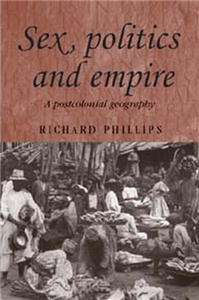
Colonial governments, institutions and companies recognised that in many ways the effective operation of the Empire depended upon sexual arrangements. For example, nuclear families serving agricultural colonization, and prostitutes working for single men who powered armies and plantations, mines and bureaucracies. For this reason they devised elaborate systems of sexual governance, such as attending to marriage and the family. However, they also devoted disproportionate energy to marking and policing the sexual margins. In Sex, Politics and Empire, Richard Phillips investigates controversies surrounding prostitution, homosexuality and the age of consent in the British Empire, and revolutionises our notions about the importance of sex as a nexus of imperial power relations. ;
Trusted Partner
 Trusted Partner

This book offers a new critical framework for understanding the processes of politicising and gendering care for older people and their manifestations in several European contexts. It interrogates how care for older adults varies across time and place while searching for an in-depth comprehension of how it becomes an arena of political struggle and the object of public policy in different countries and at various societal and political levels. It brings together multidisciplinary contributions that examine the issue of care for older people as a political concern from many angles, such as problematising care needs, long-term care policies, home care services, institutional services and family care. The contributions reveal the diversity of situations in which the processes of politicising and gendering care for older adults overlap, contradict or reinforce each other while leading to increased gender (in)equalities on different levels.
Trusted Partner

This book is a study of mobility, image and identity in colonial India and imperial Britain in the late nineteenth and early twentieth centuries. It is a model for studies of migrant figures like K.S. Ranjitsinhji who emerged during the imperial period. Ranjitsinhji is an important figure in the history of modern India and the British empire because he was recognized as a great athlete and described as such. The book focuses on four aspects of Ranjitsinhji's life as a colonial subject: race, money, loyalty and gender. It touches upon Ranjitsinhji's career as a cricketer in the race section. The issue of money gave Indian critics of Ranjitsinhji's regime the language they needed to condemn his personal and administrative priorities, and to portray him as self-indulgent. Ranjitsinhji lived his life as a player of multiple gender roles: sometimes serially, and on occasion simultaneously. His status as a "prince" - while not entirely fake - was fragile enough to be unreliable, and he worked hard to reinforce it even as he constructed his Englishness. Any Indian attempt to transcend race, culture, climate and political place by imitating an English institution and its product must be an unnatural act of insurgency. The disdain for colonial politics that was manifest in the "small rebellions" at the end of the world war converged with the colonized/Indian identity that was evident at the League of Nations. Between the war and his death, it is clear, Ranjitsinhji moved to maximize his autonomy in Nawanagar.
Trusted Partner
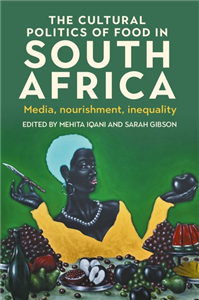
Food is both a material system of nourishment, necessary for human survival, and a communicative system that signifies multiple meanings across human cultures. This book explores the cultural politics of food in the South African context, bringing together a range of disciplinary perspectives on the links between media, nourishment, and inequality. The chapters all highlight the multiplicity of meanings that food has in South African society. These include historical perspectives on the impact of colonialism, migration and apartheid had on food and foodways in South Africa; sociological interventions on food and society; aesthetic practices in relation to food; and mediated food cultures in South Africa. Taken together, the book critically explores the multiple ways in which food is never just food, and always linked to complex and shifting modalities of meaning and knowledge in the South African context.
Trusted Partner

This important book provides new understandings of how the politics of memory impacts peace in societies transitioning from a violent past. It does so by developing a theoretical approach focusing on the intersection of sites, agency, narratives, and events in memory-making. Drawing on rich empirical studies of mnemonic formations in Cyprus, Bosnia and Herzegovina, Rwanda, South Africa and Cambodia, the book speaks to a broad audience. The in-depth, cross-case analysis shows that inclusivity, pluralism, and dignity in memory politics are key to the construction of a just peace. The book contributes crucial and timely knowledge about societies that grapple with the painful legacies of the past and advances the study of memory and peace.
Trusted Partner
Trusted Partner
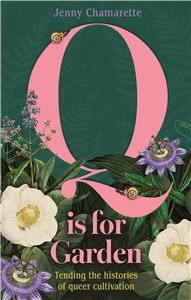
A bold, tender exploration of how queerness and nature entwine - and what happens when we step beyond the binaries that fence us in. There is a Q in garden, but you can't always see it. When Jenny Chamarette faced a devastating health crisis, they found themselves unmoored from the rules of gender, sexuality and productivity. In a small South London garden, Jenny began to imagine another way of living: porous, unruly, rooted in the lessons of soil and plant life. Gardens, like identities, are usually bounded - but what if those limits can be re-drawn? Blending memoir and cultural criticism, this book asks whether the categories we inherit - colonial, patriarchal, conventions of sexuality and gender - still serve us, or whether they confine us. From illness and recovery to queer love and ecological wonder, Q is for garden invites readers to reimagine how we inhabit land, culture and each other. An eloquent work of nature writing and queer thought, Q is for garden digs into the rich history of queer gardeners, botanists, artists and agriculturalists. It offers a hopeful vision of belonging, if we are curious enough to unearth it.
Trusted Partner

This book explores how and why Scottish Highlanders, Punjabi Sikhs, and Nepalese Gurkhas became identified as the British Empire's fiercest, most manly soldiers in nineteenth century discourse. As 'martial races' these men were believed to possess a biological or cultural disposition to the racial and masculine qualities necessary for the arts of war. Because of this, they were used as icons to promote recruitment in British and Indian armies - a phenomenon with important social and political effects in India, in Britain, and in the armies of the Empire. Martial Races bridges regional studies of South Asia and Britain while straddling the fields of racial theory, masculinity, imperialism, identity politics, and military studies. Of particular importance is the way it exposes the historical instability of racial categories based on colour and its insistence that historically specific ideologies of masculinity helped form the logic of imperial defence, thus wedding gender theory with military studies in unique ways. Moreover, Martial Races challenges the marginalisation of the British Army in histories of Victorian popular culture, and demonstrates the army's enduring impact on the regional cultures of the Highlands, the Punjab and Nepal. This unique study will make fascinating reading for higher level students and experts in imperial history, military history and gender history.
Trusted Partner
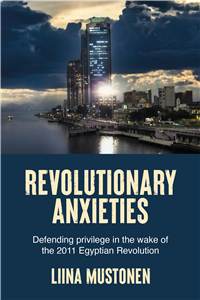
Revolutionary anxieties sheds light on an unexplored dimension of the 2011 Egyptian revolution: the anxieties experienced by Cairo-based liberal elite, socialites, and cultural actors who opposed the rise of the new political actors, the Muslim Brotherhood. This book provides fresh insights into the failure of the Egyptian revolution by examining the perspectives of those who had a vested interest in maintaining the status-quo. It engages with post-colonial theory and examines the elite milieu in Cairo through the lenses of gender and race. Based on over two years of ethnographic research in various elite locations such as the Cairo Opera House, an Egyptian-European film festival, and an elite sporting club in Cairo, the book illustrates how members of Egyptian liberal upper class insisted on their privilege in a moment when the country's class hierarchies were challenged. By revealing the prevalence of counter-revolutionary sentiment among Cairo's liberal and affluent elite, the book tells an untold story of the Arab Spring.
Trusted Partner


Ein kämpferisches Buch in dunklen Zeiten, um wieder aus der Defensive zu kommen Für den globalen Rechtsruck spielt der Kampf gegen »Gender« eine zentrale Rolle. Ob in der Hinterfragung geschlechtlicher Normen nun eine Gefährdung von Kindern, die Zerstörung der Familie oder ein Angriff auf die natürliche Ordnung gesehen wird – in nichts sind sich Rechtspopulisten, religiöse Frömmler und Anti-Trans-Feministinnen so einig, nichts sonst bringen sie solche Ablehnung entgegen. Judith Butler hat unser Denken über Geschlecht revolutioniert und wurde zur globalen Ikone. Nun erklärt Butler, welche politische Funktion das Schreckgespenst »Gender« in der rechten Agenda besitzt. Dabei thematisiert Butler nicht nur, wie es ist, selbst zum Hassobjekt zu werden, sondern argumentiert zudem, dass queere Politik nur in einer breiten Koalition der Bewegungen gegen verschiedene Ungerechtigkeiten gelingen kann.
Trusted Partner

The essential message of the 'two regimes' model is that the social politics of fatherhood have taken on a global significance and that the USA and Sweden represent two ends of an international continuum of ways of thinking about fatherhood. The key selling points of the two regimes model are its topicality, originality, its global appeal, and its particularised appeal to readers in the USA, the Nordic countries, Great Britain, Ireland, the European Union, Japan and China. The book offers students a comparative analytical framework and new insights into why some welfare states have 'father-friendly' social policies and others do not. The book makes an original contribution to the growing fields of welfare regime and gender studies by linking the epochal decline of patriarchal fatherhood to welfare state expansion over the course of the twentieth century and it raises new questions about the legitimacy of religiously inspired neo-patriarchy.


