Silke Heiss (Give Your Writing The Edge)
We are a one-woman charity, hoping to transform into a self-sustaining business, devoted to reminding readers of themselves.
View Rights Portal
We are a one-woman charity, hoping to transform into a self-sustaining business, devoted to reminding readers of themselves.
View Rights Portal
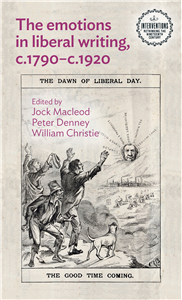
This volume of essays from a selection of distinguished international scholars is the first of its kind to explore in depth the emotional dimensions of liberal writing in Britain over the long nineteenth century. Addressing liberal writing in the public sphere rather than high political or parliamentary liberalism, it comprises a clear, context-setting introduction and eleven substantive chapters. The chapters analyse key texts and figures from the 1790s through to the 1920s and offer several different approaches to the central concern with the emotions and liberalism. These include examining the place of the emotions in the 'good life'; the social and political function of the emotions; emotional rhetoric in liberal writing; and liberal theories of the emotions. Both individually and as a collection, the essays provide an essential foundation for further scholarly work in this emerging field.
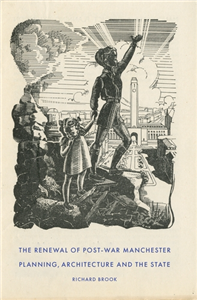
A compelling account of the project to transform post-war Manchester, revealing the clash between utopian vision and compromised reality. Urban renewal in Britain was thrilling in its vision, yet partial and incomplete in its implementation. For the first time, this deep study of a renewal city reveals the complex networks of actors behind physical change and stagnation in post-war Britain. Using the nested scales of region, city and case-study sites, the book explores the relationships between Whitehall legislation, its interpretation by local government planning officers and the on-the-ground impact through urban architectural projects. Each chapter highlights the connections between policy goals, global narratives and the design and construction of cities. The Cold War, decolonialisation, rising consumerism and the oil crisis all feature in a richly illustrated account of architecture and planning in post-war Manchester.
 Trusted Partner
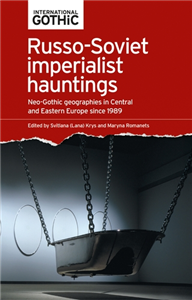
Russo-Soviet imperialist hauntings attempts to capture some of the ghosts of the colonial and totalitarian past that have been proliferating in international political and cultural landscapes after the collapse of the USSR. By conflating postcolonial, post-totalitarian, postcommunist, and Gothic discourses, it maps virtually untouched aspects of cultural decolonization, focusing on unsettling "hauntings" of unresolved memory traces of Russo-Soviet domination in the former Eastern Bloc countries and Soviet republics. Operating within a vast intertextual field of social, cultural, and ideological discourses, the volume enables a productive exchange across distinct (inter)disciplinary boundaries and represents a range of voices from Europe and North America. The contributors' diverse interests draw on transmedia (literature, visual arts, and film), transnational, and translingual (diasporic literature) approaches, providing insights into a variety of forms that the Gothic has taken in the (late) twentieth and twenty-first centuries, and demonstrating its consistent engagement with history, ideology, and politics.
Trusted Partner
Writing power radically rethinks the place of the canon and canonicity as objects and concepts in contemporary academia and the everyday intellectual practices of academics. It is distinctive in its demonstration of how academics' engagements with canons shape their writing practices but also how scholars' writing practices, spaces, proclivities, and desires shape the canon and changing ideas of value in canonicity. The book thinks through frequently discussed problems of legitimacy and knowledge production from fresh perspectives of lived experience and the everyday to offer new insights into the politics of knowledge in contemporary social sciences.
Trusted Partner
 Trusted Partner
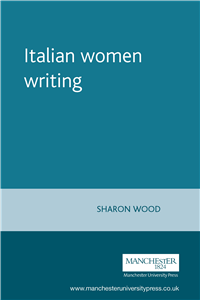
How has it happened that from being politely ignored or marginalized just half a century ago, women writers in Italy are now at the centre of literary activity? To what extent does writing by women reflect the successes and failures of Italy in the post-war period? What form did the feminist movement in Italy take, and how did this affect what - and how - women wrote? And how are women who write responding to a more fragmented post-modern age? These are just some of the questions asked of the relationship between women and fiction in post-war Italy in this anthology. It includes stories by Cialente, Ginzburg, Ortese, Morante, Romano, Maraini and Duranti as well as Bompiani, Sanvitale, Mizzau, Scaramuzzino, Capriolo and Petrignani. The thirteen stories presented offer a range of style and content indicative of the wealth and diversity of writing by women, and their reading is supported by critical notes and an extensive vocabulary. This is a clear and challenging introduction to the rich field of women and fiction in Italy. ;
Trusted Partner

Postmodern, postcolonial and post-truth are broadly used terms. But where do they come from? When and why did the habit of interpreting the world in post-terms emerge? And who exactly were the 'post boys' responsible for this? Post-everything examines why post-Christian, post-industrial and post-bourgeois were terms that resonated, not only among academics, but also in the popular press. It delves into the historical roots of postmodern and poststructuralist, while also subjecting more recent post-constructions (posthumanist, postfeminist) to critical scrutiny. This study is the first to offer a comprehensive history of post-concepts. In tracing how these concepts found their way into a broad range of genres and disciplines, Post-everything contributes to a rapprochement between the history of the humanities and the history of the social sciences.
Trusted Partner
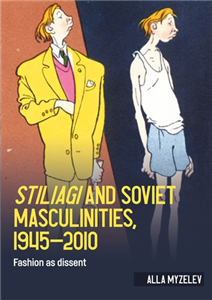
This book provides an in-depth analysis of the Stiliagi, the Soviet Union's pioneering youth subculture from the late 1940s to the early 1960s. Characterized by their distinctive Western-influenced fashion, affinity for jazz, and resistance to Soviet ideological conformity, the Stiliagi represented a significant cultural shift in post-war Soviet society. The book examines how this subculture, through its embrace of alternative masculinities and nonconformist behaviours, challenged prevailing social norms and influenced Soviet cinema, theatre, and broader cultural discourse. Drawing on rigorous research, the book situates the Stiliagi within the broader context of Soviet and Post-Soviet history, arguing that their legacy persisted well beyond their absorption into mainstream culture. Essential reading for scholars of Soviet history, cultural studies, and subcultural movements, this work offers a nuanced understanding of the Stiliagi's enduring impact on Soviet identity and cultural resistance.
Trusted Partner
 Trusted Partner
Trusted Partner
Trusted Partner
Trusted Partner
Trusted Partner
Trusted Partner
Trusted Partner
Trusted Partner
Trusted Partner
Dennis Kelly's award-winning plays have been translated into over thirty languages and produced on six continents. His endlessly inventive vision has produced a diverse body of work for a variety of audiences across a range of forms, genres, and media, from the Olivier and Tony Award-winning Matilda the Musical (2010), to the Channel Four cult-classic series Utopia. His 2008 play DNA, written for National Theatre Connections, is a set text on the AQA GCSE English Literature syllabus. This collection of essays written by leading scholars, teachers, and practitioners of theatre provides the first multi-authored study of Kelly's critically acclaimed oeuvre. Featuring an original interview with Kelly himself, this volume captures the full range and scope of his writing for stage and screen, from the quirky fringe debut Debris (2003) to the globally-distributed film adaptation of Matilda the Musical (2022).
Trusted Partner

In this bold and exhilarating mix of memoir and writing guide, Melissa Febos tackles the emotional, psychological, and physical work of writing intimately while offering an utterly fresh examination of the storyteller's life and the challenges it presents. How do we write about the relationships that have formed us? How do we describe our bodies, their desires and traumas? What does it mean to have your writing, or living, dismissed as "navel-gazing"-or else hailed as "so brave, so raw"? And to whom, in the end, do our most intimate stories belong? Drawing on her journey from aspiring writer to acclaimed author and writing professor-via addiction and recovery, sex work and academia-Melissa Febos has created a captivating guide to the writing life, and a brilliantly unusual exploration of subjectivity, privacy, and the power of divulgence. Candid and inspiring, Body Work will empower readers and writers alike, offering ideas-and occasional notes of caution-to anyone who has ever hoped to see their true self reflecting back from the open page.
Trusted Partner

In this bold and exhilarating mix of memoir and writing guide, Melissa Febos tackles the emotional, psychological, and physical work of writing intimately while offering an utterly fresh examination of the storyteller's life and the challenges it presents. How do we write about the relationships that have formed us? How do we describe our bodies, their desires and traumas? What does it mean to have your writing, or living, dismissed as "navel-gazing"-or else hailed as "so brave, so raw"? And to whom, in the end, do our most intimate stories belong? Drawing on her journey from aspiring writer to acclaimed author and writing professor-via addiction and recovery, sex work and academia-Melissa Febos has created a captivating guide to the writing life, and a brilliantly unusual exploration of subjectivity, privacy, and the power of divulgence. Candid and inspiring, Body Work will empower readers and writers alike, offering ideas-and occasional notes of caution-to anyone who has ever hoped to see their true self reflecting back from the open page.
Trusted Partner
In this bold and exhilarating mix of memoir and writing guide, Melissa Febos tackles the emotional, psychological, and physical work of writing intimately while offering an utterly fresh examination of the storyteller's life and the challenges it presents. How do we write about the relationships that have formed us? How do we describe our bodies, their desires and traumas? What does it mean to have your writing, or living, dismissed as "navel-gazing"-or else hailed as "so brave, so raw"? And to whom, in the end, do our most intimate stories belong? Drawing on her journey from aspiring writer to acclaimed author and writing professor-via addiction and recovery, sex work and academia-Melissa Febos has created a captivating guide to the writing life, and a brilliantly unusual exploration of subjectivity, privacy, and the power of divulgence. Candid and inspiring, Body Work will empower readers and writers alike, offering ideas-and occasional notes of caution-to anyone who has ever hoped to see their true self reflecting back from the open page.
Trusted Partner
 Trusted Partner

In this fascinating study, Samantha George explores the cultivation of the female mind and the feminised discourse of botanical literature in eighteenth-century Britain. In particular, she discusses British women's engagement with the Swedish botanist, Carl Linnaeus, and his unsettling discovery of plant sexuality. Previously ignored primary texts of an extraordinary nature are rescued from obscurity and assigned a proper place in the histories of science, eighteenth-century literature, and women's writing. The result is groundbreaking: the author explores nationality and sexuality debates in relation to botany and charts the appearance of a new literary stereotype, the sexually precocious female botanist. She uncovers an anonymous poem on Linnaean botany, handwritten in the eighteenth century, and subsequently traces the development of a new genre of women's writing - the botanical poem with scientific notes. The book is indispensable reading for all scholars of the eighteenth century, especially those interested in Romantic women's writing, or the relationship between literature and science.
Trusted Partner