Your Search Results

      • International Committee for Conflict Mangagement (ICCM) - Arno Editions

        ICCM is a charitable organization created in Brussels in 1994 by a group of human rights experts, university professors, civil society actors and representatives of women's and youth organizations concerned with sharing the experience acquired through their research, teaching, projects and humanitarian interventions in countries affected by conflicts in several regions of the world.The purpose of the organization is to promote the protection and promotion of human rights, peaceful resolution, prevention and transformation of conflicts.Thus, through training, research, publication and book distribution, ICCM, through its publishing house (Arno) contributes to the peaceful resolution, management and prevention of armed conflicts to mitigate their consequences on the civilian population.

        View Rights Portal
      • Trusted Partner
        Business, Economics & Law
        May 2005

        The UN, human rights and post-conflict situations

        by Nigel White, Dirk Klaasen

        The United Nations is one of the largest providers of assistance in post-conflict situations in the world. This book considers the human rights standards applicable to the United Nations and applied by the United Nations in post-conflict situations, including East Timor, Kosovo and Afghanistan. It looks at legal principles, peace agreements, support of democracy, human rights protection, development and other forms of reconstruction with which the UN has become involved, including the grandly-named task of "state-building". It deals both with the obligation upon the UN to respect human rights in post-conflict situations, and the obligation upon the UN to ensure that human rights are respected by those in positions of power in post-conflict situations. Written by an internationally renowned list of contributors, this book will be of vital use to anyone studying conflict analysis, international relations, international law and the role of the United Nations on the world stage. ;

      • Trusted Partner
        Teaching, Language & Reference
        May 2025

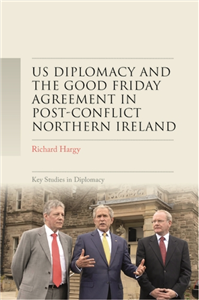
        US diplomacy and the Good Friday Agreement in post-conflict Northern Ireland

        by Richard Hargy

        Richard Haass and Mitchell Reiss, as autonomous diplomats in the George W. Bush State Department, were able to alter US intervention in Northern Ireland and play critical roles in the post-1998 peace process. Their contributions have not been fully appreciated or understood. The restoration of Northern Ireland's power-sharing government in 2007 was made possible by State Department-led intervention in the peace process. There are few references to Northern Ireland in work examining the foreign policy legacy of the George W. Bush presidency. Moreover, the ability to control US foreign policy towards the region brought one of George W. Bush's Northern Ireland special envoys into direct diplomatic conflict with the most senior actors inside the British government. This book will uncover the extent of this fall-out and provide original accounts on how diplomatic relations between these old allies became so fraught.

      • Trusted Partner
        Humanities & Social Sciences
        July 2021

        Post-everything

        An intellectual history of post-concepts

        by Herman Paul, Adriaan van Veldhuizen

        Postmodern, postcolonial and post-truth are broadly used terms. But where do they come from? When and why did the habit of interpreting the world in post-terms emerge? And who exactly were the 'post boys' responsible for this? Post-everything examines why post-Christian, post-industrial and post-bourgeois were terms that resonated, not only among academics, but also in the popular press. It delves into the historical roots of postmodern and poststructuralist, while also subjecting more recent post-constructions (posthumanist, postfeminist) to critical scrutiny. This study is the first to offer a comprehensive history of post-concepts. In tracing how these concepts found their way into a broad range of genres and disciplines, Post-everything contributes to a rapprochement between the history of the humanities and the history of the social sciences.

      • Trusted Partner
        Humanities & Social Sciences
        December 2025

        Criminality, political power and conflict

        Critical perspectives

        by José Antonio Gutiérrez Danton, Francisco Gutiérrez Sanín

        In the aftermath of the greed vs. grievance debate and the new wars paradigm, the focus of conflict studies shifted decisively to understanding "predatory" behaviours as the raison d'etre of contemporary conflict. Conflict was viewed as a continuum in which the more you engage in criminal behaviour, the less political you are.This approach has been robustly criticised over the past 15 years; however, in the process, we have been left with unsuitable concepts to handle the complex interactions between civil war, political power and criminality. The departure point here is the understanding of politics and criminality as two historically differentiated domains of human activity. Different, but interrelated, often co-constitutive and overlapping. Here, we empirically and theoretically explore their interactions, connections, and convergences, not focusing solely on irregular actors, thus bringing back the State and elites into this debate.

      • Trusted Partner
        Humanities & Social Sciences
        March 2016

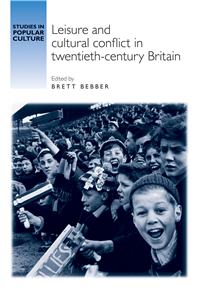
        Leisure and cultural conflict in twentieth-century Britain

        by Jeffrey Richards, Brett Bebber, Allison Abra, Brad Beaven, Brett Bebber, Kelly Boyd

        This collection of essays addresses research trends in the history of British leisure while also presenting a wide range of articles on cultural conflict and leisure in the twentieth century. It includes innovative research on a number of topics, including television, cinema, the circus, women's leisure, dance, football and drug culture. It provides an excellent entry to leisure studies and history, while addressing the contributions of other disciplines and exploring key historiographical trends. Three broad topics structure the collection; cultural contestation and social conflict in leisure; regulation and standardisation; and national identity embodied in leisure and popular culture. The book will be useful to students and educators of twentieth-century and British history, as it offers accessible and topical studies that pique historical curiosity. In addition, historians, sociologists and cultural analysts of the twentieth century will find it essential for understanding pleasure and recreation in twentieth-century British society. ;

      • Trusted Partner
        Humanities & Social Sciences
        July 2018

        Order and conflict

        Anthony Ascham and English political thought (1648–50)

        by Peter Lake, Marco Barducci, Anthony Milton, Jason Peacey, Alexandra Gajda

        This book provides a careful and systematic analysis of Anthony Ascham's career and writings for the first time in English. During the crucial period between the Second Civil War and the establishment of the English Republic, when he served as official pamphleteer of the Parliament and the republican government, Ascham put forward a complex argument in support of Parliament's claims for obedience which drew on the political thought of Grotius, Hobbes, Selden, Filmer and Machiavelli. He combined ideas taken from these authors and turned them into a powerful instrument of propaganda to be deployed in the service of the political agenda of his Independent patrons in Parliament. This investigation of Ascham's works brings together an intellectual analysis of his political thought and an exploration of the interaction between politics, propaganda and political ideas.

      • Trusted Partner
        Humanities & Social Sciences
        January 2025

        The four dimensions of power

        Understanding domination, empowerment and democracy

        by Mark Haugaard

        In this accessible and sophisticated exploration of the nature and workings of social and political power, Haugaard examines the interrelation between domination and empowerment. Building upon the perspectives of Steven Lukes, Michel Foucault, Amy Allen, Hannah Arendt, Anthony Giddens, Pierre Bourdieu and others, he offers a clear theoretical framework, delineating power in four interrelated dimensions. The first and second dimensions of power entail two different types of social conflict. The third dimension concerns tacit knowledge, uses of truth and reification. Drawing upon genealogical theory and accounts of slavery as social death, the fourth dimension of power concerns the power to create social subjects. The book concludes with an original normative pragmatist power-based account of democracy. Offering lucid and entertaining illustrations of complex theoretical perspectives, this book is essential reading for scholars and activists.

      • Trusted Partner
        Business, Economics & Law
        May 2008

        The contemporary law of armed conflict

        by Leslie C. Green, Iain Scobbie, Jean D'Aspremont, Dominic McGoldrick

        Green's The contemporary law of armed conflict has been acclaimed as one of the most significant works on the law of armed conflict to appear in recent years. The first edition was adopted as a basic text by military institutions and educational establishments throughout the world and is among the most comprehensive and readable works on the subject. This new edition brings the work up to date, examining the significance of the World Court's Opinion on the legality of the nuclear weapon. It also considers the importance of such matters as the laser weapon agreement, the mines treaty and the jurisprudence of the two war crimes tribunals, that for the former Yugoslavia as well as for Rwanda, and assesses the role of the proposed International Criminal Court as it may affect the law of armed conflict. The book applies a practical as well as a theoretical approach, and draws on an extensive range of national and international practice. It is thus an indispensable reference for the armed forces and government defence organizations, as well as academics and students interested in the modern law of war. ;

      • Trusted Partner
        The Arts
        August 2026

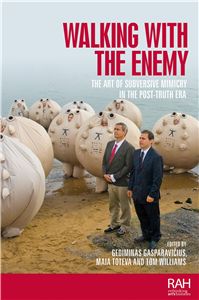
        Walking with the enemy

        The art of subversive mimicry in the post-truth era

        by Gediminas Gasparavicius, Maia Toteva, Tom Williams

        This book is about artists and activists who have embraced mimicry as a subversive tactic. Bringing together the contributions of seventeen writers, it addresses the ways in which artists have responded to power and ideology by imitating its outward forms. These contributors address in particular the current age of fantasy and political deception, and they consider the work of artists who have reacted by using dissimulation and make-believe themselves. Chapters include discussions of mimicry in reference to a number developments and debates: the post-truth era, the neoliberal consensus, the politics of race and gender, online subcultures, and the rise of the new right.

      • Trusted Partner
        Business, Economics & Law
        July 2018

        The contemporary law of armed conflict (3rd edn)

        by Leslie C. Green, Iain Scobbie, Jean D'Aspremont, Dominic McGoldrick

        Green's The contemporary law of armed conflict has been acclaimed as one of the most significant works on the law of armed conflict to appear in recent years. The first edition was adopted as a basic text by military institutions and educational establishments throughout the world and is among the most comprehensive and readable works on the subject. This new edition brings the work up to date, examining the significance of the World Court's Opinion on the legality of the nuclear weapon. It also considers the importance of such matters as the laser weapon agreement, the mines treaty and the jurisprudence of the two war crimes tribunals, that for the former Yugoslavia as well as for Rwanda, and assesses the role of the proposed International Criminal Court as it may affect the law of armed conflict. The book applies a practical as well as a theoretical approach, and draws on an extensive range of national and international practice. It is thus an indispensable reference for the armed forces and government defence organizations, as well as academics and students interested in the modern law of war.

      • Trusted Partner
      • Trusted Partner
        Social & cultural history
        July 2012

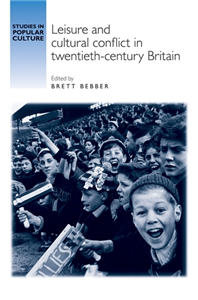
        Leisure and cultural conflict in twentieth-century Britain

        by Allison Abra, Brad Beaven, Brett Bebber, Kelly Boyd

        This collection of essays addresses research trends in the history of British leisure while also presenting a wide range of articles on cultural conflict and leisure in the twentieth century. It includes innovative research on a number of topics, including television, cinema, the circus, women's leisure, dance, football and drug culture. It provides an excellent entry to leisure studies and history, while addressing the contributions of other disciplines and exploring key historiographical trends. Three broad topics structure the collection; cultural contestation and social conflict in leisure; regulation and standardisation; and national identity embodied in leisure and popular culture. The book will be useful to students and educators of twentieth-century and British history, as it offers accessible and topical studies that pique historical curiosity. In addition, historians, sociologists and cultural analysts of the twentieth century will find it essential for understanding pleasure and recreation in twentieth-century British society.

      • Trusted Partner
        Humanities & Social Sciences
        July 2026

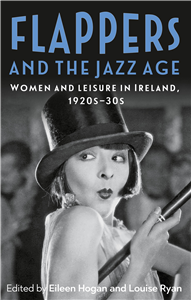
        Flappers and the Jazz Age

        Women and leisure in Ireland, 1920s–30s

        by Eileen Hogan, Louise Ryan

        People's ordinary, everyday lives - and more specifically, their leisure activities - are often obscured within existing academic research on 1920s-30s Ireland. This book seeks to redress that neglect by exploring the relationship between identity, recreation, and culture both North and South of the border, with particular attention to women's lived experiences. Leisurely pursuits during this period were commonly overshadowed by religious influence and the nation-building projects in post-partition Ireland. Nevertheless, there existed alternative spaces, where people enjoyed dancing, singing, listening to music, shopping, glamour, reading magazines, swimming, travelling, and going to the cinema. Such activities reflected international trends beyond national borders. This book documents those activities and spaces through a feminist lens and intersectional analysis of gender, class, religion and rural/urban identities. It brings together multi-disciplinary perspectives including cultural studies, architecture, geography, fashion, and musicology. In so doing, we present new insights and advance understanding of this under-researched aspect of Irish history.

      • Trusted Partner
        Literature & Literary Studies
        June 2025

        Contemporary Slavic horror across media

        Cursed zones

        by Agnieszka Jezyk

        In the Western cultural production that puts individual or collective fear at its center, East/Central Europe has been portrayed as an othered space of horror - lawless, frightening zones where anything can happen. Incorporating articles on literature, film, visual arts, video games, music videos, and music festivals, Contemporary Slavic horror across media: Cursed zones is a pioneering anthology of academic essays devoted to Slavic horror fiction. The book focuses on works from the mid-20th century through the present, particularly the post-Soviet period. Assessing current trends in Czech, Polish, Russian, Slovak, Ukrainian, and East/Central European horror media, the book looks at similarities and idiosyncrasies of the genre in its Slavic variant. With this anthology we hope to tame 'the Easterner Other' and start exorcising 'monstrous' East/Central Europe.

      • Trusted Partner
        Demonstrations & protest movements
        July 2014

        Worker protests in post-communist Romania and Ukraine

        Striking with tied hands

        by Mihai Varga

        Worker protests in post-communist Romania and Ukraine is a book about strategies of trade unions confronting employers in difficult conditions. The book's main idea is to study why and how successful forms of workers' interest representation could emerge in a hostile context. The post-communist context makes it difficult for workers and trade unions to mobilise, pose threats to employers, and break out of their political isolation, but even under such harsh conditions strategy matters for defending workers' rights and living standards. The cases studied in this book are 18 conflict episodes at 10 privatised plants in the Romanian steel industry and Ukraine's civil machine-building sector in the 2000s. This book should be relevant for anyone taking interest in how and to what extent workers can reassert their influence over the conditions of production in regions and economic sectors characterised by disinvestment (of which outsourcing and 'lean' methods of production are instances).

      • Trusted Partner
        Humanities & Social Sciences
        September 2021

        Nostalgia and the post-war Labour Party

        by Richard Jobson

      • Trusted Partner
        Humanities & Social Sciences
        March 2017

        British culture and the end of empire

        by Stuart Ward

        This book is the first major attempt to examine the cultural manifestations of the demise of imperialism as a social and political ideology in post-war Britain. Far from being a matter of indifference or resigned acceptance as is often suggested, the fall of the British Empire came as a profound shock to the British national imagination, and resonated widely in British popular culture. The sheer range of subjects discussed, from the satire boom of the 1960s to the worlds of sport and the arts, demonstrates how profoundly decolonisation was absorbed into the popular consciousness. Offers an extremely novel and provocative interpretation of post-war British cultural history, and opens up a whole new field of enquiry in the history of decolonisation.

      • Trusted Partner
        Humanities & Social Sciences
        April 2021

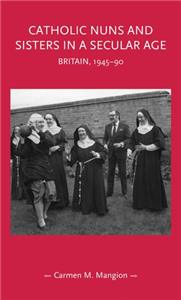
        Catholic nuns and sisters in a secular age

        Britain, 1945–90

        by Carmen M. Mangion

        This is the first in-depth study of post-war female religious life. It draws on archival materials and a remarkable set of eighty interviews to place Catholic sisters and nuns at the heart of the turbulent 1960s, integrating their story of social change into a larger British and international one. Shedding new light on how religious bodies engaged in modernisation, it addresses themes such as the Modern Girl and youth culture, '1968', generational discourse, post-war modernity, the voluntary sector and the women's movement. Women religious were at the forefront of the Roman Catholic Church's movement of adaptation and renewal towards the world. This volume tells their stories in their own words.

      Subscribe to our

      newsletter