
McGill-Queen's University Press
Livres Canada Books
View Rights Portal

Established in 1948, UQP is a dynamic publishing house known for its innovative philosophy and commitment to producing books of high quality and cultural significance. UQP publishes books for general readers in the areas of fiction, non-fiction, poetry, Indigenous writing and youth literature as well as scholarly works. Our books and authors have received national and international recognition through literary prizes. These include the Miles Franklin Literary Award, the ABIAs, the CBCAs, the Prime Minister’s Literary Awards, the NSW Premier’s Literary Awards, the Deutscher Jugendliteraturpreis and the White Raven awards.
View Rights Portal
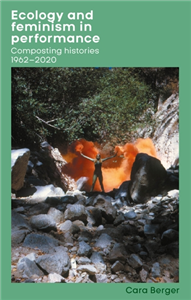
This book provides a vital new history of feminist performance through an ecological lens. It argues that from the 1960s to the present, artists have used performance to challenge the linked oppression of women and nature. Proposing 'composting' as a new method for writing feminist history, the study moves beyond linear narratives to trace regenerative connections between generations of practitioners. It provides sustained analysis of genres from land art to postdramatic theatre, re-evaluating the work of canonical figures while examining how contemporary artists continue to address these urgent themes. By placing ecofeminism in dialogue with feminist new materialism, queer ecology, and transecological thought, this study demonstrates how performance has been a crucial site for imagining more just and sustainable futures in an age of environmental crisis.
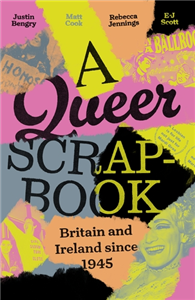
A beautifully illustrated compendium of LGBTIQ+ life. A queer scrapbook offers a treasure trove of LGBTIQ+ histories from across Britain and Ireland. Packed with materials, from interviews and newspaper articles to photographs and flyers, the book explores urban, rural and regional queer life since 1945. Commentaries and short essays introduce a changing queer landscape, spotlighting four broad themes: home and family, sex and socialising, arts and culture and politics and activism. The book delves into the meaning and experiences of domesticity and parenting and explores the sometimes unexpected places LGBTIQ+ people met to have fun. It examines the importance of creative work in forming community and identity and shows how people fought injustice and advocated for equal rights. Collecting has been a way for the marginalised to explore and assert identity and community. A queer scrapbook vividly illustrates the diversity of queer and trans lives across the British and Irish isles since the Second World War.
 Trusted Partner

De-centering queer theory seeks to reorient queer theory to a different conception of bodies and sexuality derived from Eastern European Marxism. The book articulates a contrast between the concept of the productive body, which draws its epistemology from Soviet and avant-garde theorists, and Cold War gender, which is defined as the social construction of the body. The first part of the book concentrates on the theoretical and visual production of Eastern European Marxism, which proposed an alternative version of sexuality to that of western liberalism. In doing so it offers a historical angle to understand the emergence not only of an alternative epistemology, but also of queer theory's vocabulary. The second part of the book provides a Marxist, anti-capitalist archive for queer studies, which often neglects to engage critically with its liberal and Cold War underpinnings.
Trusted Partner

Can reading make us better citizens? In Crossing borders and queering citizenship, Feghali crafts a sophisticated theoretical framework to theorise how the act of reading can contribute to the queering of contemporary citizenship in North America. Providing sensitive and convincing readings of work by both popular and niche authors, including Gloria Anzaldúa, Dorothy Allison, Gregory Scofield, Guillermo Gómez-Peña, Erín Moure, Junot Díaz, and Yann Martel, this book is the first to not only read these authors together, but also to discuss how each powerfully resists the exclusionary work of state-sanctioned citizenship in the U.S. and Canada. This book convincingly draws connections between queer theory, citizenship studies, and border studies and sheds light on how these connections can reframe our understanding of American Studies.
Trusted Partner
Trusted Partner
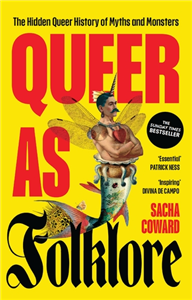
A celebration of queer history like you've never seen it before. Queer as folklore travels across centuries and continents to reveal the unsung heroes and villains of storytelling, magic and fantasy. Featuring images from archives, galleries and museums around the world, each chapter investigates the queer history of different mythic and folkloric characters, both old and new. Leaving no headstone unturned, Sacha Coward takes you on a wild ride through the night from ancient Greece to the main stage of RuPaul's Drag Race, visiting cross-dressing pirates, radical fairies and the graves of the 'queerly departed' along the way. Queer communities have often sought refuge in the shadows and created safe spaces in underworlds. But these forgotten narratives tell stories of resilience that deserve to be heard. Join any Pride march and you will see a glorious display of papier-mâché unicorn heads, drag queens in mermaid tails and more fairy wings than you can shake a trident at. These are not just accessories: they are queer symbols with historic roots. To truly understand who queer people are today, we must confront the twisted tales of the past.
Trusted Partner
Queer lives give rise to a vast array of objects: the things we fill our houses with, the gifts we share with our friends, the commodities we consume at work and at play, the clothes and accessories we wear, and the analogue and digital technologies we use to communicate with one another. But what makes an object queer? The sixty-three chapters in Queer Objects consider this question in relation to lesbian, gay and transgender communities across time, cultures and space. In this unique international collaboration, well-known and newer writers traverse world history to write about items ranging from ancient Egyptian tomb paintings and Roman artefacts to political placards, snapshots, sex toys and the smartphone. Fabulous, captivating, transgressive.
Trusted Partner

This book explores radical dissent from orthodox mainstream economics, and sets out a theoretically grounded vision for the emerging paradigm of social ecological economics. At the heart of this paradigmatic shift lies an acknowledgement of the inextricable embeddedness of economies in biophysical reality and social structure. The struggle for this transformative vision unfolds through a critical examination of mainstream environmental thought, followed by a nuanced evaluation of contributions from Marxists, socialists, critical institutionalists, feminists and Post-Keynesians grappling with the urgent environmental crisis. Synthesising insights from these diverse and heterodox schools, the book navigates the philosophical underpinnings of science, embracing a critical realist approach that challenges not only mainstream economic thought but also eclectic pluralism, relativism and strong constructionism. The question of what constitutes revolutionary science is explored in light of works by Kuhn, Schumpeter and Neurath, emphasising the pivotal role of values and ideology in works from Marx to Gramsci. Building on these radical and philosophical foundations, the book articulates a preanalytic vision of social ecological economics, dismantling entrenched notions of growth and efficiency in favour of a framework centered on social provisioning and needs embedded in ethics. In a thought-provoking conclusion, the book applies its analytical lens to the multiple crises of modernity within industrialised capital-accumulating economies. An agenda for social ecological transformation toward diverse alternative economies emerges, providing a compelling call to action in the face of contemporary challenges.
Trusted Partner
An Idea for a Theatre Ecology is the first book in the discipline of Theatre and Performance Studies to provide a rigorous and coherent theory of the ecology that is immanent to the theatrical medium. Over six clearly written chapters, the book provides a genealogy, outlines a method, provides a lexicon and demonstrates an alternative practice of ecoperformance analysis grounded in the figure of the archipelago. Focusing on Antonin Artaud's theatre of cruelty, the book argues that theatre has no need to provide ecological messages nor to transform itself into a platform for the narration of ecological stories. Instead, more is to be gained, environmentally and politically, by concentrating on the power of images, gestures and voices to create corporeal affects and sensations that implicate the spectators in a terrestrial event.
Trusted Partner


Three quarters of the world’s population live in cities. One in eight people lives in a metropolitan area. Megacities swallow up land, energy and resources – and at the same time are particularly hard hit by the current climate crisis that they fuel. However, in the metropolises of the overcrowded world plenty of committed people have heard the warning signals and establish networks to use the potential of cities to reorganize the participative and social-ecological activity that is urgently needed. The contributions to this Yearbook for Ecology focus on the present and future of cities from wide-ranging viewpoints and highlight perspectives for their creative transformation towards liveable sustainability.
Trusted Partner
A bold, tender exploration of how queerness and nature entwine - and what happens when we step beyond the binaries that fence us in. There is a Q in garden, but you can't always see it. When Jenny Chamarette faced a devastating health crisis, they found themselves unmoored from the rules of gender, sexuality and productivity. In a small South London garden, Jenny began to imagine another way of living: porous, unruly, rooted in the lessons of soil and plant life. Gardens, like identities, are usually bounded - but what if those limits can be re-drawn? Blending memoir and cultural criticism, this book asks whether the categories we inherit - colonial, patriarchal, conventions of sexuality and gender - still serve us, or whether they confine us. From illness and recovery to queer love and ecological wonder, Q is for garden invites readers to reimagine how we inhabit land, culture and each other. An eloquent work of nature writing and queer thought, Q is for garden digs into the rich history of queer gardeners, botanists, artists and agriculturalists. It offers a hopeful vision of belonging, if we are curious enough to unearth it.
Trusted Partner
Jacques Martineau, Olivier Ducastel, Alain Guiraudie, Sébastien Lifshitz and Céline Sciamma. The films of these five major French directors exemplify queer cinema in the twenty-first century. Comprehensive in scope, Queer cinema in contemporary France traces the development of the meaning of queer across these directors' careers, from their earliest, often unknown films to their later, major films with wide international release. Whether having sex on the beach or kissing in the high school swimming pool, these cinematic characters create or embody forward-looking, open-ended and optimistic forms of queerness and modes of living, loving and desiring. Whether they are white, beur or black, whether they are lesbian, gay, trans* or queer, they open up hetero- and cisnormativity to new ways of being a gendered subject.
Trusted Partner
This anthology, presenting new research from fourteen scholars, delves into the interplay between contemporary art and ecological concerns in East and Southeast Asia. Focused on the concept of artistic remediation, the book unravels the diverse capacities of art to combat systemic anthropogenic destruction to the environment and ecology. At its core, the book articulates the ongoing ecological transformation in art and art history that embraces a paradigm shift in human-nature relationships, emphasizing interconnectedness of all life forms of the Earth. Bridging art studies, activism, and environmental studies, the book examines how artistic practices in the region have engaged with ecocritical reflection, biodiversity advocacy, sustainable practices, and environmental justice, among others. Providing a platform for critical and timely analysis of artistic interventions in the face of existential crises, the book acknowledges diverse voices of scholars who have situated their scholarship in the cultural and artistic specificities of various societies, locales, and communities in the region.
Trusted Partner

This book examines Turkey's integration with Europe within structural dynamics of globalisation from a critical political economy perspective. Critical approaches have been sidelined within European Studies. Turkish enlargement is not an exemption. The analyses are based on original data generated by 109 interviews conducted in 2010, 2017 and 2023 with five categories of actors: representatives of capital and labour, political parties, state officials, and struggles around ecology, patriarchy and migration. It argues that the pro-membership was hegemonic in the 2000s which was contested by two rival class strategies, Ha-vet and neo-mercantilism. In the 2010s, pro-membership is no longer hegemonic within rising critical tone of social forces supporting rival class strategies. Unevenness of Turkey's trajectory of integration to Europe is likely to be consolidated through market integration and management of migration through transactional approach.
Trusted Partner

Universities have a key role to play in contributing to environmental development and combating climate change. The chapters within this volume detail the challenges faced by higher education institutions in considering environmental sustainability, and provide both a broad view of university engagement and a detailed examination of various projects. As part of this series in association with the Place and Social Capital and Learning (PASCAL) International Observatory, the three key PASCAL themes of place management, lifelong learning and the development of social capital are considered throughout the book. While universities have historically generated knowledge outside of specific local contexts, this book argues that it is particularly important for them to engage with the local community and to consider diverse perspectives and assets when looking at issues within an ecological context. The chapters in this volume provide new perspectives and frames of reference for transforming universities by engaging in the development of resilient communities.
Trusted Partner

This edited volume reframes the Caribbean as a paradigm of ecological resilience and creativity by bringing together the voices of contemporary artists and scholars who are at the forefront of environmental activism in the region and across its diasporas. While dominant narratives percolating from the environmental sciences to the mainstream press present the Caribbean as a frontier of planetary disaster, the contributors to this volume show how the region offers radical models for overcoming the environmental challenges of the present. At the heart of this argument lies the history of the Caribbean as a centre for grassroots forms of anti-colonial and anti-capitalist resistance founded upon nature-centred cosmologies and practices. Caribbean Eco-Aesthetics shows how contemporary artists are mobilising this radical heritage in a bid to unlock alternative planetary futures.
Trusted Partner
Trusted Partner

Environments of power provides unique case studies of environmental inclusion and exclusion across the Americas, Africa, Japan, India, and the South-Pacific. Using more-than-human and Indigenist approaches, chapters focus on Indigenous environmental resistance, marginalisation across social and physical environments, ecology as art, and how local communities are caught up in and resist development and infrastructure projects. The book demonstrates how environments influence which bodies and other matter belong (or not) in certain places.
Trusted Partner

More and more companies are becoming sustainable. More and more products are being produced sustainably. But things that are called climate-neutral or sustainable today often are not. Then there are the catchy phrases like 'electric mobility belongs to the future' or 'there's enough food on the planet for everyone'. These statements are not true, and are referred to in science as 'frames'. This book provides a guide that enables us to free ourselves from these ecological frames, to see through them. Because only a policy that understands the connections is able to develop perspectives. Numerous experts uncover the biggest lies about the future in this book, refute them and explain what we need to change. Because we can lie to ourselves, but we cannot lie to nature.
Trusted Partner


