
Your Search Results


-
Promoted Content

 Humanities & Social SciencesJanuary 2026
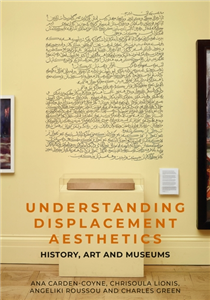
Understanding displacement aesthetics
History, art and museums
by Ana Carden-Coyne, Charles Green, Chrisoula Lionis, Angeliki Roussou
Since the Second World War and the formalisation of the international refugee regime, forced displacement has been marked by a set of aesthetic, practical, and institutional concerns. Understanding Displacement Aesthetics examines how visual culture and art practice constructs and challenges ideas about forced displacement and refugees. The novel framework for 'displacement aesthetics' moves beyond conventional understandings of aesthetics as merely representational, demonstrating the entanglement of visual culture, art practices, and forced displacement in postmigrant contexts. Bringing together the fields of cultural history, art history, and curatorial studies, Understanding Displacement Aesthetics identifies four areas for consideration: visual tropes of refugeedom; language and identity; institutional and artistic responses to displacement; and lived experiences of artists with backgrounds of displacement. Through archival research, visual culture and art, interviews, and collaborative curatorship, Understanding Displacement Aesthetics offers new insight into overcoming the limitations that contexts of displacement can present for artists, art galleries and institutions addressing refugeedom and its legacies.
-
Promoted Content
 The ArtsMarch 2026
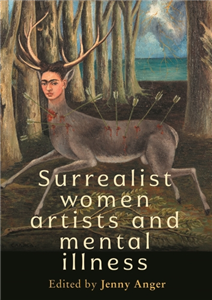
Surrealist women artists and mental illness
by Jenny Anger
Female mental illness has been a prominent and complicated theme in surrealist cultural traditions, including the idealization of women with mental illness in works such as André Breton's Nadja (1928). Art historians have examined this tendency before, but to date there has been no comprehensive study of the lived reality of women surrealist artists with mental illness. How did women's experience and their work intersect with this romanticized vision? Was the masculine dream of feminized, "mad" genius prohibitive or productive for these women artists? After establishing the ideological field within which these women worked, the book turns to case studies of well-known and some lesser-known artists, including Ángeles Santos, Leonora Carrington, Dora Maar, Claude Cahun, Frida Kahlo, Meret Oppenheim, Sonja Sekula, and Unica Zürn. This collection of essays contains a wide range of responses, revealing surrealism's generative as well as restrictive force.
-
 Trusted Partner
 The ArtsAugust 2010
Women artists between the Wars
'A fair field and no favour'
by Katy Deepwell
Starting with a critique of existing methodologies and histories of the period, this book examines the production of women artists, looking at different areas and aspects of their activities, and particularly contrasting the lives of different generations of women artists. Many of these women's names or their works are not familiar in art histories of the twentieth century. The book analyses how women artists' presence which was consistently one third of the artists in many major exhibiting groups became less than 10% of the museum purchases and in art historical texts for this period. Comparisons are made between the opportunities presented to women artists and those of their male peers in the light of considerable change and restructuring within the art world in Britain during this period, principally due to the growing influence of modernism in the art market. ;
-
Trusted Partner
 Humanities & Social SciencesJuly 2010
Refugee women in Britain and France
by Gill Allwood, Khursheed Wadia
This book is about the lives of refugee women in Britain and France. Who are they? Where do they come from? What happens to them when they arrive, while they wait for a decision on their claim for asylum, and after the decision, whether positive or negative? It shows how laws and processes designed to meet the needs of men fleeing political persecution often fail to protect women from persecution in their home countries and fail to meet their needs during and after the decision-making process. It portrays refugee women as resilient, resourceful and potentially active participants in British and French social, political and cultural life. It exposes the obstacles that make active participation difficult. The book is an authoritative and thorough synthesis of all available material on refugee women in Britain and France. The style is accessible and highly readable, making this an ideal book for academics, students and interested readers. ;
-
Trusted Partner
 Humanities & Social SciencesJuly 2026
Unruly subjects
Migration, solidarity and resistance in Greece
by Ludek Stavinoha
Unruly Subjects takes readers to the epicentre of Europe's intensifying border struggles-the Aegean islands in Greece, where thousands of 'undesirable' migrants have been warehoused and violently abandoned in EU-funded refugee camps. Drawing on nearly a decade of research, Ludek Stavinoha reveals the subterranean corners in which resistance brews and solidarity takes hold, tracing migrants' everyday struggles for dignity and their rights, alongside grassroots volunteers who have built vital infrastructures of support. At the heart of the book are the creative, if precarious and ambivalent, solidarities forged between volunteers and refugees, citizens and non-citizens, as they unsettle racialised boundaries and logics of control, in defiance of state-sanctioned violence, criminalisation, and neglect. Urgent and compelling, Unruly Subjects illuminates how people navigate and subvert Europe's increasingly hostile border regime, and the alternative imaginaries of more just futures their struggles embody.
-
Trusted Partner
-
Trusted Partner
-

 The ArtsMarch 1905
Concerning the Spiritual in Art
by Wassily Kandinsky
A pioneering work in the movement to free art from its traditional bonds to material reality, this book is one of the most important documents in the history of modern art. Written by the famous nonobjective painter Wassily Kandinsky (1866–1944), it explains Kandinsky's own theory of painting and crystallizes the ideas that were influencing many other modern artists of the period. Along with his own groundbreaking paintings, this book had a tremendous impact on the development of modern art. Kandinsky's ideas are presented in two parts. The first part, called "About General Aesthetic," issues a call for a spiritual revolution in painting that will let artists express their own inner lives in abstract, non-material terms. Just as musicians do not depend upon the material world for their music, so artists should not have to depend upon the material world for their art. In the second part, "About Painting," Kandinsky discusses the psychology of colors, the language of form and color, and the responsibilities of the artist. An Introduction by the translator, Michael T. H. Sadler, offers additional explanation of Kandinsky's art and theories, while a new Preface by Richard Stratton discusses Kandinsky's career as a whole and the impact of the book. Making the book even more valuable are nine woodcuts by Kandinsky himself that appear at the chapter headings. This English translation of Über das Geistige in der Kunst was a significant contribution to the understanding of nonobjectivism in art. It continues to be a stimulating and necessary reading experience for every artist, art student, and art patron concerned with the direction of 20th-century painting.
-
Trusted Partner
 Humanities & Social SciencesSeptember 2024
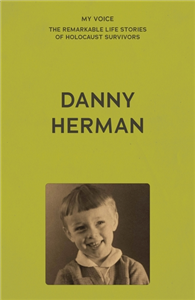
My Voice: Danny Herman
by Danny Herman
Danny Herman was born in 1935 in Königsberg in East Prussia. As the Nazis were rounding up Jews, Danny's father managed to escape to England in July 1939. He travelled to the Kitchener Camp in Kent, which helped refugees secure visas for safer places. Danny and his mother arrived in England just three days before war was declared in 1939, and his father was later sent to an internment camp on the Isle of Man. Danny went on to become a successful runner, competing in many international athletics events and volunteering in many roles, including at the 2002 Commonwealth Games. Danny's detailed memories of arriving in England, initially at the seaside in Kent and then moving to Manchester, create a vivid picture of life-changing events as experienced by a young child. Danny's book is part of the My Voice book collection, a stand-alone project of The Fed, the leading Jewish social care charity in Manchester, dedicated to preserving the life stories of Holocaust survivors and refugees from Nazi persecution who settled in the UK. The oral history, which is recorded and transcribed, captures their entire lives from before, during and after the war years. The books are written in the words of the survivor so that future generations can always hear their voice. The My Voice book collection is a valuable resource for Holocaust awareness and education.
-
Trusted Partner
 Gender studies: menNovember 2007
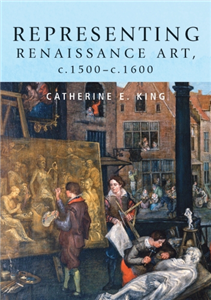
Representing Renaissance art, c.1500–c.1600
by Catherine E. King
Representing Renaissance art, c.1500-c.1600 is a study of change and continuity in the iconographies of art and the visual representation of artists during the sixteenth century, especially in Italy and the Netherlands. The issue of how, and how far, artists obtained higher status for their profession during the Renaissance is a key question for the study of the early modern period. This book considers the maintenance of well-established traditions for the visual representation of artists, and also examines the new iconographies that emerged in the sixteenth century. By highlighting art and architecture that artists designed for their personal use, including the decoration of their houses, this study provides insight into the tastes and 'ways of looking' specific to artists. By examining the visual evidence we see the opinions both of artists who expressed their views in literary texts, and additionally those of artists who did not publish their ideas in written form.
-
Trusted Partner
 Humanities & Social SciencesMay 2025
Statelessness after Arendt
European refugees in China and the Pacific during the Second World War
by Kolleen Guy, Jay Winter
This book is a study of statelessness in the period of the Second World War. It breaks new ground by focusing not on Europe, but on the Asian and Pacific theatres of the conflict. This perspective enables us to go beyond Hannah Arendt's classic account of statelessness in her Origins of Totalitarianism. To her, statelessness was the product of a failed European nation-state system. We find a very different story when we examine the history of stateless people, many of them Jews, fleeing to Asia from Europe. In Asia, we see that being stateless was not a uniform experience, but a variety of possibilities reflecting the political structure of the states and cities in which refugees found shelter. We find too that stateless people managed to enter the political realm long before they reached the threshold of citizenship.
-
Trusted Partner
 The ArtsOctober 2025
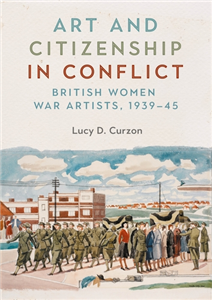
Art and citizenship in conflict
British women war artists, 1939–45
by Lucy Curzon
Art and Citizenship in Conflict examines the work of women war artists in order to highlight the complexity of citizenship and gender in Britain during the Second World War. Evelyn Dunbar, Mary Kessell, Ethel Gabain, Stella Schmolle, and Laura Knight, among others, were commissioned by the War Artists' Advisory Committee (WAAC) to document the millions of women who took up sometimes unconventional roles-in agriculture, the auxiliary services, and manufacturing, among others-to support the British war effort. Indeed, their prints, drawings, and paintings were part of a broader scheme to uphold morale and promote much-needed citizen involvement on the home front. While there is growing interest, the importance of their remit in the history of the Second World War and the quality of their artistry have nonetheless not yet secured them a significant place in scholarship. Art and Citizenship in Conflict seeks to amend this gap while also broadening approaches to the study of war itself.
-
Trusted Partner
 The ArtsApril 2026
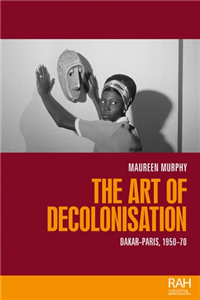
The art of decolonisation
Dakar-Paris, 1950-70
by Maureen Murphy
The art of decolonisation examines how artists challenged colonial legacies and reconfigured power through transnational networks of art and diplomacy. Adopting a global and transhistorical perspective, it explores artistic, political, and institutional relations between France and Senegal during decolonisation and the Cold War. From the emergence of a national modern art in Senegal to contested cultural policies and high-profile exhibitions-such as those featuring Picasso and Soulages in Dakar, or contemporary Senegalese art in Paris-this book traces the circulation of artworks, ideas, and influence across borders. It reveals how visual artists and filmmakers shaped a new artistic geopolitics between 1950 and 1970. Reconsidering the accepted chronology of the 'global turn', The art of decolonisation shows that the roots of global art discourse run deeper than the 1990s, and were already forming during the era of independence struggles.
-
Trusted Partner
 The ArtsFebruary 2022
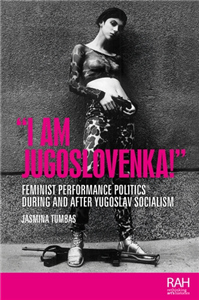
"I am Jugoslovenka!"
Feminist performance politics during and after Yugoslav Socialism
by Jasmina Tumbas, Amelia Jones, Marsha Meskimmon
"I am Jugoslovenka" argues that queer-feminist artistic and political resistance were paradoxically enabled by socialist Yugoslavia's unique history of patriarchy and women's emancipation. Spanning performance and conceptual art, video works, film and pop music, lesbian activism and press photos of female snipers in the Yugoslav wars, the book analyses feminist resistance in a range of performative actions that manifest the radical embodiment of Yugoslavia's anti-fascist, transnational and feminist legacies. It covers celebrated and lesser-known artists from the 1970s to today, including Marina Abramovic, Sanja Ivekovic, Vlasta Delimar, Tanja Ostojic, Selma Selman and Helena Janecic, along with music legends Lepa Brena and Esma Redzepova. "I am Jugoslovenka" tells a unique story of women's resistance through the intersection of feminism, socialism and nationalism in East European visual culture.
-
Trusted Partner
 Humanities & Social SciencesSeptember 2025
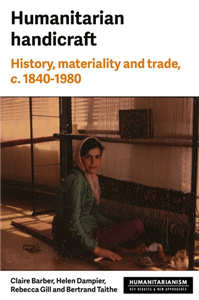
Humanitarian handicraft
History, materiality and trade, c. 1840–1980
by Rebecca Gill, Claire Barber, Helen Dampier, Bertrand Taithe
This book uncovers the overlooked history of artisanal textiles in projects aimed at social uplift and moral reform. The contributors ask what the implications of this form of gendered craft production are for our understanding of the humanitarian imagination, relations of humanitarian production and the generation of meaning and social and artistic value. It also opens a dialogue with contemporary socially-engaged textile artists to engender critical reflection on the socially-situated meaning of textile craft in past and present humanitarian contexts.
-
Trusted Partner
 The ArtsJanuary 2012
Art, ethnography and the life of objects
Paris, c.1925–35
by Julia Kelly, Marsha Meskimmon, Shearer West, Tim Barringer
In the 1920s and 1930s, anthropology and ethnography provided new and striking ways of rethinking what art could be and the forms which it could take. This book examines the impact of these emergent disciplines on the artistic avant-garde in Paris. The reception by European artists of objects arriving from colonial territories in the first half of the twentieth century is generally understood through the artistic appropriation of the forms of African or Oceanic sculpture. The author reveals how anthropological approaches to this intriguing material began to affect the ways in which artists, theorists, critics and curators thought about three-dimensional objects and their changing status as 'art', 'artefacts' or 'ethnographic evidence'. This book analyses texts, photographs and art works that cross disciplinary boundaries, through case studies including the Dakar to Djibouti expedition of 1931-33, the Trocadéro Ethnographic Museum, and the two art periodicals Documents and Minotaure. Through its interdisciplinary and contextual approach, it provides an important corrective to histories of modern art and the European avant-garde. ;
-
Trusted Partner
 Literature & Literary StudiesOctober 2012
Art and Literature of the Second Empire
by David Baguley
This volume explores the characteristics of the art and literature of the Second Empire in France; it examines the attitudes and positioning of artists and writers of the period in relation to a regime of dubious legitimacy, and the ways in which that regime exploited to its advantage the artistic capital available to it. ;
-
Trusted Partner

 April 2024
Schmerz Camp
by Patty Kim Hamilton
Sieben Frauen in einer renommierten, surrealen Schmerzklinik: Im ewigen Kreislauf von Therapien und Gesprächen mit den Ärzt:innen probieren die Patientinnen Medikamente aus, töpfern, meditieren, treiben Sport – der Schmerz aber bleibt. Scheinbar geschieht mit den Frauen in der Klinik nichts und doch ist alles in ständiger, minimaler Bewegung. Zeit vergeht hier anders. Dabei ist der alternde, weiblich gelesene Körper ein zentrales Motiv. Sprache und Dialoge basieren auf realen Gesprächen und Klinikfragebögen – werden bereichert von chorischen Passagen, Lyrik und performativen Naturbildern, die eine neue Dimension aufmachen: Wo finden wir Trost und wie kann ein Weg durch den Schmerz aussehen? Das Theaterstück Schmerz Camp ist ein Plädoyer für das ehrliche Zuhören, für mehr Achtsamkeit und eine solidarische Gemeinschaft. Patty Kim Hamilton sucht darin nach dem Alltäglichen, dem Humor, der Zärtlichkeit, dem Einfachen vor dem dunklen Abgrund und findet dabei eine virtuose Sprache für etwas, das sich mit Worten kaum fassen lässt.
-
Trusted Partner
 The ArtsMarch 2018
Art versus industry?
New perspectives on visual and industrial cultures in nineteenth-century Britain
by Christopher Breward, Kate Nichols, Bill Sherman, Rebecca Wade, Gabriel Williams
This book is about encounters between art and industry in nineteenth-century Britain. It looks beyond the oppositions established by later interpretations of the work of John Ruskin, William Morris and the Arts and Crafts movement to reveal surprising examples of collaboration - between artists, craftspeople, designers, inventors, curators, engineers and educators - during a crucial period in the formation of the cultural and commercial identity of Britain and its colonies. Across thirteen chapters by fourteen contributors, Art versus industry? explores such diverse subjects as the production of lace, the mechanical translation of sculpture, the display of stained glass, the use of the kaleidoscope in painting and pattern design, the emergence of domestic electric lighting and the development of art and design education and international exhibitions in India.
-
Trusted Partner
 Science & MathematicsApril 2021
Medicalising borders
Selection, containment and quarantine since 1800
by Sevasti Trubeta, Christian Promitzer, Paul Weindling, Hastings Donnan
The research of pandemics, epidemics, and pathogens like COVID-19 reaches far beyond the scope of biomedicine. It is not only an objective for the health, political and social sciences, but epidemics and pandemics are a matter of geography: foci and vectors of communicable diseases continue to test the efficacy of medical control at state borders. This volume illuminates these issues from various disciplinary viewpoints. It starts by exploring historical models of quarantine, spatial isolation and detention as precautionary means against the dissemination of disease and contagion by border crossers, migrants and refugees. Besides the patterns of prejudice with which these groups are confronted, the book also deals with various kinds of fear of contamination from outside of the nation state. The contributors address the implementation of medical techniques at state borders in the twentieth and early twenty-first centuries, as well as the presently practiced measures of medical and biometric screening of migrants and refugees. Uniquely, this volume shows that the current border security regimes of Western states exhibit a high share of medicalised techniques of power, which originate both in European modernity and in the medical and biological disciplines developed during the last quarter of the millennium. Drawing on the collective expertise of a network of international researchers, this interdisciplinary volume is essential reading for those wishing to understand the medicalisation of borders across the globe, from the early eighteenth century up to the present day.



