
Wolters Kluwer Legal & Regulatory U.S.
Wolters Kluwer Law & Business delivers expert content and solutions in the areas of law, corporate compliance, health compliance, reimbursement, and legal education.
View Rights Portal
Wolters Kluwer Law & Business delivers expert content and solutions in the areas of law, corporate compliance, health compliance, reimbursement, and legal education.
View Rights Portal
Regio has nearly 30 years of experience in the publication of maps and atlases of all kinds, which have been internationally recognised and awarded on numerous occasions. Regio has two main fields of activity: mapping and geospatial data. We design accurate, up-to-date maps at all scales and for all purposes. In addition to printed maps we provide maps for internet applications, GPS and mobile devices. We are flexible and will assist you in the planning, consultation anddevelopment of all cartographic products. In geospatial data area Regio owns and maintains the most detailed geospatial database of Estonia and the Baltic States, including buildings, address data, points of interest, land cover, road network and navigation datasets.
View Rights Portal

Border enclaves examines the Spanish enclave of Melilla as a prism for understanding Europe's contemporary dislocations. Based on over a decade of ethnographic research, it explores how borders are enforced, contested and inhabited in a city suspended between Africa and Europe, colonial legacies and modern regimes. Through a polyphonic narrative following smugglers, migrants, teachers and politicians, it reveals how everyday practices and symbolic performances shape life in the enclave. Selective visibility-who is seen or erased-structures authority and exclusion. Situating Melilla within broader processes like Spain's colonial history and Europe's border restructuring, the book argues that its fragmented sovereignties and external dependencies make it a paradigmatic site for grasping Europe's precarious margins. It calls for an ethnographic lens attuned to dislocation as both lived experience and analytic tool.
 Trusted Partner

Local government in the UK is in crisis. It is now neither local in terms of the geography and populations of its principle units, nor does it truly govern in these areas. As this book reveals, over the previous 200 years local government has moved from a system in which local interests held governance over localities to one in which central government and national and multi-national agencies such as corporate businesses hold governance over local and community decision-making. These changes seriously undermine the important role that local government can play in liberal democracy in the UK. The book explains the nature of local government today and asks if there is any possibility of change.
Trusted Partner
This book is a collection of articles by anthropologists and social scientists concerned with gendered labour, care, intimacy and sexuality, in relation to mobility and the hardening of borders in Europe. Interrogating the relation between physical, geopolitical borders and ideological, conceptual boundaries, it offers a range of vivid and original ethnographic case studies that will capture the imagination of anyone interested in gendered migration, policies of inclusion and exclusion, and regulation of reproduction and intimacy. The book presents ethnographic and phenomenological discussions of people's changing lives as they cross borders, how people transgress and reshape moral boundaries of proper gender and kinship behaviour, and moral economies of intimacy and sexuality. It also focuses on migrants' navigation of social and financial services in their destination countries, putting questions about rights and limitations on citizenship at the core.
Trusted Partner
During the first half of the twentieth century, world politics was reshaped in pursuit of a new international order. The ideological foundations of the 'new diplomacy' (and its fate during the interwar period) are well known. This book instead examines the practices of internationalism and diplomacy from the First Hague Conference of 1899 to the aftermath of the Second World War. By focusing on these practices, such as disarmament regimes or public diplomacy, and their use as instruments to build international order(s), it emphasises the constructed, contested, and experimental character of what subsequently became a standard repertoire of international politics. Essays from a range of interdisciplinary scholars address well-established principles such as self-determination, and also less prominent practices such as small arms control or parliamentary inquiry. The book makes a major contribution to the growing historiography on twentieth-century internationalism.
Trusted Partner
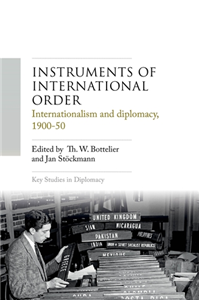
During the first half of the twentieth century, world politics was reshaped in pursuit of a new international order. The ideological foundations of the 'new diplomacy' (and its fate during the interwar period) are well known. This book instead examines the practices of internationalism and diplomacy from the First Hague Conference of 1899 to the aftermath of the Second World War. By focusing on these practices, such as disarmament regimes or public diplomacy, and their use as instruments to build international order(s), it emphasises the constructed, contested, and experimental character of what subsequently became a standard repertoire of international politics. Essays from a range of interdisciplinary scholars address well-established principles such as self-determination, and also less prominent practices such as small arms control or parliamentary inquiry. The book makes a major contribution to the growing historiography on twentieth-century internationalism.
Trusted Partner

Capitalism in Europe is transformed as a result of liberalisation, privatisation and regulatory reform. Unravelling the state as service provider and employer has posed significant social policy challenges to the emerging regulatory state. The book examines how these challenges have been addressed in different varieties of capitalism and across sectors. It compares change in France, Germany and the United Kingdom, takes stock of the reform movement in Europe and internationally, and discusses policy approaches in telecoms and electricity. It pays special attention to falling mail volumes as a driver of change and a new wave of privatisation triggered by the European sovereign debt crisis. The analysis reveals whether and how social policy goals have been addressed by means of regulation and redistribution. The book explains why liberal market economies have been postal reform latecomers and why the regulatory state benefits consumers, but is likely to leave employees' interests behind. ;
Trusted Partner

This book examines British imperialism in late colonial Burma to study how imperialists attempted to protect their strategic and economic interests after decolonisation: they did so by supporting ethnonationalism. This process resembles the Cold War tactic of "containment," and the book makes a crucial contribution to the study of modern imperialism by demonstrating the continuity between "containment's" late- and "neo"-colonial manifestations. For Burma/Myanmar, it also explores the origin of the present-day military junta's racial regime: it emphasizes the protection of the ethnoreligious majority from ethnic minority insurgency. The Rohingya people are currently suffering a genocide because of this racial regime. As the country endures civil war against the junta, this book highlights how ethnonationalists in the late colonial period first promoted this racial regime to seize power and prevent revolution, a process supported by British imperialists for their own ends.
Trusted Partner
This book provides an analysis of European Union pharmaceutical regulation from a policy-making perspective. The focus is on how the often conflicting agendas of the pharmaceutical industry, the EU member states, the European Commission, and consumer interests are reconciled within the context of regulatory outcomes having to serve public health, healthcare and industrial policy needs within the single market. Breaking with more traditional approaches which stress the economic determinants of pharmaceutical policy, different strands of public policy analysis, regulatory and European integration and policy-making theories are invoked in developing a new conceptual approach to frame the analysis. In-depth case-studies in three key policy areas: patent protection, market authorisation, and pricing and reimbursement, provide substantive support. In providing a unique perspective on how and why EU pharmaceutical policy is made, the book will be of interest to academics, students and policy-practitioners interested in EU policy-making, regulation and public policy analysis. ;
Trusted Partner

This book investigates the legacies of British slavery beyond Britain, focusing upon the colonisation of Australia and New Zealand, and explores why this history has been overlooked. After August 1833, when the British Parliament abolished slavery in the British Caribbean, Mauritius and the Cape, the former slave-owners were paid compensation for the loss of their 'property'. New research has begun to show that many beneficiaries had ties to other parts of the British Empire, including the settler colonies of Australia, New Zealand, Canada and South Africa. Through a range of case studies, contributors to this collection trace the movement of people, goods, capital, and practices from the Caribbean to the new Australasian settler colonies. Chapters consider a range of places, people and themes to reveal the varied ways that slavery continued to shape imperial relationships, economic networks, and racial labour regimes after 1833.
Trusted Partner
 Trusted Partner

This new edited collection of essays focuses on the history of Labour's second period in office during the 1929-1931 global financial crisis. Contributions by leading historians and younger academics bring fresh perspectives to Labour's domestic problems, electoral and party matters, relations with the Soviet Union and ideological questions. An important range of new historical research provides a much-needed reappraisal of Ramsay MacDonald's second Labour government, which impressed few with its conventional policies for tackling mass unemployment. Oswald Mosley, John Maynard Keynes and Ernest Bevin's alternative economic strategies are critically studied in key essays. A more positive side of the government's policies is also adeptly revealed on consumerism and agriculture. Significant new light is adroitly shed on the 1929 general election, the first fought on a universal franchise. The intricate politics of the Parliamentary Labour Party and the disaffiliation of the Independent Labour Party are convincingly explored. The influence of the Soviet Union on Labour's thoughts and actions is analysed in valuable accounts of Labour's foreign policy and Labour's turn to socialism after 1931. An important fresh account of opposition politics breaks new ground on the reaction of Tory politicians, including Harold Macmillan, to MacDonald's government. The volume concludes with an absorbing analysis of the myths surrounding '1931' in Labour history. This timely volume makes accessible a major reassessment of existing knowledge and new scholarship that will appeal to students and teachers of British political and social history. It is essential reading for sixth form and university courses on twentieth-century history. ;
Trusted Partner
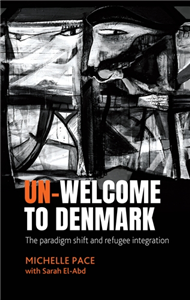
Un-welcome to Denmark critically assesses Denmark's migration regime by directly engaging the voices of multiple stakeholders impacted by its harshness. It puts forward the theory of the unwelcome migrant by undertaking an extensive analysis of the programmatic and legal foundations for the undeserving migrant as well as of the lived experiences of Syrian refugees, and welfare professionals and private businesses tasked with supporting them. It thereby documents the ways in which the Danish migration gaze produces and perpetuates the hyper precarity of the everyday lives of Syrians and the anxiety that overshadows the manner in which Syrians and those who support them navigate its maze. By so doing, it traces how a once admired, liberal, tolerant and open society with a strong reverence for human rights has turned into one of the harshest migration regimes in Europe, if not internationally.
Trusted Partner

This is the first comprehensive study of direct rule as the system of governance which operated in Northern Ireland for most of the period between 1972 and 2007. The major institutions of governance are described and examined in detail, including the often neglected sectors of the role of the Westminster parliament, the civil service, local government, quangos, ombudsmen offices, cross-border structures and the public expenditure process. The book explains how the complex system covering transferred, reserved and excepted functions worked and provided viable governance despite political violence, constitutional conflict and political party disagreements. In addition, a comparison is drawn between direct rule and devolution, analysing both the positive and negative impact of direct rule, as well as identifying where there has been minimal divergence in processes and outcomes. It will prove an invaluable reference source on direct rule and provide a comparative basis for assessing devolution for students of public administration, government, politics, public policy and devolution. ;
Trusted Partner
Trusted Partner
Trusted Partner

This book examines the varied and fascinating ways that Westminster - traditionally home to the royal court, the fashionable West End and parliament - became the seat of the successive, non-monarchical regimes of the 1640s and 1650s. It first explores the town as the venue that helped to shape the breakdown of relations between the king and parliament in 1640-42. Subsequent chapters explore the role Westminster performed as both the ceremonial and administrative heart of shifting regimes, the hitherto unnoticed militarisation of local society through the 1640s and 1650s, and the fluctuating fortunes of the fashionable society of the West End in this revolutionary context. Analyses of religious life and patterns of local political allegiance and government unveil a complex and dynamic picture, in which the area not only witnessed major political and cultural change in these turbulent decades, but also the persistence of conservatism on the very doorstep of government.
Trusted Partner
In defence of councillors is an unashamed defence of local representative democracy and of those elected to serve as councillors from the often ill-informed, ill-judged and inaccurate criticism made by the media, government and public, of councillors' personal, political and professional roles. By using qualitative research from a number of related projects, the book examines the roles, functions and responsibilities of councillors and the expectations placed upon them by citizens, communities and government. It also examines the impact council membership has on other facets of the councillor's life. The book examines how councillors develop strategies to overcome the constraints and restrictions on their office so as to be able to govern their communities, balance their political and public life and democratise and hold to account a vast array of unelected bodies that spend public money and develop public policy without the electoral mandate and legitimacy held by our councillors.
Trusted Partner

At every level of human interaction new levels of identity-based tension are in evidence. Contributors to this book explore facets of fragmentation processes within systems of state and interstate organisation, how they influence the use of negotiation, and how negotiation might be used to effect renewed coherence. Following Anstey's (Ch1) introductory chapter framing the nature and shape of fragmentation dynamics, Zartman (Ch 2) argues that the use of negotiation as a process of conflict resolution is deeply shaped by identity groups whose internal coherence is dependent on sustaining a negative identity of others. International relations are no longer solely the realm of experienced diplomats but are shaped as Meerts (Ch3) points out by politicians seeking to be responsive to voting publics rather than wider concerns. Anstey digs into problems of fragmentation (Ch. 4) and Troitskiy (Ch 5) points out how a reluctant acceptance of the power of 'the other' can lead to a form of strategic stability in relations. Anstey and Meerts (Ch 6) point out in their analysis of the Israeli-Palestinian case as an identity conflict turned very bad. Guggenbuhl (Ch 7 ) reveals how structures and processes have been designed within the EU to prevent, contain and regulate conflicts to limit risks of confrontation and fragmentation. Schuessler (Ch 8) to advocates a shift away from a template or roadmap approach to EU membership to a cohesion based on non-dominance. There is still a strong desire on the part of some states, like Northern Macedonia, to become EU members, as reflected in Manton's (Ch 9). Paula Garzon and Frans Schram explain the success of the Colombia Peace Negotiations (Ch 10), while Odigie and da Rocha (Ch 11) analyse the struggle faced by ECOWAS to influence coup leaders in Mali to return to constitutional government and changes of government by constitutional means. Liang (Ch12) discusses how the internet as the modern vehicle of inter-state, inter-group and interpersonal communication has become weaponised. In Ch 13 Anstey draws some lessons from contributions to the compilation.
Trusted Partner



