
Annina Safran
Eine Jugendbuchfantasy-Saga ab 10 Jahre: Der Spiegelwächter, Die Suche nach dem Schattendorf, Im Land der Nuria. Insgesamt wird es fünf Bände zu dieser Saga geben.
View Rights Portal
Eine Jugendbuchfantasy-Saga ab 10 Jahre: Der Spiegelwächter, Die Suche nach dem Schattendorf, Im Land der Nuria. Insgesamt wird es fünf Bände zu dieser Saga geben.
View Rights Portal
It was founded in November of 2006 with the efforts of SeyedHossein Abedini and was introduced to the publishing industryof Iran. He placed the publishing approach on the production ofresources related to traditional medicine , history and textualresearch using manuscripts. Publishing books on nutrition andcomplementary medicine are also considered to be other booksthat have been discussed more.
View Rights Portal
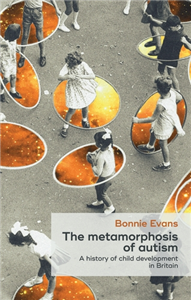
What is autism and where has it come from? Increased diagnostic rates, the rise of the 'neurodiversity' movement, and growing autism journalism, have recently fuelled autism's fame and controversy. The metamorphosis of autism is the first book to explain our current fascination with autism by linking it to a longer history of childhood development. Drawing from a staggering array of primary sources, Bonnie Evans traces autism back to its origins in the early twentieth century and explains why the idea of autism has always been controversial and why it experienced a 'metamorphosis' in the 1960s and 1970s. Evans takes the reader on a journey of discovery from the ill-managed wards of 'mental deficiency' hospitals, to high-powered debates in the houses of parliament, and beyond. The book will appeal to a wide market of scholars and others interested in autism, neurodiversity and how this relates to wider theories of children's psychological development.

This book is available as an open access ebook under a CC-BY-NC-ND licence. What is autism and where has it come from? Increased diagnostic rates, the rise of the 'neurodiversity' movement, and growing autism journalism, have recently fuelled autism's fame and controversy. The metamorphosis of autism is the first book to explain our current fascination with autism by linking it to a longer history of childhood development. Drawing from a staggering array of primary sources, Bonnie Evans traces autism back to its origins in the early twentieth century and explains why the idea of autism has always been controversial and why it experienced a 'metamorphosis' in the 1960s and 1970s. Evans takes the reader on a journey of discovery from the ill-managed wards of 'mental deficiency' hospitals, to high-powered debates in the houses of parliament, and beyond. The book will appeal to a wide market of scholars and others interested in autism.
 Trusted Partner


Four out of your five children have autism, and your husband too! This is what happened to Joyce van Maaren. Over the years four of her children and her husband are diagnosed with an autism spectrum disorder. In A Family With Autism she talks openly about how her life gets turned upside down over and over again, and how the family had to regain their balance. In this inspiring and lovable book, Joyce van Maaren takes the reader on a journey – one with many ups and downs. Readers can find support in her story and discover what autism means for daily life. But most of all, they will be inspired to make the most of every day, even if they or their family has to deal with autism (or other psychological disorders). Target Group: people with autism and their relatives, families of which some members have autism.
Trusted Partner

This book discusses a new type of therapy that can help people with autism to be less overburdened, let go of recurrent thoughts, and get better at recognizing physical signs of stress. Mindfulness includes meditation techniques that are derived from Buddhism and that do not require much communication or insight in thoughts and feelings. This is especially beneficial for people with autism, for whom communication and social interaction can be a challenge. After a clear introduction to what mindfulness is, each chapter of this book offers a meditation exercise. For each meditation exercise useful tips and tricks are given, as well as potential pitfalls that relate directly to autism. Mindfulness for adults with autism is the first treatment for adults with autism that has proven to be effective. Because of its readability and the beautiful illustrations, this book is highly recommended for both therapists and people with autism.
Trusted Partner

This title helps people with autism to effectively cope with anger, frustration, and injustice. This practical book offers a training-program which can be completed alone, based on scientifically examined treatment methods. It is especially suited to be used together with a caretaker. The first part of the book clearly describes the connection between autism and self-control issues. The second part offers practical exercises which explain how to recognize anger in time and how strong emotions such as anger and frustration. Numerous tips, exercises and relatable examples help the reader to experience more direction and control. Target Group: Adults with autism and involved caretakers
Trusted Partner

Lately, autism spectrum disorders (ASD) in adults have received more and more attention. A decade ago, autism was only recognised and diagnosed in children. Oddly enough, the fact that ASD could also occur in adults has been neglected for a long time. By now it has become clear that the symptoms of ASD change over the lifetime. Though people with ASD definitely have many strengths (eye for detail, perseverance, sincerity, a sense of humour, reliability, and consistency), they also have shortcomings. This book brings the reader up to date about ASD. In Part 1, the causes of ASD are described, both in nature and nurture. This part also includes a discussion about information processing in relation to ASD. Part 2 deals with the behavioural aspects as described in the DSM-5. In Part 3, several important themes are discussed, such as the diagnostic process, sexuality, gender differences, and changes that people with ASD experience throughout their lives. ‘I wish I had read this book 15 years ago. I finally understand why people respond to me the way they do.’ Joost, diagnosed with ASD. Target Group: adults with autism, relatives, therapists.
Trusted Partner

When you have autism, you probably have to cope with stress on a daily basis. Often, people with autism do not know how to recognize stress, what causes stress, and what they can do to reduce it. More peace, less stress offers a useful step-by-step plan. In seven steps, the reader learns what causes stress, how to recognise stress signals, and what they can do to feel more at ease. The book includes practical exercises so new knowledge can be applied right away. Being more at ease means to be able to: have better relationships with a partner, family, friends and colleagues, focus attention to get things done more easily, have a grip on life, instead of experiencing chaos, restlessness and insecurity and feel more powerful and have more self-esteem.
Trusted Partner


It‘s a match?! The interaction check plays a key role when it comes to drug therapy safety. These index cards offer a way of keeping track and familiarising yourself with a wide variety of active ingredient combinations. The standardised structure of the case studies helps you learn • to understand the mechanism of interaction, • to assess the clinical relevance, and • to implement any necessary measures. The 2nd edition has not only been updated, but also expanded to include new cases. Thanks to a handy booklet, users can refer quickly to the theoretical principles.
Trusted Partner

Because of their problems with social interaction it is often presumed that people with an autism spectrum disorder (ASD) cannot have romantic relationships. This is not true; adults with ASD are certainly capable of having long-term relationships. Although some partners are satisfied with their relationship, there are also some who experience problems caused by ASD. Both, the partner with, as the partner without ASD, can feel unhappy and misunderstood in the relationship. This is where this book can be of help. This unique 10 step psychoeducational program helps women, whose partner suffers from an autism spectrum disorder, to understand the condition as well as their partner better. This book also offers tips for daily life that can help improve the relationship between the partners and giving the women more time to herself. Target Group: partners of people with autism, therapists.
Trusted Partner
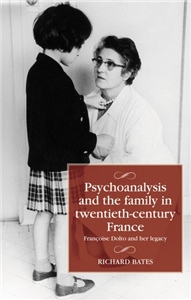
In the last quarter of the twentieth century, if French people had a parenting problem or dilemma there was one person they consulted above all: Françoise Dolto (1908-88). But who was Dolto? How did she achieve a position of such influence? What ideas did she communicate to the French public? This book connects the story of Dolto's rise to two broader histories: the dramatic growth of psychoanalysis in postwar France and the long-running debate over the family and the proper role of women in society. It shows that Dolto's continued reputation in France as a liberal and enlightened educational thinker is at best only partially deserved and that conservative and anti-feminist ideas often underpinned her prominent public interventions. While Dolto retains the status of a national treasure, her career has had far-reaching and sometimes harmful repercussions for French society, particularly in the treatment of autism.
Trusted Partner

This title discusses the psychological and neuropsychological background of autism spectrum disorder, as well as appropriate diagnostic tools. The assessments that this book introduces are sorted by development area (intellectual, adaptive, social, language, etc.). Additionally, this title provides professionals with a variety of case studies from clinical practice. Target Group: clinical psychologists, mental health professionals, psychiatrists, neurologists, pediatricians, speech therapists, students, teachers
Trusted Partner

The handling of drug interactions in the pharmacy has an important significance. A well-functioning interaction management system increases the safety of drug therapy for patients, promotes interdisciplinary exchange between physician and pharmacist, and boosts the skills of the local pharmacy. The author, an experienced practitioner, has developed standard templates for successfully communicating the most commonly occurring, clinically relevant interactions: - Decision aids in the form of flowcharts: When and how should the communication with the physician take place? - Aids to communication as sample forms that can be tailored to the individual pharmacy: What information does the physician need, what solutions does the pharmacy suggest? The forms cover both general interactions and specific interaction pairs and mechanisms: The appropriate solution for every interaction!
Trusted Partner

Several different pills prescribed by many different physicians: pharmacists encounter patients in this situation every day! What at first seems quite normal can, on closer inspection, be fraught with considerable risks of drug-related problems. Using this analysis as a core component of medication management, pharmacies have the key risk minimisation tool at their disposal. The authors guide their readers step by step through the discussions with the patient, the stages of the analysis, and the clear documentation. Case examples reflect on the content and illustrate implementation. The launch of pharmaceutical services enables an improvement in the safety and efficacy of customers‘ drug therapy in the pharmacy by means of the service „Extended medication counselling for polymedication“. Everything pharmacists need to know for the necessary medication analysis can be found in this book. This completely revised 2nd edition includes: - Important information on pharmaceutical services - Illustrative case examples on many indications - QR codes that lead to additional digital material Whether it is a detailed adjustment or a major change to medication: every patient benefits from the intervention.
Trusted Partner

Taking five or more medications – this is part of the daily routine of many, especially elderly people. But polymedication increases the risk of drug-related problems. This is where the pharmaceutical service „Extended medication counselling for polymedication“ comes in. This comprehensive guide shows how to establish and implement such knowledge in the pharmacy: ■ Part A explains the legal and contractual basis of the service. In addition, the publication highlights the risks of polymedication, drug-related problems and goals, and the benefits of the service for the stakeholders involved in the pharmacy, the doctor‘s practice, and for the patients themselves. ■ Part B is dedicated to the organisation in the pharmacy: team preparation, quality management, required documents, consulting and workplaces, and staff qualification. Aspects such as time management, patient recruitment and public liability are also considered. ■ Part C describes the individual process steps flanked by aids such as work tables, checklists, sample texts (for download at www.Online-PlusBase.de) and a comparison table for supporting AMTS software tools, including screenshots. ■ Part D offers case studies, including the initiation of extended medication counselling, the pharmaceutical AMTS review (software-supported), solution paths and communication (including formulation examples) with the various stakeholders involved. A medication analysis promotes drug therapy safety, strengthens customer loyalty and creates new opportunities for interdisciplinary cooperation with the medical profession – good reasons for starting immediately!
Trusted Partner

In this book Tatjana van Strien, the author of the Dutch Eating Behavior Questionnaire (DEBQ), presents a scientific alternative for all the ‘miracle solutions’ to lose weight. Based on more than 25 years of scientific research, she offers a self-test-method which enables readers to explore what is the cause of their eating problem, what they can do about it, and ultimately lose weight and keep it off. Target Group: people who want to lose weight, dieticians, doctors, psychologists.
Trusted Partner

Evidence-based-nursing and caring, a method that relies on scientifically verifiable data from an outside perspective (“external evidence”) as well as the individual needs of those cared for as well as the caretakers (“internal evidence”). This title offers a detailed insight into external and internal evidence in nursing care and shows in a 6-step-approach how to • make shared decision • analyse and describe problems • find literature and relevant studies • critically evaluate nursing studies and their quality • change nursing practice and • evaluate nursing care. Target Group: Nursing Students, Nurse Educators.
Trusted Partner

One in five children in a kindergarten class is at risk for mental health problems. By making a diagnosis as early as possible, the child may receive targeted support and be strengthened in his or her further development. This textbook aims at increasing competence in the expert treatment of mental disorders and behavioral problems in early childhood. After a compact presentation of child development in the first six years of life, possible clinical disorders are presented, stringently structured according to classification, prevalence, causes, diagnosis, and therapy. The disorders that are covered in this book include autism spectrum disorders, ADHD, anxiety and obsessive-compulsive disorders, affective disorders, sleep, eating, and crying disorders, trauma, stress, and deprivation disorders, and attachment and relationship disorders of early childhood.
Trusted Partner

As the tragedy of the Grenfell tower fire has slowly revealed a shadowy background of outsourcing, private finance initiatives and a council turning a blind eye to health and safety concerns, many questions need answers. Stuart Hodkinson has those answers. He has worked for the last decade with residents groups in council regeneration projects across London. As residents have been shifted out of 60s and 70s social housing to make way for higher rent paying newcomers, they have been promised a higher quality of housing. Councils have passed the responsibility for this housing to private consortia who amazingly have been allowed to self-regulate on quality and safety. Residents have been ignored for years on this and only now are we hearing the truth. Stuart will weave together his research on PFIs, regulation and resident action to tell the whole story of how Grenfell happened and how this could easily have happened in multiple locations across the country.
Trusted Partner
 Trusted Partner

A how-to guide to affirmative counseling with transgender clients• Presents the best evidence-basedcare• Instructions for strategies to improveinclusivity• Illustrated with case studies• Printable tools for clinical use This volume provides fundamental and evidence-based information on working with transgender and gender diverse people in mental health services. The authors, who are experts in the field, outline the key qualities of affirming mental health services, as well as explore strategies for improving inclusivity and what evidence-based care with trans clients looks like. They also provide insight into current topics, such as working with youth, the harmful and ill-advised approach known as rapid onset gender dysphoria, and whether and how autism is a co-occurring diagnostic concern. Practitioners will find the printable resources provided invaluable for their clinical practice, including sample letters of support for trans clients who are seeking gender affirming medical care. For:• clinical psychologists• psychiatrists• psychotherapists• family practitioners• counselors• students

