
Animals
Animals
View Rights Portal


 Trusted Partner
 Trusted Partner
 Trusted Partner
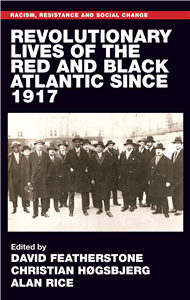
Revolutionary lives of the Red and Black Atlantic brings to light the life histories of a wide range of radical figures whose political activity in relation to the black liberation struggle was profoundly shaped by the global impact and legacy of the Russian Revolution of October 1917. The volume introduces new perspectives on the intellectual trajectories of well-known figures and critical activists including C. L. R. James, Paul Robeson, Walter Rodney and Grace P. Campbell. This biographical approach brings a vivid and distinctive lens to bear on how racialised social and political worlds were negotiated and experienced by these revolutionary figures, and on historic black radical engagements with left political movements, in the wake of the Russian Revolution.
Trusted Partner

This book explores how fishers make the sea productive through their labour, using technologies ranging from wooden boats to digital GPS plotters to create familiar places in a seemingly hostile environment. It shows how their lives are affected by capitalist forces in the markets they sell to, forces that shape even the relations between fishers on the same boat. Fishers frequently have to make impossible choices between safe seamanship and staying afloat economically, and the book describes the human impact of the high rate of deaths in the fishing industry. The book makes a unique contribution to understanding human-environment relations, examining the places fishers create and name at sea, as well as technologies and navigation practices. It combines phenomenology and political economy to offer new approaches for analyses of human-environment relations and technologies. It contributes to the social studies of fisheries through an analysis of how deeply fishing practices and social relations are shaped by political economy. It will be read in universities by social scientists and anthropologists and also by those with an interest in maritime Scotland.
Trusted Partner


From insects to fish as well as birds and primates: the use of tools is amazingly widespread in the animal kingdom. It’s a misnomer to presume that humans are distinguished by tool use and conscious capacity. So where is culture initiated? The biologist Peter-René Becker has evaluated numerous studies and cites plenty of evidence for the use of the hammer and anvil, lances, bait or sponges. Animals also use “tools as social implements”. Ultimately, the depth of man’s conscience singles him out from other animals.
Trusted Partner

Colouring the Caribbean offers the first comprehensive study of Agostino Brunias's intriguing pictures of colonial West Indians of colour - so called 'Red' and 'Black' Caribs, dark-skinned Africans and Afro-Creoles, and people of mixed race - made for colonial officials and plantocratic elites during the late-eighteenth century. Although Brunias's paintings have often been understood as straightforward documents of visual ethnography that functioned as field guides for reading race, this book investigates how the images both reflected and refracted ideas about race commonly held by eighteenth-century Britons, helping to construct racial categories while simultaneously exposing their constructedness and underscoring their contradictions. The book offers provocative new insights about Brunias's work gleaned from a broad survey of his paintings, many of which are reproduced here for the first time.
Trusted Partner
Living with water brings together sociologists, geographers, artists, writers and poets to explore the ways in which water binds, immerses and supports us. Drawing from international research on river crossings, boat dwelling, wild swimming, sea fishing, and drought impacts, and navigating urban waters, glacial lagoons, barrier reefs and disappearing tarns, the collection illuminates the ways that we live with and without water, and explores how we can think and write with water on land. Water offers a way of attending to emerging and enduring social and ecological concerns and making sense of them in lively and creative ways. By approaching Living with water from different disciplinary and methodological perspectives, and drawing on research from around the world, this collection opens up discussions that reinvigorate and renew previously landlocked debates. This book is relevant to United Nations Sustainable Development Goal 6, Clean water and sanitation
Trusted Partner

Consumers stand perplexed at the fish counter. Cod or salmon; mackerel or sea bass? Or perhaps rather carp and trout? How about flounder and dab? Dab what? A terrific flatfish, but sadly hardly anyone has heard of it. And what was it again about organic, aquaculture, wild-caught, and that little blue sustainability certificate? Is catching your own a way out? Before you start thinking it’s time to opt for a chop and fried potatoes instead, read this book. It provides readers with deep blue facts from the world’s waters and analyses the global and local habitat of the finned creature.
Trusted Partner
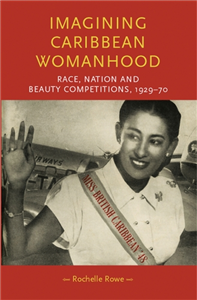
Over fifty years after Jamaican and Trinidadian independence, Imagining Caribbean womanhood examines the links between beauty and politics in the Anglophone Caribbean, providing a first cultural history of Caribbean beauty competitions, spanning from Kingston to London. It traces the origins and transformation of female beauty contests in the British Caribbean from 1929 to 1970, through the development of cultural nationalism, race-conscious politics and decolonisation. The beauty contest, a seemingly marginal phenomenon, is used to illuminate the persistence of racial supremacy, the advance of consumer culture and the negotiation of race and nation through the idealised performance of cultured, modern beauty. Modern Caribbean femininity was intended to be politically functional but also commercially viable and subtly eroticised.
Trusted Partner
This edited volume reframes the Caribbean as a paradigm of ecological resilience and creativity by bringing together the voices of contemporary artists and scholars who are at the forefront of environmental activism in the region and across its diasporas. While dominant narratives percolating from the environmental sciences to the mainstream press present the Caribbean as a frontier of planetary disaster, the contributors to this volume show how the region offers radical models for overcoming the environmental challenges of the present. At the heart of this argument lies the history of the Caribbean as a centre for grassroots forms of anti-colonial and anti-capitalist resistance founded upon nature-centred cosmologies and practices. Caribbean Eco-Aesthetics shows how contemporary artists are mobilising this radical heritage in a bid to unlock alternative planetary futures.
Trusted Partner
Trusted Partner
 Trusted Partner

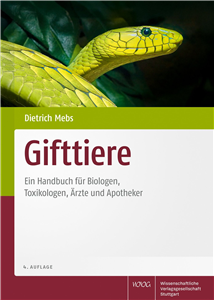
From slithering snakes and creepy-crawly spiders to glowing jellyfish – venomous creatures evoke both fear and fascina- tion. Over millions of years, they have evolved remarkable defence mechanisms and lethal cocktails. Their poisons are used to capture and break down their prey. However, due to improper handling or lack of awareness, they can also pose a threat to humans. This book explores the fascinating world of venomous creatures on land and in the sea – and uncovers their secrets: • Where do bites, stings and poisonings pose a risk? • What substances do animal venoms contain and how do they act? • How should first aid be administered and how are poisonings treated? The 4th edition has been expanded to include additional venomous species, along with fascinating new case studies and illustrations. Discover the captivating world of nature’s poisonous creatures – well worth the risk! Target group: Biologists, toxicologists, pharmacists, physicians, travellers (also off the beaten track), scuba divers, nature lovers, interested laymen
Trusted Partner
Ireland, slavery and the Caribbean is a complex and ground-breaking collection of essays. Grounded in history, it integrates perspectives from art historians, architectural and landscape historians, and literary scholars to produce a genuinely interdisciplinary collection that spans from 1620-1830: the high point of European colonialism. By exploring imperial, national and familial relationships from their building blocks of plantation, migration, property and trade, it finds new ways to re-create and question how slavery made the Atlantic world.
Trusted Partner

Jack Tar to Union Jack examines the intersection between empire, navy, and manhood in British society from 1870 to 1918. Through analysis of sources that include courts-martial cases, sailors' own writings, and the HMS Pinafore, Conley charts new depictions of naval manhood during the Age of Empire, a period which witnessed the radical transformation of the navy, the intensification of imperial competition, the democratisation of British society, and the advent of mass culture. Jack Tar to Union Jack argues that popular representations of naval men increasingly reflected and informed imperial masculine ideals in Victorian and Edwardian Britain. Conley shows how the British Bluejacket as both patriotic defender and dutiful husband and father stood in sharp contrast to the stereotypic image of the brave but bawdy tar of the Georgian navy. This book will be essential reading for students of British imperial history, naval and military history, and gender studies.
Trusted Partner

In the wake of 9/11, the Asian crisis and the 2004 tsunami, traditional analytical frameworks are increasingly unable to explain how individuals and communities are rendered insecure, or advance individual, global or environmental security. In the Asia-Pacific, the accepted wisdom of realism has meant that analyses rarely move beyond the statist, militarist and exclusionary assumptions that underpin traditional realpolitik. This innovative new book challenges these limitations and addresses the missing problems, people and vulnerabilities of the Asia-Pacific region. It also turns a critical eye on traditional interstate strategic dynamics. Critical security in the Asia-Pacific applies both a critical theoretical approach that interrogates the deeper assumptions underpinning security discourses, and a human-centred policy approach that focuses on the security, welfare and emancipation of individuals and communities. Leading Asia-Pacific researchers combine to apply these frameworks to the most pressing issues in the region, from the Korean peninsula to environmental change, Indonesian conflict, the 'war on terror' and the plight of refugees. The result is a sophisticated and accessible account of often-neglected realities of marginalization in the region, and a compelling argument for the empowerment and security of the most vulnerable.
Trusted Partner
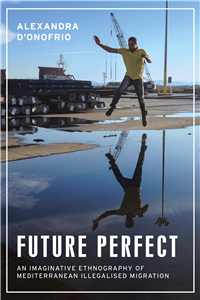
The present volume emerges from a practice-based research that focuses on experiences of migration and border crossing during what are perceived as existential 'turning points' by the protagonists themselves. It recognizes the fundamental role that imagination plays in people's perceptions of reality, in their decisions and actions, and finally in the way they narrate their experiences. As a consequence, it makes a stance for ethnographic practice to include more creative and collaborative methodologies in order to explore such intangible and unstructured realms of existence. In particular, this ethnography developed theoretically and methodologically in close collaboration with a group of Egyptian men who crossed the Mediterranean Sea in search of better living opportunities in Italy, by engaging them through a range of the co-creative processes such as theatre improvisations, storytelling practices, collaborative filmmaking and participatory animation.
Trusted Partner

Flea dermatitis in dogs, runny noses in cats, colic in horses – when our four-legged friends suffer, the owners suffer with them and want to find the best possible treatment. Alongside conventional medicine, natural remedies and homoeopathic treatments also offer opportunities for treating animals – but which of them have proved effective? An experienced veterinarian and alternative practitioner draws on his wealth of knowledge and explains ■ Typical clinical pictures with causes, symptoms and their diagnosis ■ Tried and tested proposed treatments from conventional medicine, homoeopathy, phytotherapy and other procedures ■ Basic principles, such as structure and function of organs, nerve and hormone systems, blood circulation Here the reader can quickly find the most effective method of treatment!



