
Your Search Results
-

-

The Endocrine Society
The Endocrine Society is a global organization of 18,000 researchers, educators, and clinicians advancing breakthroughs in hormone science and improving public health.
View Rights Portal
-
Promoted Content

 Humanities & Social SciencesMarch 2017
Rethinking settler colonialism
History and memory in Australia, Canada, Aotearoa New Zealand and South Africa
by Annie Coombes
Rethinking settler colonialism focuses on the long history of contact between indigenous peoples and the white colonial communities who settled in Australia, Aotearoa New Zealand, Canada and South Africa. It interrogates how histories of colonial settlement have been mythologised, narrated and embodied in public culture in the twentieth century (through monuments, exhibitions and images) and charts some of the vociferous challenges to such histories that have emerged over recent years. Despite a shared familiarity with cultural and political institutions, practices and policies amongst the white settler communities, the distinctiveness which marked these constituencies as variously, 'Australian', 'South African', 'Canadian' or 'New Zealander', was fundamentally contingent upon their relationship to and with the various indigenous communities they encountered. In each of these countries these communities were displaced, marginalised and sometimes subjected to attempted genocide through the colonial process. Recently these groups have renewed their claims for greater political representation and autonomy. The essays and artwork in this book insist that an understanding of the political and cultural institutions and practices which shaped settler-colonial societies in the past can provide important insights into how this legacy of unequal rights can be contested in the present. It will be of interest to those studying the effects of colonial powers on indigenous populations, and the legacies of imperial rule in postcolonial societies.
-
Promoted Content
 April 2026
Settler/colonialism in Kashmir
Sovereignty, catastrophe, indigeneity
by Goldie Osuri
Sovereignty, catastrophe, Indigeneity examines Indian rule in occupied Jammu and Kashmir through settler/colonial geopolitics. Engaging with settler colonial, decolonial and Indigenous studies, the book explores how European sovereignty was shaped by settler/colonialism. Settler/colonialism was catastrophic for Indigenous worlds and generated the climate crisis. The book explores how India draws on settler/colonialism's catastrophic mechanisms to rule Kashmir, thus fuelling the climate crisis and participating in the geopolitical settler/colonial world order. Sites of analysis include the India China rivalry, Kashmir's political economy, and India's indigenisation of its Hindu sacred geography in Kashmir. Through this exploration, the author argues for asserting Kashmiri resistance as an Indigenous anti-colonial struggle. The intersections between sovereignty, catastrophe, Indigeneity, and ecology, illuminate Kashmir's place in the geopolitical settler/colonial world order. The book contributes to timely debates regarding settler/colonialism and planetary crises.
-
 Trusted Partner
 Humanities & Social SciencesAugust 2025
Invoking Empire
Imperial citizenship and Indigenous rights across the British World, 1860–1900
by Darren Reid
Invoking Empire examines the histories of Canada, South Africa, Australia, and New Zealand during the transitional decades between 1860-1900, when each gained some degree of self-government yet still remained within the sovereignty of the British Empire. It applies the conceptual framework of imperial citizenship to nine case studies of settlers and Indigenous peoples who lived through these decades to make two main arguments. It argues that colonial subjects adapted imperial citizenship to both support and challenge settler sovereignty, revealing the continuing importance of imperial authority in self-governing settler spaces. It also posits that imperial citizenship was rendered inoperable by a combination of factors in both Britian and the colonies, highlighting the contingency of settler colonialism on imperial governmental structures and challenging teleological assumptions that the rise of settler nation states was an inevitable result of settler self-government.
-
Trusted Partner
 Humanities & Social SciencesDecember 2022
Class, work and whiteness
Race and settler colonialism in Southern Rhodesia, 1919–79
by Nicola Ginsburgh
This book offers the first comprehensive history of white workers from the end of the First World War to Zimbabwean independence in 1980. It reveals how white worker identity was constituted, examines the white labouring class as an ethnically and nationally heterogeneous formation comprised of both men and women, and emphasises the active participation of white workers in the ongoing and contested production of race. White wage labourers' experiences, both as exploited workers and as part of the privileged white minority, offer insight into how race and class co-produced one another and how boundaries fundamental to settler colonialism were regulated and policed. Based on original research conducted in Zimbabwe, South Africa and the UK, this book offers a unique theoretical synthesis of work on gender, whiteness studies, labour histories, settler colonialism, Marxism, emotions and the New African Economic History.
-
Trusted Partner
 Humanities & Social SciencesOctober 2025
Entertaining the empire
London music hall and the export of Britishness
by Andrew Horrall
The stage entertainments known as music hall emerged in mid-Victorian London just as the British began colonising large parts of the world.Settlers recreated this metropolitan popular culture throughout the empire and in places under foreign control. They erected music halls resembling those at home, imported songs and sketches, performed inamateur shows and watched touring professionals. London originals were rewritten as commentaries on local conditions. This activity transformed music hall into a marker of an exclusionary British identity overseas and made colonies look and sound more like Britain. The result was that settlers separated by vast distances were linked by a shared popular culture. The touring circuits and cultural affinities the Victorians created endure to this day.
-
Trusted Partner
 March 2026
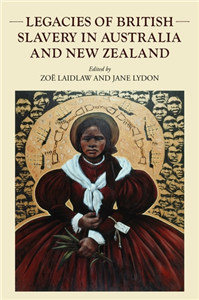
Legacies of British slavery in Australia and New Zealand
by Zoë Laidlaw, Jane Lydon
This book investigates the legacies of British slavery beyond Britain, focusing upon the colonisation of Australia and New Zealand, and explores why this history has been overlooked. After August 1833, when the British Parliament abolished slavery in the British Caribbean, Mauritius and the Cape, the former slave-owners were paid compensation for the loss of their 'property'. New research has begun to show that many beneficiaries had ties to other parts of the British Empire, including the settler colonies of Australia, New Zealand, Canada and South Africa. Through a range of case studies, contributors to this collection trace the movement of people, goods, capital, and practices from the Caribbean to the new Australasian settler colonies. Chapters consider a range of places, people and themes to reveal the varied ways that slavery continued to shape imperial relationships, economic networks, and racial labour regimes after 1833.
-
Trusted Partner
 The ArtsDecember 2024
Engendering an avant-garde
The unsettled landscapes of Vancouver photo-conceptualism
by Leah Modigliani
Engendering an avant-garde is the first book to comprehensively examine the origins of Vancouver photo-conceptualism in its regional context between 1968 and 1990. Employing discourse analysis of texts written by and about artists, feminist critique and settler-colonial theory, the book discusses the historical transition from artists' creation of 'defeatured landscapes' between 1968-71 to their cinematographic photographs of the late 1970s and the backlash against such work by other artists in the late 1980s. It is the first study to provide a structural account for why the group remains all-male. It accomplishes this by demonstrating that the importation of a European discourse of avant-garde activity, which assumed masculine social privilege and public activity, effectively excluded women artists from membership.
-
Trusted Partner
Humanities & Social SciencesSeptember 2024
Settlers at the end of empire
Race and the politics of migration in South Africa, Rhodesia and the United Kingdom
by Jean Smith
Settlers at the end of empire traces the development of racialised migration regimes in South Africa, Rhodesia (present-day Zimbabwe) and the United Kingdom from the Second World War to the end of apartheid in 1994. While South Africa and Rhodesia, like other settler colonies, had a long history of restricting the entry of migrants of colour, in the 1960s under existential threat and after abandoning formal ties with the Commonwealth they began to actively recruit white migrants, the majority of whom were British. At the same time, with the 1962 Commonwealth Immigrants Act, the British government began to implement restrictions aimed at slowing the migration of British subjects of colour. In all three nations, these policies were aimed at the preservation of nations imagined as white, revealing the persistence of the racial ideologies of empire across the era of decolonisation.
-
Trusted Partner
 Humanities & Social SciencesMarch 2017
Science and society in southern Africa
by Saul Dubow
This collection, dealing with case studies drawn from South Africa, Zimbabwe, Mozambique and Mauritius, examines the relationship between scientific claims and practices, and the exercise of colonial power. It challenges conventional views that portray science as a detached mode of reasoning with the capacity to confer benefits in a more or less even-handed manner. That science has the potential to further the collective good is not fundamentally at issue, but science can also be seen as complicit in processes of colonial domination. Not only did science assist in bolstering aspects of colonial power and exploitation, it also possessed a significant ideological component: it offered a means of legitimating colonial authority by counter-poising Western rationality to native superstition and it served to enhance the self-image of colonial or settler elites in important respects. This innovative volume ranges broadly through topics such as statistics, medicine, eugenics, agriculture, entomology and botany.
-
Trusted Partner
Humanities & Social SciencesMarch 2017
Colonial frontiers
by Andrew Thompson, John M. MacKenzie, Kim Latham
Colonial frontiers explores the formation, structure and maintenance of boundaries and frontiers in settler colonies. Drawing on the work of anthropologists, historians, archaeologists and post-colonial theorists, the authors in this fascinating collection explore the importance of cross-cultural interactions in the settler colonies of Australia, New Zealand, South Africa and America. Taking key historical moments to illuminate the formation of new boundaries and the interaction between the settler societies and the indigenous groups, this book raises many important questions about how the empire worked 'on the ground'. Importantly, the collection attempts to theorise the indigenous experience. As we move towards globalisation, borders and boundaries have begun to fall away. This book reminds us that not long ago the frontiers and boundaries were the key sites for cross-cultural interaction. This collection, which includes chapters by John K. Noyes, Nigel Penn, Kay Schaffer and Ian McNiven, is broad in scope and presents an exciting new approach to the issues surrounding group interaction in colonial settings. Students and academics, from backgrounds such as imperial history, anthropology and post-colonial studies, will find this collection extremely valuable.
-
Trusted Partner
 Humanities & Social SciencesMay 2011
Rethinking settler colonialism
by Andrew Thompson, Annie Coombes, John Mackenzie
-
Trusted Partner
-
Trusted Partner
 Humanities & Social SciencesJune 2009
Science and society in southern Africa
by Andrew Thompson, Saul Dubow, John Mackenzie
This collection, dealing with case studies drawn from South Africa, Zimbabwe, Mozambique and Mauritius, examines the relationship between scientific claims and practices, and the exercise of colonial power. It challenges conventional views that portray science as a detached mode of reasoning with the capacity to confer benefits in a more or less even-handed manner. That science has the potential to further the collective good is not fundamentally at issue, but science can also be seen as complicit in processes of colonial domination. Not only did science assist in bolstering aspects of colonial power and exploitation, it also possessed a significant ideological component: it offered a means of legitimating colonial authority by counter-poising Western rationality to native superstition and it served to enhance the self-image of colonial or settler elites in important respects. This innovative volume ranges broadly through topics such as statistics, medicine, eugenics, agriculture, entomology and botany. ;
-
Trusted Partner
 Humanities & Social SciencesOctober 2010
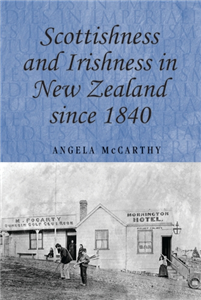
Scottishness and Irishness in New Zealand since 1840
by Angela McCarthy, Andrew Thompson, John Mackenzie
This book examines the distinctive aspects that insiders and outsiders perceived as characteristic of Irish and Scottish ethnic identities in New Zealand. When, how, and why did Irish and Scots identify themselves and others in ethnic terms? What characteristics did the Irish and the Scots attribute to themselves and what traits did others assign to them? Did these traits change over time and if so how? Contemporary interest surrounding issues of ethnic identities is vibrant. In countries such as New Zealand, descendants of European settlers are seeking their ethnic origins, spurred on in part by factors such as an ongoing interest in indigenous genealogies, the burgeoning appeal of family history societies, and the booming financial benefits of marketing ethnicities abroad. This fascinating book will appeal to scholars and students of the history of empire and the construction of identity in settler communities, as well as those interested in the history of New Zealand. ;
-
Trusted Partner
 Humanities & Social SciencesFebruary 2017
Scottishness and Irishness in New Zealand since 1840
by Angela McCarthy, Andrew Thompson, John M. MacKenzie
This book examines the distinctive aspects that insiders and outsiders perceived as characteristic of Irish and Scottish ethnic identities in New Zealand. When, how, and why did Irish and Scots identify themselves and others in ethnic terms? What characteristics did the Irish and the Scots attribute to themselves and what traits did others assign to them? Did these traits change over time and if so how? Contemporary interest surrounding issues of ethnic identities is vibrant. In countries such as New Zealand, descendants of European settlers are seeking their ethnic origins, spurred on in part by factors such as an ongoing interest in indigenous genealogies, the burgeoning appeal of family history societies, and the booming financial benefits of marketing ethnicities abroad. This fascinating book will appeal to scholars and students of the history of empire and the construction of identity in settler communities, as well as those interested in the history of New Zealand.
-
Trusted Partner
 Humanities & Social SciencesJuly 2023
The imperial Commonwealth
Australia and the project of empire, 1867-1914
by Wm. Matthew Kennedy
From the late 1800s to the early 1900s, Australian settler colonists mobilised their unique settler experiences to develop their own vision of what 'empire' was and could be. Reinterpreting their histories and attempting to divine their futures with a much heavier concentration on racialized visions of humanity, white Australian settlers came to believe that their whiteness as well as their Britishness qualified them for an equal voice in the running of Britain's imperial project. Through asserting their case, many soon claimed that, as newly minted citizens of a progressive and exemplary Australian Commonwealth, white settlers such as themselves were actually better suited to the modern task of empire. Such a settler political cosmology with empire at its center ultimately led Australians to claim an empire of their own in the Pacific Islands, complete with its own, unique imperial governmentality.
-
Trusted Partner
-
Trusted Partner
 Humanities & Social SciencesMarch 2025
Spirits of extraction
Christianity, settler colonialism and the geology of race
by Claire Blencowe
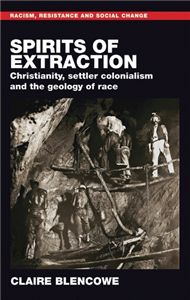
Spirits of extraction revisits the troubling history of socially reformist, ostensibly anti-racist, Christianity and its role in the expansion of the extractive industries, British imperialism, and settler colonialism. The book explores key moments in the history of Methodism and the evangelical movement. Colonial fears, and the attempt to 'civilise savages', were crucial to the movement's foundation in eighteenth-century industrialising Bristol, England. Through the culture of the Cornish mining diaspora of the nineteenth century, Methodism enmeshed with all the complexity of race and labour-structures of the British empire. At the same time, in Anishinaabewaki/Upper Canda/Ontario, Methodist missionaries laid the foundation of abusive education and racialised ideas of redemption that both enable and sacralise the mining industry. Through these histories of our present, the book theorises the relation of religion and education to racism, modernity, biopower, extractivism, and the geology of race.
-
Trusted Partner
 Humanities & Social SciencesJuly 2018
Security sector reform in transforming societies
Croatia, Serbia and Montenegro
by Timothy Edmunds
This book is about the relationship between societies and their security forces at times of great political and societal change. It uses the experiences of Croatia, Serbia and Montenegro to examine the control, management and reform of armed forces, police and intelligence agencies in the aftermath of conflict and authoritarianism. The book assesses the theory and practice of security sector reform programmes in the context of Europe and the Western Balkans, the relationship between security sector reform and normative international policy more generally, and the broader dynamics of post-conflict and post-authoritarian transformation. In so doing it addresses two underlying questions. First, how and in what ways does reform in the security sector interrelate with processes of domestic political and societal transformation, particularly democratisation. Second, how and in what ways do these processes relate and respond to internationally-driven efforts to promote a particular type of security sector reform as a component of wider peacebuilding and democracy promotion strategies.
-
Trusted Partner
 Humanities & Social SciencesJuly 1999
Britain in China
by Robert Bickers, Andrew Thompson, John Mackenzie
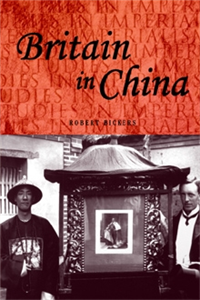
This is a study of Britain's presence in China both at its peak, and during its inter-war dissolution in the face of assertive Chinese nationalism and declining British diplomatic support. Using archival materials from China and records in Britain and the United States, the author paints a portrait of the traders, missionaries, businessmen, diplomats and settlers who constituted "Britain-in-China", challenging our understanding of British imperialism there. Bickers argues that the British presence in China was dominated by urban settlers whose primary allegiance lay not with any grand imperial design, but with their own communities and precarious livelihoods. This brought them into conflict not only with the Chinese population, but with the British imperial government. The book also analyzes the formation and maintenance of settler identities, and then investigates how the British state and its allies brought an end to the reign of freelance, settler imperialism on the China coast. At the same time, other British sectors, missionary and business, renegotiated their own relationship with their Chinese markets and the Chinese state and distanced themselves from the settler British. ;


