Your Search Results

      • China Social Sciences Press

        Established in June, 1978, China Social Sciences Press is sponsored by Chinese Academy of Social Sciences. CSSP is a national level publishing house focusing on academic publications mainly in the field of humanities and social sciences. In 1993, CSSP won the honorary title of “national outstanding press” granted by Propaganda Department of CPC and General Administration of Press and Publication.The missions and the publication targets of CSSP are: first, editing and publishing the most outstanding academic results of CASS and great achievements from the fields of social sciences and culture circle in China, including academic works, text books, reference books and popular books; second, translating Chinese versions of significant humanities and social sciences books written by western authors.

        View Rights Portal
      • Strange Days Books, Social Cooperative Enterprise

        Strange Days Books is a social cooperative publishing firm based in Crete, Greece. Since 2012 we have published almost 100 books. Every year we organize Sand Festival, an online Writers’ Workshop and - in cooperation with www.eyelands.gr literary magazine - the one and only international short story competition based in Greece, plus our International Book Awards. In 2019 SDB was the only publishing house in Greece to receive approval by the European Union’s Creative Europe translation funding program for its project "Strange Days in Europe”. Strange Days Books is an entirely independent publisher, primarily interested in showcasing the wealth of new writing voices in Greece. We work closely with our authors to create books that will appeal to booklovers, books about the present, books that strive to push the art of literature forward, books written with talent and passion, books that challenge the way we see the world, books bursting with new ideas and intriguing perspectives.

        View Rights Portal
      • Trusted Partner
        Humanities & Social Sciences
        November 2024

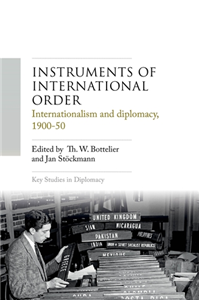
        Instruments of international order

        Internationalism and diplomacy, 1900-50

        by Thomas W. Bottelier, Jan Stöckmann

        During the first half of the twentieth century, world politics was reshaped in pursuit of a new international order. The ideological foundations of the 'new diplomacy' (and its fate during the interwar period) are well known. This book instead examines the practices of internationalism and diplomacy from the First Hague Conference of 1899 to the aftermath of the Second World War. By focusing on these practices, such as disarmament regimes or public diplomacy, and their use as instruments to build international order(s), it emphasises the constructed, contested, and experimental character of what subsequently became a standard repertoire of international politics. Essays from a range of interdisciplinary scholars address well-established principles such as self-determination, and also less prominent practices such as small arms control or parliamentary inquiry. The book makes a major contribution to the growing historiography on twentieth-century internationalism.

      • Trusted Partner
        Humanities & Social Sciences
        June 2026

        Instruments of international order

        Internationalism and diplomacy, 1900-50

        by Th. W. Bottelier, Jan Stöckmann

        During the first half of the twentieth century, world politics was reshaped in pursuit of a new international order. The ideological foundations of the 'new diplomacy' (and its fate during the interwar period) are well known. This book instead examines the practices of internationalism and diplomacy from the First Hague Conference of 1899 to the aftermath of the Second World War. By focusing on these practices, such as disarmament regimes or public diplomacy, and their use as instruments to build international order(s), it emphasises the constructed, contested, and experimental character of what subsequently became a standard repertoire of international politics. Essays from a range of interdisciplinary scholars address well-established principles such as self-determination, and also less prominent practices such as small arms control or parliamentary inquiry. The book makes a major contribution to the growing historiography on twentieth-century internationalism.

      • Trusted Partner
        Humanities & Social Sciences
        April 2026

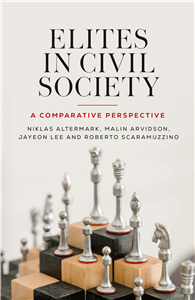
        Elites in civil society

        A comparative perspective

        by Niklas Altermark, Malin Arvidson, Jayeon Lee, Roberto Scaramuzzino

        Where civil society is often seen as a driving force for equality, this book addresses a challenging topic: civil society elites. Drawing on a comprehensive study of Italy, Poland, Sweden, and the UK, this ground-breaking research investigates the often-overlooked power structures within civil society. By combining elite studies with civil society research, the book uncovers how a distinct civil society elite emerges and how it interacts with leaders in politics and business. The findings reveal a fascinating paradox. While this elite may be a powerful engine for social change, its integration into wider power circles risks reproducing the very inequalities it seeks to dismantle. By exploring how this elite can become disconnected from its grassroots, the book provides essential insights into the future of civil society and its democratic promise.

      • Trusted Partner
        Humanities & Social Sciences
        February 2013

        Comedy, caricature and the social order, 1820–50

        by Brian Maidment

        Offering an overview of the marketplace for comic images between 1820 and 1850, this book makes a case for the interest and importance of a largely neglected area of visual culture. It considers the impact on the development of print culture of the emergent, but soon widespread, use of lithography and wood engraving, both capable of integrating texts and images cheaply and imaginatively on the printed page. Drawing on a wide range of commercially produced print genres, including song books, play-texts, comic annuals and magazines as well as single plate and series of caricatures, this book traces the ways in which Regency and early Victorian visual humour both sustains some of the characteristics of an earlier caricature tradition while also beginning to develop new ways of analyzing and coping with social change through comic forms and genres. ;

      • Trusted Partner
        Humanities & Social Sciences
        January 2013

        Crime, Law and Society in the Later Middle Ages

        by Anthony Musson, Edward Powell

        This book provides an accessible collection of translated legal sources through which the exploits of criminals and developments in the English criminal justice system (c.1215-1485) can be studied. Drawing on the wealth of archival material and an array of contemporary literary texts, it guides readers towards an understanding of prevailing notions of law and justice and expectations of the law and legal institutions. Tensions are shown emerging between theoretical ideals of justice and the practical realities of administering the law during an era profoundly affected by periodic bouts of war, political in-fighting, social dislocation and economic disaster. Introductions and notes provide both the specific and wider legal, social and political contexts in addition to offering an overview of the existing secondary literature and historiographical trends. This collection affords a valuable insight into the character of medieval governance as well as revealing the complex nexus of interests, attitudes and relationships prevailing in society during the later Middle Ages.

      • Trusted Partner
        2019

        History of the Throw-Away Society

        The drawback of consumption

        by Wolfgang König

        Sooner or later everything is thrown away. In the consumer society, however, usable and serviceable products that may be as good as new are also thrown away. Such behaviour is the result of a long-term process that has developed over a period of one-and-a-half centuries. The change was led by the USA, and the Federal Republic of Germany followed. It started at the turn of the last century with personal hygiene: articles such as toilet paper, sanitary towels, nappies and paper handkerchiefs. After the Second World War, a large number of other disposable articles were soon added, such as paper cups and plastic dishes, nylon stockings and pens, razor blades, beverage cans and much more besides. Wolfgang König shows how business and consumers have together made throwing things away perfectly normal – and discusses how the throwaway society may be overcome.

      • Trusted Partner
        Humanities & Social Sciences
        January 2018

        Noble society

        Five lives from twelfth-century Germany

        by Jonathan R. Lyon

        This book provides scholars and students alike with a set of texts that can deepen their understanding of the culture and society of the twelfth-century German kingdom. The sources translated here bring to life the activities of five noblemen and noblewomen from Rome to the Baltic coast and from the Rhine River to the Alpine valleys of Austria. To read these five sources together is to appreciate how interconnected political, military, economic, religious and spiritual interests could be for some of the leading members of medieval German society-and for the authors who wrote about them. Whether fighting for the emperor in Italy, bringing Christianity to pagans in what is today northern Poland, or founding, reforming and governing monastic communities in the heartland of the German kingdom, the subjects of these texts call attention to some of the many ways that noble life shaped the world of central medieval Europe.

      • Trusted Partner
        Business, Economics & Law
        January 2024

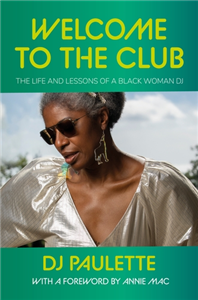
        Welcome to the club

        The life and lessons of a Black woman DJ

        by DJ Paulette

        In Welcome to the club, Manchester legend DJ Paulette shares the highs, lows and lessons of a thirty-year music career, with help from some famous friends. One of the Haçienda's first female DJs, Paulette has scaled the heights of the music industry, playing to crowds of thousands all around the world, and descended to the lows of being unceremoniously benched by COVID-19, with no chance of furlough and little support from the government. Here she tells her story, offering a remarkable view of the music industry from a Black woman's perspective. Behind the core values of peace, love, unity and respect, dance music is a world of exclusion, misogyny, racism and classism. But, as Paulette reveals, it is also a space bursting at the seams with powerful women. Part personal account, part call to arms, Welcome to the club exposes the exclusivity of the music industry while seeking to do justice to the often invisible women who keep the beat going.

      • Trusted Partner
        Humanities & Social Sciences
        March 2026

        Negotiating identity conflicts in a fragmenting world order

        by Paul Willem Meerts, Mark Anstey

        At every level of human interaction new levels of identity-based tension are in evidence. Contributors to this book explore facets of fragmentation processes within systems of state and interstate organisation, how they influence the use of negotiation, and how negotiation might be used to effect renewed coherence. Following Anstey's (Ch1) introductory chapter framing the nature and shape of fragmentation dynamics, Zartman (Ch 2) argues that the use of negotiation as a process of conflict resolution is deeply shaped by identity groups whose internal coherence is dependent on sustaining a negative identity of others. International relations are no longer solely the realm of experienced diplomats but are shaped as Meerts (Ch3) points out by politicians seeking to be responsive to voting publics rather than wider concerns. Anstey digs into problems of fragmentation (Ch. 4) and Troitskiy (Ch 5) points out how a reluctant acceptance of the power of 'the other' can lead to a form of strategic stability in relations. Anstey and Meerts (Ch 6) point out in their analysis of the Israeli-Palestinian case as an identity conflict turned very bad. Guggenbuhl (Ch 7 ) reveals how structures and processes have been designed within the EU to prevent, contain and regulate conflicts to limit risks of confrontation and fragmentation. Schuessler (Ch 8) to advocates a shift away from a template or roadmap approach to EU membership to a cohesion based on non-dominance. There is still a strong desire on the part of some states, like Northern Macedonia, to become EU members, as reflected in Manton's (Ch 9). Paula Garzon and Frans Schram explain the success of the Colombia Peace Negotiations (Ch 10), while Odigie and da Rocha (Ch 11) analyse the struggle faced by ECOWAS to influence coup leaders in Mali to return to constitutional government and changes of government by constitutional means. Liang (Ch12) discusses how the internet as the modern vehicle of inter-state, inter-group and interpersonal communication has become weaponised. In Ch 13 Anstey draws some lessons from contributions to the compilation.

      • Trusted Partner
      • Trusted Partner
        Business, Economics & Law
        June 2025

        Foundations of social ecological economics

        The fight for revolutionary change in economic thought

        by Clive L Spash

        This book explores radical dissent from orthodox mainstream economics, and sets out a theoretically grounded vision for the emerging paradigm of social ecological economics. At the heart of this paradigmatic shift lies an acknowledgement of the inextricable embeddedness of economies in biophysical reality and social structure. The struggle for this transformative vision unfolds through a critical examination of mainstream environmental thought, followed by a nuanced evaluation of contributions from Marxists, socialists, critical institutionalists, feminists and Post-Keynesians grappling with the urgent environmental crisis. Synthesising insights from these diverse and heterodox schools, the book navigates the philosophical underpinnings of science, embracing a critical realist approach that challenges not only mainstream economic thought but also eclectic pluralism, relativism and strong constructionism. The question of what constitutes revolutionary science is explored in light of works by Kuhn, Schumpeter and Neurath, emphasising the pivotal role of values and ideology in works from Marx to Gramsci. Building on these radical and philosophical foundations, the book articulates a preanalytic vision of social ecological economics, dismantling entrenched notions of growth and efficiency in favour of a framework centered on social provisioning and needs embedded in ethics. In a thought-provoking conclusion, the book applies its analytical lens to the multiple crises of modernity within industrialised capital-accumulating economies. An agenda for social ecological transformation toward diverse alternative economies emerges, providing a compelling call to action in the face of contemporary challenges.

      • Trusted Partner
        Humanities & Social Sciences
        January 2026

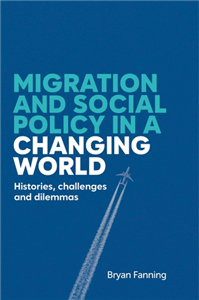
        Migration and social policy in a changing world

        Histories, challenges and dilemmas

        by Bryan Fanning

        Migration and social policy in a changing world bridges the generally separate fields of social policy and migration studies. This book traces social policy responses to migration from the Industrial Revolution to today's era of globalisation and large-scale migration. Through case studies from across the globe, the book explores key themes including rural-urban migration, social citizenship, welfare internationalism and diasporic care systems. It examines how migrants are included in or excluded from social citizenship in host societies, and how they become providers of welfare services such as health and social care. Moving beyond a methodological nationalist focus, the book investigates migrant incorporation into welfare states through family networks, faith communities, and other informal welfare structures. It combines migrants' experiences with host societies' immigration politics, institutional perspectives and policies to present a comprehensive analysis of the migration-welfare relationship. This volume fills a gap in academic literature and offers policymakers, practitioners and scholars a framework for understanding the interplay between migration and social policy in our changing world.

      • Trusted Partner
        Humanities & Social Sciences
        March 2017

        Science and society in southern Africa

        by Saul Dubow

        This collection, dealing with case studies drawn from South Africa, Zimbabwe, Mozambique and Mauritius, examines the relationship between scientific claims and practices, and the exercise of colonial power. It challenges conventional views that portray science as a detached mode of reasoning with the capacity to confer benefits in a more or less even-handed manner. That science has the potential to further the collective good is not fundamentally at issue, but science can also be seen as complicit in processes of colonial domination. Not only did science assist in bolstering aspects of colonial power and exploitation, it also possessed a significant ideological component: it offered a means of legitimating colonial authority by counter-poising Western rationality to native superstition and it served to enhance the self-image of colonial or settler elites in important respects. This innovative volume ranges broadly through topics such as statistics, medicine, eugenics, agriculture, entomology and botany.

      • Trusted Partner
        March 2021

        Right to Dementia

        A plea

        by Thomas Klie

        People are living longer, and people are developing dementia. But our consumer society, which is optimised for working silently, is helpless in the face of those who have gone mad from its midst. The burden of caring for them is borne largely by their dependants and by carers from Eastern Europe. In his extremely stirring book, Professor Thomas Klie argues that we should include people with dementia as part of our lives and recognise that it is possible to live a happy and fulfilled life even with dementia – under the right conditions. Especially in the light of societal conflicts over income distribution fuelled by the corona pandemic, Klie is convinced that the dominant culture is measured by how it treats the subject of dementia.

      • Trusted Partner
        Humanities & Social Sciences
        December 2017

        Comedy, caricature and the social order, 1820–50

        by Brian Maidment

      • Trusted Partner
        February 2010

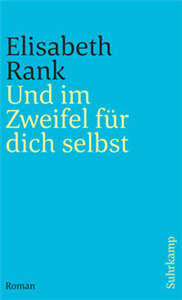
        Und im Zweifel für dich selbst

        Roman

        by Elisabeth Rank

        Wenn man zwanzig ist und nie auf die Idee kommen würde, jeden Tag so zu leben, als wäre es der letzte – wie geht man dann mit dem Tod des Geliebten um? Als Lenes Freund Tim bei einem Autounfall stirbt, bricht die Existenz von Lene und Tonia in Stücke. Berlin, Prüfungen, Partys – nichts in ihrem Leben ist bislang besonders schwerwiegend gewesen. »Nutze den Tag« war nur ein hübscher Spruch in Schönschrift. Als sie plötzlich mit einem schrecklichen Verlust klarkommen müssen, setzen sie sich ins Auto und fahren los, erst mal nur weg, kreuz und quer durchs sommerlich heiße Mecklenburg, Hauptsache nicht zurück, denn zu Hause wird alles anders sein. Doch am Meer geht es nicht mehr weiter, und Tonia, die Erzählerin, begreift: So sehr man glaubt, die Welt bleibt stehen, es geht immer weiter. Für die anderen, die noch da sind. Für die neue Liebe. Und im Zweifel für sich selbst. Elisabeth Ranks literarisches Debüt ist ein Generationenporträt und der Roman eines Lebensgefühls: die Geschichte der ersten echten Krise im Erwachsenenleben, erzählt als Roadstory.

      • Trusted Partner
        September 2014

        Der Grund ist Fußball

        Fotografische Begegnungen in den Stadien der Welt

        by Rank, Jürgen

      • Trusted Partner
        Humanities & Social Sciences
        April 1999

        French society in revolution 1789–1799

        by David Andress, Mark Greengrass

        French society in revolution aims to retrieve the social history of the French Revolution from unjustified neglect. This study examines both the structural and cultural elements behind the breakdown of the eighteenth-century monarchic state and its aris. . . . ;

      Subscribe to our

      newsletter