
Teacher Created Materials
Teacher Created Materials publishes innovative, imaginative, and award-winning resources for teachers, parents, and students in all subjects for ages 4-18 worldwide.
View Rights Portal
Teacher Created Materials publishes innovative, imaginative, and award-winning resources for teachers, parents, and students in all subjects for ages 4-18 worldwide.
View Rights Portal
For over 40 years, Teacher Created Materials (TCM) has published innovative and imaginative resources for teachers and students, bringing exceptional curriculum content to classrooms worldwide. Our award-winning resources are sold and licensed in 89 countries. Everything we publish is created and approved by teachers. All our leveled reading books and curriculum kits are designed to engage students, improve literacy and reading comprehension, build content knowledge, and develop critical-thinking skills.
View Rights Portal
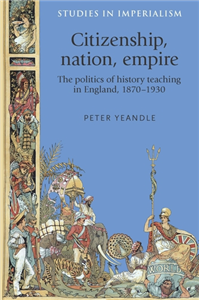
Citizenship, nation, empire investigates the extent to which popular imperialism influenced the teaching of history between 1870 and 1930. It is the first book-length study to trace the substantial impact of educational psychology on the teaching of history, probing its impact on textbooks, literacy primers and teacher-training manuals. Educationists identified 'enlightened patriotism' to be the core objective of historical education. This was neither tub-thumping jingoism, nor state-prescribed national-identity teaching, but rather a carefully crafted curriculum for all children which fused civic as well as imperial ambitions. The book will be of interest to those studying or researching aspects of English domestic imperial culture, especially those concerned with questions of childhood and schooling, citizenship, educational publishing and anglo-British relations. Given that vitriolic debates about the politics of history teaching have endured into the twenty-first century, Citizenship, nation, empire is a timely study of the formative influences that shaped the history curriculum in English schools
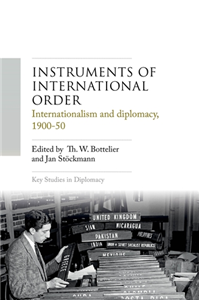
During the first half of the twentieth century, world politics was reshaped in pursuit of a new international order. The ideological foundations of the 'new diplomacy' (and its fate during the interwar period) are well known. This book instead examines the practices of internationalism and diplomacy from the First Hague Conference of 1899 to the aftermath of the Second World War. By focusing on these practices, such as disarmament regimes or public diplomacy, and their use as instruments to build international order(s), it emphasises the constructed, contested, and experimental character of what subsequently became a standard repertoire of international politics. Essays from a range of interdisciplinary scholars address well-established principles such as self-determination, and also less prominent practices such as small arms control or parliamentary inquiry. The book makes a major contribution to the growing historiography on twentieth-century internationalism.
 Trusted Partner

During the first half of the twentieth century, world politics was reshaped in pursuit of a new international order. The ideological foundations of the 'new diplomacy' (and its fate during the interwar period) are well known. This book instead examines the practices of internationalism and diplomacy from the First Hague Conference of 1899 to the aftermath of the Second World War. By focusing on these practices, such as disarmament regimes or public diplomacy, and their use as instruments to build international order(s), it emphasises the constructed, contested, and experimental character of what subsequently became a standard repertoire of international politics. Essays from a range of interdisciplinary scholars address well-established principles such as self-determination, and also less prominent practices such as small arms control or parliamentary inquiry. The book makes a major contribution to the growing historiography on twentieth-century internationalism.
Trusted Partner
This volume offers new practical and theoretical perspectives on one of the most complex questions regarding the formation of international law, namely that actors other than states contribute to the making of customary international law. Notwithstanding the International Law Commission's valuable contribution, the making of customary international law remains riddled with acute practical and theoretical controversies that continue to be intensively debated. Making extensive reference to the case-law of international law courts and tribunals, as well as the most recent scholarly work on customary international law, this volume provides a comprehensive study of the contribution of international organisations and non-state actors to the formation of customary international law. With innovative tools and guidance for law students, legal scholars, and researchers in law, as well as legal practitioners, advisers, judges, arbitrators, and counsels, this collection is essential reading for those wishing to understand and address contemporary questions of international law-making.
Trusted Partner
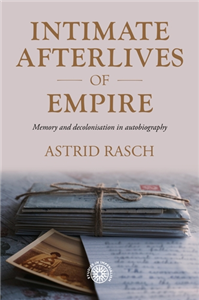
Through close readings of almost twenty autobiographies written after the break-up of the British Empire, the book examines how individuals engage with the changing narrative landscape brought about by decolonisation. It considers the autobiographies less for what they may teach us about the moment remembered and more as windows on the act of remembering. This adds a crucial dimension to our understanding of the legacies of colonialism and how the ongoing process of decolonisation is reflected on the level of the individual. It argues that autobiographers are at once influenced by and seek to influence the cultural memory of empire and its legacies, and the authors' own position in both. Situated at the intersection of imperial/decolonisation history, memory studies, and life writing studies, the book uncovers this intimate afterlife of empire.
Trusted Partner


Sie sind nur noch zu dritt und sie sind geschwächt. Aber sie wollen überleben – um jeden Preis. Zweifel überschatten den Kampf gegen das Labyrinth, das mit immer neuen Mysterien für die Jugendlichen aufwartet. Ihr mühsam erworbener Teamgeist scheint nicht zu brechen, doch lohnt sich für Jeb, Jenna und Mary der gemeinsame Kampf, wenn nur einer von ihnen überleben kann? Die entscheidende Frage aber wagt niemand zu stellen: Was erwartet den letzten Überlebenden hinter dem sechsten Tor? „Aus dem Labyrinth gibt es kein Entkommen, es hat mir den Schlaf geraubt. Spannender geht’s nicht.“ Ursula Poznanski „Das Labyrinth erwacht“ (Band 1 der Trilogie) wurde ausgezeichnet mit den Leserpreisen „Segeberger Feder“ und „Ulmer Unke“. Nominiert für die Leserpreise „Buxtehuder Bulle“ und „Goldene Leslie“. Alle Bände der Labyrinth-Tetralogie:Das Labyrinth erwacht (1)Das Labyrinth jagt dich (2)Das Labyrinth ist ohne Gnade (3)Das Labyrinth vergisst nicht (4)
Trusted Partner
Was there international law in the Middle Ages? Using treaties as its main source, this book examines the extent to which such a system of rules was known and followed in the period 700 to 1200. It considers how consistently international legal rules were obeyed, whether there was a reliance on justification of action and whether the system had the capacity to resolve disputed questions of fact and law. The book further sheds light on issues such as compliance, enforcement, deterrence, authority and jurisdiction, challenging traditional ideas over their role and function in the history of international law. International law in Europe, 700-1200 will appeal to students and scholars of medieval Europe, international law and its history, as well as those with a more general interest in warfare, diplomacy and international relations.
Trusted Partner
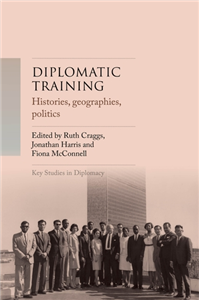
Despite the essential role diplomatic training plays in the everyday workings of international relations, international law and in the various multilateral organisations, this practice has received little critical attention in the humanities, social and political sciences. Bringing together detailed accounts of the histories, development and contemporary practices of diplomatic training with insights from key practitioners, this edited collection places training centrally within our understanding of international relations. It argues that diplomatic training both reflects and reproduces hegemonic power relations, whilst at the same time offering opportunities to contest them, and imagine alternative futures. The book includes a substantive introduction, nine full-length chapters from a range of disciplinary and regional perspectives drawing on archival research, oral history, interviews, and ethnographic methods, and four 'interventions': reflection pieces from trainers and directors of training programmes. It offers a globe-spanning, interdisciplinary account of the politics of diplomatic training and appeals to both scholarly and practitioner audiences.
Trusted Partner
Why are constitutionalist ideals so prominent in science fiction? Does Independence Day depict self-defence as a legal concept with absolute limits? Is international law lost in space? This innovative interdisciplinary volume represents the first exploration of the relationship between international law and cinema. From Star Wars to Werner Herzog, The Godfather to The West Wing, this book uncovers a diverse range of representations of international law and its norms in film and television. Examining the wider links between international law, cinema, and ideology, the contributions not only examine visual representations of international law, but they offer an essential insight into the functions fulfilled by these cinematic representations. Providing an extraordinary introduction to a variety of perspectives on core international legal questions, Cinematic perspectives on international law extends a valuable methodology by which international lawyers can critique the depiction of international law in film.
Trusted Partner
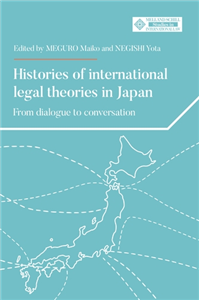
This volume presents the first systematic account of Japanese international legal theory; edited by Japanese scholars, the volume traces thirteen influential scholars and spans over a century. It examines how theorists positioned outside international law's Western centre developed sophisticated frameworks to address tensions between Western modernity and their own experiences. The book's central contribution proposes 'conversation'-continuous engagement that respects differences between legal traditions-as an alternative to 'dialogue', which often reproduces existing hierarchies by assuming all perspectives can be reconciled. Through detailed intellectual biographies across six historical periods, contributors reveal how Japanese scholars strategically employed legal positivism, articulated transcivilizational perspectives, and developed concepts of normative multilateralism. Addressed at scholars of international law, legal theory, and comparative legal traditions, this volume demonstrates that the discipline's future requires genuinely reciprocal exchange where diverse perspectives can coexist productively.
Trusted Partner
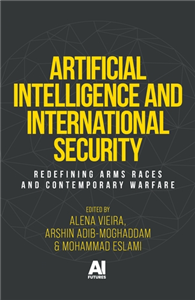
As artificial intelligence continues to transform modern warfare, the rapid development of AI-driven weaponry presents profound ethical, legal, and security challenges. Artificial Intelligence and International Security: Redefining Arms Races and Contemporary Warfare offers a critical examination of this emerging arms race, exploring issues of arms control, international law, diplomacy, and long-term security. Bringing together expert perspectives, this volume assesses the risks and implications of autonomous weapon systems while proposing solutions to ensure ethical AI deployment. Through a comprehensive analysis of this urgent issue, it seeks to contribute to global debates and inform policies that foster peace, stability, and the responsible use of AI in warfare.
Trusted Partner

This topical and innovative study is the first book on Algerian cinema to be published in English since the 1970s. At a time when North African and Islamic cultures are of increasing political significance, Algerian National Cinema presents a dynamic, detailed and up to date analysis of how film has represented this often misunderstood nation. Algerian National Cinema explores key films from The Battle of Algiers (1966) to Mascarades (2007). Introductions to Algerian history and to the national film industry are followed by chapters on the essential genres and themes of filmmaking in Algeria, including films of anti-colonial struggle, representations of gender, Berber cinema, and filming the 'black decade' of the 1990s. This thoughtful and timely book will appeal to all interested in world cinemas, in North African and Islamic cultures, and in the role of cinema as a vehicle for the expression of contested identities. By the author of the critically-acclaimed Contemporary French Cinema.
Trusted Partner

This topical and innovative study is the first book on Algerian cinema to be published in English since the 1970s. At a time when North African and Islamic cultures are of increasing political significance, Algerian National Cinema presents a dynamic, detailed and up to date analysis of how film has represented this often misunderstood nation. Algerian National Cinema explores key films from The Battle of Algiers (1966) to Mascarades (2007). Introductions to Algerian history and to the national film industry are followed by chapters on the essential genres and themes of filmmaking in Algeria, including films of anti-colonial struggle, representations of gender, Berber cinema, and filming the 'black decade' of the 1990s. This thoughtful and timely book will appeal to all interested in world cinemas, in North African and Islamic cultures, and in the role of cinema as a vehicle for the expression of contested identities. By the author of the critically-acclaimed Contemporary French Cinema.
Trusted Partner

This book contributes to a welcome new wave focusing on the importance of female filmmakers, providing a reappraisal of Ida Lupino, a cinematic figure of significant importance. Given her ability to move between popular and independent cinemas and her status as both a Hollywood star and director/writer/producer of socially relevant films overlooked by the mainstream, Lupino is a particularly interesting case study. Employing a range of critical approaches, including feminist theory, auteur theory and critical theory, this book investigates key themes and motifs that developed across Lupino's unusual and unique career as one of the most significant female players in film history. Investigating her oeuvre as actress, director, writer and producer, it discusses Lupino as a complex and important filmmaker whose career, on both sides of the camera, requires substantially more critical attention than it has been awarded thus far.
Trusted Partner

 Trusted Partner

Making home explores the figure of the orphan child in a broad selection of contemporary US novels by popular and critically acclaimed authors Barbara Kingsolver, Linda Hogan, Leslie Marmon Silko, Marilynne Robinson, Michael Cunningham, Jonathan Safran Foer, John Irving, Kaye Gibbons, Octavia Butler, Jewelle Gomez and Toni Morrison. The orphan child is a continuous presence in US literature, not only in children's books and nineteenth-century texts, but also in a variety of genres of contemporary fiction for adults. Making home examines the meanings of this figure in the contexts of American literary history, social history and ideologies of family, race and nation. It argues that contemporary orphan characters function as links to literary history and national mythologies, even as they may also serve to critique the limits of literary history, as well as the limits of familial and national belonging.
Trusted Partner

This book focuses on current policy discourse in Higher Education, with special reference to Europe. It discusses globalisation, Lifelong Learning, the EU's Higher Education discourse, this discourse's regional ramifications and alternative practices in Higher Education from both the minority and majority worlds with their different learning traditions and epistemologies. It argues that these alternative practices could well provide the germs for the shape of a public good oriented Higher Education for the future. It theoretically expounds on important elements to consider when engaging Higher Education and communities, discussing the nature of the term 'community' itself. Special reference is accorded to the difference that lies at the core of these ever-changing communities. It then provides an analysis of an 'on the ground project' in University community engagement, before suggesting signposts for further action at the level of policy and provision. This book is relevant to United Nations Sustainable Development Goal 4, Quality education
Trusted Partner
 Trusted Partner

This book is available as an open access ebook under a CC-BY-NC-ND licence. Through its study of diabetes care in twentieth-century Britain, Managing diabetes, managing medicine offers the first historical monograph to explore how the decision-making and labour of medical professionals became subject to bureaucratic regulation and managerial oversight. Where much existing literature has cast health care management as either a political imposition or an assertion of medical control, this work positions managerial medicine as a co-constructed venture. Although driven by different motives, doctors, nurses, professional bodies, government agencies and international organisations were all integral to the creation of managerial systems, working within a context of considerable professional, political, technological, economic and cultural change.
Trusted Partner
Latin America has been a complex laboratory for the development of international investment law. While some governments and non-state actors have remained true to the Latin American tradition of resistance towards the international investment law regime, other governments and actors have sought to accommodate said regime in the region. Consequently, a profusion of theories and doctrines, too often embedded in clashing narratives, has emerged. In Latin America, the practice of international investment law is the vivid amalgamation of the practice of governments sometimes resisting and sometimes welcoming mainstream approaches; the practice of lawyers assisting foreign investors from outside and within the region; and the practice of civil society, indigenous peoples and other actors in their struggle for human rights and sustainable development. Latin America and international investment law describes the complex roles that governments have played vis-à-vis foreign investors and investments; the refreshing but clashing forces that international organizations, corporations, civil society, and indigenous peoples have brought to the field; and the contribution that Latin America has made to the development of the theory and practice of international investment law, notably in fields in which the Latin American experience has been traumatic: human rights and sustainable development. Latin American scholars have been contributing to the theory of international investment law for over a century; resting on the shoulders of true giants, this volume aims at pushing this contribution a little further.

