Your Search Results

      • Naxos Deutschland Musik & Video Vertriebs GmbH

        About Naxos licensing service As the world's leading classical music label, we can offer you an unparalleled range of repertoire for licensing. Our continuously-expanding catalogue now contains over 750,000 tracks, all of the highest artistic standard, all in state-of-the-art digital sound and many critically-acclaimed. From Early music to Opera, from Medieval to Post-Modern, from Bach to Wagner, Naxos has it. And because we own our recordings outright we can clear the right overnight without involving third parties. Are you looking for unique music for your project? We are offering a complete service from your initial concept to the finished product.   Julia Brunzlow eMail: jb@naxos.de Tel.: 0171-3312975   Julia Gärtner eMail: jg@naxos.de Tel.: 08121-2500747   Web: www.naxoslicensing.com

        View Rights Portal
      • ArtThema

        We would like a translation for our books.

        View Rights Portal
      • Trusted Partner
        The Arts
        February 2022

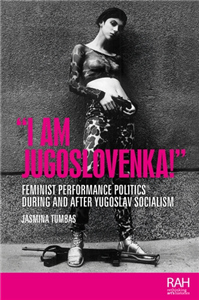
        "I am Jugoslovenka!"

        Feminist performance politics during and after Yugoslav Socialism

        by Jasmina Tumbas, Amelia Jones, Marsha Meskimmon

        "I am Jugoslovenka" argues that queer-feminist artistic and political resistance were paradoxically enabled by socialist Yugoslavia's unique history of patriarchy and women's emancipation. Spanning performance and conceptual art, video works, film and pop music, lesbian activism and press photos of female snipers in the Yugoslav wars, the book analyses feminist resistance in a range of performative actions that manifest the radical embodiment of Yugoslavia's anti-fascist, transnational and feminist legacies. It covers celebrated and lesser-known artists from the 1970s to today, including Marina Abramovic, Sanja Ivekovic, Vlasta Delimar, Tanja Ostojic, Selma Selman and Helena Janecic, along with music legends Lepa Brena and Esma Redzepova. "I am Jugoslovenka" tells a unique story of women's resistance through the intersection of feminism, socialism and nationalism in East European visual culture.

      • Trusted Partner
        The Arts
        December 2025

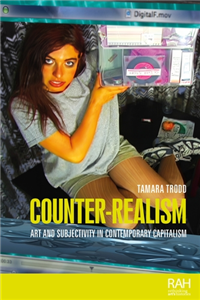
        Counter-realism

        Art and subjectivity in contemporary capitalism

        by Tamara Trodd

        Counter-Realism: Art and subjectivity in contemporary capitalism is an ambitious and original study of key works of film and video art made since 2008 by leading contemporary artists, including William Kentridge, Amalia Ulman, Melanie Gilligan, Lizzie Fitch/Ryan Trecartin and Elizabeth Price. It argues their work should be understood as a reconfigured form of 'realism', expressing economic forces and political pressures across contexts ranging from post-apartheid South Africa, through austerity-era Spain, to contemporary Britain and North America. Supported by original artist interviews and detailed visual analysis of individual works of art, as well as a wide-ranging research base, which synthesises arguments from a variety of disciplines including art history, literary, film and political studies, the book is clearly written, and makes legible the ways in which some of the most vivid and compelling works of contemporary moving-image art engage with historical and contemporary political debates.

      • Trusted Partner
      • Trusted Partner
        The Arts
        June 2026

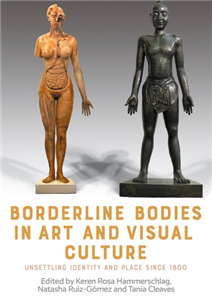
        Borderline bodies in art and visual culture

        Unsettling identity and place since 1800

        by Keren Hammerschlag, Natasha Ruiz-Gómez, Tania Anne Cleaves

        Borderline bodies offers original interpretations of visual representations of human bodies as bounded and unbounded, fortified and permeable, mobile and static-subject to borders and able to traverse and challenge them. It also takes as its focus images and objects that might be considered 'borderline' because they sit at the intersection of disciplines or sit outside accepted notions of what constitutes serious 'art.' By mapping the ways human bodies traverse borders and straddle-even dismantle-categories, this volume's essays approach afresh the relationship of bodies to traditional modes of representation, especially in art and medicine, and encourage us to think anew about how we understand the relationship between human corporeality, identity and place. Critical transdisciplinary and transnational analyses of objects and images from a range of geographies shed new light on the themes of: bodies and identity; typologies of the body; racialised bodies; 'normal' and 'abnormal' bodies; encounters between bodies; bodies in transition; bodies and mobility; and the bounded and unbounded human body. The outcome is a fresh approach to depictions of the human body produced for the purposes of artistic and medical education, aesthetic edification, and scientific and professional advancement, which disrupts assumptions about the normative human body perpetuated through Western image-making traditions.

      • Trusted Partner
        The Arts
        March 2026

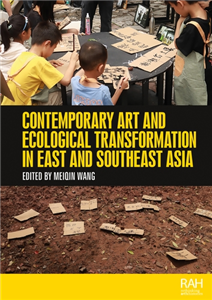
        Contemporary art and ecological transformation in East and Southeast Asia

        by Meiqin Wang

        This anthology, presenting new research from fourteen scholars, delves into the interplay between contemporary art and ecological concerns in East and Southeast Asia. Focused on the concept of artistic remediation, the book unravels the diverse capacities of art to combat systemic anthropogenic destruction to the environment and ecology. At its core, the book articulates the ongoing ecological transformation in art and art history that embraces a paradigm shift in human-nature relationships, emphasizing interconnectedness of all life forms of the Earth. Bridging art studies, activism, and environmental studies, the book examines how artistic practices in the region have engaged with ecocritical reflection, biodiversity advocacy, sustainable practices, and environmental justice, among others. Providing a platform for critical and timely analysis of artistic interventions in the face of existential crises, the book acknowledges diverse voices of scholars who have situated their scholarship in the cultural and artistic specificities of various societies, locales, and communities in the region.

      • Trusted Partner
      • Trusted Partner
        The Arts
        November 2018

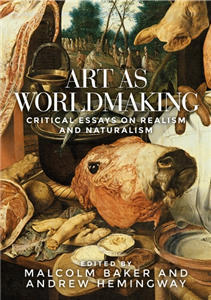
        Art as worldmaking

        Critical essays on realism and naturalism

        by Malcolm Baker, Andrew Hemingway, Andrew Hemingway, Briony Fer, Joshua Shannon, Adrian Rifkin, Malcolm Baker, Martina Droth, Caroline Arscott, Anne Wagner, Martin Powers, Neil McWilliam, Celeste Brusati, T.J. Clark, Rebecca Zurier, Steve Edwards, Tamar Garb, Lisa Tickner, Alistair Rider, Thomas Crow, Gail Day

        Art as worldmaking is a response to Alex Potts's provocative 2013 book Experiments in modern realism. Twenty essays by leading scholars test Potts's recasting of realism through examinations of art produced in different media and periods, ranging from eighth-century Chinese garden aesthetics to video work by the contemporary Russian collective Radek Community. While the book does not neglect avatars of pictorial realism such as Menzel and Eakins, or the question of nineteenth-century realism's historical antecedents, it is contemporary in orientation in that many contributors are particularly concerned with the questions that sculpture, photography and non-traditional media pose for realism as an aesthetic norm. It will be essential reading for students of art history concerned with art's truth value or more broadly with conceptual problems of representation and the intersections of art and politics.

      • Trusted Partner
      • Trusted Partner
      • Trusted Partner
      • Trusted Partner
        The Arts
        December 2007

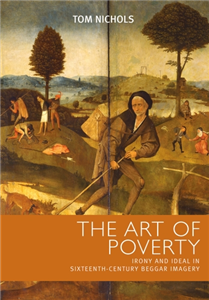
        The art of poverty

        Irony and ideal in sixteenth-century beggar imagery

        by Tom Nichols

        The art of poverty is the first book in English to analyse depictions of beggars in sixteenth-century European art. Featuring works from Germany, the Low Countries, Britain, France and Italy, it discusses a diverse body of imagery in many different media, from crude woodcuts to monumental church altarpieces. It develops a striking thesis, arguing that these works largely conformed to two paradoxical, though mutually supportive, representational approaches. The earlier chapters follow the emergence of a trenchantly negative approach in Northern art, in which beggars are shown as vagabonds, whose idleness and thievery threatened the values of sixteenth-century society (especially its growing emphasis on the need to work). In the other predominant visual mode, beggars are exalted as examples of sacred purity. In many Italian religious paintings, beggars are morally exalted with reference to sacred texts, and made formally beautiful with reference to revered artistic models. Though these approaches reflect the impact of religious reform, it is shown that, by the end of the century, they happily co-existed within Protestant and Catholic cultures. The final part of the book is concerned with the issue of artistic style and with the growing tendency of the beggar image to mediate and dissolve the didactic traditions through which it had originally been defined. The art of poverty will be of special interest to scholars and students of Renaissance art history, and its progressive approach and cross-disciplinary theme and perspective will also make it vital reading for those concerned with the development of early modern European culture. ;

      • Trusted Partner
        History of art & design styles: c 1400 to c 1600
        November 2014

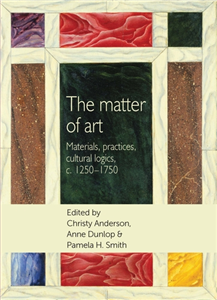
        The matter of art

        Materials, practices, cultural logics, c.1250–1750

        by Edited by Christy Anderson, Anne Dunlop and Pamela H. Smith

        Materials carried the meaning of early modern art. Transformed and crafted from the matter of nature, art objects were the physical embodiment of both the inherent qualities of materials and the forces of culture that used, refined and produced them. The study of materials offers a new approach to this important period in the history of art, science and culture, linking the close study of painting, sculpture and architecture to much wider categories of the everyday and the exotic. Drawing on new research and models from anthropology, material culture and the history of art, scholars in The matter of art explore topics as diverse as Inka stonework, gold in panel painting, cork platforms for shoes, and the Christian Eucharist.

      • Trusted Partner
        The Arts
        January 2019

        Medieval film

        by Anke Bernau, Bettina Bildhauer

        Medieval film explores theoretical questions about the ideological, artistic, emotional and financial investments inhering in cinematic renditions of the medieval period. What does it mean to create and watch a 'medieval film'? What is a medieval film and why are they successful? This is the first work that attempts to answer these questions, drawing, for instance, on film theory, postcolonial theory, cultural studies and the growing body of work on medievalism. Contributors investigate British, German, Italian, Australian, French, Swedish and American film, exploring topics such translation, temporality, film noir, framing and period film - and find the medieval lurking in unexpected corners. In addition it provides in-depth studies of individual films from different countries including The Birth of a Nation to Nosferatu, and Robin Hood: Prince of Thieves. Medieval film will be of interest to medievalists working in disciplines including literature, history, art history, to scholars working on film and in cultural studies. It will also be of interest to undergraduates, postgraduates and to an informed enthusiast in film or/and medieval culture.

      • Trusted Partner
      • Trusted Partner
        Humanities & Social Sciences
        July 1997

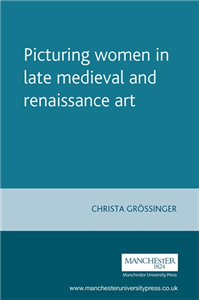
        Picturing women in late medieval and renaissance art

        by Christa Grossinger

        This extensively illustrated book discusses the representation of women in the art of the late Middle Ages in Northern Europe. Drawing on a wide range of different media, but making particular use of the rich plethora of woodcuts, the author charts how the images of women changed during the period and proposes two basic categories - the Virgin and Eve, good and evil. Within these, however, we discover attitudes to sinful, foolish, married and unmarried women and the style and use of these images exposes the full extent of the misogyny entrenched in medieval society. ;

      • Trusted Partner
        The Arts
        February 2026

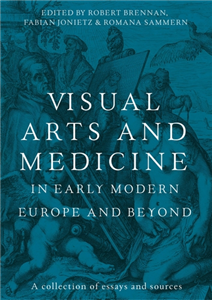
        Visual arts and medicine in early modern Europe and beyond

        A collection of essays and sources

        by Robert Brennan, Fabian Jonietz, Romana Sammern

        This book opens up new perspectives on the relationship between art, medicine, and science in late-medieval and early modern Europe. Looking beyond the traditional nexus of art, anatomy, and optics, the volume sheds light on a broader array of connections between artists and physicians: collaborations between painters and doctors on colour charts, handwork skills common to sculptors and surgeons, the transmission of art theory through medical texts long before the emergence of art writing itself as an independent genre, and the kinship of medical diagnosis with early modes of connoisseurship. Reconfiguring the histories of art, medicine, and science, the book also traverses conventional boundaries between physical and mental health, religious and medical modes of healing, menial and exalted forms of knowledge and labour, as well as vernacular and scientific understandings of human difference, including gender, race, and neurodiversity.

      • Trusted Partner
        The Arts
        April 2026

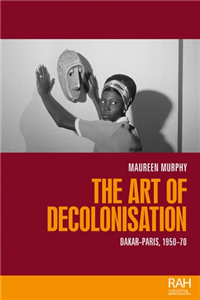
        The art of decolonisation

        Dakar-Paris, 1950-70

        by Maureen Murphy

        The art of decolonisation examines how artists challenged colonial legacies and reconfigured power through transnational networks of art and diplomacy. Adopting a global and transhistorical perspective, it explores artistic, political, and institutional relations between France and Senegal during decolonisation and the Cold War. From the emergence of a national modern art in Senegal to contested cultural policies and high-profile exhibitions-such as those featuring Picasso and Soulages in Dakar, or contemporary Senegalese art in Paris-this book traces the circulation of artworks, ideas, and influence across borders. It reveals how visual artists and filmmakers shaped a new artistic geopolitics between 1950 and 1970. Reconsidering the accepted chronology of the 'global turn', The art of decolonisation shows that the roots of global art discourse run deeper than the 1990s, and were already forming during the era of independence struggles.

      • Trusted Partner
        Gender studies: men
        November 2007

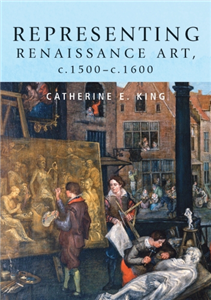
        Representing Renaissance art, c.1500–c.1600

        by Catherine E. King

        Representing Renaissance art, c.1500-c.1600 is a study of change and continuity in the iconographies of art and the visual representation of artists during the sixteenth century, especially in Italy and the Netherlands. The issue of how, and how far, artists obtained higher status for their profession during the Renaissance is a key question for the study of the early modern period. This book considers the maintenance of well-established traditions for the visual representation of artists, and also examines the new iconographies that emerged in the sixteenth century. By highlighting art and architecture that artists designed for their personal use, including the decoration of their houses, this study provides insight into the tastes and 'ways of looking' specific to artists. By examining the visual evidence we see the opinions both of artists who expressed their views in literary texts, and additionally those of artists who did not publish their ideas in written form.

      Subscribe to our

      newsletter