
Your Search Results
-

-

Get Fresh Books Publishing
Get Fresh Books Publishing is a non-profit, cooperative press devoted to amplifying diverse voices in poetry and making the publication process accessible to marginalized communities. Our primary objective is to provide opportunities for underrepresented voices by eliminating economic and societal barriers, such as submission fees and contests, which may inhibit marginalized voices from contributing to the literary conversation. As a cooperative press, we encourage manuscript submissions from BIPOC, LGBTQ+, people with disabilities and people living with mental illnesses. By doing so, we explicitly reject any “ism” or phobia which seeks to suppress the voices of those who receive insufficient or inadequate representation in literature. In the four short years of our founding, we have been able to preserve our commitment to diversity and inclusivity by publishing the work of 12 talented and distinct poets, whose poetry cover a wide range of topics from ethnicity, sexuality and religion to immigration, suicide and discrimination. Our press’s cooperative process of integrating the ideas and skills of our poets, editors and publisher have given us the ability to bring fresh and diverse voices into the literary world. With the help of donations, grants and private investments, we have been able to publish each literary work without charging a single submission fee to ensure that poets and writers of all ages, ethnicities, sexual orientations, abilities, and economic statuses would have their voices heard.
View Rights Portal
-
Promoted Content

 Humanities & Social SciencesJanuary 2026
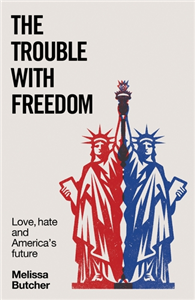
The trouble with freedom
Love, hate and America's future
by Melissa Butcher
An illuminating account of how Americans have been divided by the very value that unites them. America today is being torn apart by the struggle over a single concept, deeply rooted in the country's sense of self: freedom. Battered by wave after wave of crises, ordinary people of all political persuasions have come to feel that their freedom is under threat - and with it, nothing less than the soul of the nation. In The trouble with freedom, journalist and researcher Melissa Butcher takes a trip into the ferociously polarised world of American politics, hoping to find out what's going on beneath the surface. Criss-crossing the country, she talks to a wide range of people: Democrat and Republican, gay and straight, urban and rural, immigrants, First Nations, Black, white, the incarcerated. What she discovers is that political conflict is often the outcome of very personal experiences of managing cultural change. Exploring the different ways freedom has been used to define what it means to be American, Butcher encounters anger and distrust, but also untapped possibilities for empathy and care.
-
Promoted Content
 Humanities & Social SciencesMarch 2007
‘Chords of freedom’
Commemoration, ritual and British transatlantic slavery
by J. R. Oldfield
How should we as Britons remember transatlantic slavery? How has slavery been remembered in the past? 'Chords of freedom' sets out to answer these questions and, in doing so, traces the way in which British transatlantic slavery has been absorbed into the nation's collective memory. By combining two current historiographical preoccupations - the construction of public memory and British transatlantic slavery - this fascinating book focuses on the way in which the British traditionally have been taught to view transatlantic slavery through the moral triumph of abolition. The author traces the construction of this national history through a number of case studies, including visual images, literary memorials (the competing accounts of the anti-slavery movement produced by Thomas Clarkson and Robert and Samuel Wilberforce), monument-memorials, galleries and museums, and commemorative rituals from the nineteenth century to the present day. A separate chapter also considers how Britain's example in abolishing first the slave trade (1807) and then colonial slavery (1833-34) impacted on the rituals of the American anti-slavery movement, and served as a convenient symbol of the potential of freedom in the British West Indies. 'Chords of freedom' offers valuable new insights into the way in which a 'culture of abolition' took root in Britain, and how our views of transatlantic slavery and figures like William Wilberforce have been revised and amended to reflect the changing demands of a series of 'present days'. Its cross-disciplinary approach will appeal to a broad spectrum of specialists, as well as to undergraduates and postgraduates. ;
-
 Trusted Partner
 Humanities & Social SciencesMarch 2026
The dilemma of Authority
by Allyn Fives
The moral problem of authority is the challenge of reconciling legitimate authority (the right to rule) with the demands of freedom and rationality. In this book, I argue that authority can have legitimacy, but when it does it generates a moral dilemma, where the obligation to obey comes at some cost to freedom and reason. Hence, not only do I depart from the views of those who insist that authority can never have legitimacy, but also those who maintain that insofar as authority is legitimate it simply satisfies the demands of freedom or rationality. My focus here will be on both what it is that justifies authority (in particular focusing on membership, and the goods of membership) as well what type of reason an authoritative directive is, how it can come into conflict with others reasons, and how those conflicts are resolved.
-
Trusted Partner
-
Trusted Partner
 Humanities & Social Sciences
Naguib Mahfouz Annuals: About Youth and Freedom
by Naguib Mahfouz
Religion is taught in schools as if a branch of science consisting of some Koranic verses, prophetic tradition (Hadith), creed, worships, and biography! Pupils usually study such items by heart, then they go to exam and forget all. Religion is neither a branch of science nor a branch of material knowledge. Religion is a spiritual education that had to be applied in society. It is felt in the way people behave or conduct. Sometimes we meet a clever pupil but he has bad manners! Another, may get high marks in religion but dismissed out of the school for his ill behaviors and bad manners. I believe that religion must be taught as a spiritual education surrounded by a sphere of sympathy and affection. It is something felt by heart, not studied by heart. Teachers have to adress minds to make pupils convinced. They have to teach them biography of the prophet and also of the orthodox Caliphs. They have to select Koran verses according to “the age and the need”. For example Koranic verses dealing with” prayers”, must be studied in an early stage. Then Koranic verses dealing with “fasting”. After that comes verses dealing with moral conducts. In an advanced stage or secondary school, students can study views, ideas, conceptions, visions and philosophy of Islamic eminent characters, as well as eminent characters of other religions. There is a sort of a deflagrated competition between different religions, though they are similar in concepts and attitudes. Also, rivalary between Islam and Western civilization, and communism, is considered. Western civilization has its own entity. It is an integral doctrine having its theories and applications. Western civilization admits human rights and free economy. It could achieve marvellous progress in different fields of life. At the other hand communism also has its own integral doctrine with a private philosophy, economy and ruling systems. It aspires equality between all people, regardless to their colour or race. As a matter of fact it could achieve marevellous progress in different fields of life. Islam stands in between those two different civilizations, trying to get up and rise after a long sleep in the darkness of stagnancy and retardation. Lately, Islam did not achieve adequate progress in fields like modern science, technology, and material power. But it didn’t surrender, because it is till standing as a civilization having its own historical dignity and tradition. But now it is working hard to compensate what it did lose and indemnify what has gone, without contradicting its message and entity.
-
Trusted Partner
 Humanities & Social SciencesJanuary 2021
Freedom of speech, 1500–1850
by Robert Ingram, Jason Peacey, Alex W. Barber
This collection brings together historians, political theorists and literary scholars to provide historical perspectives on the modern debate over freedom of speech, particularly the question of whether limitations might be necessary given religious pluralism and concerns about hate speech. It integrates religion into the history of free speech and rethinks what is sometimes regarded as a coherent tradition of more or less absolutist justifications for free expression. Contributors examine the aims and effectiveness of government policies, the sometimes contingent ways in which freedom of speech became a reality and a wide range of canonical and non-canonical texts in which contemporaries outlined their ideas and ideals. Overall, the book argues that while the period from 1500 to 1850 witnessed considerable change in terms of both ideas and practices, these were more or less distinct from those that characterise modern debates.
-
Trusted Partner
 Humanities & Social SciencesNovember 2022
Freedom of speech, 1500–1850
by Robert Ingram, Jason Peacey, Alex W. Barber, Alastair Bellany, Peter Lake
-
Trusted Partner

 October 2024
Renunciation and Freedom
Survivial in the future
by Jean-Pierre Wils
The situation in our society is precarious. The ecological shocks are omnipresent. The mere continuation of our lifestyles fixated on expansion and self-development has long since reached its limits. As if intoxicated by ourselves, we consume our world voraciously and without restraint. We need moderation and frugality that lead us out of the ecological and social dead ends and hold both the individual and Politics to account. We are by no means powerless and are perfectly capable of leading a life that offers prospects for a humane future. However, our idea of freedom needs urgent correction. For this endeavour to succeed, we need the courage to face reality and the willingness, in a spirit of solidarity, to say goodbye to a false life and join the alliance of renunciation and freedom. Then we will be free – differently and better.
-
Trusted Partner
-
Trusted Partner
 Humanities & Social SciencesNovember 2023
Critical theory and human rights
From compassion to coercion
by David McGrogan
This book describes how human rights have given rise to a vision of benevolent governance that, if fully realised, would be antithetical to individual freedom. It describes human rights' evolution into a grand but nebulous project, rooted in compassion, with the overarching aim of improving universal welfare by defining the conditions of human well-being and imposing obligations on the state and other actors to realise them. This gives rise to a form of managerialism, preoccupied with measuring and improving the 'human rights performance' of the state, businesses and so on. The ultimate result is the 'governmentalisation' of a pastoral form of global human rights governance, in which power is exercised for the general good, moulded by a complex regulatory sphere which shapes the field of action for the individual at every turn. This, unsurprisingly, does not appeal to rights-holders themselves.
-
Trusted Partner
 Humanities & Social SciencesSeptember 2026
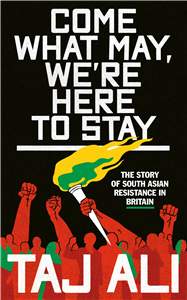
Come what may, we're here to stay
The story of South Asian resistance in Britain
by Taj Ali
As British South Asians reel from the riots of summer 2025, this book tells the inspirational story of how the community organised against racism in the past and how it continues to fight in the present. British South Asians have a long tradition of radical political activism. The 1970s and 1980s saw the community grappling with prejudice in the workplace and violence in the streets. But this history is deeper than you might think, from students agitating for independence at the heart of the British Empire to seafarers organising global strikes on the eve of the Second World War. In Come what may, we're here to stay, Taj Ali reveals how successive generations fought for rights, dignity and a sense of belonging while actively shaping the country they now call home. He shows that British South Asian political life has often been defined less by religious difference than by shared commitments to anti-imperialism and anti-racism. In pursuit of these goals, alliances have been forged with other movements, from Irish republicanism to Black Power. As racism rears its ugly head again, Come what may, we're here to stay asks: are we are doomed to repeat the past or will we learn from our mistakes and build a better world together?
-
Trusted Partner
-
Trusted Partner
-
Trusted Partner
 Science & MathematicsFebruary 2020
The freedom of scientific research
by Simona Giordano, John Harris, Lucio Piccirillo, Rebecca Bennett
-
Trusted Partner
 The ArtsJune 2026
What is a thoughtful life?
by Kélina Gotman
In fresh readings of Theodor W. Adorno, Giorgio Agamben, Hannah Arendt, Judith Butler, Barbara Cassin, Michel Foucault, Werner Hamacher, Martin Heidegger, and many more, Gotman rearticulates the foundations of broadly western philosophical thinking to carve out a shadowy space of recalcitrant thought 'in dark times'. At once indebted to the legacy of critique and enmeshed in affective and performative approaches to language, anti-theatricality, critical race theory and gender studies, she weaves a poetic mesh of intimate fragments, reflections on what it means to think and to write, as she puts it, after spectacle. Almost but not quite a straight work of philosophy, distinctly literary and performative in its anti-genre, this book twists and turns, swerves and cuts, to show the work of thinking as an intimate act - a theatre of angles and openings, adjacencies and reverberations.
-
Trusted Partner
 April 2022
What Colour is Monday?
Synaesthesia: Living with Connected Senses
by Udo Schneider, Markus Zedler, Hinderk Emrich
Blue wine or colour-matched letters, compass points seen in colour, or listening to music that is also an experience of forms and structures. Anyone with these kind of perceptions lives among the synaesthetes. This phenomenon was long overlooked by science. Nowadays, things are different. This book presents not only modern neuroscience’s standpoint on the puzzle of synaesthesia; it also ventures into philosophical peripheral areas. What does life look like for a synaesthete, and how does our perception work anyway?
-
Trusted Partner

 Children's & YA
Climate Change. What We Can Do Now
by Ruth Omphalius/ Monika Azakli
“There is no Planet B!” More and more young people are worried about the future of Planet Earth. Climate change is heating not only the planet but also people’s emotions. But what exactly is climate? And why are the changes threatening the lives of both polar bears and us humans. In simple language but with solid science, the authors explain the most important aspects of climate, from the greenhouse effect to the Gulf Stream. Current developments are described as well, and the scientific background is supplemented by gripping reports. The book also offers a glimpse of the future: what will happen if we go on in the same way as now? How can climate change be halted? This makes for riveting reading – and not just for young activists.
-
Trusted Partner
 September 2023
Trapped by Social Media
How we save our digital sovereignty
by Björn Staschen
— Who is behind the big platforms, what are their alternatives and why do algorithms contribute to polarisation? — A contribution to the discussion on current media policy in the EU It's a paradox: thanks to the countless platforms and channels that are around today, it has never been so easy to express your opinion. And yet never before have so few people decided on the rules of these platforms. Never before has the free formation of opinion, which is essential for our democracies, been in so much danger. And never before have the signs of recognising this been so obvious. So what needs to be done? In a controversial discourse on the effects of TikTok, Facebook, Instagram, Twitter and the rest, Björn Staschen reveals how we are slowly losing our freedom – and how we can get it back again.
-
Trusted Partner
Humanities & Social SciencesOctober 2023
Towards a just Europe
A theory of distributive justice for the European Union
by João Labareda
This highly original book constitutes one of the first attempts to examine the problem of distributive justice in the European Union in a systematic manner. João Labareda argues that the set of shared political institutions at EU level, including the European Parliament and the Court of Justice of the EU, generate democratic duties of redistribution among EU citizens. Furthermore, the economic structure of the EU, comprising a common market, a common currency and a free-movement area, triggers duties of reciprocity among member states. The responsibilities to fulfil these duties, Labareda argues, should be shared by the local, national and supranational levels of government. Not only should the EU act as a safety net to the national welfare systems, applying the principle of subsidiarity, but common market and Eurozone regulations should balance their efficiency targets with fair cooperation terms. The concrete policy proposals presented in this book include a threshold of basic goods for all EU citizens, an EU labour code, a minimum EU corporate tax rate and an EU fund for competitiveness. Labarada argues that his proposals match the political culture of the member states, are economically feasible, can be translated into functioning institutions and policies and are consistent with the limited degree of social solidarity in Europe. This book is a major contribution to the understanding of what a just Europe would look like and what it might take to get us there. This book is relevant to United Nations Sustainable Development Goal 10, Reduced inequalities
-
Trusted Partner



