
Your Search Results


-
Promoted Content

 1988
1988Unser Körper - Unser Leben
The New Our Bodies, Ourselves. Ein Handbuch von Frauen für Frauen
by The Boston Women's Health Book Collective
-
Promoted Content
 1981
1981Unsere Kinder - unser Leben
Ein Handbuch von Eltern für Eltern
by The Boston Women's Health Book Collective
-
 Trusted Partner
-
Trusted Partner

 The ArtsMay 2026
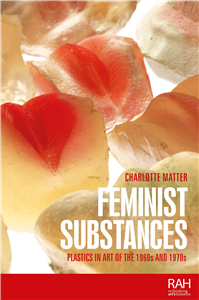
Feminist substances
Plastics in art of the 1960s and 1970s
by Charlotte Matter
Numerous women artists engaged with industrial materials such as plastics in the 1960s and 1970s, contrary to what the discourse of the time would have us believe. As Feminist substances shows, their works offered unique approaches to plastics in art, introducing new material meanings through a feminist lens. With a focus on Europe and Latin America, the book discusses the practices of Carla Accardi, Lea Lublin and Alina Szapocznikow, combining close readings of selected artworks with broader considerations of their social contexts. It explores their use of Sicofoil, plexiglass, plastic inflatables, polyester resin and polyurethane foam to address key concerns of feminist thought in relation to social reproduction, motherhood, memory, desire and illness. Beyond commonplaces of plastics as generic bad materials, Feminist substances considers more complex ways of engaging with synthetic matter, taking into account our messy relationships with these controversial materials.
-
Trusted Partner
 Humanities & Social SciencesDecember 2022
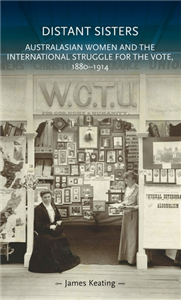
Distant sisters
Australasian women and the international struggle for the vote, 1880–1914
by James Keating
In the 1890s Australian and New Zealand women became the first in the world to win the vote. Buoyed by their victories, they promised to lead a global struggle for the expansion of women's electoral rights. Charting the common trajectory of the colonial suffrage campaigns, Distant Sisters uncovers the personal and material networks that transformed feminist organising. Considering intimate and institutional connections, well-connected elites and ordinary women, this book argues developments in Auckland, Sydney, and Adelaide-long considered the peripheries of the feminist world-cannot be separated from its glamourous metropoles. Focusing on Antipodean women, simultaneously insiders and outsiders in the emerging international women's movement, and documenting the failures of their expansive vision alongside its successes, this book reveals a more contingent history of international organising and challenges celebratory accounts of fin-de-siècle global connection.
-
Trusted Partner
 Humanities & Social SciencesAugust 2014
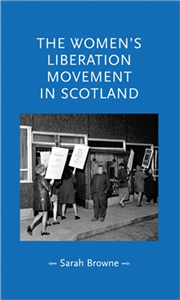
The women's liberation movement in Scotland
by Sarah Browne, Pamela Sharpe, Penny Summerfield, Lynn Abrams, Cordelia Beattie
This is the first book-length account of the women's liberation movement in Scotland, which, using documentary evidence and oral testimony, charts the origins and development of this important social movement of the post-1945 period. In doing so, it reveals the inventiveness and fearlessness of feminist activism, while also pointing towards the importance of considering the movement from the local and grassroots perspectives, presenting a more optimistic account of the enduring legacy of women's liberation. Not only does this book uncover the reach of the WLM but it also considers what case studies of women's liberation can tell us about the ways in which the development of the movement has been portrayed. Previous accounts have tended to equate the fragmentation of the movement with weakness and decline. This book challenges this conclusion, arguing that fragmentation led to a diffusion of feminist ideas into wider society. In the Scottish context, it led to a lively and flourishing feminist culture where activists highlighted important issues such as abortion and violence against women. ;
-
Trusted Partner
 Literature & Literary StudiesApril 2001
Victorian women's magazines
An anthology
by Margaret Beetham, Kay Boardman
This anthology makes available to students and general readers the rich variety of Victorian magazines for women. The extracts range from fashion magazines to feminist journals, from serious works for Christian mothers to tales of romance and passion for 'sweethearts'. Focusing on the historical development of the British women's magazine, this extensively illustrated work gives access to texts which few readers ever see. The first main section describes and illustrates eight kinds of magazine for women. Though they have common features, the differences between the drawing room journal of the 1830s and 1840s and the cheap domestic magazines of the 1890s are clearly demonstrated. The second section focuses on those elements which made up the magazine's typical mix of ingredients, including fiction, the fashion plate, poetry, political journalism, advice columns and reader's letters. The last section is the most comprehensive listing of British Victorian women's magazines which currently exists. This is a work of scholarship but one which will appeal to students of Cultural, Historical, Literary and Women's Studies, as well as to the general interested reader. Like the magazines it represents, it offers its readers both entertainment and instruction. ;
-
Trusted Partner
 The ArtsFebruary 2022
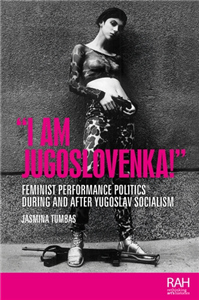
"I am Jugoslovenka!"
Feminist performance politics during and after Yugoslav Socialism
by Jasmina Tumbas, Amelia Jones, Marsha Meskimmon
"I am Jugoslovenka" argues that queer-feminist artistic and political resistance were paradoxically enabled by socialist Yugoslavia's unique history of patriarchy and women's emancipation. Spanning performance and conceptual art, video works, film and pop music, lesbian activism and press photos of female snipers in the Yugoslav wars, the book analyses feminist resistance in a range of performative actions that manifest the radical embodiment of Yugoslavia's anti-fascist, transnational and feminist legacies. It covers celebrated and lesser-known artists from the 1970s to today, including Marina Abramovic, Sanja Ivekovic, Vlasta Delimar, Tanja Ostojic, Selma Selman and Helena Janecic, along with music legends Lepa Brena and Esma Redzepova. "I am Jugoslovenka" tells a unique story of women's resistance through the intersection of feminism, socialism and nationalism in East European visual culture.
-
Trusted Partner
 The ArtsMay 2026
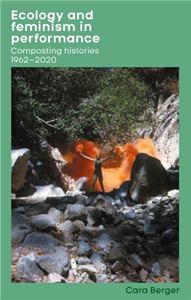
Ecology and feminism in performance
Composting histories 1962–2020
by Cara Berger
This book provides a vital new history of feminist performance through an ecological lens. It argues that from the 1960s to the present, artists have used performance to challenge the linked oppression of women and nature. Proposing 'composting' as a new method for writing feminist history, the study moves beyond linear narratives to trace regenerative connections between generations of practitioners. It provides sustained analysis of genres from land art to postdramatic theatre, re-evaluating the work of canonical figures while examining how contemporary artists continue to address these urgent themes. By placing ecofeminism in dialogue with feminist new materialism, queer ecology, and transecological thought, this study demonstrates how performance has been a crucial site for imagining more just and sustainable futures in an age of environmental crisis.
-
Trusted Partner
 Literature & Literary StudiesOctober 2017
Botany, sexuality and women's writing, 1760–1830
From modest shoot to forward plant
by Sam George
In this fascinating study, Samantha George explores the cultivation of the female mind and the feminised discourse of botanical literature in eighteenth-century Britain. In particular, she discusses British women's engagement with the Swedish botanist, Carl Linnaeus, and his unsettling discovery of plant sexuality. Previously ignored primary texts of an extraordinary nature are rescued from obscurity and assigned a proper place in the histories of science, eighteenth-century literature, and women's writing. The result is groundbreaking: the author explores nationality and sexuality debates in relation to botany and charts the appearance of a new literary stereotype, the sexually precocious female botanist. She uncovers an anonymous poem on Linnaean botany, handwritten in the eighteenth century, and subsequently traces the development of a new genre of women's writing - the botanical poem with scientific notes. The book is indispensable reading for all scholars of the eighteenth century, especially those interested in Romantic women's writing, or the relationship between literature and science.
-
Trusted Partner
 Literature & Literary StudiesMarch 2005
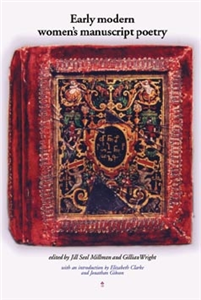
Early modern women's manuscript poetry
by Jill Millman, Gillian Wright
'Early modern women's manuscript poetry' is an anthology of texts by fourteen women poets writing between 1589 and 1706. It is the only currently available anthology of early modern women's writing which focuses exclusively on manuscript material. Authors include Mary Sidney, Lucy Hutchinson and Katherine Philips; central figures in the emerging canon of early modern women writers, but whose work appears in a fresh and very different light in the manuscript context emphasised by this anthology. The volume also includes substantial excerpts from a recently discovered verse paraphrase of Genesis, thought to be by the previously unknown seventeenth-century writer Mary Roper, as well as selections from the unjustly neglected poet, Hester Pulter. The mix of canonical and non-canonical writers makes this book ideal for use on undergraduate and early postgraduate courses, while specialists will be particularly interested in the sophisticated and varied material taken from less familiar sources. ;
-
Trusted Partner
Literature & Literary StudiesJanuary 2026
Mid-century women's writing
by Melissa Dinsman, Megan Faragher, Ravenel Richardson
-
Trusted Partner
 Literature & Literary StudiesMay 2026
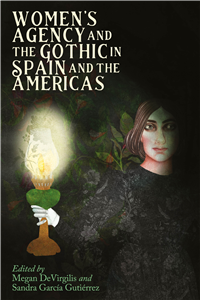
Women’s Agency and the Gothic in Spain and the Americas
by Megan DeVirgilis, Sandra García Gutiérrez
This volume has emerged to fulfill two main purposes: Primarily, to constitute the first collaborative work that traces the relationship between the Gothic and Women in Spain and the Americas, but also, to surpass the term 'Female Gothic,' coined by Ellen Moers, by transferring the focus towards women and their agency as writers, readers and characters. This volume functions as a manifesto per se to open new avenues into understanding how women have interacted with the Gothic between the nineteenth and twenty-first centuries in Spain and the Americas. The question, we determine, is not simply about identity, but rather about agency. We define women's agency as the total capacity of characters, authors and readers to act freely within a social framework in relation to gothic texts. In our exploration of authorship, we reject the claim that the Gothic is a simplistic literary genre, instead sustaining that the plasticity of the Gothic has enabled it to survive for centuries; by shifting from a genre to a mode, it has surpassed literary forms and invaded all kinds of media: from film to music and merchandise such as clothing and pop culture collectables, fostering an authentic goth fandom.
-
Trusted Partner
 Humanities & Social SciencesJuly 2010
Shaping a global women's agenda: women's NGOs and global governance, 1925–85
by Karen Garner
Drawing on a wide range of archival sources, Karen Garner documents international women's history through the lens of the long-established Western-led international organisations that defined and dominated women's involvement in global politics from the 1925 founding of the Joint Standing Committee of Women's International Organisations up through the UN Decade for Women (1976-85). Documenting specific global campaigns in episodes that span the twentieth century, Garner includes biographical information about lesser known international leaders as she discusses important historic debates regarding feminist goals and strategies among women from the East and West, North and South. This interdisciplinary study addresses questions of interest to historians, political scientists, international relations scholars, sociologists, and feminist scholars and activists whose work promotes women's and human rights. ;
-
Trusted Partner
 Literature & Literary StudiesMay 2024
Conceiving bodies
Reproduction in early medieval English medicine
by Dana Oswald
Despite reliance on ingredients like horse dung, Old English remedies for women's medicine speak to contemporary reproductive concerns. Previous translators reduced the remedies to a general category of women's medicine, but sustained examination of language reveals important distinctions: remedies for menstruation indicate social concerns about fertility, where remedies for 'cleansing' do not provide a clear path to conception, but rather foreclose it. Rarest of all are the remedies for childbirth, but their rarity is compounded by the practices of translators who conflate the language for women's reproduction into an amorphous singularity. Through an original method of hysteric philology-the combining of traditional philology with contemporary feminist and medical epistemologies-this book situates itself in the historical treatment of reproductive people as both objects and subjects of medical practice, and gestures forward in time to the contemporary struggle for bodily autonomy.
-
Trusted Partner
 Politics & governmentFebruary 2013
Shaping a global women's agenda
Women's NGOs and global governance, 1925–85
by Karen Garner
Available in paperback for the first time, and drawing on a wide range of archival sources, Shaping a global women's agenda documents international women's history through the lens of the long-established Western-led international organisations that defined and dominated women's involvement in global politics from the 1925 founding of the Joint Standing Committee of Women's International Organisations up through the UN Decade for Women (1976-85). Documenting specific global campaigns in episodes that span the twentieth century, Garner includes biographical information about lesser known international leaders as she discusses important historic debates regarding feminist goals and strategies among women from the East and West, North and South. This interdisciplinary study addresses questions of interest to historians, political scientists, international relations scholars, sociologists, and feminist scholars and activists whose work promotes women's and human rights.
-
Trusted Partner
-
Trusted Partner
 Literature & Literary StudiesNovember 2021
Encountering The Book of Margery Kempe
by Laura Kalas, Laura Varnam, David Matthews, Anke Bernau, James Paz
This innovative critical volume brings the study of Margery Kempe into the twenty-first century. Structured around four categories of 'encounter' - textual, internal, external and performative - the volume offers a capacious exploration of The Book of Margery Kempe, characterised by multiple complementary and dissonant approaches. It employs a multiplicity of scholarly and critical lenses, including the intertextual history of medieval women's literary culture, medical humanities, history of science, digital humanities, literary criticism, oral history, the global Middle Ages, archival research and creative re-imagining. Revealing several new discoveries about Margery Kempe and her Book in its global contexts, and offering multiple ways of reading the Book in the modern world, it will be an essential companion for years to come.
-
Trusted Partner
Literature & Literary StudiesApril 2023
Encountering The Book of Margery Kempe
by Laura Kalas, Laura Varnam
This innovative critical volume brings the study of Margery Kempe into the twenty-first century. Structured around four categories of 'encounter' - textual, internal, external and performative - the volume offers a capacious exploration of The Book of Margery Kempe, characterised by multiple complementary and dissonant approaches. It employs a multiplicity of scholarly and critical lenses, including the intertextual history of medieval women's literary culture, medical humanities, history of science, digital humanities, literary criticism, oral history, the global Middle Ages, archival research and creative re-imagining. Revealing several new discoveries about Margery Kempe and her Book in its global contexts, and offering multiple ways of reading the Book in the modern world, it will be an essential companion for years to come.
-
Trusted Partner
 Humanities & Social SciencesAugust 2006
History matters
Patriarchy and the challenge of Feminism
by Judith Bennett
Written for everyone interested in women's and gender history, History matters reaffirms the importance to feminist theory and activism of long-term historical perspectives. Judith M. Bennett takes as her central problem the growing chasm between feminism and history which, although closely allied in the 1970s, have now moved away from one another. Seeking to narrow this gap, Bennett proposes that feminist historians turn their attention to the intellectual challenges posed by the persistence of patriarchy. She posits a 'patriarchal equilibrium' whereby, despite many changes in women's experiences over past centuries, women's status vis-à-vis men has remained remarkably unchanged. Bennett argues that the theoretical challenge posed by this 'patriarchal equilibrium' will be best met by long-term historical perspectives that reach back well before the modern era. A new manifesto, History matters engages forthrightly with the challenges faced by feminist historians today. It argues for the radical potential of a history that is focused on feminist issues, aware of the distant past, attentive to continuities over time, and alert to the workings of patriarchal power. ;


