
All Things Women
Find your focus and strengths in times of crisis.
View Rights Portal

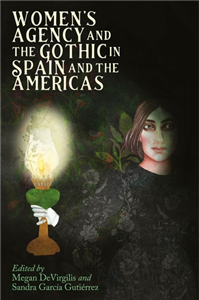
This volume has emerged to fulfill two main purposes: Primarily, to constitute the first collaborative work that traces the relationship between the Gothic and Women in Spain and the Americas, but also, to surpass the term 'Female Gothic,' coined by Ellen Moers, by transferring the focus towards women and their agency as writers, readers and characters. This volume functions as a manifesto per se to open new avenues into understanding how women have interacted with the Gothic between the nineteenth and twenty-first centuries in Spain and the Americas. The question, we determine, is not simply about identity, but rather about agency. We define women's agency as the total capacity of characters, authors and readers to act freely within a social framework in relation to gothic texts. In our exploration of authorship, we reject the claim that the Gothic is a simplistic literary genre, instead sustaining that the plasticity of the Gothic has enabled it to survive for centuries; by shifting from a genre to a mode, it has surpassed literary forms and invaded all kinds of media: from film to music and merchandise such as clothing and pop culture collectables, fostering an authentic goth fandom.

Since the mid-2000s, the harsh reality of call centre employment for a generation of young workers in Portugal has been impossible to ignore. With its endless rows of small cubicles, where human agents endure repetitive telephone conversations with abusive clients under invasive modes of technological surveillance, discipline and control, call centre work remains a striking symbol of labour precarity, a condition particularly associated with the neoliberal generational disenchantment that 'each generation does better than its predecessor'. This book describes the emergence of a regime of disciplined agency in the Portuguese call centre sector. Examining the ascendancy of call centres as icons of precarity in contemporary Portugal, this book argues that call centre labour constitutes a new form of commodification of the labouring subject. De Matos argues that call centres represent an advanced system of non-manual labour power exploitation, due to the underestimation of human creativity that lies at the centre of the regimented structures of call centre labour. Call centres can only guarantee profit maintenance, de Matos argues, through the commodification of the human agency arising from the operators' moral, relational and social embedded agentive linguistic interventions of creative improvisation, decision-making, problem-solving and ethical evaluation.
 Trusted Partner
 Trusted Partner

This volume offers a comprehensive analysis of the agency phenomenon in the European Union. It takes stock of the emergence and development of EU agencies, providing insight into the characteristics as well as the consequences of the ongoing EU agencification process. The volume traces the varied roots of and routes to agency emergence and institutionalisation. It also analyses everyday decision-making processes within EU-level agencies, notably the management of such agencies, their role in the creation of network structures in European executive governance and in the implementation of EU legislation at the member state level, and the varied sources of agency accountability. The ambition of this volume is to offer an even-handed assessment and explanation of agency creation, design, and evolution at the EU level. The volume is targeted to academics, post-graduate students and practitioners. Chapter authors include Deirdre Curtin, Renaud Dehousse, Morten Egeberg and Thomas Gehring. ;
Trusted Partner
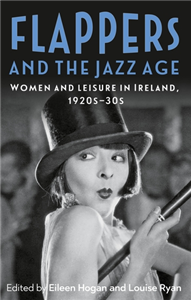
People's ordinary, everyday lives - and more specifically, their leisure activities - are often obscured within existing academic research on 1920s-30s Ireland. This book seeks to redress that neglect by exploring the relationship between identity, recreation, and culture both North and South of the border, with particular attention to women's lived experiences. Leisurely pursuits during this period were commonly overshadowed by religious influence and the nation-building projects in post-partition Ireland. Nevertheless, there existed alternative spaces, where people enjoyed dancing, singing, listening to music, shopping, glamour, reading magazines, swimming, travelling, and going to the cinema. Such activities reflected international trends beyond national borders. This book documents those activities and spaces through a feminist lens and intersectional analysis of gender, class, religion and rural/urban identities. It brings together multi-disciplinary perspectives including cultural studies, architecture, geography, fashion, and musicology. In so doing, we present new insights and advance understanding of this under-researched aspect of Irish history.
Trusted Partner
Trusted Partner
The moral problem of authority is the challenge of reconciling legitimate authority (the right to rule) with the demands of freedom and rationality. In this book, I argue that authority can have legitimacy, but when it does it generates a moral dilemma, where the obligation to obey comes at some cost to freedom and reason. Hence, not only do I depart from the views of those who insist that authority can never have legitimacy, but also those who maintain that insofar as authority is legitimate it simply satisfies the demands of freedom or rationality. My focus here will be on both what it is that justifies authority (in particular focusing on membership, and the goods of membership) as well what type of reason an authoritative directive is, how it can come into conflict with others reasons, and how those conflicts are resolved.
Trusted Partner

In the new world order mapped out by Japanese and Western imperialism in East Asia after the mid-nineteenth century opium wars, communities of merchants and settlers took root in China and Korea. New identities were constructed, new modes of collaboration formed and new boundaries between the indigenous and foreign communities were literally and figuratively established. Newly available in paperback, this pioneering and comparative study of Western and Japanese imperialism examines European, American and Japanese communities in China and Korea, and challenges received notions of agency and collaboration by also looking at the roles in China of British and Japanese colonial subjects from Korea, Taiwan and India, and at Chinese Christians and White Russian refugees. This volume will be of interest to students and scholars of the history and anthropology of imperialism, colonialism's culture and East Asian history, as well as contemporary Asian affairs.
Trusted Partner
Trusted Partner
 Trusted Partner
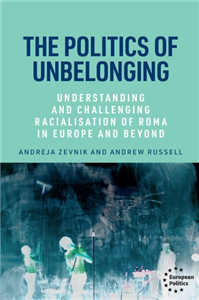
This book offers a comprehensive study of racialisation of Romani communities in Europe (and beyond). Drawing on the idea of unbelonging it demonstrates how Romani communities are placed in a position of visceral visibility by local, national and international institutions as well as public media discourses. It shows how such positionality impacts the ability of Roma to self-represent politically and build capacity for change. From the position of unbelonging the book offers an account of Romani agency which both challenges the mainstream representations of Roma but also develops an alternative none-nation-state sense of belonging. In doing so the book outlines an account of Romani alternative expressions in order to take control of their relationship with their own history, future, knowledge, and identity, and the rest of the society.
Trusted Partner
Trusted Partner
 Trusted Partner
Trusted Partner
Trusted Partner
Trusted Partner
Trusted Partner
 Trusted Partner
Local government in the UK is in crisis. It is now neither local in terms of the geography and populations of its principle units, nor does it truly govern in these areas. As this book reveals, over the previous 200 years local government has moved from a system in which local interests held governance over localities to one in which central government and national and multi-national agencies such as corporate businesses hold governance over local and community decision-making. These changes seriously undermine the important role that local government can play in liberal democracy in the UK. The book explains the nature of local government today and asks if there is any possibility of change.
Trusted Partner
 Trusted Partner

Through the Fiction of Phebe Gibbes places this prolific, newly recovered English writer at the centre of the revolutionary period. Gibbes's novels mark the struggles of women for agency in an expanding British empire, from the Seven Years' War to revolutions in American, Haiti and France. With Gibbes as a nexus in a lineage of women writers from Aphra Behn to Jane Austen, Kathryn S. Freeman offers a valuable perspective on the 'long eighteenth century', with Gibbes' own evolution mirroring that of the larger period. The study traces the development of Gibbes' authorial voice from satire to irony through a range of female characters subverting patriarchal oppression. Freeman guides the reader through patterns of narrative voice, concerns with gender and sexuality, and elements of wordplay through detailed discussion of five novels representing Gibbes' evolving representation of a subversive female subjectivity.
Trusted Partner

This series provides texts central to medieval studies courses and focuses upon the diverse cultural, social and political conditions that affected the functioning of all levels of medieval society. Translations are accompanied by introductory and explanatory material and each volume includes a comprehensive guide to the sources' interpretation, including discussion of critical linguistic problems and an assessment of recent research on the topics covered. From 1348 to 1350 Europe was devastated by an epidemic that left between a third and one half of the population dead. This source book traces, through contemporary writings, the calamitous impact of the Black Death in Europe, with a particular emphasis on its spread across England from 1348 to 1349. Rosemary Horrox surveys contemporary attempts to explain the plague, which was universally regarded as an expression of divine vengeance for the sins of humankind. Moralists all had their particular targets for criticism. However, this emphasis on divine chastisement did not preclude attempts to explain the plague in medical or scientific terms. Also, there was a widespread belief that human agencies had been involved, and such scapegoats as foreigners, the poor and Jews were all accused of poisoning wells. The final section of the book charts the social and psychological impact of the plague, and its effect on the late-medieval economy.



