
Amberley Publishing
Established in 2008,AmberleyPublishingis home of the ever-popular colour local history series Through Time, Amberleyis an independent publisher of books on a rich variety of history and heritage.
View Rights Portal
Established in 2008,AmberleyPublishingis home of the ever-popular colour local history series Through Time, Amberleyis an independent publisher of books on a rich variety of history and heritage.
View Rights Portal
We are an independent illustrated non-fiction publisher based in London, UK and have been in the industry for over 30 years. We publish a growing range of titles under our own Amber Books imprint.
View Rights Portal

How do patients experience waiting, what consequences does it have for them, and how can healthcare professionals help waiting and bored patients? This handbook describes how healthcare professionals can treat waiting patients professionally. It focuses on waiting situations in hospitals with outpatient care, emergency admission, and inpatient care, as well as in medical practices and therapists’ offices. The author clearly demonstrates to hospital managers and practice owners the existential importance of trained staff in achieving high-quality outcomes. Target Group: Nurses, midwives, medical professionals, doctors, therapists, medical assistants, pharmaceutical assistants, radiology technicians


The labour movement in Lebanon: Power on hold narrates the history of the Lebanese labour movement from the early twentieth century to today. Bou Khater demonstrates that trade unionism in the country has largely been a failure, for reasons including state interference, tactical co-optation, and the strategic use of sectarianism by an oligarchic elite, together with the structural weakness of a service-based laissez-faire economy. Drawing on a vast body of Arabic-language primary sources and difficult-to-access archives, the book's conclusions are significant not only for trade unionism, but also for new forms of workers' organisations and social movements in Lebanon and beyond. The Lebanese case study presented here holds significant implications for the wider Arab world and for comparative studies of labour. This authoritative history of the labour movement in Lebanon is vital reading for scholars of trade unionism, Lebanese politics, and political economy.
 Trusted Partner

In How to be multiple, Helena de Bres - a twin herself - argues that twinhood is a unique lens for examining our place in the world and how we relate to other people. The way we think about twins offers remarkable insights into some of the deepest questions of our existence, from what is a person? to how should we treat one another? Deftly weaving together literary and cultural history, philosophical enquiry and personal experience, de Bres examines such thorny issues as binary thinking, objectification, romantic love and friendship, revealing the limits of our individualistic perspectives. In this illuminating, entertaining book, wittily illustrated by her twin sister, de Bres ultimately suggests that to consider twinhood is to imagine the possibility of a more interconnected, capacious human future.
Trusted Partner


What a disaster! Snöfrid’s stream has disappeared during the night! Without water there can be no porridge, and Snöfrid doesn’t have to think twice. This problem must be solved immediately! The hunt for water begins with a wet meeting at the pond of the little nymph Flumina, but when it turns into a hunt for the mysterious river pearl, involving a submersible boat, the story quickly becomes an underwater adventure, and who knows how it will end? Magical adventure, great fun for boys and girls, by Spiegel bestselling author Andreas H. Schmachtl.
Trusted Partner
Trusted Partner
Trusted Partner
Trusted Partner
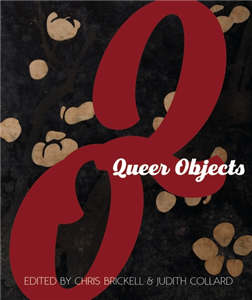
Queer lives give rise to a vast array of objects: the things we fill our houses with, the gifts we share with our friends, the commodities we consume at work and at play, the clothes and accessories we wear, and the analogue and digital technologies we use to communicate with one another. But what makes an object queer? The sixty-three chapters in Queer Objects consider this question in relation to lesbian, gay and transgender communities across time, cultures and space. In this unique international collaboration, well-known and newer writers traverse world history to write about items ranging from ancient Egyptian tomb paintings and Roman artefacts to political placards, snapshots, sex toys and the smartphone. Fabulous, captivating, transgressive.
Trusted Partner
Available in paperback for the first time, this book is the third in the three volume set The Labour governments 1964-1970 and concentrates on Britain's economic policy under the Labour governments in the 1960s. It assesses the origins, development and outcomes of the attempts made by the 1964-1970 Labourgovernments under Harold Wilson to modernise the British economy. This is the first comprehensive and archivally-based work to offer a detailed study of this modernisation project. The book places the project in the context of Labour's economic ideas as they had developed since the 1940s as well as the economic legacy they inherited from the previous thirteen years of Conservative rule. After outlining this context and providing a summary narrative of economic policy over this period, the international aspect of Labour's approach to the economy is analysed. The core of the book then goes on to look in detail at the policies directly concerned with modernisation. Following the agenda set by the national plan of 1965, policies on planning, investment and the firm, technical change, the labour market and the nationalised industries are all analysed. In addition, the productivity campaign of the late 1960s is shown to have encapsulated many of the underlying ideas but also many of the problems of Labour's approach to economic policy. The final section of the book asks how the pursuit of modernisation affected Labour's pursuit of "social justice", before offering an overall assessment of Labour's period of office. The book will be of special interest to contemporary historians, economic historians and those interested in the history of the Labour party. Together with the other books in the series, on domestic policy and international policy, it provides a complete picture of the development of Britain under the premiership of Harold Wilson. ;
Trusted Partner

Why is the search for democratic renewal so elusive? This book examines both the political and policy implications of efforts by the centre-left to transform democracy. This is a story not only about democratic change, but also the identity crisis of centre-left political parties. The book offers a fresh critique of the Big Society agenda, and analyses why both left and right are searching for democratic renewal. Drawing on high-profile interviews and examining an in-depth series of comparative cases, the book argues that the centre-left's search for democratic renewal contains a range of policy and political aims, contradictions and tensions. It will be of interest to students, academics, researchers, interest groups and policy analysts interested in consultation, democratic renewal, labour politics, and Australian and British politics. ;
Trusted Partner

Waiting for the revolution is a volume of essays examining the diverse currents of British left-wing politics from 1956 to the present day. The book is designed to complement the previous volume, Against the grain: The far left in Britain from 1956, bringing together young and established academics and writers to discuss the realignments and fissures that maintain leftist politics into the twenty-first century. The two books endeavour to historicise the British left, detailing but also seeking to understand the diverse currents that comprise 'the far left'. Their objective is less to intervene in ongoing issues relevant to the left and politics more generally, than to uncover and explore the traditions and issues that have preoccupied leftist groups, activists and struggles. To this end, the book will appeal to scholars and anyone interested in British politics.
Trusted Partner
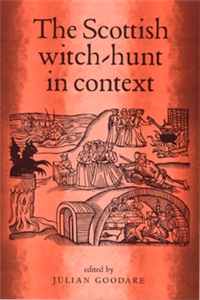
A collection of essays on Scottish witchcraft and witch-hunting, which covers the whole period of the Scottish witch-hunt, from the mid-sixteenth century to the early eighteenth. Includes studies of particular witchcraft panics such as a reassessment of the role of King James VI. Covers a wide range of topics concerned with Scottish witch-hunting and places it in the context of other topics such as gender relations, folklore, magic and healing, and moral regulation by the church and state. Provides a comparative dimension of witch-hunting beyond Scotland - one on the global context, and one comparing Scotland with England. It is a showcase for the latest thinking on the subject and will be of interest to all scholars studying witchcraft in early modern Europe, as well as the general reader wanting to move beyond shallow and sensational accounts of a subject of compelling in. ;
Trusted Partner

The West must wait presents a new perspective on the development of the Irish Free State. It extends the regional historical debate beyond the Irish revolution and raises a series of challenging questions about post-civil war society in Ireland. Through a detailed examination of key local themes - land, poverty, politics, emigration, the status of the Irish language, the influence of radical republicans and the authority of the Catholic Church - it offers a probing analysis of the socio-political realities of life in the new state. This book opens up a new dimension by providing a rural contrast to the Dublin-centred views of Irish politics. Significantly, it reveals the level of deprivation in local Free State society with which the government had to confront in the west. Rigorously researched, it explores the disconnect between the perceptions of what independence would deliver and what was achieved by the incumbent Cumann na nGaedheal administration.
Trusted Partner
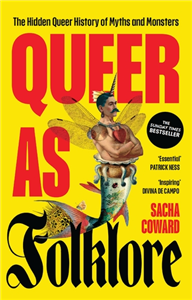
A celebration of queer history like you've never seen it before. Queer as folklore travels across centuries and continents to reveal the unsung heroes and villains of storytelling, magic and fantasy. Featuring images from archives, galleries and museums around the world, each chapter investigates the queer history of different mythic and folkloric characters, both old and new. Leaving no headstone unturned, Sacha Coward takes you on a wild ride through the night from ancient Greece to the main stage of RuPaul's Drag Race, visiting cross-dressing pirates, radical fairies and the graves of the 'queerly departed' along the way. Queer communities have often sought refuge in the shadows and created safe spaces in underworlds. But these forgotten narratives tell stories of resilience that deserve to be heard. Join any Pride march and you will see a glorious display of papier-mâché unicorn heads, drag queens in mermaid tails and more fairy wings than you can shake a trident at. These are not just accessories: they are queer symbols with historic roots. To truly understand who queer people are today, we must confront the twisted tales of the past.
Trusted Partner
 Trusted Partner

Silent war reveals how silence functions as a crucial but often overlooked force in enabling and sustaining military violence. While war propaganda and discursive justifications have received significant attention, this book argues that military operations also depend on a hidden infrastructure of silence - through omission, secrecy, and tacit consent. Focusing on drone warfare and colonial counterinsurgency, it explores how regimes of (not) listening shape what can and cannot be heard. Drawing on a multidisciplinary framework and extensive empirical research - including analysis of Western parliamentary debates, UN documents, media coverage, and archival records - Silent war traces the enduring role of silence in legitimising imperial violence. It reframes silence not as absence but as a constitutive force in global power relations, offering critical tools for interrogating dominant frameworks of military violence and opening space for listening otherwise.
Trusted Partner

This is a fundamental reassessment of the work of William Holman Hunt, and the first critical text to reproduce his pictures in colour and set him on an international stage. Introducing a new critique of the autobiography and drawing on hundreds of private letters, drawings and paintings, the author depicts a radical man of his times, deeply troubled by the pivotal concerns of the materialist age - the isolation of the individual, the collapse of faith and the status of art - and seeking solutions through a systematic testing of the extremes of painting. A close examination of the pictures, including neglected later works, combined with recent scientific research relate the physical act of painting, and the paint, back to the body of the artist. Lavishly illustrated and engagingly written, this book answers the longstanding lack of any monograph on Hunt and will make compelling reading for undergraduate and graduate students of History of Art, Victorian Studies, English Literature and Religious Studies, as well as curators, conservators and the artist's many admirers. ;
Trusted Partner

Queer exceptions is a study of contemporary solo performance in the UK and Western Europe that explores the contentious relationship between identity, individuality and neoliberalism. With diverse case studies featuring the work of La Ribot, David Hoyle, Oreet Ashery, Bridget Christie, Tanja Ostojic, Adrian Howells and Nassim Soleimanpour, the book examines the role of singular or 'exceptional' subjects in constructing and challenging assumed notions of communal sociability and togetherness, while drawing fresh insight from the fields of sociology, gender studies and political philosophy to reconsider theatre's attachment to singular lives and experiences. Framed by a detailed exploration of arts festivals as encapsulating the material, entrepreneurial circumstances of contemporary performance-making, this is the first major critical study of solo work since the millennium.
Trusted Partner

De-centering queer theory seeks to reorient queer theory to a different conception of bodies and sexuality derived from Eastern European Marxism. The book articulates a contrast between the concept of the productive body, which draws its epistemology from Soviet and avant-garde theorists, and Cold War gender, which is defined as the social construction of the body. The first part of the book concentrates on the theoretical and visual production of Eastern European Marxism, which proposed an alternative version of sexuality to that of western liberalism. In doing so it offers a historical angle to understand the emergence not only of an alternative epistemology, but also of queer theory's vocabulary. The second part of the book provides a Marxist, anti-capitalist archive for queer studies, which often neglects to engage critically with its liberal and Cold War underpinnings.
Trusted Partner


Jeder Tag ist ein guter Tag für Bücher. Zumindest für Debbie, die an keiner Buchhandlung vorbeigehen kann, ohne einen großen Bücherstapel mitzunehmen. Debbie genießt Bücher mit allen Sinnen. Sie kann an ihnen riechen, sie streicheln, sogar Sport damit machen. Und manchmal kann sie sie hören. Dann ruft ein Buch: „Lies mich!“, wenn Debbie eigentlich gerade etwas ganz anderes tun wollte. Vor allem aber gilt für Debbie: Bücher können zaubern und uns in andere Welten versetzen. Denn wer ein Leseleben führt, lebt viele Leben auf einmal. Book Love ist eine einzige Liebeserklärung an das Medium Buch und das Lesen und ein Must-have für alle Buchliebhaber*innen.



