
Angara Management Ltd
Angara Management Ltd
View Rights Portal

EULAC is the Association of Latin American and the Caribbean University Presses, it works in coordination with eleven national networks. Gathers more than 400 members from 20 countries. We are interested in promoting the various knowledges that are produced in the universities of our region, which not only represent our particular interests but also those that we share with many other publishers and people in other countries. We are open to contact different university presses around the world to find and develop common projects. More information about us: www.eulac.org More information about our catalogs: www.catalat.org Contact: María Daniela Verón mariadanielaveron@gmail.com
View Rights Portal
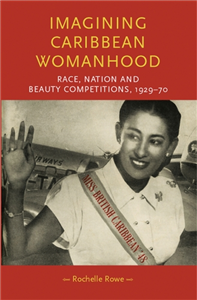
Over fifty years after Jamaican and Trinidadian independence, Imagining Caribbean womanhood examines the links between beauty and politics in the Anglophone Caribbean, providing a first cultural history of Caribbean beauty competitions, spanning from Kingston to London. It traces the origins and transformation of female beauty contests in the British Caribbean from 1929 to 1970, through the development of cultural nationalism, race-conscious politics and decolonisation. The beauty contest, a seemingly marginal phenomenon, is used to illuminate the persistence of racial supremacy, the advance of consumer culture and the negotiation of race and nation through the idealised performance of cultured, modern beauty. Modern Caribbean femininity was intended to be politically functional but also commercially viable and subtly eroticised.

This edited volume reframes the Caribbean as a paradigm of ecological resilience and creativity by bringing together the voices of contemporary artists and scholars who are at the forefront of environmental activism in the region and across its diasporas. While dominant narratives percolating from the environmental sciences to the mainstream press present the Caribbean as a frontier of planetary disaster, the contributors to this volume show how the region offers radical models for overcoming the environmental challenges of the present. At the heart of this argument lies the history of the Caribbean as a centre for grassroots forms of anti-colonial and anti-capitalist resistance founded upon nature-centred cosmologies and practices. Caribbean Eco-Aesthetics shows how contemporary artists are mobilising this radical heritage in a bid to unlock alternative planetary futures.
 Trusted Partner

Colouring the Caribbean offers the first comprehensive study of Agostino Brunias's intriguing pictures of colonial West Indians of colour - so called 'Red' and 'Black' Caribs, dark-skinned Africans and Afro-Creoles, and people of mixed race - made for colonial officials and plantocratic elites during the late-eighteenth century. Although Brunias's paintings have often been understood as straightforward documents of visual ethnography that functioned as field guides for reading race, this book investigates how the images both reflected and refracted ideas about race commonly held by eighteenth-century Britons, helping to construct racial categories while simultaneously exposing their constructedness and underscoring their contradictions. The book offers provocative new insights about Brunias's work gleaned from a broad survey of his paintings, many of which are reproduced here for the first time.
Trusted Partner
Ireland, slavery and the Caribbean is a complex and ground-breaking collection of essays. Grounded in history, it integrates perspectives from art historians, architectural and landscape historians, and literary scholars to produce a genuinely interdisciplinary collection that spans from 1620-1830: the high point of European colonialism. By exploring imperial, national and familial relationships from their building blocks of plantation, migration, property and trade, it finds new ways to re-create and question how slavery made the Atlantic world.
Trusted Partner

This book argues that the Caribbean frontier, usually assumed to have been eclipsed after colonial conquest, remains a powerful but unrecognised element of Caribbean island culture. Combining analytical and creative genres of writing, it explores historical and contemporary patterns of frontier change through a case study of the little-known Eastern Caribbean multi-island state of St Vincent and the Grenadines. Modern frontier traits are located in the wandering woodcutter, the squatter on government land and the mountainside ganja grower. But the frontier is also identified as part of global production that has shaped island tourism, the financial sector and patterns of migration.
Trusted Partner
 Trusted Partner
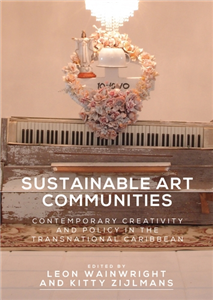
This collection sets out a range of perspectives on the challenges that the Caribbean is facing today, showing how the arts hold a crucial role in forging a more sustainable Caribbean community. It forcefully attests to the view that visual art in particular has a specific contribution to make and that this in turn means striving to foster a sustainable arts community that can contend with an environment of uneven infrastructure, opportunity and public awareness. Spanning the scholarly, artistic and professional fields of arts and heritage, this book compares two of the Caribbean's key linguistic regions - the Anglophone and the Dutch - to address the themes of global-local relations, capital, patronage, morality, contestation, sustainability and knowledge exchange. The result is a milestone of collaboration from diverse global settings of the Caribbean and its diaspora, including Jamaica, the Bahamas, Barbados, Suriname, Curaçao, the Netherlands, United Kingdom, Germany and the United States.
Trusted Partner
Trusted Partner
Trusted Partner
 Trusted Partner
 Trusted Partner
Trusted Partner
Trusted Partner
Trusted Partner
Trusted Partner
Trusted Partner
Trusted Partner
 Trusted Partner
Trusted Partner
Trusted Partner
Trusted Partner
Trusted Partner
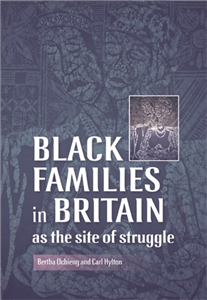
This edited book provides a valuable, unique and scholarly contribution to the study of Black families (African and African Caribbean) in the UK. It combines a systematic yet clear-headed approach with up-to-date and well-researched data to support its many stimulating assertions. All fifteen contributors (including academics, arts practitioners and community activists) are of African or African Caribbean descent and approach their subject matter with a dedicated 'hands-on' feel. Their committed approach is supported by empirical research and comprehensive review of the literature. With chapters on social policy, education, music, sports, social exclusion, racism, religion and spirituality, this book will become the essential text about UK families of African/Caribbean descent for higher education students, professionals, practitioners and the general reader. It will also appeal to professional organisations working with Black individuals and families. ;
Trusted Partner
 Trusted Partner



