
Playwrights Canada Press
Livres Canada Books
View Rights Portal

Livres Canada Books supports Canadian-owned book publishers in their export sales activities, in developing international partnerships, and assists publishers in improving their overall results through a range of services, including financial support, collective marketing, promotion, research, training, and a collective presence at major international book fairs. We are delighted to showcase great Canadian fiction, non-fiction, scholarly books, children’s books and young adult fiction in English and French. We encourage you to consult the listings here to find the stories and relationships that speak to you most. Livres Canada Books appuie les éditeurs appartenant à des intérêts canadiens dans leurs activités de ventes à l’exportation, en établissant des partenariats internationaux et en améliorant leur rendement global au moyen d’une gamme de services, dont l’aide financière, le marketing collectif, la promotion, la recherche, la formation et une présence collective aux principales foires internationales du livre. Nous nous réjouissons de mettre en vedette des titres canadiens exceptionnels, qu’il s’agisse de romans, de livres de non fiction, de livres pour enfants, de romans jeunes adultes ainsi que des publications savantes, et ce, en français et anglais. Nous vous invitons à consulter ces titres pour y découvrir les récits et les histoires qui vous interpellent le plus.
View Rights Portal

This book challenges the idealised narrative of Canada as an antislavery haven for self-liberated people to explore Canada's complicated relationship with slavery. Examining advertisements, abolitionist texts and narratives about slavery in Canadian newspapers and the texts that were printed alongside them, it shows how Canadian readers and enslavers developed an image of themselves as belonging to an antislavery community even while recognising their own complicity in slavery. The book explores narratives that depict the lives of Black settlers in Canada and how slave narratives circulated in Canada. Canada's relationship with slavery is far more complicated than seeing it as either an antislavery haven or a slaveholding space. Canada was connected to Britain, France, the Caribbean and the United States and this was central to how Canadians and Canadian readers fashioned their self-image in relation to slavery.
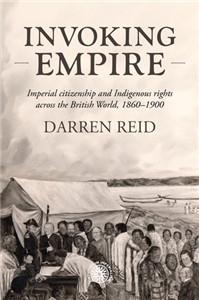
Invoking Empire examines the histories of Canada, South Africa, Australia, and New Zealand during the transitional decades between 1860-1900, when each gained some degree of self-government yet still remained within the sovereignty of the British Empire. It applies the conceptual framework of imperial citizenship to nine case studies of settlers and Indigenous peoples who lived through these decades to make two main arguments. It argues that colonial subjects adapted imperial citizenship to both support and challenge settler sovereignty, revealing the continuing importance of imperial authority in self-governing settler spaces. It also posits that imperial citizenship was rendered inoperable by a combination of factors in both Britian and the colonies, highlighting the contingency of settler colonialism on imperial governmental structures and challenging teleological assumptions that the rise of settler nation states was an inevitable result of settler self-government.
 Trusted Partner
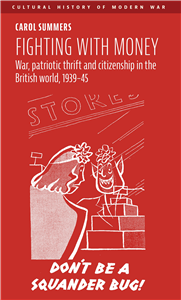
During the second world war, war savings campaigns reframed money as a means to to defend children, secure freedom, and enact citizenship across the British world. Patriotic thrift propaganda urged people to reject consumer goods and instead invest deliberately in stamps, certificates and bonds, presenting saving as a patriotic act that transformed subjects into accountable citizens. Officials and volunteers built a state-directed mobilisation that documented participation and linked household decisions to national victory. In Britain, these initiatives brought workers together and validated housewives' expertise, while Canada and Australia developed parallel schemes. Even colonies such as Uganda invested actively in British defence. Fighting with money examines how activists constructed these campaigns, the identities they imagined and their limits in a shifting wartime and postwar landscape.
Trusted Partner

Rethinking settler colonialism focuses on the long history of contact between indigenous peoples and the white colonial communities who settled in Australia, Aotearoa New Zealand, Canada and South Africa. It interrogates how histories of colonial settlement have been mythologised, narrated and embodied in public culture in the twentieth century (through monuments, exhibitions and images) and charts some of the vociferous challenges to such histories that have emerged over recent years. Despite a shared familiarity with cultural and political institutions, practices and policies amongst the white settler communities, the distinctiveness which marked these constituencies as variously, 'Australian', 'South African', 'Canadian' or 'New Zealander', was fundamentally contingent upon their relationship to and with the various indigenous communities they encountered. In each of these countries these communities were displaced, marginalised and sometimes subjected to attempted genocide through the colonial process. Recently these groups have renewed their claims for greater political representation and autonomy. The essays and artwork in this book insist that an understanding of the political and cultural institutions and practices which shaped settler-colonial societies in the past can provide important insights into how this legacy of unequal rights can be contested in the present. It will be of interest to those studying the effects of colonial powers on indigenous populations, and the legacies of imperial rule in postcolonial societies.
Trusted Partner

Research on soldier settlement has to be set within the wider history of emigration and immigration. This book examines two parallel but complementary themes: the settlement of British soldiers in the overseas or 'white' dominions, Australia, Canada, New Zealand and South Africa, between 1915 and 1930. One must place soldier settlement within the larger context of imperial migration prior to 1914 in order to elicit the changes in attitude and policy which occurred after the armistice. The book discusses the changes to Anglo-dominion relations that were consequent upon the incorporation of British ex-service personnel into several overseas soldier settlement programmes, and unravels the responses of the dominion governments to such programmes. For instance, Canadians and Australians complained about the number of ex-imperials who arrived physically unfit and unable to undertake employment of any kind. The First World War made the British government to commit itself to a free passage scheme for its ex-service personnel between 1914 and 1922. The efforts of men such as L. S. Amery who attempted to establish a landed imperial yeomanry overseas is described. Anglicisation was revived in South Africa after the second Anglo-Boer War, and politicisation of the country's soldier settlement was an integral part of the larger debate on British immigration to South Africa. The Australian experience of resettling ex-servicemen on the land after World War I came at a great social and financial cost, and New Zealand's disappointing results demonstrated the nation's vulnerability to outside economic factors.
Trusted Partner


This year, Ole is not looking forward at all to winter. He doesn’t like his new home and he really hates his new school. Especially because Rocco and his gang are making his life a misery. What he would like best of all is simply to run away and go to his grandfather Ottokar in Canada. But what’s this? Suddenly there’s a knock at Ole’s window and floating into the room comes – “Hellole, Ole” – a real live Snowby! And with a Snowby at Ole’s side, there can only be a wonderfully magic, wildly snowflaky winter! But when the Snowby himself is in danger, Ole must work wonders if he is to come to the rescue. Luckily he’s made some new friends he can rely on.
Trusted Partner
Trusted Partner
Mistress of everything examines how indigenous people across Britain's settler colonies engaged with Queen Victoria in their lives and predicaments, incorporated her into their political repertoires, and implicated her as they sought redress for the effects of imperial expansion during her long reign. It draws together empirically rich studies from Canada, Australia, New Zealand and Southern Africa, to provide scope for comparative and transnational analysis. The book includes chapters on a Maori visit to Queen Victoria in 1863, meetings between African leaders and the Queen's son Prince Alfred in 1860, gift-giving in the Queen's name on colonial frontiers in Canada and Australia, and Maori women's references to Queen Victoria in support of their own chiefly status and rights. The collection offers an innovative approach to interpreting and including indigenous perspectives within broader histories of British imperialism and settler colonialism. ;
Trusted Partner

This book outlines the ways sport helps to create transnational social fields that interconnect migrants dispersed across a region known as the Black Atlantic: England, North America and the Caribbean. Many Caribbean men's stories about their experiences migrating to Canada, settling in Toronto, finding jobs and travelling involved some contact with a cricket and social club. This book offers a unique contribution to black diaspora studies through showing sport as a means of allaying the pain of ageing in the diaspora, creating transnational social networks and marking ethnic boundaries on a local scale. The book also brings black diaspora analysis to sport research, and through a close look at what goes on before, during and after cricket matches provides insights into the dis-unities, contradictions and complexities of Afro-diasporic identity in multicultural Canada. It will be of interest to students and scholars in sociology, sport studies and black diaspora studies.
Trusted Partner
 Trusted Partner
Trusted Partner
Trusted Partner
This book will provide the first study of how the Gothic engages with ecocritical ideas. Ecocriticism has frequently explored images of environmental catastrophe, the wilderness, the idea of home, constructions of 'nature', and images of the post-apocalypse - images which are also central to a certain type of Gothic literature. By exploring the relationship between the ecocritical aspects of the Gothic and the Gothic elements of the ecocritical, this book provides a new way of looking at both the Gothic and ecocriticism. Writers discussed include Ann Radcliffe, Mary Shelley, Ambrose Bierce, Algernon Blackwood, Margaret Atwood, Cormac McCarthy, Dan Simmons and Rana Dasgupta. The volume thus explores writing and film across various national contexts including Britain, America and Canada, as well as giving due consideration to how such issues might be discussed within a global context.
Trusted Partner

Can reading make us better citizens? In Crossing borders and queering citizenship, Feghali crafts a sophisticated theoretical framework to theorise how the act of reading can contribute to the queering of contemporary citizenship in North America. Providing sensitive and convincing readings of work by both popular and niche authors, including Gloria Anzaldúa, Dorothy Allison, Gregory Scofield, Guillermo Gómez-Peña, Erín Moure, Junot Díaz, and Yann Martel, this book is the first to not only read these authors together, but also to discuss how each powerfully resists the exclusionary work of state-sanctioned citizenship in the U.S. and Canada. This book convincingly draws connections between queer theory, citizenship studies, and border studies and sheds light on how these connections can reframe our understanding of American Studies.
Trusted Partner
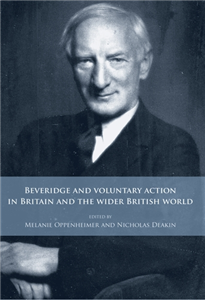
The relationship between the state and the voluntary sector has changed significantly since 1948 when Beveridge's major report, Voluntary Action, was first published. Sixty years later, a group of historians analyse and reassess the impact of Beveridge's ideas about voluntary action for social advance in this timely volume. Using examples from the UK, Australasia and Canada, this book clearly articulates the importance and significance of Beveridge's ideas on voluntary action within an international context. With the emphasis of governments on the importance of the voluntary or 'third sector' and the development of policies and practices to enhance social capital, build civil society and engage communities, this book will be invaluable for those interested in how the third sector has evolved over time. It will be of interest to historians, social policy researchers, political theorists, economists and educationalists. ;
Trusted Partner
Trusted Partner

The Toronto New Wave (TNW) comprises a group of avant-garde filmmakers working in Canada from the 1980s and into the new millennium whose innovative film works share significant affinities with anarchist themes and aesthetics. Several of the TNW filmmakers openly identify as anarchists and/or acknowledge a debt to anarchism in their production of highly apocalyptic narratives as part of their cinematic political projects. However, recognition of anarchism's progressive apocalyptic theoretical relevance has yet to be substantially taken up by scholarship in cinema analysis. This analysis introduces an anarchist-inflected analytical methodology to understand the apocalyptic-revelatory political work these films attempt to accomplish in the perceptual space between the filmic texts and both their auteurs and potential viewers, and to re-locate the TNW within cinema history as an ongoing phenomenon with new significance in an apocalyptic era of digital distribution.
Trusted Partner
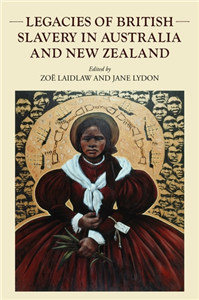
This book investigates the legacies of British slavery beyond Britain, focusing upon the colonisation of Australia and New Zealand, and explores why this history has been overlooked. After August 1833, when the British Parliament abolished slavery in the British Caribbean, Mauritius and the Cape, the former slave-owners were paid compensation for the loss of their 'property'. New research has begun to show that many beneficiaries had ties to other parts of the British Empire, including the settler colonies of Australia, New Zealand, Canada and South Africa. Through a range of case studies, contributors to this collection trace the movement of people, goods, capital, and practices from the Caribbean to the new Australasian settler colonies. Chapters consider a range of places, people and themes to reveal the varied ways that slavery continued to shape imperial relationships, economic networks, and racial labour regimes after 1833.
Trusted Partner
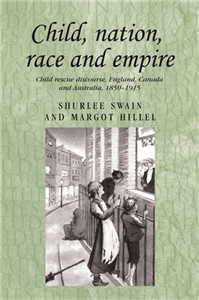
Child, nation, race and empire is an innovative, inter-disciplinary, cross cultural study that contributes to understandings of both contemporary child welfare practices and the complex dynamics of empire. It analyses the construction and transmission of nineteenth-century British child rescue ideology. Locating the origins of contemporary practice in the publications of the prominent English Child rescuers, Dr Barnardo, Thomas Bowman Stephenson, Benjamin Waugh, Edward de Montjoie Rudolf and their colonial disciples and literature written for children, it shows how the vulnerable body of the child at risk came to be reconstituted as central to the survival of nation, race and empire. Yet, as the shocking testimony before the many official enquiries into the past treatment of children in out-of-home 'care' held in Britain, Ireland, Australia and Canada make clear, there was no guarantee that the rescued child would be protected from further harm. ;
Trusted Partner
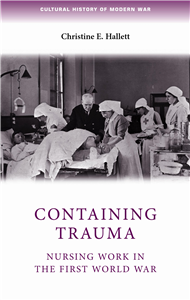
In this lucid and cogently-argued book, Christine Hallett explores the nature of the practices developed by nurses and their volunteer-assistants during the First World War. She argues that nurses found meaning in their complex and stressful work by identifying it as a process of 'containing trauma'. Broad in its scope and detailed in its research, the book analyses the work of nurses from Britain, Australia, New Zealand, Canada, South Africa and the United States of America. It draws on highly personal writings: letters and diaries drawn from archives and libraries throughout the world. This wide-ranging book explores a range of treatment scenarios, from the Western and Eastern Fronts to the Eastern Mediterranean, Mesopotamia and India. It considers both the efforts of nurses to provide physical, emotional and moral containment to their patients, and the work they did to maintain their own physical and emotional integrity. ;
Trusted Partner

Child, nation, race and empire is an innovative, inter-disciplinary, cross cultural study that contributes to understandings of both contemporary child welfare practices and the complex dynamics of empire. It analyses the construction and transmission of nineteenth-century British child rescue ideology. Locating the origins of contemporary practice in the publications of the prominent English Child rescuers, Dr Barnardo, Thomas Bowman Stephenson, Benjamin Waugh, Edward de Montjoie Rudolf and their colonial disciples and literature written for children, it shows how the vulnerable body of the child at risk came to be reconstituted as central to the survival of nation, race and empire. Yet, as the shocking testimony before the many official enquiries into the past treatment of children in out-of-home 'care' held in Britain, Ireland, Australia and Canada make clear, there was no guarantee that the rescued child would be protected from further harm.


