Your Search Results

      • Cultural Relics Press

        Cultural Relics Press was established in 1957, and is the only press dedicated to publishing archeology related books. It is committed to salvaging and protecting China’s cultural heritage and publicizing the content and artistic charm of traditional Chinese culture. Over the past 60 years, it has published about 7000 kinds of books on culture and archeology”. Its publications on traditional Chinese culture are well received across the world. It is the first press to engage in cultural exchange abroad and cooperate with counterparts in Europe, the United States, Hong Kong and Taiwan. It has collaborated with partners in UK, USA, Italy, Japan, former Yugoslavia, Taiwan. More than 300 awards has been received at home and abroad, including, among others, National Book Award, China Book Award, and “Most Beautiful Books in the World” (Leipzig).

        View Rights Portal
      • Book Cultural Center

        The Book Cultural Center is a publishing house established in Morocco, Casablanca, created in 2016. With over 42 years of experience in the industry, we are specialized in Arabic literature, social science and novels. We have more than 250 titles. Our books are distributed in all Arabic countries and we participate in more than 10 bookfairs a year. Our establishment is a reference and a pioneer in the Arabic world.

        View Rights Portal
      • Trusted Partner
        Business, Economics & Law
        March 2008

        Cultural warfare and trust

        Fighting the Mafia in Palermo

        by Carina Gunnarson, Kim Stringer

        Cultural warfare and trust: fighting the Mafia in Palermo concentrates on a central issue in research on democratic processes: the development of generalised trust. The existence of generalised trust and confidence in a society is decisive for economic development and an effective democracy. Is it possible to fight persistent values of distrust and non-cooperation? Is it possible to support the development of generalised trust through public action and education? The book addresses these questions by examining political efforts to combat Palermo's Mafia-controlled heritage and to turn a tradition of non-cooperation and distrust into cooperation and trust. In particular, it focuses on the school program launched in Palermo during the mid-1990s, which was designed to break the Mafia's territorial and mental control. Combining theories on social capital and civic education, the author presents and analyses new quantitative and qualitative research carried out in seven public schools in Palermo. This book will be valuable to students, academics and researchers interested in social capital and trust, Italian politics, civic education, organised crime, local government and democratic practice. ;

      • Trusted Partner
      • Trusted Partner
      • Trusted Partner
        Psychology

        Developing Anti-Racist Cultural Competence

        by Rehman Abdulrehman

        Learn to understand how you see others with this no-nonsense,practical guide• Teaches cultural humility• Provides practical guidance• Addresses internalized racismIn today’s society, anti-racist cultural competence is an essentialskill and not something meant only to be addressedby some. Issues tied to resolving racism and understandingand including diverse cultural points of view remain highlyconflictual – and the ability to deal with these issues effectivelyis often hindered by fear, anxiety, and a misunderstandingof what it means to be culturally competent withoutmaking people feel like outsiders. While many other modelsof cultural competence approach the issue as though lookinginto a fishbowl, this book views the issue as everyoneswimming in the water together, as part of a common ecosystemand community.

      • Trusted Partner
        Humanities & Social Sciences
        September 2008

        The culture of toleration in diverse societies

        Reasonable tolerance

        by Catriona McKinnon, Dario Castiglione

        The idea of toleration as the appropriate response to difference has been central to liberal thought since Locke. Although the subject has been widely and variously explored, there has been reluctance to acknowledge the new meaning that current debates on toleration have when compared with those at its origins in the early modern period and with subsequent discussions about pluralism and freedom of expression. This collection starts from a clear recognition of the new terms of the debate. It recognises that a new academic consensus is slowly emerging on a view of tolerance that is reasonable in two senses. Firstly of reflecting the capacity of seeing the other's viewpoint, secondly on the relatively limited extent to which toleration can be granted. It reflects the cross-thematic and cross-disciplinary nature of such discussions, dissecting a number of debates such as liberalism and communitarianism, public and private, multiculturalism and the politics of identity, and a number of disciplines: moral, legal and political philosophy, historical and educational studies, anthropology, sociology and psychology. A group of distinguished authors explore the complexities emerging from the new debate. They scrutinise, with analytical sophistication, the philosophical foundation, the normative content and the broadly political implications of a new culture of toleration for diverse societies. Specific issues considered include the toleration of religious discrimination in employment, city life and community, social ethos, publicity, justice and reason and ethics. The book is unique in resolutely looking forward to the theoretical and practical challenges posed by commitment to a conception of toleration demanding empathy and understanding in an ever-diversifying world. ;

      • Trusted Partner
        Humanities & Social Sciences
        March 2026

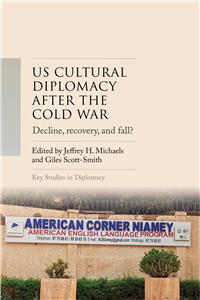
        US cultural diplomacy after the Cold War

        Decline, recovery, and fall

        by Jeffrey H. Michaels, Giles Scott-Smith

        In the decades following the USSR's collapse, the US has gone from unrivalled hegemon to a position of relative decline. With America 'triumphant' after 1991, its culture, like its diplomatic, military and economic power, remained unmatched. Such favourable circumstances seemed to undercut the need for cultural diplomacy. Why should the US government sell a product that was already selling so well? After 9/11, however, it was apparent the US image was less popular than previously assumed. To reverse this negative image, cultural diplomacy was revived. Despite being beset by internal and external challenges, US officials supported various cultural initiatives and partnerships to promote the American brand globally. Along the way, cultural diplomacy has made use of new forms of expression to promote American culture and build positive foreign relations. The arrival of the second Trump administration in 2025 has clearly signalled an end to using cultural diplomacy to further causes of empowerment and diversity, making the future uncertain for this field of activity.

      • Trusted Partner
        Humanities & Social Sciences
        July 2013

        Diversity management in Spain

        New dimensions, new challenges

        by Ricard Zapata-Barrero

        In the current European dilemma as to whether to increase diversity policies or move towards an assimilationist policy, it is difficult to know what the Spanish approach is. This book argues that Spain represents a context of "multiple diversity", where two frameworks interact: an old, unresolved one, arising from democratic transition, and a new one due to immigration. This explains the Spanish practical approach, where the recent past plays the role of an iron cage, limiting institutional innovation and change. The author proposes a heuristic model, to better understand the "Spanish laboratory of diversities". In order to go through these steps, the author analyses three case studies, coming from the political/social agenda: education, workplace, and political rights. At the end, the reader will have an empirically informed and theoretically founded overview on how Spain is managing diversity. This book is timely for a wide range of academic and professional readers. ;

      • Trusted Partner
        Humanities & Social Sciences
        February 2011

        Cultural Region

        North east England 1945–2000

        by Natasha Vall

        This book is the first historical assessment of English regional cultural policy. With its dialect and striking modern icons such as the Angel of the North, the north east has been described as England's most distinctive region. This study reveals the impact of the new cultural institutions that emerged after 1945 upon a region with deeply rooted vernacular traditions. The creation of the regional arts board and the development of regional broadcasting as well as the national efforts to manage the northern economic problems presented challenges for vernacular culture. In the ensuing battle between provincial and metropolitan values the north east as a modern cultural region took shape. The concluding chapters detail the cultural regeneration of the urban riversides, a much vaunted example of successful culture-led regeneration. This volume is essential for anyone with an interest in the formation of cultural identities, the development of regional government arts policies, urban regeneration and cultural and social history. ;

      • Trusted Partner
        Humanities & Social Sciences
        December 2024

        British culture after empire

        Race, decolonisation and migration since 1945

        by Josh Doble, Liam Liburd, Emma Parker

        British culture after Empire is the first collection of its kind to explore the intertwined social, cultural and political aftermath of empire in Britain from 1945 up to and beyond the Brexit referendum of 2016, combining approaches from the fields of history, English and cultural studies. Against those who would deny, downplay or attempt to forget Britain's imperial legacy, the various contributions expose and explore how the British Empire and the consequences of its end continue to shape Britain at the local, national and international level. As an important and urgent intervention in a field of increasing relevance within and beyond the academy, the book offers fresh perspectives on the colonial hangovers in post-colonial Britain from up-and-coming as well as established scholars.

      • Trusted Partner
        October 2015

        Diversity Management

        Generationenübergreifende Zusammenarbeit fördern

        by Wegge, Jürgen; Schmidt, Klaus-Helmut

      • Trusted Partner
      • Trusted Partner
        Humanities & Social Sciences
        April 2004

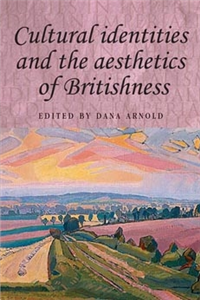
        Cultural identities and the aesthetics of Britishness

        by Andrew Thompson, Dana Arnold, John Mackenzie

        Considers how notions of Britishness were constructed and promoted through architecture, landscape, painting, sculpture and literature. Maps important moments in the self-conscious evolution of the idea of 'nation' against a broad cultural historical framework. An important addition to the field of postcolonial studies as it looks at how British identity creation affected those living in England - most study in this area has thus far focused on the effect of such identity creation upon the colonial subject. Broad appeal due to wide subject matter covered. Examines just how 'constructed' a national identity is - past and present. ;

      • Trusted Partner
        Humanities & Social Sciences
        March 2017

        Cultural identities and the aesthetics of Britishness

        by Dana Arnold

        Considers how notions of Britishness were constructed and promoted through architecture, landscape, painting, sculpture and literature. Maps important moments in the self-conscious evolution of the idea of 'nation' against a broad cultural historical framework. An important addition to the field of postcolonial studies as it looks at how British identity creation affected those living in England - most study in this area has thus far focused on the effect of such identity creation upon the colonial subject. Broad appeal due to wide subject matter covered. Examines just how 'constructed' a national identity is - past and present.

      • Trusted Partner
        Humanities & Social Sciences
        March 2026

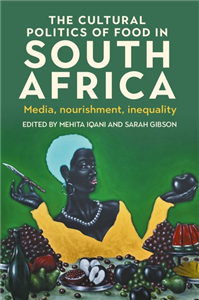
        The cultural politics of food in South Africa

        Media, nourishment, inequality

        by Mehita Iqani, Sarah Gibson

        Food is both a material system of nourishment, necessary for human survival, and a communicative system that signifies multiple meanings across human cultures. This book explores the cultural politics of food in the South African context, bringing together a range of disciplinary perspectives on the links between media, nourishment, and inequality. The chapters all highlight the multiplicity of meanings that food has in South African society. These include historical perspectives on the impact of colonialism, migration and apartheid had on food and foodways in South Africa; sociological interventions on food and society; aesthetic practices in relation to food; and mediated food cultures in South Africa. Taken together, the book critically explores the multiple ways in which food is never just food, and always linked to complex and shifting modalities of meaning and knowledge in the South African context.

      • Trusted Partner
        May 1992

        Beschreibung einer Form

        Versuch über Kafka

        by Martin Walser, Walter Höllerer

        Der Versuch über Kafka Beschreibung einer Form ist Martin Walsers Dissertation, sie erschien erstmals 1961 und ist eine bemerkenswerte Einführung in das Werk Franz Kafkas, das eine so tiefe und nicht nachlassende Wirkung ausübt.

      • Trusted Partner
        July 2006

        Cultural Turns

        Neuorientierungen in den Kulturwissenschaften

        by Bachmann-Medick, Doris

      • Trusted Partner
        July 2011

        Cultural Governance

        Zur Kulturgeographie des UNESCO-Welterberegimes

        by Schmitt, Thomas M.

      • Trusted Partner
        August 2001

        Lara Croft - Modell, Medium, Cyberheldin

        Das virtuelle Geschlecht und seine metaphysischen Tücken

        by Astrid Deuber-Mankowsky, EIDOS Interactive Germany, Agentur TBWA Frankfurt

        Lara Croft, die Heldin des Computerspiels »Tomb Raider«, ist in kurzer Zeit zu einem »Cultural icon« geworden. Sie ist Traum-Frau und weibliche Heldin, Pin-up-Girl und »Grrl« in einem. Damit bedient sie männliche ebenso wie weibliche Ermächtigungsphantasien. Doch statt die hierarchische Geschlechterordnung zu unterlaufen, befördert der Kult um Lara Croft einen Prozeß, der als »Medialisierung« der Körper beschrieben werden kann und der die dualistische Geschlechtermetaphysik auf einem höheren Level auferstehen läßt. Welche Bedeutungsverschiebung durchläuft der Begriff des Geschlechtlichen im Zuge seiner Virtualisierung? Die Autorin nähert sich dieser Frage entlang einer Analyse der Entstehungs- und der Wirkungsgeschichte des Phänomens Lara Croft.

      Subscribe to our

      newsletter