
Annika Parance Éditeur
Livres Canada Books
View Rights Portal

Eine Jugendbuchfantasy-Saga ab 10 Jahre: Der Spiegelwächter, Die Suche nach dem Schattendorf, Im Land der Nuria. Insgesamt wird es fünf Bände zu dieser Saga geben.
View Rights Portal



Halt geben, Vertrauen leben. Wenn das Leben wackelt, braucht es Menschen, die Halt geben – und die wissen, wie Vertrauen entsteht. Dieses Buch schenkt Eltern Kraft, Trost und Klarheit: inmitten von Chaos, Selbstzweifeln und Alltagsstress. Mit den berührenden Texten von Bestsellerautorin Nora Imlau und den liebevollen Illustrationen von Frau Annika wird jede Seite zum stärkenden Moment. Für alle, die spüren: Echte Sicherheit wächst nicht aus Kontrolle – sondern aus Beziehung.
 Trusted Partner

Was Familien stark macht Mit ehrlichen Einblicken ins echte Familienleben zeigt Erziehungsexpertin und Bestsellerautorin Nora Imlau, wie Nähe und Verbundenheit gelingen - selbst inmitten des ganz normalen Alltagschaos. In Zusammenarbeit mit der Illustratorin Frau Annika entsteht ein liebevoll gestaltetes Geschenkbuch, das Mut macht, die Goldrichtigkeit des eigenen Weges zu erkennen: Du bist genau richtig - als Mensch, als Elternteil, als Familie. Goldrichtig. Was uns zusammenhält und trägt: Die wichtigsten Leitsätze von Erziehungsexpertin Nora Imlau in einem wunderbaren Geschenkbuch Familienleben in echt: Ein inspirierendes Geschenkbuch für Erwachsene über die Schönheit und Besonderheit des Alltags mit Kindern. Ehrliche Einblicke: Nora Imlau beschreibt liebevoll, wie man den Alltag mit Kindern meistert und dabei authentisch und bedürfnisorientiert agiert. Wie ein kunterbuntes Zuhause: Die warmherzigen Illustrationen von Frau Annika unterstreichen die Texte und machen das Buch zu einem einzigartigen, emotionalen Leseerlebnis. Zum immer wieder Lesen: Ein ganz besonderes Geschenk für Eltern, das für Ruhe und Durchhaltevermögen im Familienleben sorgt. Ein Schatzkästchen für Eltern: Das Bilderbuch ist der Auftakt einer neuen Buchreihe über Themen, die Eltern und Kinder verbinden. Die Schönheit des Lebens feiern mit DRESSLERillustro!DRESSLERillustro steht für sorgfältig kuratierte Geschenkbücher mit einzigartigen Bildern und Texten. Die reich illustrierten Bilderbücher für Erwachsene von namhaften Autor*innen und Illustrator*innen begeistern durch ihre hohe inhaltliche und optische Qualität. Bei DRESSLERillustro dreht sich alles um die großen Themen unserer Zeit: Liebe, Hoffnung, Sehnsucht, Naturverbundenheit, Selbstfürsorge. Jedes Buch ist ein kleines Kunstwerk und ein wertvolles Geschenk für einen lieben Menschen oder für sich selbst. Für kleine Auszeiten und Momente des Innehaltens und Reflektierens.
Trusted Partner

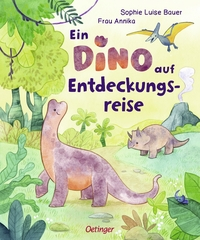
Die Kleinsten entdecken die Welt – eine bunte Reise durch die Urzeit. Der kleine Langhals erlebt sein erstes Abenteuer und lernt dabei die anderen Dinosaurier kennen. Manche haben Hörner, manche können fliegen, manche schwimmen und wieder andere können richtig schnell rennen. Und manche Dinos sehen sogar ein bisschen gefährlich aus, auch wenn sie nur Pflanzen fressen. „Was kann ich besonders gut?“ fragt das Dino-Baby seine Mama, nachdem es all die anderen Urzeittiere getroffen hat. Na klar, mit seinem langen Hals kommt es an die leckersten Blätter heran. Denn die hängen ja bekanntlich weiter oben an Bäumen und Sträuchern. Zauberhafte Reime! Eine Pappbilderbuch-Geschichte aus der Welt der Dinos. So faszinierend, diese Dinosaurier! Urzeit-Abenteuer für kleine Entdecker*innen ab 2 Jahren. Schau nur, wie viele Dinos sich im Buch tummeln! Und alle sind verschieden – so wie wir Menschen. Liebevolle Reime wecken die Lust aufs Erkunden der Welt, stärken das Selbstbewusstsein und machen Mut für den Umgang mit anderen. Einzigartige Optik: Bebildert mit traumhaft schönen Aquarell-Illustrationen der bekannten Lettering-Künstlerin und Illustratorin Frau Annika. Nachhaltig produziert, schont Ressourcen und die Umwelt.
Trusted Partner


Tim, who with Annika and Malte has qualified for the second round, is confronted with the biggest challenge of his running career: he, his friends and their arch rivals Jeremy, Darius and Vanessa must form a team that will perform perfectly together. How well they succeed will be judged by millions of spectators, because every moment of this competition will be broadcast live by the media company Global Games. The decision as to who wins has long since ceased to be a matter of ability. Whether the prize is worth the challenge is open to question.
Trusted Partner
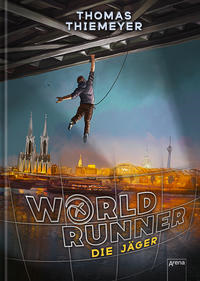
Tim is one of them. A runner full of passion, ready to go beyond the limits. When one day he gets a letter from GlobalGames he doesn’t hesitate to accept the challenge for a second. 7 caches have been hidden in 7 locations. 100 young people are chasing after them. Each one against the others. But Tim soon realises that he can’t do it alone. He finds an ally in the fascinating Annika, known as Sakura. But can he really trust her? Or is everyone just running for themselves after all? Who’s ready to go the furthest to find the biggest cache in the world?
Trusted Partner
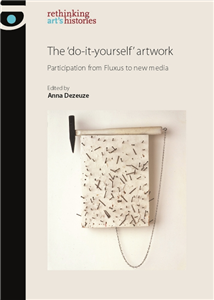
Viewers of contemporary art are often invited to involve themselves actively in artworks, by entering installations, touching objects, performing instructions or clicking on interactive websites. Why have artists sought to engage spectators in these new forms of participation? In what ways does active participation affect the viewer's experience and the status of the artwork? Spanning a range of practices including kinetic art, happenings, environments, performance, installations, relational and new media art from the 1950s to the present, this critical anthology sheds light on the history and specificity of artworks that only come to life when you - the viewer - are invited to 'do it yourself.' Rather than a specialist topic in the history of twentieth- and twenty-first century art, the 'do-it-yourself' artwork raises broader issues concerning the role of the viewer in art, the status of the artwork and the socio-political relations between art and its contexts.
Trusted Partner
 Trusted Partner

With well over 6,300 articles, including over 500 new entries, this fourth edition of The Encyclopedia of British Film is a fully updated invaluable reference guide to the British film industry. It is the most authoritative volume yet, stretching from the inception of the industry to the present day, with detailed listings of the producers, directors, actors and studios behind a century or so of great British cinema. Brian McFarlane's meticulously researched guide is the definitive companion for anyone interested in the world of film. Previous editions have sold many thousands of copies and this fourth edition will be an essential work of reference for enthusiasts interested in the history of British cinema, and for universities and libraries.
Trusted Partner

Thomas May's The Tragedy of Antigone (1631), edited by Matteo Pangallo, is the first English treatment of the story made famous by Sophocles. This edition contains a facsimile of the copy held at the Beinecke Library of Yale University, making the play commercially available for the first time since its original publication. The extensive introduction discusses, among other things, the ownership history of existing copies and their marginal annotations, and of the play's topical political implications in the light of May's wavering between royalist and republican sympathies. Writing during the contentious early years of Charles I's reign, May used Sophocles' Antigone to explore the problems of just rule and justified rebellion. He also went beyond the scope of the original, adding content from a wide range of other classical and contemporary plays, poems and other sources, including Shakespeare's Romeo and Juliet and Macbeth. This volume will be essential reading for advanced students, researchers and teachers of early English drama and seventeenth-century political history.
Trusted Partner

The Humorous Magistrate is a seventeenth-century satiric comedy extant in two highly distinctive manuscripts. This, the earliest and clearly working draft of the play is bound with three other plays (including The Emperor's Favourite, published by the Malone Society in 2010) in a volume in the library of the Newdigate family of Arbury Hall, Nuneaton, Warwickshire. The second version, showing yet another stage of revision not found in the Arbury manuscript and orientated towards performance, was purchased by the University of Calgary from the English antiquarian Edgar Osborne in 1972. The relationship between the manuscripts was discovered in 2005. The anonymous play has been attributed to John Newdigate III (1600-1642). Like The Emperor's Favourite, it takes aim at the court; its particular object of satire is governmental strategies under the Personal Rule of Charles I. The play appears in print for the first time in these separate editions. The volumes are illustrated with several plates, some provided for comparative purposes.
Trusted Partner
 Trusted Partner

Mary Kelly, we are told, was not a feminist artist, but a feminist who made art. Designed to accompany a major retrospective at the Whitworth Art Gallery, this book contains essays and interviews which show the implications of that distinction and also the legacy of feminists and feminism in relation to art. Challenging and beautiful, Kelly's artworks address questions of sexuality, identity and historical memory in the form of large-scale narrative installations. The works are agilely discussed in contributions by some of the luminary feminist art scholars of our time, including Janet Wolff, Laura Mulvey, Carol Mavor and Amelia Jones, making this collection an essential new text in the discourse on art, feminism, psychoanalysis and representation.
Trusted Partner


Pippi geht in die Schule, schließlich ist es doch ungerecht, dass Annika und Tommy Ferien bekommen und Pippi nicht! Aber erst einmal muss die Lehrerin testen, was Pippi denn so kann – da kommt Schwung in den Unterricht. Doch auch wenn gerade keine Schule ist, muss man sich das Leben doch schön machen! Also organisiert Pippi einen Ferienausflug für Annika und Tommy, Picknick auf der Kuhwiese inklusive. Enthält die Geschichten: Pippi geht in die Schule, Pippi arrangiert einen Ausflug Vorgelesen von Ursula Illert, untermalt mit vielen Geräuschen und Musik.
Trusted Partner
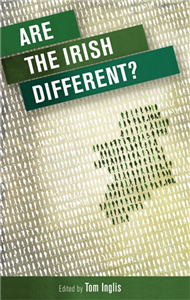
This book examines the extent and nature of Irish social and cultural difference. It is a collection of twenty-three short essays written in a clear and accessible manner by human scientists who are international experts in their area. The topics covered include the nature of Irish nationalism and capitalism, the Irish political elite, the differences and similarities of the Irish family, the upsurge in immigration, Northern Ireland, the Irish diaspora, the Irish language, sport, music and many other topics. The book will be bought by those who have an academic and personal interest in Irish Studies. It will be attractive to those who are not familiar with the theories and methods of the human sciences and how they can shine a light on the transformations that have taken place in Ireland. Tom Inglis, the editor of the collection, is a sociologist who has written extensively on Irish culture and society.
Trusted Partner
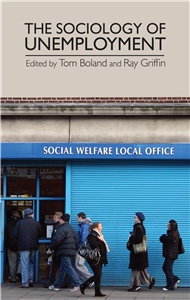
The sociology of unemployment is an analysis of the experience and governance of unemployment. By considering unemployment as more than just the absence of work; the book explores unemployment as a distinctive experience created by the welfare state. Each chapter explores an aspect of the experience or governance of unemployment; beginning with how people talk about their experience of being unemployed individually and collectively, to the places of unemployment, and on to the processes, policies and forms of the social welfare system. Clear explanations of classic theories are explored and extended, all against the backdrop of new primary research. Chapter by chapter, The sociology of unemployment challenges the 'deprivation theory of unemployment' which dominates sociology, psychology and social policy, by focusing on how governmental power forms the experience of unemployment. As a result, the book is both an introductory text on the sociology of unemployment and a fresh, critical perspective.
Trusted Partner
Writers have previously placed the action of kissing into categories: kisses of love, affection, peace, respect and friendship. Each of the essays in this fascinating book take a single kind of kiss and uses it as an index to the past. For rather than offering a simple history of the kiss, this book is about the kiss in history. In this collection, an eminent group of cultural historians have explored this subject using an exceptionally wide range of evidence. They explore the kiss through sources as diverse as canonical religious texts, popular prints, court depositions, periodicals, diaries and poetry. In casting the net so wide, these authors demonstrate how cultural history has been shaped by a broad concept of culture, encompassing more than simply the canons of art and literature, and integrating apparently 'historical' and 'non-historical' sources. Furthermore, this collections shows that by analyzing the kiss and its position - embedded as it is as part of our culture - history can use small gestures to take us to big issues concerning ourselves and others, the past and the present. With an afterword by Sir Keith Thomas, this book will be fascinating reading for cultural historians working on a wide range of different societies and periods.
Trusted Partner

Bob Dylan's cultural production in the second half of the twentieth century, his songs, but also his changing images and self-fashionings have informed and productively re/shaped certain images of America from outside and within. Refractions of Bob Dylan collects scholarly essays which thoroughly investigate the routes of Bob Dylan's cultural appropriations. The collection looks at how Dylan has been used and interpreted by others, and how his work has been reworked into cultural expressions in culturally and regionally divergent spaces. Additionally, a number of essays look at what Dylan has appropriated and incorporated in his own work, focusing on questions of plagiarism, tribute, allusion, love and theft. Some of the essays originate from the Refractions of Bob Dylan conference in Vienna (www.dylanvienna.at) which took place around the 70th birthday of Bob Dylan, and included Dylan experts such as Clinton Heylin, Stephen Scobie and Michael Gray.
Trusted Partner


Already in its 3rd edition, the PTAheute handbook presents the essence of practical pharmacy knowledge and is becoming the standard work for a practical pharmacy. PTAheute authors contribute their professional experience and bundle the most important facts, in the proven manner of the trade journal PTAheute: ■ Comprehensibly prepared content facilitates putting knowledge effectively into practice. ■ Infographics help readers understand the contexts. ■ Yellow boxes provide a quick overview. ■ Pictures and graphic design increase reading pleasure. The content on multiple sclerosis or on the various aspects of Covid-19 is new to the 3rd edition. The chapters on „Antibiotics“ and „Interactions“ have been completely restructured and revised and all other content has been brought fully up to date. The PTAheute handbook – the reliable companion in everyday pharmacy life!
Trusted Partner

Auteurism - the idea that a director of a film is its source of meaning and should retain creative control over the finished product - has been one of film studies' most important paradigms ever since the French New Wave of the late 1950s and early 1960s, and the adoption of the term auteur by Andrew Sarris. Through the popular, controversial and critically acclaimed films of Olivier Assayas, Jacques Audiard, the Dardenne borthers, Michael Haneke and Francois Ozon, this book looks into how the meaning of 'auteur' has changed over this half-century, and assesses the current state of Francophone auteur cinema. It combines French philosophical and sociological approaches with methodologies from the Anglo-American fields of gender studies, queer theory and postmodernism. This volume will be of interest to researchers and students of film studies, European cinema and French and Francophone studies, as well as to film enthusiasts.

