Your Search Results

      • Trusted Partner
        Business, Economics & Law
        March 2026

        Humanitarianism in Civil War

        The Biafra crisis, 1967-1970

        by Marie-Luce Desgrandchamps

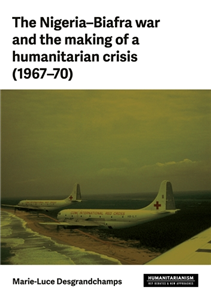
        May 1967, in Nigeria, the Republic of Biafra declared its independence. Soon, civil war and famine ravaged the region and gradually entered the European and American media. Photographs of the conflict arouse considerable emotion in the West. The secessionist enclave and the areas taken over by the Nigerian army then became the scene of major relief operations, developed and financed by multiple organizations and governments. Part of a historiography of humanitarianism in full renewal, this book tells the story of the war, its metamorphosis into an international crisis and the responses that were provided. Based on a large body of sources from French, British, Swiss, Nigerian and American archives, it offers an insight into the world of humanitarian work at the end of the 1960s. It shows the reconfigurations taking place there. in the postcolonial era by proposing complementary scales of observation - international, national and local. The work also revisits some of the controversies which developed around the conflict regarding the instrumentalization of aid, its links with politics, the reception of relief operations on the ground or even the birth of borderlessness and testimony. It thus returns to the place occupied by the Biafran crisis in the history of humanitarian aid.

      • Trusted Partner
        The Arts
        March 2017

        Images of the army

        The military in British art, 1815-1914

        by J. W. M. Hichberger

        In an age when engraving and photography were making artistic images available to a much wider public, artists were able to influence public attitudes more powerfully than ever before. This book examines works of art on military themes in relation to ruling-class ideologies about the army, war and the empire. The first part of the book is devoted to a chronological survey of battle painting, integrated with a study of contemporary military and political history. The chapters link the debate over the status and importance of battle painting to contemporary debates over the role of the army and its function at home and abroad. The second part discusses the intersection of ideologies about the army and military art, but is concerned with an examination of genre representations of soldiers. Another important theme which runs through the book is the relation of English to French military art. During the first eighty years of the period under review France was the cynosure of military artists, the school against which British critics measured their own, and the place from which innovations were imported and modified. In every generation after Waterloo battle painters visited France and often trained there. The book shows that military art, or the 'absence' of it, was one of the ways in which nationalist commentators articulated Britain's moral superiority. The final theme which underlies much of the book is the shifts which took place in the perception of heroes and hero-worship.

      • Trusted Partner
        Humanities & Social Sciences
        March 2017

        The French empire between the wars

        Imperialism, politics and society

        by Martin Thomas

        By considering the distinctiveness of the inter-war years as a discrete period of colonial change, this book addresses several larger issues, such as tracing the origins of decolonization in the rise of colonial nationalism, and a re-assessment of the impact of inter-war colonial rebellions in Africa, Syria and Indochina. The book also connects French theories of colonial governance to the lived experience of colonial rule in a period scarred by war and economic dislocation.

      • Trusted Partner
        Literature & Literary Studies
        March 2023

        Sleep and its spaces in Middle English literature

        Emotions, ethics, dreams

        by Megan Leitch

        Middle English literature is intimately concerned with sleep and the spaces in which it takes place. In the medieval English imagination, sleep is an embodied and culturally determined act. It is both performed and interpreted by characters and contemporaries, subject to a particular habitus and understood through particular hermeneutic lenses. While illuminating the intersecting medical and moral discourses by which it is shaped, sleep also sheds light on subjects in favour of which it has hitherto been overlooked: what sleep can enable (dreams and dream poetry) or what it can stand in for or supersede (desire and sex). This book argues that sleep mediates thematic concerns and questions in ways that have ethical, affective and oneiric implications. At the same time, it offers important contributions to understanding different Middle English genres: romance, dream vision, drama and fabliau.

      • Trusted Partner
        The Arts
        January 2019

        The war that won't die

        The Spanish Civil War in cinema

        by David Archibald

        The war that won't die charts the changing nature of cinematic depictions of the Spanish Civil War. In 1936, a significant number of artists, filmmakers and writers - from George Orwell and Pablo Picasso to Joris Ivens and Joan Miró - rallied to support the country's democratically-elected Republican government. The arts have played an important role in shaping popular understandings of the Spanish Civil War and this book examines the specific role cinema has played in this process. The book's focus is on fictional feature films produced within Spain and beyond its borders between the 1940s and the early years of the twenty-first century - including Hollywood blockbusters, East European films, the work of the avant garde in Paris and films produced under Franco's censorial dictatorship. The book will appeal to scholars and students of Film, Media and Hispanic Studies, but also to historians and, indeed, anyone interested in why the Spanish Civil War remains such a contested political topic.

      • Trusted Partner
        The Arts
        June 2021

        The war that won't die

        The Spanish Civil War in cinema

        by David Archibald

        The war that won't die charts the changing nature of cinematic depictions of the Spanish Civil War. In 1936, a significant number of artists, filmmakers and writers - from George Orwell and Pablo Picasso to Joris Ivens and Joan Miró - rallied to support the country's democratically-elected Republican government. The arts have played an important role in shaping popular understandings of the Spanish Civil War and this book examines the specific role cinema has played in this process. The book's focus is on fictional feature films produced within Spain and beyond its borders between the 1940s and the early years of the twenty-first century - including Hollywood blockbusters, East European films, the work of the avant garde in Paris and films produced under Franco's censorial dictatorship. The book will appeal to scholars and students of Film, Media and Hispanic Studies, but also to historians and, indeed, anyone interested in why the Spanish Civil War remains such a contested political topic.

      • Trusted Partner
        Humanities & Social Sciences
        January 2022

        Exiting war

        The British Empire and the 1918–20 moment

        by Romain Fathi, Margaret Hutchison, Andrekos Varnava, Michael Walsh, Alan Lester

        Exiting war explores a particular 1918-20 'moment' in the British Empire's history, between the First World War's armistices of 1918, and the peace treaties of 1919 and 1920. That moment, we argue, was a challenging and transformative time for the Empire. While British authorities successfully answered some of the post-war tests they faced, such as demobilisation, repatriation, and fighting the widespread effects of the Spanish flu, the racial, social, political and economic hallmarks of their imperialism set the scene for a wide range of expressions of loyalties and disloyalties, and anticolonial movements. The book documents and conceptualises this 1918-20 'moment' and its characteristics as a crucial three-year period of transformation for and within the Empire, examining these years for the significant shifts in the imperial relationship that occurred and as laying the foundation for later change in the imperial system.

      • Trusted Partner
      • Trusted Partner
        Humanities & Social Sciences
        March 2017

        British culture and the end of empire

        by Stuart Ward

        This book is the first major attempt to examine the cultural manifestations of the demise of imperialism as a social and political ideology in post-war Britain. Far from being a matter of indifference or resigned acceptance as is often suggested, the fall of the British Empire came as a profound shock to the British national imagination, and resonated widely in British popular culture. The sheer range of subjects discussed, from the satire boom of the 1960s to the worlds of sport and the arts, demonstrates how profoundly decolonisation was absorbed into the popular consciousness. Offers an extremely novel and provocative interpretation of post-war British cultural history, and opens up a whole new field of enquiry in the history of decolonisation.

      • Trusted Partner
        Humanities & Social Sciences
        March 2017

        The harem, slavery and British imperial culture

        Anglo-Muslim relations in the late nineteenth century

        by Diane Robinson-Dunn

        This book focuses on British efforts to suppress the traffic in female slaves destined for Egyptian harems during the late-nineteenth century. It considers this campaign in relation to gender debates in England, and examines the ways in which the assumptions and dominant imperialist discourses of these abolitionists were challenged by the newly-established Muslim communities in England, as well as by English people who converted to or were sympathetic with Islam. While previous scholars have treated antislavery activity in Egypt first and foremost as an extension of earlier efforts to abolish plantation slavery in the New World, this book considers it in terms of encounters with Islam during a period which it argues marked a new departure in Anglo-Muslim relations. This approach illuminates the role of Islam in the creation of English national identities within the global cultural system of the British Empire. This book would appeal to those with an interest in British imperial history; Islam; gender, feminism, and women's studies; slavery and race; the formation of national identities; global processes; Orientalism; and Middle Eastern studies.

      • Trusted Partner
        Literature & Literary Studies
        June 2023

        The politics of male friendship in contemporary American fiction

        by Michael Kalisch

        How might our friendships shape our politics? This book examines how contemporary American fiction has rediscovered the concept of civic friendship and revived a long tradition of imagining male friendship as interlinked with the promises and paradoxes of democracy in the United States. Bringing into dialogue the work of a wide range of authors - including Philip Roth, Paul Auster, Michael Chabon, Jonathan Lethem, Dinaw Mengestu, and Teju Cole - this innovative study advances a compelling new account of the political and intellectual fabric of the American novel today.

      • Trusted Partner
        Humanities & Social Sciences
        April 2026

        Elites in civil society

        A comparative perspective

        by Niklas Altermark, Malin Arvidson, Jayeon Lee, Roberto Scaramuzzino

        Where civil society is often seen as a driving force for equality, this book addresses a challenging topic: civil society elites. Drawing on a comprehensive study of Italy, Poland, Sweden, and the UK, this ground-breaking research investigates the often-overlooked power structures within civil society. By combining elite studies with civil society research, the book uncovers how a distinct civil society elite emerges and how it interacts with leaders in politics and business. The findings reveal a fascinating paradox. While this elite may be a powerful engine for social change, its integration into wider power circles risks reproducing the very inequalities it seeks to dismantle. By exploring how this elite can become disconnected from its grassroots, the book provides essential insights into the future of civil society and its democratic promise.

      • Trusted Partner
      • Trusted Partner
        Literature & Literary Studies
        May 2021

        Bad English

        by Rachael Gilmour

      • Trusted Partner
        Humanities & Social Sciences
        January 2017

        The West must wait

        County Galway and the Irish Free State, 1922–32

        by Una Newell

        The West must wait presents a new perspective on the development of the Irish Free State. It extends the regional historical debate beyond the Irish revolution and raises a series of challenging questions about post-civil war society in Ireland. Through a detailed examination of key local themes - land, poverty, politics, emigration, the status of the Irish language, the influence of radical republicans and the authority of the Catholic Church - it offers a probing analysis of the socio-political realities of life in the new state. This book opens up a new dimension by providing a rural contrast to the Dublin-centred views of Irish politics. Significantly, it reveals the level of deprivation in local Free State society with which the government had to confront in the west. Rigorously researched, it explores the disconnect between the perceptions of what independence would deliver and what was achieved by the incumbent Cumann na nGaedheal administration.

      • Trusted Partner
        Literature & Literary Studies
        August 2023

        Poison on the early modern English stage

        Plants, paints and potions

        by Lisa Hopkins, Bill Angus

        Many early modern plays use poison, most famously Hamlet, where the murder of Old Hamlet showcases the range of issues poison mobilises. Its orchard setting is one of a number of sinister uses of plants which comment on both the loss of horticultural knowledge resulting from the Dissolution of the Monasteries and also the many new arrivals in English gardens through travel, trade, and attempts at colonisation. The fact that Old Hamlet was asleep reflects unease about soporifics troubling the distinction between sleep and death; pouring poison into the ear smuggles in the contemporary fear of informers; and it is difficult to prove. This book explores poisoning in early modern plays, the legal and epistemological issues it raises, and the cultural work it performs, which includes questions related to race, religion, nationality, gender, and humans' relationship to the environment.

      • Trusted Partner
        The Arts
        September 2024

        The renewal of post-war Manchester

        Planning, architecture and the state

        by Richard Brook

        A compelling account of the project to transform post-war Manchester, revealing the clash between utopian vision and compromised reality. Urban renewal in Britain was thrilling in its vision, yet partial and incomplete in its implementation. For the first time, this deep study of a renewal city reveals the complex networks of actors behind physical change and stagnation in post-war Britain. Using the nested scales of region, city and case-study sites, the book explores the relationships between Whitehall legislation, its interpretation by local government planning officers and the on-the-ground impact through urban architectural projects. Each chapter highlights the connections between policy goals, global narratives and the design and construction of cities. The Cold War, decolonialisation, rising consumerism and the oil crisis all feature in a richly illustrated account of architecture and planning in post-war Manchester.

      • Trusted Partner
        Humanities & Social Sciences
        May 2026

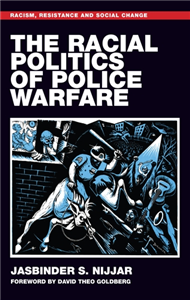
        The racial politics of police warfare

        by Jasbinder S. Nijjar

        Amid renewed anti-racist resistance to violent policing, The racial politics of police warfare unpacks the racisms that rationalise militarised policing in contemporary Britain. Jasbinder S. Nijjar shatters prevailing myths about British police as an impartial public service, by revealing it as an institution where racism and war reinforce one another. In examining flagship anti-gang and counter-terrorism policies and practices, the book offers a unique analysis of the relationship between anti-black and anti-Muslim racisms, to demonstrate how racialised populations are institutionalised as common enemies of modernity. Combining perspectives from sociology, history, criminology and social policy, Nijjar illustrates how British policing defends law and order and national security from the perceived threat of race through hyper-intrusive, pre-emptive and deathly measures. Accordingly, he gives a fresh take on resisting racial police warfare, calling for strategies that are at once political, collective, anti-militaristic and abolitionist.

      Subscribe to our

      newsletter