Your Search Results
-

-

Xinjiang Juvenile Publishing House
We are a children's publisher specializing in picture books, fiction, science books and educational materials for children from 0-16 years old. Established in 1956, we are a team of more than 200 people publishing over 300 titles per year, we introduce many titles overseas and cooperate with different publishers all over the world.
View Rights Portal
-
Promoted Content

 June 2008
Die Angel meines Großvaters
Erzählungen
by Gao, Xingjian / Chinesisch Gentz Vittinghoff, Natascha
-
Promoted Content
-
 Trusted Partner
 April 2006
Das Buch eines einsamen Menschen
Roman
by Gao, Xingjian / Chinesisch Vittinghoff, Natascha
-
Trusted Partner
 August 2010
Die Angel meines Großvaters
Erzählungen
by Gao, Xingjian / Chinesisch Vittinghoff, Natascha
-
Trusted Partner
-
Trusted Partner
-
Trusted Partner
-
Trusted Partner
 October 2001
Der Berg der Seele
(Arbeitstitel). Roman
by Gao, Xingjian / Übersetzt von Forster-Latsch, Helmut; Übersetzt von Schneckmann, Gisela; Übersetzt von Latsch, Marie L
-
Trusted Partner
-
Trusted Partner
-
Trusted Partner
-
Trusted Partner
-
Trusted Partner
-
Trusted Partner
-
Trusted Partner

 January 2027
Kulturkampfkunst
Ein Handbuch | Warum man nicht über jedes Stöckchen springen sollte
by Natascha Strobl
Ein »Zuschauer*innen« in den Nachrichten, und das Internet kocht. Ein Verlag zieht zwei Winnetou-Bücher zurück, und die Angelegenheit weitet sich fast zu einer Staatsaffäre aus. Eine transgender Influencerin bewirbt eine Biermarke, Konservative starten einen Boykott, der Kurs des größten Brauereikonzerns der Welt bricht ein. Eine Kulturkampf-Episode jagt die nächste, und selbst Konflikte um so materielle Dinge wie Gasheizungen werden zunehmend emotionalisiert und identitätspolitisch aufgeladen. Natürlich sind an solchen Auseinandersetzungen immer zwei Seiten beteiligt. Radikalisierte Konservative bespielen sie jedoch besonders intensiv und auf eine besonders gefährliche Weise. Natascha Strobl zeichnet die Geschichte der großen Verkulturkampfisierung nach. Sie analysiert, warum diese Strategie für konservative und rechte Parteien so attraktiv ist; außerdem präsentiert sie Ratschläge für den Umgang damit: Wann ist es sinnvoll, nicht über das Stöckchen zu springen? Und wann muss man widersprechen, damit menschenfeindliche Haltungen nicht Normalität werden?
-
Trusted Partner

 Humanities & Social SciencesAugust 2010
Dictionary of British Politics
Second edition
by Bill Jones, Bill Jones
From Diane Abbott to Hugo Young via Keynesianism and Thatcherism, from Major to Millbank and from New Labour to Norman Tebbitt, this book is the ultimate student reference guide to British politics. The 2nd edition has been fully updated to take account of all the changes that have taken place in British politics since 2004. With over one thousand entries, the book covers the personalities, policies and institutions that have shaped British politics, with special emphasis on developments since the beginning of the twentieth century. This is the ideal instant reference book on British politics. It provides the reader with short, authoritative explanations and definitions of key terms, institutions, offices of state, political events, processes and policies as well as biographies of well known politicians, political thinkers, movements and theorists. Any student unsure of a term, an event, the details of the life of a prominent politician, or the inner workings of an institution can turn to this book for immediate assistance. ;
-
Trusted Partner
 Humanities & Social SciencesMay 2021
Disciplined agency
Neoliberal precarity, generational dispossession and call centre labour in Portugal
by Patrícia Alves de Matos
Since the mid-2000s, the harsh reality of call centre employment for a generation of young workers in Portugal has been impossible to ignore. With its endless rows of small cubicles, where human agents endure repetitive telephone conversations with abusive clients under invasive modes of technological surveillance, discipline and control, call centre work remains a striking symbol of labour precarity, a condition particularly associated with the neoliberal generational disenchantment that 'each generation does better than its predecessor'. This book describes the emergence of a regime of disciplined agency in the Portuguese call centre sector. Examining the ascendancy of call centres as icons of precarity in contemporary Portugal, this book argues that call centre labour constitutes a new form of commodification of the labouring subject. De Matos argues that call centres represent an advanced system of non-manual labour power exploitation, due to the underestimation of human creativity that lies at the centre of the regimented structures of call centre labour. Call centres can only guarantee profit maintenance, de Matos argues, through the commodification of the human agency arising from the operators' moral, relational and social embedded agentive linguistic interventions of creative improvisation, decision-making, problem-solving and ethical evaluation.
-
Trusted Partner
 Humanities & Social SciencesFebruary 2009
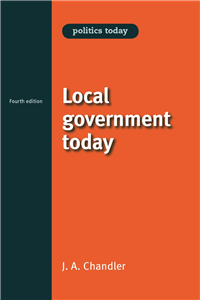
Local government today
by J. Chandler, Bill Jones
Local government today provides a comprehensive analysis of the structure, finance, management and democratic framework for local government in Britain. This new edition has been substantially rewritten to encompass the many changes to the structure and function of the system since 2000, including developments flowing from the 2007 Local Government Act. The study discusses how, during the Blair years, local governments came to be seen once again as centrally important institutions within Britain's political system. However, they are not seen as organisations that can function as separate agencies, undertaking all their duties 'in-house'. They are now required to work in partnership with the private, public and voluntary sectors to deliver local services and represent local interests. It is further argued that, for the first time in over a century, the barriers between civil servants and senior local government officers are being eroded as central government begins to incorporate leading local government officials into its decision-making processes. This established textbook also offers a comparative focus by showing how the British system differs from the structures for local governance in Western Europe and the United States. ;
-
Trusted Partner
-
Trusted Partner
 Literature & Literary StudiesMay 2026
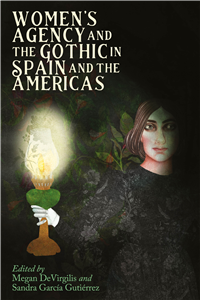
Women’s Agency and the Gothic in Spain and the Americas
by Megan DeVirgilis, Sandra García Gutiérrez
This volume has emerged to fulfill two main purposes: Primarily, to constitute the first collaborative work that traces the relationship between the Gothic and Women in Spain and the Americas, but also, to surpass the term 'Female Gothic,' coined by Ellen Moers, by transferring the focus towards women and their agency as writers, readers and characters. This volume functions as a manifesto per se to open new avenues into understanding how women have interacted with the Gothic between the nineteenth and twenty-first centuries in Spain and the Americas. The question, we determine, is not simply about identity, but rather about agency. We define women's agency as the total capacity of characters, authors and readers to act freely within a social framework in relation to gothic texts. In our exploration of authorship, we reject the claim that the Gothic is a simplistic literary genre, instead sustaining that the plasticity of the Gothic has enabled it to survive for centuries; by shifting from a genre to a mode, it has surpassed literary forms and invaded all kinds of media: from film to music and merchandise such as clothing and pop culture collectables, fostering an authentic goth fandom.