
The Endocrine Society
The Endocrine Society is a global organization of 18,000 researchers, educators, and clinicians advancing breakthroughs in hormone science and improving public health.
View Rights Portal
The Endocrine Society is a global organization of 18,000 researchers, educators, and clinicians advancing breakthroughs in hormone science and improving public health.
View Rights Portal
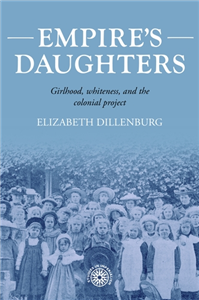
Girlhood and whiteness in the British empire traces the interconnected histories of girlhood, whiteness, and British colonialism in the late nineteenth and early twentieth centuries through the study of the Girls' Friendly Society. The society functioned as both a youth organisation and emigration society, making it especially valuable in examining girls' multifaceted participation with the empire. The book charts the emergence of the organisation during the late Victorian era through its height in the first decade of the twentieth century to its decline in the interwar years. Employing a multi-sited approach and using a range of sources-including correspondences, newsletters, and scrapbooks-the book uncovers the ways in which girls participated in the empire as migrants, settlers, laborers, and creators of colonial knowledge and also how they resisted these prescribed roles and challenged systems of colonial power.


Sooner or later everything is thrown away. In the consumer society, however, usable and serviceable products that may be as good as new are also thrown away. Such behaviour is the result of a long-term process that has developed over a period of one-and-a-half centuries. The change was led by the USA, and the Federal Republic of Germany followed. It started at the turn of the last century with personal hygiene: articles such as toilet paper, sanitary towels, nappies and paper handkerchiefs. After the Second World War, a large number of other disposable articles were soon added, such as paper cups and plastic dishes, nylon stockings and pens, razor blades, beverage cans and much more besides. Wolfgang König shows how business and consumers have together made throwing things away perfectly normal – and discusses how the throwaway society may be overcome.


This 1926 survey, written by a distinguished social and economic historian, examines the role of religion in the rise of capitalism. Arguing that material acquisitiveness is morally wrong and a corrupting social influence, the author draws upon his profound knowledge of labor and politics to show how concentrated wealth distorts economic policies. Colorful but credible, this study offers a timeless vision of alternative means toward a just economic, social, and intellectual order.
 Trusted Partner
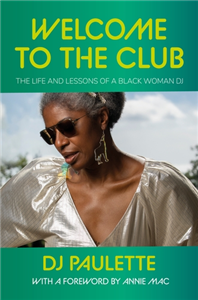
In Welcome to the club, Manchester legend DJ Paulette shares the highs, lows and lessons of a thirty-year music career, with help from some famous friends. One of the Haçienda's first female DJs, Paulette has scaled the heights of the music industry, playing to crowds of thousands all around the world, and descended to the lows of being unceremoniously benched by COVID-19, with no chance of furlough and little support from the government. Here she tells her story, offering a remarkable view of the music industry from a Black woman's perspective. Behind the core values of peace, love, unity and respect, dance music is a world of exclusion, misogyny, racism and classism. But, as Paulette reveals, it is also a space bursting at the seams with powerful women. Part personal account, part call to arms, Welcome to the club exposes the exclusivity of the music industry while seeking to do justice to the often invisible women who keep the beat going.
Trusted Partner

This collection, dealing with case studies drawn from South Africa, Zimbabwe, Mozambique and Mauritius, examines the relationship between scientific claims and practices, and the exercise of colonial power. It challenges conventional views that portray science as a detached mode of reasoning with the capacity to confer benefits in a more or less even-handed manner. That science has the potential to further the collective good is not fundamentally at issue, but science can also be seen as complicit in processes of colonial domination. Not only did science assist in bolstering aspects of colonial power and exploitation, it also possessed a significant ideological component: it offered a means of legitimating colonial authority by counter-poising Western rationality to native superstition and it served to enhance the self-image of colonial or settler elites in important respects. This innovative volume ranges broadly through topics such as statistics, medicine, eugenics, agriculture, entomology and botany.
Trusted Partner

This book provides an accessible collection of translated legal sources through which the exploits of criminals and developments in the English criminal justice system (c.1215-1485) can be studied. Drawing on the wealth of archival material and an array of contemporary literary texts, it guides readers towards an understanding of prevailing notions of law and justice and expectations of the law and legal institutions. Tensions are shown emerging between theoretical ideals of justice and the practical realities of administering the law during an era profoundly affected by periodic bouts of war, political in-fighting, social dislocation and economic disaster. Introductions and notes provide both the specific and wider legal, social and political contexts in addition to offering an overview of the existing secondary literature and historiographical trends. This collection affords a valuable insight into the character of medieval governance as well as revealing the complex nexus of interests, attitudes and relationships prevailing in society during the later Middle Ages.
Trusted Partner

This volume is the first ever attempt to unite and translate some of the key texts which informed Johan Huizinga's famous study of the Burgundian court, The Waning of the Middle Ages, a work which has never gone out of print. It combines these texts with sources that Huizinga did not consider, those that illuminate the wider civic world that the Burgundian court inhabited and the dynamic interaction between court and city. Through these sources, and an introduction offering new perspectives on recent historiography, the book tests whether Huizinga's controversial vision of the period still stands. Covering subjects including ceremonial events, such as the spectacles and gargantuan banquets that made the Burgundian dukes the talk of Europe, the workings of the court, and jousting, archery and rhetoric competitions, the book will appeal to students of late medieval and early modern Europe and to those with wider interests in court culture, ritual and ceremony.
Trusted Partner


Magical sweets and real miracles? Elina has experienced them both in Belony, and now she can hardly wait to dip deeper into the world of the candy crafters. But it’s not long before a new problem arises, because just before Robin’s first candy crafting examination, his magic tool goes bust. Old Mr Snotty knows where they can get help, and he takes Elina and her friends to Bittersweet Avenue. It quickly becomes clear, though, that not all candy crafters are well disposed towards “ungifted” people. There are also rumours about the return of the mysterious Otherwise Society, which has tried once before to bring down the mighty Candy Guild. When Mr Snotty suddenly disappears without a trace, it’s up to Elina, Charlie and Robin to follow the clues he has left behind for them. They soon realize that there is a reason for his disappearance, because the Otherwise Society is looking for something in particular – and Elina, Charlie and Robin have the key to this something in their hands…
Trusted Partner
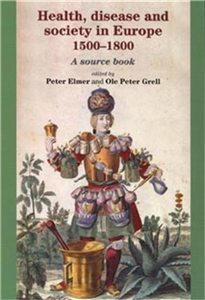
Considers how the body was viewed by the medical profession from the Renaissance to the Enlightenment, and challenges established ideas in the field of medical history. Examines the provision of medical care in context and how it was shaped by the social, religious, political and cultural concerns of the age. Arranged thematically and with brief but scholarly introductions, the selection of documents includes contemporary sources, recent research in the field and classical writings. Written in an accessible style by an Open University lecturer. Companion volume to The Healing Arts: Health, Disease and Society in Europe 1500-1800. ;
Trusted Partner

This book provides scholars and students alike with a set of texts that can deepen their understanding of the culture and society of the twelfth-century German kingdom. The sources translated here bring to life the activities of five noblemen and noblewomen from Rome to the Baltic coast and from the Rhine River to the Alpine valleys of Austria. To read these five sources together is to appreciate how interconnected political, military, economic, religious and spiritual interests could be for some of the leading members of medieval German society-and for the authors who wrote about them. Whether fighting for the emperor in Italy, bringing Christianity to pagans in what is today northern Poland, or founding, reforming and governing monastic communities in the heartland of the German kingdom, the subjects of these texts call attention to some of the many ways that noble life shaped the world of central medieval Europe.
Trusted Partner
Trusted Partner
Trusted Partner

Where civil society is often seen as a driving force for equality, this book addresses a challenging topic: civil society elites. Drawing on a comprehensive study of Italy, Poland, Sweden, and the UK, this ground-breaking research investigates the often-overlooked power structures within civil society. By combining elite studies with civil society research, the book uncovers how a distinct civil society elite emerges and how it interacts with leaders in politics and business. The findings reveal a fascinating paradox. While this elite may be a powerful engine for social change, its integration into wider power circles risks reproducing the very inequalities it seeks to dismantle. By exploring how this elite can become disconnected from its grassroots, the book provides essential insights into the future of civil society and its democratic promise.
Trusted Partner
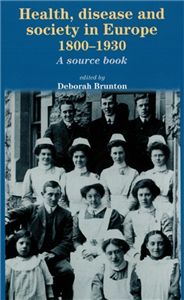
During the nineteenth century, the provision of medical care underwent a radical transformation. In 1800, the body was still understood in terms of humours and fluids, and treatment was provided by a wide range of individuals, some of whom had little or no formal training. Institutions were marginal to the medical enterprise, and governments took almost no part in providing medical services. By 1930, however, a recognisably modern medicine had begun to emerge across Europe. New understandings of human physiology had resulted in the new science of surgical therapy; hospitals had become centres for care, research and training; and the newly organised medical professions increasingly sought to regulate medical practice. In most countries, the state had accepted responsibility for public health and the provision of basic welfare services. This volume provides readers with unrivalled access to a comprehensive range of sources on these major themes. Extracts from contemporary writings vividly illustrate key aspects of medical thought and practice, while a selection of classic historical research and up-to-date work in the field helps further our understanding of medical history. Thematically arranged, these sources are assembled to complement the essays in the companion volume, Medicine Transformed: Health, Disease and Society in Europe, 1800-1930. In addition, brief scholarly introductions make the sources accessible to both the specialist and the general reader. ;
Trusted Partner

This book is about power in welfare encounters. Present-day citizens are no longer the passive clients of the bureaucracy and welfare workers are no longer automatically the powerful party of the encounter. Instead, citizens are expected to engage in active, responsible and coproducing relationships with welfare workers. However, other factors impact these interactions; factors which often pull in different directions. Welfare encounters are thus influenced by bureaucratic principles and market values as well. Consequently, this book engages with both Weberian (bureaucracy) and Foucauldian (market values/NPM) studies when investigating the powerful welfare encounter. The book is targeted Academics, post-graduates, and undergraduates within sociology, anthropology and political science.
Trusted Partner


Merkwürdige Dinge geschehen im Umfeld der Magic Girls: ein brennender Baum, ein wütendes Wildschwein, mysteriöse Botschaften – hier scheint es jemand auf Mona, Elenas Großmutter, abgesehen zu haben. Ob da womöglich Rache im Spiel ist? Mona, sonst nie um Hexereien verlegen, ist diesmal eindeutig überfordert. Ihre Zauberkünste versagen. Höchste Zeit, dass Elena und Miranda eingreifen! Dabei haben sie gerade selbst genügend Probleme. Aber dann gibt es eine Riesenüberraschung…
Trusted Partner

This work details traces the origins, development and impact of the proselytizing organization, the Society for Irish Church Missions to the Roman Catholics, from its Protestant foundation during the famine of 1845-47 to the early decades of Irish Free State. It argues that the foundation of this ostensibly religious society was also underpinned by social, political, and economic factors and demonstrates that by the mid 1850s the mission operated on a very substantial scale. Moffitt examines the mission's role in the shifting political realities of the late nineteenth and early twentieth centuries. The impact of this inter-faith power struggle and its legacy to the present day are explored by examining contemporary sources, folklore evidence, and the depiction of proselytizing missions in both Catholic and Protestant denomination literature and fictional writings. ;
Trusted Partner

The Protestant Orphan Society, founded in Dublin in 1828, managed a carefully-regulated boarding-out and apprenticeship scheme. This book examines its origins, its forward-thinking policies, and particularly its investment in children's health, the part women played in the charity, opposition to its work and the development of local Protestant Orphan Societies. It argues that by the 1860s the parent body in Dublin had become one of the most well-respected nineteenth-century Protestant charities and an authority in the field of boarding out. The author uses individual case histories to explore the ways in which the charity shaped the orphans' lives and assisted widows, including the sister of Sean O'Casey, the renowned playwright, and identifies the prominent figures who supported its work such as Douglas Hyde, the first President of Ireland. This book makes valuable contributions to the history of child welfare, foster care, the family and the study of Irish Protestantism. ;
Trusted Partner

Child, nation, race and empire is an innovative, inter-disciplinary, cross cultural study that contributes to understandings of both contemporary child welfare practices and the complex dynamics of empire. It analyses the construction and transmission of nineteenth-century British child rescue ideology. Locating the origins of contemporary practice in the publications of the prominent English Child rescuers, Dr Barnardo, Thomas Bowman Stephenson, Benjamin Waugh, Edward de Montjoie Rudolf and their colonial disciples and literature written for children, it shows how the vulnerable body of the child at risk came to be reconstituted as central to the survival of nation, race and empire. Yet, as the shocking testimony before the many official enquiries into the past treatment of children in out-of-home 'care' held in Britain, Ireland, Australia and Canada make clear, there was no guarantee that the rescued child would be protected from further harm.
Trusted Partner


People are living longer, and people are developing dementia. But our consumer society, which is optimised for working silently, is helpless in the face of those who have gone mad from its midst. The burden of caring for them is borne largely by their dependants and by carers from Eastern Europe. In his extremely stirring book, Professor Thomas Klie argues that we should include people with dementia as part of our lives and recognise that it is possible to live a happy and fulfilled life even with dementia – under the right conditions. Especially in the light of societal conflicts over income distribution fuelled by the corona pandemic, Klie is convinced that the dominant culture is measured by how it treats the subject of dementia.



