
Wilfrid Laurier University Press
Wilfrid Laurier University Press is a scholarly press based in Waterloo, Ontario.
View Rights Portal
Wilfrid Laurier University Press is a scholarly press based in Waterloo, Ontario.
View Rights Portal

Eva Perón starb 1952 im Alter von nur 33 Jahren; eine bombastische Zeremonie des langsamen Abschieds nahm ihren Lauf. Evita war eine aus der Provinz auf- und von der Leinwand herabgestiegene Göttin, eine lebende Heilige. Was jedoch nach ihrem Tode geschah, scheint jedes Maß der Verehrung zu sprengen: Ihr Leib wurde einbalsamiert, versteckt, gejagt, ging auf eine makabre Wanderschaft und wurde zum Objekt unglaublicher Intrigen und Obsessionen – mehr noch als Evita selbst. »›Santa Evita‹ hat mich von der ersten Seite an überwältigt – ich war gerührt, litt, genoß, eignete mir schändliche Laster an und verriet meine heiligsten Prinzipien. Wenn ein Roman es fertigbringt, einen Sterblichen mit festen Grundsätzen und strengen Gewohnheiten zu derartigem Unfug zu verleiten, dann kann es keinen Zweifel geben: Er gehört entweder verboten, oder er muß unverzüglich gelesen werden.« »Mario Vargas Llosa« »Hier ist endlich der Roman, den ich immer lesen wollte.« »Gabriel García Márquez«


L. Frank Baum, der Schöpfer des Kinderbuchklassikers Der Zauberer von Oz, hat mit der Geschichte über das abenteuerliche Leben des Santa Claus ein weiteres, bezauberndes Märchen geschrieben. Und er findet wunderbare Antworten auf all das, was wir schon immer wissen wollten: Wo wohnt der Weihnachtsmann? Wie kam Santa Claus zu seinem Namen? War der Weihnachtsmann auch einmal ein kleiner Junge? Warum wird Santa Claus von Rentieren durch die Lüfte gezogen und wieso können Rentiere überhaupt fliegen?
 Trusted Partner

Corinna Santa Cruz, geboren in Frankfurt am Main, studierte Romanistik in Frankfurt, Quito (Ecuador), Lissabon (Portugal) und Bogotá (Kolumbien). Sie ist als Übersetzerin und Lektorin für spanisch- und portugiesischsprachige Literatur tätig.
Trusted Partner

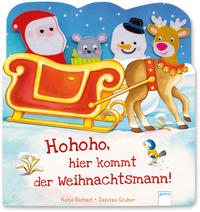
Soon it’ll be Christmas! It’s time to load the sleigh with presents, thinks the reindeer. But Father Christmas wants to decorate his house first, and build a snowman, and have a nice cup of tea. Then suddenly it’s almost too late! All his friends must help, so that children can get their presents on time.
Trusted Partner
Trusted Partner
Trusted Partner
Trusted Partner
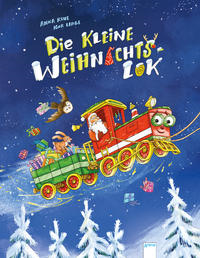
It’s winter in the pleasure park. The Little Engine is dreaming of Christmas, as he does every year. It would be so nice to see a real Christmas for himself. Suddenly something terrible happens up in the sky: Father Christmas comes crashing down to earth with his overloaded sleigh. Fortunately, no one is hurt, but the sleigh is broken. This is the Little Engine’s chance. He makes Father Christmas a great offer – and so he saves this year’s Christmas.
Trusted Partner
Trusted Partner

Whether for reasons of family, food, shopping or religion, it's hard to imagine a British winter without Christmas, or to think of a more traditional national festival. But how and when did Christmas cards, pantomimes and advertising become part of that tradition? This book looks at how people in the nineteenth and early twentieth centuries experienced Christmas and how today's priorities and rituals began and endured. It explores the origins of our deeply held notions around Christmas traditions and demonstrates how those ideas were in fact shaped by the fast-paced modernisation of English life. A fascinating account of the development of many things we now take for granted, the book touches on the history of childhood and the family, philanthropy and work, and the beginnings of consumerism that shaped the Christmas we know today.
Trusted Partner
Trusted Partner

 Trusted Partner
Trusted Partner
Trusted Partner
Trusted Partner
Trusted Partner
Trusted Partner
Trusted Partner
 Trusted Partner
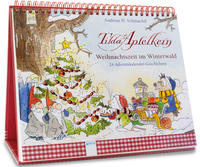
There are 24 days to go until Christmas. In the mouse house there is a delicious smell of punch, and Tilda busily hunts through her pantry: she wants to do some baking. The best of all flavours is still Aunt Emily’s frost-hip jelly. Christmas can’t come without that. But what a shock! There are no frost hips left! And it’s so difficult to get fresh ones, because they only grow in the north. Without further ado, Tilda sets off on an exciting journey through the winter forest, and she has the most weird and wonderful Christmas adventures on the way…
Trusted Partner
The second volume of this highly collectable series, covering the pivotal years of 1969-70. The Island Book of Records Volume II documents the years 1969-70, during which Island sought to build on its success with the Spencer Davis Group by seeking out new British rock talent. By the end of the period, Island was emerging as a major British label, one that could boast releases from Jethro Tull, Nick Drake, King Crimson, John and Beverley Martyn, Fairport Convention and Cat Stevens. Featuring material from recent interviews and from media interviews of the time, and including a comprehensive discography of 45s, The Island Book of Records Volume II is lavishly illustrated with gig adverts (very many at venues that no longer exist), concert tickets, flyers, international LP variants, labels, LP and 45 adverts and other ephemera collector's dream.
Trusted Partner
Trusted Partner

Carol Reed is one of the truly outstanding directors of British cinema, and one whose work is long overdue for reconsideration. This major study ranges over Reed's entire career, combining observation of general trends and patterns with detailed analysis of twenty films, both acknowledged masterpieces and lesser-known works. Evans avoids a simplistic auteurist approach, placing the films in their autobiographical, socio-political and cultural contexts and relating these to the analysis of Reed's art. The critical approach combines psychoanalysis, gender theory, and the analysis of form. Archival research is also relied on to clarify Reed's relations with his creative team, financial backers and others. Films examined include Bank Holiday, A Girl Must Live, Odd Man Out, The Fallen Idol, The Third Man, Night Train to Munich, The Way Ahead, Outcast of the Islands, Trapeze and Oliver!.



