S&P Literary - Publishing Division of Sosia & Pistoia SRL
Chiara Melloni Irene Pepiciello
View Rights Portal
Chiara Melloni Irene Pepiciello
View Rights Portal
Learnetic is an innovative educational digital publisher, content developer and eLearning technology provider. We are a technology-based company with over 20 years of experience operating in international educational publishing business. We offer a complete suite of advanced software applications supporting all stages of ePublishing, providing our partners with professional Authoring Tools, eLearning Platforms and ready-made interactive learning content.
View Rights Portal


Charting a collaborative art-based project using carpet-making skills and the industrial heritage of the region, the book investigates how a cleaved ex-industrial community used arts methodologies as a cohesion strategy. Drawing on images from the company's archives, the book mines the history of Firths Carpets Limited, a firm that carpeted interiors across the globe from the mid-1800s. Women's labour and tastes were business critical to the production and sale of Firths carpets. Drawing on the author's personal connection to the village, an ethnographic sensibility and novel research techniques, ex-worker responses to a village radically altered by ruination are explored. Ex-workers felt nostalgia for the dignity of work and a sense of homesickness in a village ghosted by industrial spectres of the past. Threads of Labour argues that left-behind deindustrialised places require acts of social re-making if their communities are to survive.
 Trusted Partner

The labour movement in Lebanon: Power on hold narrates the history of the Lebanese labour movement from the early twentieth century to today. Bou Khater demonstrates that trade unionism in the country has largely been a failure, for reasons including state interference, tactical co-optation, and the strategic use of sectarianism by an oligarchic elite, together with the structural weakness of a service-based laissez-faire economy. Drawing on a vast body of Arabic-language primary sources and difficult-to-access archives, the book's conclusions are significant not only for trade unionism, but also for new forms of workers' organisations and social movements in Lebanon and beyond. The Lebanese case study presented here holds significant implications for the wider Arab world and for comparative studies of labour. This authoritative history of the labour movement in Lebanon is vital reading for scholars of trade unionism, Lebanese politics, and political economy.
Trusted Partner
Trusted Partner
Trusted Partner

 Trusted Partner

'A rule of mine is this', said William Goldman in 1983, 'there are always three hot directors and one of them is always David Lean.' One of the best known and most admired of British film makers, David Lean had a directorial career that spanned five decades and encompassed everything from the intimate black-and-white romance of Brief Encounter (1945) to the spectacular Technicolor epic of Lawrence of Arabia (1962). This book offers comprehensive coverage of every feature film directed by Lean, yielding new insights on the established classics of his career as well as its lesser-known treasures. Its analysis prioritises questions of gender and emphasises the often-overlooked but highly significant recurrence of female-centred narratives throughout Lean's career. Drawing extensively on archival historical materials while also presenting nuanced close readings of individual films, David Lean offers a fascinating and original account of the work of a remarkable British film maker. ;
Trusted Partner
Trusted Partner
 Trusted Partner
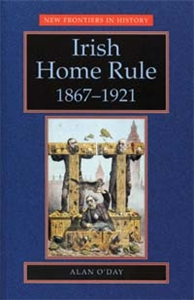
Irish Home Rule considers the pre-eminent issue in British politics during the late nineteenth and early twentieth-centuries. It is the first account to explain the various self-government plans, to place these in context and examine the motives for putting the schemes forward. The book distinguishes between moral and material home rulers, making the point that the first appealed especially to outsiders, some Protestants and the intelligentsia, who saw in self-government a means to reconcile Ireland's antagonistic traditions. In contrast, material home rulers viewed a Dublin Parliament as a forum of Catholic interests. This account appraises the home rule movement from a fresh angle, distinguishing it from the usual division drawn between physical force and constitutional nationalists It maintains that an ideological continuity runs from Young Ireland, the Fenians, the early home rulers including Isaac Butt and Charles Stewart Parnell, to the Gaelic Revivalists to the Men of 1916. These nationalists are distinguishable from material home rulers not on the basis of methods or strategy but by a fundamental ideological cleavage. ;
Trusted Partner
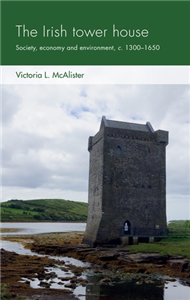
The Irish tower house examines the social role of castles in late-medieval and early modern Ireland. It uses a multidisciplinary methodology to uncover the lived experience of this historic culture, demonstrating the interconnectedness of society, economics and the environment. Of particular interest is the revelation of how concerned pre-modern people were with participation in the economy and the exploitation of the natural environment for economic gain. Material culture can shed light on how individuals shaped spaces around themselves, and tower houses, thanks to their pervasiveness in medieval and modern landscapes, represent a unique resource. Castles are the definitive building of the European Middle Ages, meaning that this book will be of great interest to scholars of both history and archaeology.
Trusted Partner

This new edited collection of essays focuses on the history of Labour's second period in office during the 1929-1931 global financial crisis. Contributions by leading historians and younger academics bring fresh perspectives to Labour's domestic problems, electoral and party matters, relations with the Soviet Union and ideological questions. An important range of new historical research provides a much-needed reappraisal of Ramsay MacDonald's second Labour government, which impressed few with its conventional policies for tackling mass unemployment. Oswald Mosley, John Maynard Keynes and Ernest Bevin's alternative economic strategies are critically studied in key essays. A more positive side of the government's policies is also adeptly revealed on consumerism and agriculture. Significant new light is adroitly shed on the 1929 general election, the first fought on a universal franchise. The intricate politics of the Parliamentary Labour Party and the disaffiliation of the Independent Labour Party are convincingly explored. The influence of the Soviet Union on Labour's thoughts and actions is analysed in valuable accounts of Labour's foreign policy and Labour's turn to socialism after 1931. An important fresh account of opposition politics breaks new ground on the reaction of Tory politicians, including Harold Macmillan, to MacDonald's government. The volume concludes with an absorbing analysis of the myths surrounding '1931' in Labour history. This timely volume makes accessible a major reassessment of existing knowledge and new scholarship that will appeal to students and teachers of British political and social history. It is essential reading for sixth form and university courses on twentieth-century history. ;
Trusted Partner


Was für eine Geburtstagsreise! Auf dem Rücken von Feuerstuhl, ihrem Drachen, machen die Olchis Europa unsicher. Sie suchen einen schönen, muffeligen Platz für die Geburtstagsfeier von Olchi-Opa. Dabei landen sie in einem schottischen Schloss, nagen den Eiffelturm in Paris an und rücken den Schiefen Turm von Pisa wieder gerade... Diese olchige Geschichte erstmals als Kinderbuchausgabe mit coolem Wackelbild auf dem Cover. Für noch mehr krötigen Olchi-Spaß sorgt der große Mitmachteil zum Rätseln und Spielen.
Trusted Partner
A compelling tour of Shakespeare's England that makes a powerful contribution to the 'authorship question'. How do we know Shakespeare was Shakespeare? Could a glover's son who left school at fifteen really be the author behind such masterpieces as Hamlet, King Lear and The Tempest? Yes! says historian Susan Amussen. She transports readers back to early modern England, to travel the path that carried William Shakespeare from humble origins in Stratford to literary greatness on the London stage. This was a society undergoing rapid change. Grammar schools made education in Latin and Greek available to commoners, while touring players brought the latest dramatic productions to the masses. And in London, a metropolis filled with European visitors, ordinary people had the opportunity to see courtly life up close. No serious historian doubts that Shakespeare was the author of the plays that bear his name. Susan Amussen shares what they know: that Shakespeare's England was a complex and cosmopolitan place, with everything a talented young playwright needed to develop his craft and furnish his imagination.
Trusted Partner
 Trusted Partner
This book is the second in the three volume set The Labour governments 1964-1970 and concentrates on Britain's international policy under the Labour governments in the 1960s and is available for the first time in paperback. The coverage ranges from defence policy and the government machine to European integration, NATO and the Vietnam war. Harold Wilson and his ministers have often been accused of betraying the sense of promise that greeted their victory in 1964. Using recently released archival evidence, John Young argues that a more balanced view of the government will recognise the real difficulties that surrounded decision-making, not only on Vietnam, but also on Aden, the Nigerian civil war and Rhodesia. Economic weakness, waning military strength, Cold War tensions and the need to placate allies all placed limits on what a once-great but now clearly declining power could achieve. Furthermore the government proved of pivotal importance in the history of Britain's international role, in that it presided over a major shift from positions East of Suez to a focus on European concerns, a focus that has remained until the present day. The book will be of vital importance to students of British history and international relations during this exciting period. Together with the other books in the series, on domestic policy and economic policy, it provides a complete picture of the development of Britain under the premiership of Harold Wilson.
Trusted Partner


Hans-Ulrich Treichel, am 12.8.1952 in Versmold/Westfalen geboren, lebt in Berlin und Leipzig. Er studierte Germanistik an der Freien Universität Berlin und promovierte 1984 mit einer Arbeit über Wolfgang Koeppen. Er war Lektor für deutsche Sprache an der Universität Salerno und an der Scuola Normale Superiore Pisa. Von 1985-1991 war er Wissenschaftlicher Mitarbeiter für Neuere Deutsche Literatur an der FU Berlin und habilitierte sich 1993. Von 1995 bis 2018 war Hans-Ulrich Treichel Professor am Deutschen Literaturinstitut der Universität Leipzig. Seine Werke sind in 28 Sprachen übersetzt.
Trusted Partner

The long-awaited prequel to Chronicles of the revolution covers the first twenty years (1377-97) of Richard II's reign. This richly-documented period offers exceptional opportunities and challenges to students, and the editor has selected material from a wide range of sources: well-known English chronicles, foreign chronicles and legal, administrative and financial records. These are arranged chronologically to form a coherent narrative of the reign. Clear and lively commentary and notes enable readers to make the fullest use of each document. The introduction describes the complex domestic and international situation which confronted the young king and offers guidance on the strengths and weaknesses of the reign's leading chronicles. The dramatic and diverse politics of the reign of Richard II make this the ideal special subject and an accessible, affordable, student-friendly documentary history of Richard II's reign has long been needed. This book is designed to fill that gap.
Trusted Partner


„I’d like the green cough medicine!“ Experienced pharmacy staff instantly know what the customer means. This book helps newcomers identify the right medicine for each customer. Concise information organised according to the Pareto principle, and numerous packaging images combine the knowledge that is essential for providing effective advice with key self-medication preparations. • Patient consultations. From usage instructions to important notes: This information is crucial for effective consultations! • At the back of your mind. From comparable preparations to information for special patient groups: Bonus material for professional expertise! • At a glance. Over 200 package photos: Instantly recognise customer requests! TOP 60 knowledge: Dive deep and address 80% of customer questions with confidence! Target group: Pharmacy interns, pharmaceutical technician interns, returnees
Trusted Partner