Your Search Results

      • Everyone Press Ltd.

        EveryONE Press is a publishing house open for participation in sharing and expressing. We employ various types of media to radiate creativity and energy to keep our society vibrant, because we believe that words can touch our souls, and lively writing can mirror our thoughts. Each one of our publication calls for readers’ feedback in words and actions.   We make “ONE” as our mission: O – Openness: lead readers to open their hearts and immerse themselves in vastness of the world of words N – Nourishment: encourage readers to read beyond words and rekindle meanings behind to nourish unsettled souls E – Excellence: inspire readers to share stories of life, be them of age 8 through 80, all can be excellent writers

        View Rights Portal
      • Lorenza Estandia Literary Agency

        The Catalogue has 114 titles, picture books, illustrated stories and novels poetry, plays, series, and non-fiction, and by readers age from 0 to 18+ years.

        View Rights Portal
      • Trusted Partner
        Humanities & Social Sciences
        April 2022

        In defence of councillors

        by Colin Copus

        In defence of councillors is an unashamed defence of local representative democracy and of those elected to serve as councillors from the often ill-informed, ill-judged and inaccurate criticism made by the media, government and public, of councillors' personal, political and professional roles. By using qualitative research from a number of related projects, the book examines the roles, functions and responsibilities of councillors and the expectations placed upon them by citizens, communities and government. It also examines the impact council membership has on other facets of the councillor's life. The book examines how councillors develop strategies to overcome the constraints and restrictions on their office so as to be able to govern their communities, balance their political and public life and democratise and hold to account a vast array of unelected bodies that spend public money and develop public policy without the electoral mandate and legitimacy held by our councillors.

      • Trusted Partner
        The Arts
        September 2024

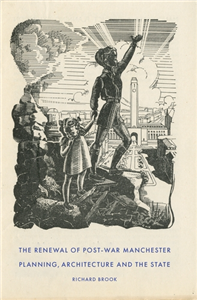
        The renewal of post-war Manchester

        Planning, architecture and the state

        by Richard Brook

        A compelling account of the project to transform post-war Manchester, revealing the clash between utopian vision and compromised reality. Urban renewal in Britain was thrilling in its vision, yet partial and incomplete in its implementation. For the first time, this deep study of a renewal city reveals the complex networks of actors behind physical change and stagnation in post-war Britain. Using the nested scales of region, city and case-study sites, the book explores the relationships between Whitehall legislation, its interpretation by local government planning officers and the on-the-ground impact through urban architectural projects. Each chapter highlights the connections between policy goals, global narratives and the design and construction of cities. The Cold War, decolonialisation, rising consumerism and the oil crisis all feature in a richly illustrated account of architecture and planning in post-war Manchester.

      • Trusted Partner
        Literature & Literary Studies
        March 2026

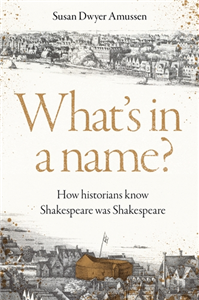
        What's in a name?

        How historians know Shakespeare was Shakespeare

        by Susan Dwyer Amussen

        A compelling tour of Shakespeare's England that makes a powerful contribution to the 'authorship question'. How do we know Shakespeare was Shakespeare? Could a glover's son who left school at fifteen really be the author behind such masterpieces as Hamlet, King Lear and The Tempest? Yes! says historian Susan Amussen. She transports readers back to early modern England, to travel the path that carried William Shakespeare from humble origins in Stratford to literary greatness on the London stage. This was a society undergoing rapid change. Grammar schools made education in Latin and Greek available to commoners, while touring players brought the latest dramatic productions to the masses. And in London, a metropolis filled with European visitors, ordinary people had the opportunity to see courtly life up close. No serious historian doubts that Shakespeare was the author of the plays that bear his name. Susan Amussen shares what they know: that Shakespeare's England was a complex and cosmopolitan place, with everything a talented young playwright needed to develop his craft and furnish his imagination.

      • Trusted Partner
        Humanities & Social Sciences
        September 2020

        Defense of the West

        by Stanley R. Sloan, Lawrence Freedman

      • Trusted Partner
        The Arts
        September 2025

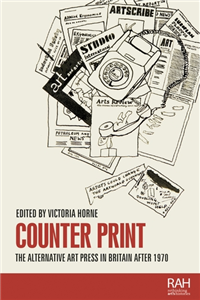
        Counter print

        The alternative art press in Britain after 1970

        by Victoria Horne

        The history of contemporary art is also a history of its newsletters, manifestos, magazines, pamphlets, and journals. Those periodical publications do not simply communicate or record ideas but have worked in exciting ways to shape art's practices, histories and communities. As a new generation of artists, activists and scholars seek to uncover the histories of alternative publishing and artistic networks, this book gathers original archival discoveries while offering methodologies for studying and thinking with those artefacts. As the first essay collection to focus on the periodical art press and the ways we study it, Counter print offers readers an alternative route into the past fifty years of contemporary art, one that is defiantly collaborative, border crossing and disruptive.

      • Trusted Partner
        Humanities & Social Sciences
        December 2015

        In defence of councillors

        by Colin Copus

        In defence of councillors is an unashamed defence of local representative democracy and of those elected to serve as councillors from the often ill-informed, ill-judged and inaccurate criticism made by the media, government and public, of councillors' personal, political and professional roles. By using qualitative research from a number of related projects, the book examines the roles, functions and responsibilities of councillors and the expectations placed upon them by citizens, communities and government. It also examines the impact council membership has on other facets of the councillor's life. The book examines how councillors develop strategies to overcome the constraints and restrictions on their office so as to be able to govern their communities, balance their political and public life and democratise and hold to account a vast array of unelected bodies that spend public money and develop public policy without the electoral mandate and legitimacy held by our councillors. ;

      • Trusted Partner
        The Arts
        September 2020

        Science in performance

        Theatre and the politics of engagement

        by Simon Parry

        This electronic version has been made available under a Creative Commons (BY-NC-ND) open access license. This book is about science in theatre and performance. It explores how theatre and performance engage with emerging scientific themes from artificial intelligence to genetics and climate change. The book covers a wide range of performance forms from Broadway musicals to educational theatre, from Somali drama to grime videos. It features work by pioneering companies including Gob Squad, Headlong Theatre and Theatre of Debate as well as offering fresh analysis of global blockbusters such as Wicked and Urinetown. The book offers detailed description and analysis of theatre and performance practices as well as broader commentary on the politics of theatre as public engagement with science. Science in performance is essential reading for researchers, students and practitioners working between science and the arts within fields such as theatre and performance studies, science communication, interdisciplinary arts and health humanities.

      • Trusted Partner
        Business, Economics & Law
        May 2025

        Steelworkers in struggle

        An oral history of the 1980 national steel strike

        by Charlie McGuire

        Using oral histories gathered from trade unionists, this book explores the national steelworkers strike of 1980 and asserts its significance as a key turning point in modern British history. The strike was nominally a response to a 2% pay offer made by British Steel Corporation (BSC), at a time when inflation was 17%, but was generated by the widespread works closures that characterised the British steel industry at this time. The outcome of the strike was a much higher pay increase but no change to the deindustrialisation strategy of BSC and the government. The book explores the strike from the perspective of those who fought it and reveals the short and longer-term consequences it had on the industry, the unions and the workers themselves.

      • Trusted Partner
        Humanities & Social Sciences
        January 2025

        England’s military heartland

        Preparing for war on Salisbury Plain

        by Vron Ware, Antonia Dawes, Mitra Pariyar, Alice Cree

        A considered investigation of a long-standing army base's impact on the British countryside. What is it like to live next door to a British Army base? Beyond the barracks provides an eye-opening account of the sprawling military presence on Salisbury Plain, drawing on a wide range of voices from both sides of the divide. Targeted for expansion under government plans to reorganise the UK's global defence estate, the Salisbury 'super garrison' offers a unique opportunity to explore the impact of the military footprint in a particular place. But this is no ordinary environment: as well as being the world-famous site of Stonehenge, the grasslands of Salisbury Plain are home to rare plants and wildlife. How does the army take responsibility for conserving this unique landscape as it trains young men and women to use lethal weapons? Are its claims that its presence is a positive for the environment anything more than propaganda? Beyond the barracks investigates these questions against the backdrop of a historic landscape inscribed with the legacy of perpetual war.

      • Trusted Partner
        Humanities & Social Sciences
        March 2022

        The British left and the defence economy

        by Keith Mc Loughlin

      • Trusted Partner
        Literature & Literary Studies
        August 2002

        An Apology for Poetry (or The Defence of Poesy)

        Sir Philip Sidney

        by R. W. Maslen

        An Apology for Poetry (or The Defence of Poesy), by the celebrated soldier-poet Sir Philip Sidney, is the most important work of literary theory published in the Renaissance. The new introduction and notes include a wealth of new information and new readings drawing on recent developments in Renassance Studies. Unfamiliar words and phrases are glossed, classical and other references explained, and difficult passages analysed in detail. The first separate edition of Sidney's seminal text to be published for more than a decade. Since 1965 Geoffrey Shepherd's edition of the Apology has been the standard, and this revision of Shepherd's edition, with a new introduction and extensive notes, is designed to introduce Sidney's best-known work to a new generation of readers at the beginning. ;

      • Trusted Partner
        Humanities & Social Sciences
        July 2023

        Now that's what I call a history of the 1980s

        by Lucy Robinson

      • Trusted Partner
        Business, Economics & Law
        June 2024

        The labour movement in Lebanon

        Power on hold

        by Lea Bou Khater

        The labour movement in Lebanon: Power on hold narrates the history of the Lebanese labour movement from the early twentieth century to today. Bou Khater demonstrates that trade unionism in the country has largely been a failure, for reasons including state interference, tactical co-optation, and the strategic use of sectarianism by an oligarchic elite, together with the structural weakness of a service-based laissez-faire economy. Drawing on a vast body of Arabic-language primary sources and difficult-to-access archives, the book's conclusions are significant not only for trade unionism, but also for new forms of workers' organisations and social movements in Lebanon and beyond. The Lebanese case study presented here holds significant implications for the wider Arab world and for comparative studies of labour. This authoritative history of the labour movement in Lebanon is vital reading for scholars of trade unionism, Lebanese politics, and political economy.

      • Trusted Partner
        Humanities & Social Sciences
        January 2025

        England’s military heartland

        Preparing for war on Salisbury Plain

        by Vron Ware, Antonia Lucia Dawes, Mitra Pariyar, Alice Cree

        What is it like to live next door to a British Army base? England's military heartland provides an eye-opening account of the sprawling military presence on Salisbury Plain, drawing on a wide range of voices from both sides of the divide. Targeted for expansion under government plans to reorganise the UK's global defence estate, the Salisbury 'super garrison' offers a unique opportunity to explore the impact of the military footprint in a particular place. But this is no ordinary environment: as well as being the world-famous site of Stonehenge, the grasslands of Salisbury Plain are home to rare plants and wildlife. How does the army take responsibility for conserving this unique landscape as it trains young men and women to use lethal weapons? Are its claims that its presence is a positive for the environment anything more than propaganda? This book investigates these questions against the backdrop of a historic landscape inscribed with the legacy of perpetual war.

      • Trusted Partner
        Humanities & Social Sciences
        November 2025

        Serfdom in medieval England

        Theory and practice 1200 to 1500

        by Mark Bailey

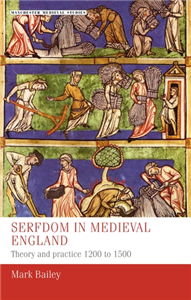
        Serfdom was a coercive relationship between a landowner and peasant, which was widespread across medieval and early modern Europe. Itfeatures prominently in major historical debates, such as the origins of capitalism and the divergent pathways of western and eastern Europe to modernity. Scholars have paid particular attention to English serfdom, which is usually portrayed as highly oppressive and a major cause of the Peasants' Revolt in 1381. This comprehensive survey draws on a vast scholarship and new research to show how, in reality, English serfdom was weak, casting new light on the nature of its society and economy when the Black Death struck in 1348-9. The pandemicnow assumesa central role in the rapid decline of serfdom, as illustrated in a case study of the estate of one of England's harshest landowners, St Albans abbey.

      • Trusted Partner
        Humanities & Social Sciences
        March 2026

        Negotiating identity conflicts in a fragmenting world order

        by Paul Willem Meerts, Mark Anstey

        At every level of human interaction new levels of identity-based tension are in evidence. Contributors to this book explore facets of fragmentation processes within systems of state and interstate organisation, how they influence the use of negotiation, and how negotiation might be used to effect renewed coherence. Following Anstey's (Ch1) introductory chapter framing the nature and shape of fragmentation dynamics, Zartman (Ch 2) argues that the use of negotiation as a process of conflict resolution is deeply shaped by identity groups whose internal coherence is dependent on sustaining a negative identity of others. International relations are no longer solely the realm of experienced diplomats but are shaped as Meerts (Ch3) points out by politicians seeking to be responsive to voting publics rather than wider concerns. Anstey digs into problems of fragmentation (Ch. 4) and Troitskiy (Ch 5) points out how a reluctant acceptance of the power of 'the other' can lead to a form of strategic stability in relations. Anstey and Meerts (Ch 6) point out in their analysis of the Israeli-Palestinian case as an identity conflict turned very bad. Guggenbuhl (Ch 7 ) reveals how structures and processes have been designed within the EU to prevent, contain and regulate conflicts to limit risks of confrontation and fragmentation. Schuessler (Ch 8) to advocates a shift away from a template or roadmap approach to EU membership to a cohesion based on non-dominance. There is still a strong desire on the part of some states, like Northern Macedonia, to become EU members, as reflected in Manton's (Ch 9). Paula Garzon and Frans Schram explain the success of the Colombia Peace Negotiations (Ch 10), while Odigie and da Rocha (Ch 11) analyse the struggle faced by ECOWAS to influence coup leaders in Mali to return to constitutional government and changes of government by constitutional means. Liang (Ch12) discusses how the internet as the modern vehicle of inter-state, inter-group and interpersonal communication has become weaponised. In Ch 13 Anstey draws some lessons from contributions to the compilation.

      • Trusted Partner
      • Trusted Partner

      Subscribe to our

      newsletter