
Teacher Created Materials
Teacher Created Materials publishes innovative, imaginative, and award-winning resources for teachers, parents, and students in all subjects for ages 4-18 worldwide.
View Rights Portal
Teacher Created Materials publishes innovative, imaginative, and award-winning resources for teachers, parents, and students in all subjects for ages 4-18 worldwide.
View Rights Portal
For over 40 years, Teacher Created Materials (TCM) has published innovative and imaginative resources for teachers and students, bringing exceptional curriculum content to classrooms worldwide. Our award-winning resources are sold and licensed in 89 countries. Everything we publish is created and approved by teachers. All our leveled reading books and curriculum kits are designed to engage students, improve literacy and reading comprehension, build content knowledge, and develop critical-thinking skills.
View Rights Portal
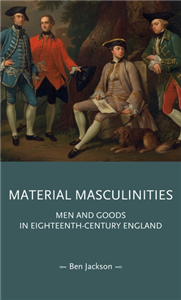
Material Masculinities examines the material and consumer practices of over 1000 men from the middling and upper ranks of eighteenth-century society, c.1650-1850. It draws upon evidence from over 35 archives and museum collections to detail how material objects were integral for men in forming identities and shaping experiences. For men of all social ranks, ages, and geographic locations, material knowledge was imperative for masculine social identities to operate in a commercial society. Before the centralised factory and widespread mass-produced goods, men personalised and repaired their goods; products were shaped by men's attitudes and concerns. Objects were tools in men's identity formation and the exercise of social and gendered power. There was a reciprocal relationship between men and goods in this period; men were active agents of material and commercial change driving product and aesthetic innovation.
 Trusted Partner
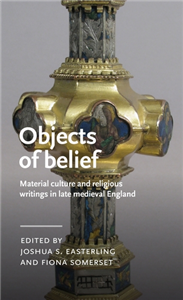
Objects in late medieval Europe were a means for lay people and clergy to negotiate their access to powers beyond the everyday, in folk practice as well as religious observance. As has been noted by scholars, this period is marked by a profusion of objects granted special importance, imaginary as well as material. These objects prompt reconsideration of cultural and intellectual frameworks, for example of superstition, reform, and heresy, that never quite successfully contain them. Essays in this volume center attention on these things themselves, from puppets to rosaries, as indeed do the written accounts through which they are often mediated. With a focus on England, contributors re-evaluate our understanding of works and authors including Geoffrey Chaucer, Walter Hilton, Nicholas Love, Julian of Norwich, miracles of the Virgin, Edward Hall's Chronicle, the Wycliffite Glossed Gospels, and the Croxton Play of the Sacrament.
Trusted Partner
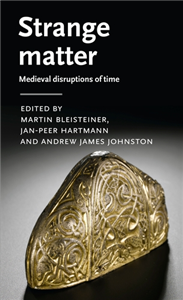
Medieval and early modern texts reflect a fascination with material objects, from ancient heirlooms to ingenious automata. Often imbued with power or beauty, these objects carry an uncanny sense of otherness, their mysterious origins evoking wonder and suggesting temporal and spatial distance. Acting as repositories of temporal alterity, such artefacts bridge the past and present in profound ways. This volume, featuring contributions from experts in literature and art history, explores how texts from these periods use material objects to engage with temporal otherness. From everyday items to marvellous creations, objects challenge distinctions between human and material, natural and cultural. Whether examining the hybrid status of Hector's body in Lydgate's Troy Book or the temporal agency of humble bubbles, the chapters illuminate the vibrant networks connecting people and objects. By highlighting the 'hybridity' of matter, the book offers fresh insights into Bruno Latour's critique of nature-culture divides.
Trusted Partner
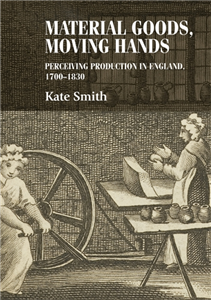
In eighteenth-century Britain, greater numbers of people entered the marketplace and bought objects in ever-greater quantities. As consumers rather than producers, how did their understandings of manufacturing processes and the material world change? Material goods and moving hands combines material culture and visual culture approaches to explore the different ways in which manufacturers and retailers presented production to consumers during the eighteenth century. It shows how new relationships with production processes encouraged consumers, retailers, designers, manufacturers and workers to develop conflicting understandings of production. Objects then were not just markers of fashion and taste, they acted as important conduits through which people living in Georgian Britain could examine and discuss their material world and the processes and knowledge that rendered it.
Trusted Partner
Trusted Partner
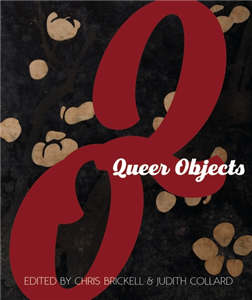
Queer lives give rise to a vast array of objects: the things we fill our houses with, the gifts we share with our friends, the commodities we consume at work and at play, the clothes and accessories we wear, and the analogue and digital technologies we use to communicate with one another. But what makes an object queer? The sixty-three chapters in Queer Objects consider this question in relation to lesbian, gay and transgender communities across time, cultures and space. In this unique international collaboration, well-known and newer writers traverse world history to write about items ranging from ancient Egyptian tomb paintings and Roman artefacts to political placards, snapshots, sex toys and the smartphone. Fabulous, captivating, transgressive.
Trusted Partner

This study examines Exeter riddles, Anglo-Saxon biblical poems (Exodus, Andreas, Judith) and Beowulf in order to uncover the poetics of spolia, an imaginative use of recycled fictional artefacts to create sites of metatextual reflection. Old English poetry famously lacks an explicit ars poetica. This book argues that attention to particularly charged moments within texts - especially those concerned with translation, transformation and the layering of various pasts - yields a previously unrecognised means for theorising Anglo-Saxon poetic creativity. Borrowed objects and the art of poetry works at the intersections of materiality and poetics, balancing insights from thing theory and related approaches with close readings of passages from Old English texts.
Trusted Partner
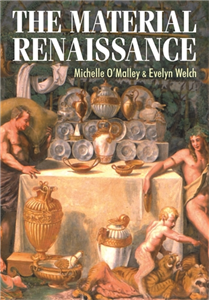
Despite the recent interests of economic and art historians in the workings of the market, we still know remarkably little about the everyday context for the exchange of objects and the meaning of demand in the lives of individuals in the Renaissance. Nor do we have much sense of the relationship between the creation and purchase of works of art and the production, buying and selling of other types of objects in Italy in the period. The material Renaissance addresses these issues of economic and social life. It develops the analysis of demand, supply and exchange first proposed by Richard Goldthwaite in his ground-breaking Wealth and the demand for art in Renaissance Italy, and expands our understanding of the particularities of exchange in this consumer-led period. Considering food, clothing and every-day furnishings, as well as books, goldsmiths' work, altarpieces and other luxury goods, the book draws on contemporary archival material to explore pricing, to investigate production from the point of view of demand, and to look at networks of exchange that relied not only on money but also on credit, payment in kind and gift giving. The material Renaissance establishes the dynamic social character of exchange. It demonstrates that the cost of goods, including the price of the most basic items, was largely contingent upon on the relationship between buyer and seller, shows that communities actively sought new goods and novel means of production long before Colbert encouraged such industrial enterprise in France and reveals the wide ownership of objects, even among the economically disadvantaged. ;
Trusted Partner

In this groundbreaking reassessment of the conventional understanding of a cohesive 'Arts and Crafts movement' in Britain, Imogen Hart argues that a sophisticated mode of looking at decorative art developed in England during the second half of the nineteenth century. Bringing to light a significant number of little-known visual and textual sources, Arts and Crafts Objects insists that the history of British design between the 1830s and the 1910s is more complex and interwoven than concepts of clearly differentiated 'movements' allow for. Reinvesting the objects with the original importance ascribed to them by their makers and users, this book places furniture, metalwork, tiles, vases, chintzes, carpets, and wallpaper at the centre of a rigorous reassessment of the concept of 'Arts and Crafts'. The book offers radical new interpretations of the Arts and Crafts Exhibition Society and the homes of William Morris, alongside illuminating analyses of less familiar but equally rich contexts. ;
Trusted Partner
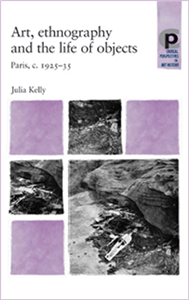
In the 1920s and 1930s, anthropology and ethnography provided new and striking ways of rethinking what art could be and the forms which it could take. This book examines the impact of these emergent disciplines on the artistic avant-garde in Paris. The reception by European artists of objects arriving from colonial territories in the first half of the twentieth century is generally understood through the artistic appropriation of the forms of African or Oceanic sculpture. The author reveals how anthropological approaches to this intriguing material began to affect the ways in which artists, theorists, critics and curators thought about three-dimensional objects and their changing status as 'art', 'artefacts' or 'ethnographic evidence'. This book analyses texts, photographs and art works that cross disciplinary boundaries, through case studies including the Dakar to Djibouti expedition of 1931-33, the Trocadéro Ethnographic Museum, and the two art periodicals Documents and Minotaure. Through its interdisciplinary and contextual approach, it provides an important corrective to histories of modern art and the European avant-garde. ;
Trusted Partner
Writing power radically rethinks the place of the canon and canonicity as objects and concepts in contemporary academia and the everyday intellectual practices of academics. It is distinctive in its demonstration of how academics' engagements with canons shape their writing practices but also how scholars' writing practices, spaces, proclivities, and desires shape the canon and changing ideas of value in canonicity. The book thinks through frequently discussed problems of legitimacy and knowledge production from fresh perspectives of lived experience and the everyday to offer new insights into the politics of knowledge in contemporary social sciences.
Trusted Partner
This is the first book to examine the shifting relationship between humanitarianism and the expansion, consolidation and postcolonial transformation of the Anglophone world across three centuries, from the antislavery campaign of the late eighteenth century to the role of NGOs balancing humanitarianism and human rights in the late twentieth century. Contributors explore the trade-offs between humane concern and the altered context of colonial and postcolonial realpolitik. They also showcase an array of methodologies and sources with which to explore the relationship between humanitarianism and colonialism. These range from the biography of material objects to interviews as well as more conventional archival enquiry. They also include work with and for Indigenous people whose family histories have been defined in large part by 'humanitarian' interventions.
Trusted Partner


Little Women "has been read as a romance or as a quest, or both. It has been read as a family drama that validates virtue over wealth", but also "as a means of escaping that life by women who knew its gender constraints only too well".[6]:34 According to Sarah Elbert, Alcott created a new form of literature, one that took elements from Romantic children's fiction and combined it with others from sentimental novels, resulting in a totally new format. Elbert argued that within Little Women can be found the first vision of the "All-American girl" and that her multiple aspects are embodied in the differing March sisters.
Trusted Partner
Trusted Partner
Soviet materialities explores how material transforms our understanding of Soviet culture, from the textures of domestic space in 1960s apartment blocks to Gulag labour on the Moscow canal, and from avant-garde literary theory in the 1920s to conceptual art under perestroika. It starts from the ethos that the material world shapes people and society. Taking a material approach-or a range of material approaches-can therefore illuminate aspects of the cultural production and lived experiences of Soviet socialism that are not reflected in other kinds of historical records. This edited volume brings cutting-edge research by emerging scholars together with the established voices who have broken the ground in this sub-field over the last twenty years and promises to make a major intervention in the study of Soviet history and culture.
Trusted Partner
At a time of heightened international interest in the colonial dimensions of museum collections, Dividing the Spoils provides new perspectives on the motivations and circumstances whereby collections were appropriated and acquired during colonial military service. Combining approaches from the fields of material anthropology, imperial and military history, this book argues for a deeper examination of these collections within a range of intercultural histories that include alliance, diplomacy, curiosity and enquiry, as well as expropriation and cultural hegemony. As museums across Europe reckon with the post-colonial legacies of their collections, Dividing the Spoils explores how the amassing of objects was understood and governed in British military culture, and considers how objects functioned in museum collections thereafter, suggesting new avenues for sustained investigation in a controversial, contested field.
Trusted Partner
Objects of affection recovers the emotional attraction of the medieval book through an engagement with a fifteenth-century literary collection known as Oxford, Bodleian Library Manuscript Ashmole 61. Exploring how the inhabitants of the book's pages - human and nonhuman, tangible and intangible - collaborate with its readers then and now, this book addresses the manuscript's material appeal in the ways it binds itself to different cultural, historical and material environments. In doing so it traces the affective literacy training that the manuscript provided its late-medieval English household, whose diverse inhabitants are incorporated into the ecology of the book itself as it fashions spiritually generous and socially mindful household members.
Trusted Partner

The documents in this stimulating volume span from 1245 to 1424 but focus on the 'contagion of rebellion' from 1355 to 1382 that followed in the wake of the plague. They comprise a diversity of sources and cover a variety of forms of popular protest in different social, political and economic settings. Their authors range across a wide political and intellectual horizon and include revolutionaries, the artistocracy, merchants and representatives from the church. They tell gripping and often gruesome stories of personal and collective violence, anguish, anger, terror, bravery, and foolishness. Of over 200 documents presented here, most have been translated into English for the first time, providing students and scholars with a new opportunity to compare social movements across Europe over two centuries, allowing a re-evaluation of pre-industrial revolts, the Black Death and its consequences for political culture and action. This book will be essential reading for those seeking to better understand popular attitudes and protest in medieval Europe.



