
Your Search Results
-

-

Nanmeebooks Co., Ltd.
Founded in September 1992, Nanmeebooks is one of the leading publishers in Thailand, which publish both fiction and non-fiction for people at all ages licensed from around the world. We are known for educational books for children and youth literature including Harry Potter. Our outstanding and bestselling titles are including books from J.K. Rowling, Paolo Coelho, Yu Hua, Yi Zhongtian, Dr. Tom Wu and Nobel writer Mo Yan. We are also honored to publish the work of HRH Princess Sirindhorn, as well as various Nobel Prize literatures.
View Rights Portal
-
Promoted Content

 February 2022
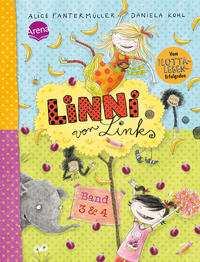
Linni von Links (Band 3 und 4)
Zwei witzig-turbulente Alltagsabenteuer ab 8 Jahren vom „Mein-Lotta-Leben“-Duo Alice Pantermüller und Daniela Kohl
by Alice Pantermüller, Daniela Kohl
Kunterbunter Sammelband für alle Fans von Alice Pantermüller und Daniela Kohl: Zwei witzig-turbulente Alltagsabenteuer ab 8 Jahren vom „Mein-Lotta-Leben“-Duo mit Lach- und Wohlfühlgarantie Linni von Links will unbedingt berühmt werden. Seit Uroama Emilie sind alle Frauen der Familie von Links berühmt geworden. Als sogar ihre kleine Schwester zum Star wird, steht für Linni fest, sie muss etwas tun. Zum Glück besitzt Linni viele Talente. Als ihre Schulklasse zum Fußballturnier antritt und Linni ihr erstes Tor schießt, will Uroma Emilie sie zur Torschützenkönigin machen und Linni selbst träumt vom Pokal. Aber hat ihr Team mit dem kleinen Jan im Tor wirklich eine Chance? Beim Ausflug in den Zoo mit ihrer besten Freundin Isadora hat Linni nur Augen für den zuckersüßen Babyelefanten Moti. Doch plötzlich ist Moti verschwunden. Für Linni und Isa steht fest: Moti wurde entführt und die beiden werden alles daransetzen, ihn zu finden. Aber das ist gar nicht so einfach. Ob Linni dennoch zur Heldin der Geschichte werden kann? Hochkomisch, liebenswert und originell erzählt von „Mein Lotta-Leben“-Bestsellerautorin Alice Pantermüller. Kunterbunt und einzigartig gestaltet von „Mein Lotta-Leben“-Bestsellerillustratorin Daniela Kohl. Band 3 und 4 der beliebten Kinderbuchreihe ab 8 Jahren erstmals im attraktiven Sammelband. Weitere Bücher von Alice Pantermüller und Daniela Kohl im Arena Verlag:Mein Lotta-Leben. Alles voller Kaninchen (1)Mein Lotta-Leben. Wie belämmert ist das denn? (2)Mein Lotta-Leben. Hier steckt der Wurm drin! (3)Mein Lotta-Leben. Daher weht der Hase! (4)Mein Lotta-Leben. Ich glaub, meine Kröte pfeift! (5)Mein Lotta-Leben. Den Letzten knutschen die Elche! (6)Mein Lotta-Leben. Und täglich grüßt der Camembär (7)Mein Lotta-Leben. Kein Drama ohne Lama (8)Mein Lotta-Leben. Das reinste Katzentheater (9)Mein Lotta-Leben. Der Schuh des Känguru (10)Mein Lotta-Leben. Volle Kanne Koala (11)Mein Lotta-Leben. Eine Natter macht die Flatter (12)Mein Lotta-Leben. Wenn die Frösche zweimal quaken (13)Mein Lotta-Leben. Da lachen ja die Hunde! (14)Mein Lotta-Leben. Wer den Wal hat (15)Mein Lotta-Leben. Das letzte Eichhorn (16)Mein Lotta-Leben. Je Otter, desto flotter (17)Mein Lotta-Leben. Im Zeichen des Tapir (18)Mein Lotta-Leben. Alles Bingo mit Flamingo (Filmbuch) Linni von Links. Sammelband. Band 1 und 2Linni von Links. Sammelband. Band 3 und 4
-
Promoted Content

 Humanities & Social SciencesFebruary 2013
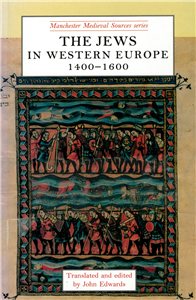
The Jews in western Europe, 1400–1600
by Translated and Edited by John Edwards
As European politics, society, economy and religion underwent epoch-making changes between 1400 and 1600, the treatment of Europe's Jews by the non-Jewish majority was, then as in later periods, a symptom of social problems and tensions in the Continent as a whole. Through a broad-ranging collection of documents, John Edwards sets out to present a vivid picture of the Jewish presence in European life during this vital and turbulent period. Subjects covered include the Jews' own economic presence and culture, social relations between Jews and Christians, the policies and actions of Christian authorities in Church and State. He also draws upon original source material to convey ordinary people's prejudices about Jews, including myths about Jewish 'devilishness', money-grabbing, and 'ritual murder' of Christian children. Full introductory and explanatory material makes accessible the historical context of the subject and highlights the insights offered by the documents as well as the pitfalls to be avoided in this area of historical enquiry. This volume aims to provide a coherent working collection of texts for lecturers, teachers and students who wish to understand the experience of Jewish Europeans in this period. ;
-
 Trusted Partner

 September 2018
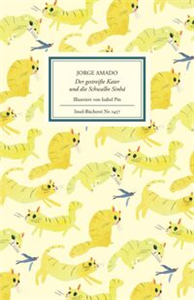
Der gestreifte Kater und die Schwalbe Sinhá
by Jorge Amado, Isabel Pin, Karin Schweder-Schreiner, Steffen Popp
Um eine blaue Rose zu gewinnen, erzählt die Morgenfrühe dem Herrn der Zeit die Liebesgeschichte vom Gestreiften Kater und der Schwalbe Sinhá: Der Gestreifte Kater, im ganzen Park gefürchtet und verachtet, weil er böse sei und hässlich, erlebt einen zweiten Frühling, als die junge, neugierige Schwalbe Sinhá sich allen Warnungen der Parkbewohner zum Trotz mit ihm anfreundet. Im Sommer sind sie miteinander glücklich, aber der Sommer geht schnell vorbei – wie jede glückliche Zeit. Diese Fabel schrieb Amado 1948 in Paris für seinen Sohn – eine kleine Geschichte, die sich Pausen gönnt, zum Plaudern, zum Philosophieren. Eine Geschichte voller Poesie, die von Vorurteilen und Ängsten handelt, vor allem indes von einer Liebe, die das Leben erst lebenswert macht. »Zum Leben wunderschönWär diese WeltKönnte es einst geschehenDass ein gestreifter Kater mitEiner Schwalbe Hochzeit hältUnd beide flögen davonGlücklich zu zweitFür alle Zeit.«
-
Trusted Partner
 Humanities & Social SciencesAugust 1994
The Black Death
by Translated and edited by Rosemary Horrox
-
Trusted Partner
-
Trusted Partner
 Humanities & Social SciencesJanuary 2026
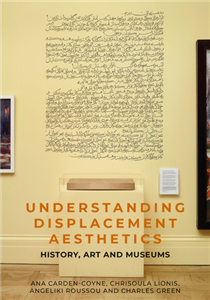
Understanding displacement aesthetics
History, art and museums
by Ana Carden-Coyne, Charles Green, Chrisoula Lionis, Angeliki Roussou
Since the Second World War and the formalisation of the international refugee regime, forced displacement has been marked by a set of aesthetic, practical, and institutional concerns. Understanding Displacement Aesthetics examines how visual culture and art practice constructs and challenges ideas about forced displacement and refugees. The novel framework for 'displacement aesthetics' moves beyond conventional understandings of aesthetics as merely representational, demonstrating the entanglement of visual culture, art practices, and forced displacement in postmigrant contexts. Bringing together the fields of cultural history, art history, and curatorial studies, Understanding Displacement Aesthetics identifies four areas for consideration: visual tropes of refugeedom; language and identity; institutional and artistic responses to displacement; and lived experiences of artists with backgrounds of displacement. Through archival research, visual culture and art, interviews, and collaborative curatorship, Understanding Displacement Aesthetics offers new insight into overcoming the limitations that contexts of displacement can present for artists, art galleries and institutions addressing refugeedom and its legacies.
-
Trusted Partner

 June 2018
Die allerbeste Prinzessin
by Poznanski, Ursula / Illustrated by Büchner, SaBine
An innovative & different princess story! • The three princesses love to quarrel • Original and incredibly witty • Written by Ursula Poznanski and stunning illustrations by Sabine Büchner • Translation Grant! Bianca, Violetta and Rosalind are three adorable princesses. But they share a tiny quirk: they love to argue! One day a visitor asks for entrance into the castle. Prince Waldomir doesn’t enjoy hunting dragons anymore and rather prefers to get married know. Of course each princess is convinced to be the best choice and the prince’s one and only. So a rat race is launched before they have even met the puny prince for the first time…
-
Trusted Partner
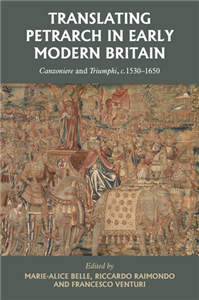 Literature & Literary StudiesAugust 2025
Translating Petrarch in early modern Britain
Canzoniere and Triumphi, c. 1530–1650
by Marie-Alice Belle, Riccardo Raimondo, Francesco Venturi
Translating Petrarch in early modern Britain gathers twelve essays by international scholars focusing on the translation of Petrarch's vernacular verse (Canzoniere and Triumphi) into English, from the Tudor age to the mid-seventeenth century (and beyond). Approaching translation as an interpretive process, but also a mode of literary emulation and cultural engagement with Petrarch's prestigious precedent, the collection explores the complex and interconnected trajectories of both poetic works in English and Scottish literary milieux. While situating each translation in its distinct historical, material, and literary context, the essays trace the reception of Petrarch's works in early modern Britain through the combined processes of linguistic and metric innovation, literary imitation, musical adaptation and cultural and material 'domestication'. The collection sheds light on the origins and development of early modern English Petrarchism as part of wider transnational - and indeed, translational-European literary culture.
-
Trusted Partner
 Humanities & Social SciencesMarch 2024
Diaspora as translation and decolonisation
by Ipek Demir
This innovative study engages critically with existing conceptualisations of diaspora, arguing that if diaspora is to have analytical purchase, it should illuminate a specific angle of migration or migrancy. To reveal the much-needed transformative potential of the concept, the book looks specifically at how diasporas undertake translation and decolonisation. It offers various conceptual tools for investigating diaspora, with a specific focus on diasporas in the Global North and a detailed empirical study of the Kurdish diaspora in Europe. The book also considers the backlash diasporas of colour have faced in the Global North.
-
Trusted Partner
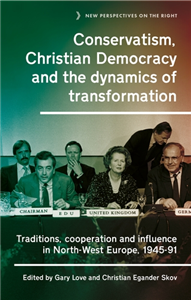 Humanities & Social SciencesJuly 2025
Conservatism, Christian Democracy and the dynamics of transformation
Traditions, cooperation and influence in North-West Europe, 1945-91
by Gary Love, Christian Egander Skov
Conservatism, Christian Democracy, and the Dynamics of Transformation compares the centre-right political traditions of Britain, the Nordic countries, France, West Germany, and Austria and looks for evidence of political cooperation and influence across borders during the period 1945-90. The book explores howa variety of intellectuals, politicians, and political parties transformed their politics in response to major economic, social, and political challenges and seeks to explain why conservatives and Christian democrats came to feel that they belonged to a wider centre-right political family by the end of this period. It also examines why these political traditions found it difficult to cooperate with each other after the Second World War and why they decided to invest more political capital in inter-party relations and wider transnational projects from the 1960s. As the book shows, these developments resulted in two new centre-right internationals: the European Democrat Union and the International Democrat Union.
-
Trusted Partner
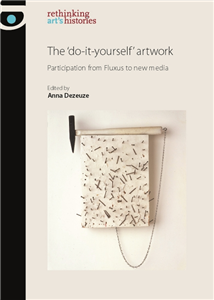 Non-graphic art formsMay 2012
The 'do-it-yourself' artwork
Participation from Fluxus to New Media
by Edited by Anna Dezeuze
Viewers of contemporary art are often invited to involve themselves actively in artworks, by entering installations, touching objects, performing instructions or clicking on interactive websites. Why have artists sought to engage spectators in these new forms of participation? In what ways does active participation affect the viewer's experience and the status of the artwork? Spanning a range of practices including kinetic art, happenings, environments, performance, installations, relational and new media art from the 1950s to the present, this critical anthology sheds light on the history and specificity of artworks that only come to life when you - the viewer - are invited to 'do it yourself.' Rather than a specialist topic in the history of twentieth- and twenty-first century art, the 'do-it-yourself' artwork raises broader issues concerning the role of the viewer in art, the status of the artwork and the socio-political relations between art and its contexts.
-
Trusted Partner
-
Trusted Partner
 Literary studies: c 1500 to c 1800November 2011
The Humorous Magistrate (Arbury)
by Edited by Margaret Jane Kidnie
The Humorous Magistrate is a seventeenth-century satiric comedy extant in two highly distinctive manuscripts. This, the earliest and clearly working draft of the play is bound with three other plays (including The Emperor's Favourite, published by the Malone Society in 2010) in a volume in the library of the Newdigate family of Arbury Hall, Nuneaton, Warwickshire. The second version, showing yet another stage of revision not found in the Arbury manuscript and orientated towards performance, was purchased by the University of Calgary from the English antiquarian Edgar Osborne in 1972. The relationship between the manuscripts was discovered in 2005. The anonymous play has been attributed to John Newdigate III (1600-1642). Like The Emperor's Favourite, it takes aim at the court; its particular object of satire is governmental strategies under the Personal Rule of Charles I. The play appears in print for the first time in these separate editions. The volumes are illustrated with several plates, some provided for comparative purposes.
-
Trusted Partner
 Modern history to 20th century: c 1700 to c 1900May 2017
Inventing the cave man
From Darwin to the Flintstones
by Andrew Horrall. Series edited by Jeffrey Richards
Fred Flintstone lived in a sunny Stone Age American suburb, but his ancestors were respectable, middle-class Victorians. They were very amused to think that prehistory was an archaic version of their own world because it suggested that British ideals were eternal. In the 1850s, our prehistoric ancestors were portrayed in satirical cartoons, songs, sketches and plays as ape-like, reflecting the threat posed by evolutionary ideas. By the end of the century, recognisably human cave men inhabited a Stone Age version of late-imperial Britain, sending-up its ideals and institutions. Cave men appeared constantly in parades, civic pageants and costume parties. In the early 1900s American cartoonists and early Hollywood stars like Charlie Chaplin and Buster Keaton adopted and reimagined this very British character, cementing it in global popular culture. Cave men are an appealing way to explore and understand Victorian and Edwardian Britain.
-
Trusted Partner
 Museums & museologyNovember 2017
Disturbing pasts
Memories, controversies and creativity
by Edited by Leon Wainwright
-
Trusted Partner
 Sociology & anthropologyFebruary 2017
Environment, labour and capitalism at sea
'Working the ground' in Scotland
by Penny McCall Howard. Series edited by Alexander Smith
This book explores how fishers make the sea productive through their labour, using technologies ranging from wooden boats to digital GPS plotters to create familiar places in a seemingly hostile environment. It shows how their lives are affected by capitalist forces in the markets they sell to, forces that shape even the relations between fishers on the same boat. Fishers frequently have to make impossible choices between safe seamanship and staying afloat economically, and the book describes the human impact of the high rate of deaths in the fishing industry. The book makes a unique contribution to understanding human-environment relations, examining the places fishers create and name at sea, as well as technologies and navigation practices. It combines phenomenology and political economy to offer new approaches for analyses of human-environment relations and technologies. It contributes to the social studies of fisheries through an analysis of how deeply fishing practices and social relations are shaped by political economy. It will be read in universities by social scientists and anthropologists and also by those with an interest in maritime Scotland.
-
Trusted Partner
 Film theory & criticismAugust 2016
British rural landscapes on film
by Edited by Paul Newland
British rural landscapes on film offers insights into how rural areas in Britain have been represented on film, from the silent era, through both world wars, and on into the twenty-first century. It is the first book to exclusively deal with representations of the British countryside on film. The contributors demonstrate that the countryside has provided Britain (and its constituent nations and regions) with a dense range of spaces in which cultural identities have been (and continue to be) worked through. British rural landscapes on film demonstrates that British cinema provides numerous examples of how national identity and the identity of the countryside have been partly constructed through filmic representation, and how British rural films can allow us to further understand the relationship between the cultural identities of specific areas of Britain and the landscapes they inhabit.
-
Trusted Partner
 Children's & YAMarch 2022
Ruby Fairygale und die Insel der Magie (Erstlese-Reihe, Band 1)
Fantasy-Abenteuer mit Ruby Fairygale ab 7 Jahren
by Marlene Jablonski, Kira Gembri / illustrated by Verena Körting
Ruby Fairygale and the Island of Magic Ruby Fairygale's first adventure - lovingly and excitingly told, with many atmospheric illustrations• Feel-good fantasy for Story Time, Early Readers and Fans of "Ruby Fairygale"!• Written by Marlene Jablonski (“Liliane Susewind” Chapter book series), based on a synopsis by Kira Gembri• Strong female protagonist and lovingly developed characters, with a high sympathy factor8-year-old Ruby Fairygale lives on a small island near the west coast of Ireland. After school, she always helps her grandmother, who works as a veterinarian. But the two of them have a big secret: they know that there are not only animals on the island, but also magical mythical creatures that need their help.Summer vacation at last! Now Ruby can spend the whole day helping her grandma. The two of them not only take care of animals, but also fairies, goblins and other mythical creatures! It's not easy to keep this secret - especially from Briana, the most unfriendly girl in Ruby's class. When Bri's father's fishing nets are destroyed, Briana suspects a pack of seals and is determined to drive them away. But Ruby suspects that something else is behind this. Something completely magical ... And indeed: a little mermaid had become entangled in the fishing net! Can Ruby still stop Bri without revealing her secret?
-
Trusted Partner

 September 2023
Die Kunst der Meeting-Navigation
Mehr Erfolg in analogen, hybriden und digitalen Besprechungen
by Schönborn, Tim; Sieben, Beatrix
-
Trusted Partner
 History of Art / Art & Design StylesOctober 2016
Hot metal
Material culture and tangible labour
by Jesse Stein. Series edited by Bill Sherman, Christopher Breward
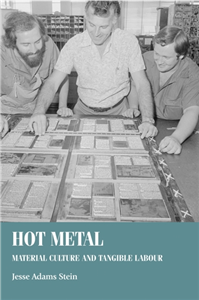
The world of work is tightly entwined with the world of things. Hot metal illuminates connections between design, material culture and labour between the 1960s and the 1980s, when the traditional crafts of hot-metal typesetting and letterpress were finally made obsolete with the introduction of computerised technologies. This multidisciplinary history provides an evocative rendering of design culture by exploring an intriguing case: a doggedly traditional Government Printing Office in Australia. It explores the struggles experienced by printers as they engaged in technological retraining, shortly before facing factory closure. Topics explored include spatial memory within oral history, gender-labour tensions, the rise of neoliberalism and the secret making of objects 'on the side'. This book will appeal to researchers in design and social history, labour history, material culture and gender studies. It is an accessible, richly argued text that will benefit students seeking to learn about the nature and erosion of blue-collar work and the history of printing as a craft.



