
Rights2 Small Publisher Showcase
The Small Publisher Rights Showcase contains a carefully curated selection of books being published by small and independent publishers from across the UK.
View Rights Portal
The Small Publisher Rights Showcase contains a carefully curated selection of books being published by small and independent publishers from across the UK.
View Rights Portal
Rights & Brands is a 360 licensing and publishing agency bringing Nordic rights and brands to a global arena. Starting from a strategic base in literature, art and design, R&B’s platform is built on knowledge, passion and people. Using all aspects of character representation and branding, from publishing and PR to licensing, merchandising and digital development, with a worldwide network of sub-agents and over 800 clients, R&B’s international insight and business capacity is unique.
View Rights Portal

This book provides an in-depth analysis of the rise and influence of both radical and mainstream right-wing movements across Latin America. Through country-specific case studies, it explores the evolution of these groups and their impact on politics, culture, and governance, highlighting key figures and strategies shaping the political landscape in the region.
 Trusted Partner
 Trusted Partner


— How politics are increasingly influencing the rule of law in Germany — Systematic failures of democracy to protect itself — Based on numerous interviews with different members of Germany's legal system Ever since the right-wing party “Alternative for Germany” (AfD) secured representation in the Bundestag and in all state parliaments, Germany’s judiciary is facing a new challenge for which it is unprepared: AfD-affiliated judges and public prosecutors are attracting attention through right-wing biased decisions and investigations. Other members of the legal system cause further damage by ignoring the right-wing extremist and anti-Semitic background of crimes and thus punishing offenders too leniently or not at all. Both the judiciary and policy-makers have so far underestimated the new danger from the right. As a result protection against the appointment of right-wing legal professionals has been insufficient. Joachim Wagner systematically analyses numerous examples from German courts in recent years. He calls on the democratic judiciary to remember the principles of a well-fortified democracy.
Trusted Partner

This book provides a comprehensive examination of conservative and right-wing responses to the Edwardian crisis in Britain (1901-1914). It stresses how the upsurge of right-wing extremism within and outside the Conservative party was accompanied by the crystallization of a culture of violence. The preparation, instigation or threatening of violent acts against all those who appeared to threaten the organic nature and vigour of the national community found expression in a myriad of ultra-nationalist organisations, citizen policing groups, private military associations, and paramilitary formations. The book innovatively reconstructs the belief system and the practices of those right-wing actors, which pursued the goals of military preparedness, "racial regeneration" and imperial unity, while defending the amorphous goals of authority, order and 'national efficiency' against the forces of radicalism and socialism. The book helps to cast light on the bellicose and authoritarian reflexes that traversed British conservatism in the turbulent prewar years.
Trusted Partner

This book offers the first examination of extremist Heathenry and occultism in the UK and how anti-racist Heathens act to counter this discourse. It explores the spectrum of Heathen practice today and the historical origins of racist Heathenry in nineteenth century Germanic romanticism and twentieth century folkish nationalism. Treating each of the three main extremist Heathen organisations, the book extends the analysis to the neo-Nazi occult organization the Order of the Nine Angles (O9A), and the wider racist Heathen cultural scene in Black Metal and Dark Folk music. The authors balance this with discussion of how inclusivist Heathens are countering this discourse, from visible protests at far-right rallies to inter-faith forums and an active presence on social media platforms. The book makes an important contribution to the intersecting fields of new religious movements, nationalist history and racist politics.
Trusted Partner
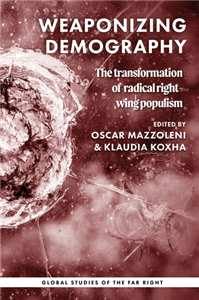
This book introduces a new framework for understanding how the radical right reimagines demographic change as an existential threat. Across Europe and the Americas, low birth rates, immigration, and gender equality are reframed as signs of civilisational decline. This volume explores how radical right actors mobilise fears around fertility, migration, race, family, and sexuality through narratives of crisis, ethnic purity, and control over borders, reproduction, and social norms. It examines conspiracy thinking fuelled by demographic anxiety to justify attacks on gender and sexual rights and reinforce exclusionary ideas of national belonging. Grounded in empirical case studies and interdisciplinary approaches, this book reveals how these narratives converge to reinforce dominance of a native, heteronormative, Christian population. In linking domains often treated separately, it provides a timely and critical perspective on the evolving logic of radical right politics worldwide.


This book is a result of the author's search for these facts and truths as a student and farmer and his endeavor as a teacher to present them in a simple manner to others. The object in presenting the book to the general public is the hope that it may be of assistance to farmers, students and teachers, in their search for the fundamental truths and principles of farming.
Trusted Partner

Available at last in paperback, Radical democracy brings together original contributions from established and emerging scholars. The contributors discuss the theoretical and practical implications of the two dominant approaches to radical democracy: theories of abundance inspired by Gilles Deleuze and theories of lack inspired by Jacques Lacan. They examine the idea of radical democracy from a wide variety of perspectives: identity/difference, the public sphere, social movements, nature, popular culture, right wing populism and political economy. In addition, the volume relates the work of contemporary thinkers such as Deleuze, Lacan, Derrida and Foucault to classical thinkers such as Spinoza, Hegel, Marx and Nietzsche. William Connolly and Ernesto Laclau conclude the volume with two afterwords on the future of radical democracy. With its original contributions, Radical democracy is essential reading for advanced students and scholars who have an interest in the political and theoretical problems of radical democracy. ;
Trusted Partner


Cosy Krimi trifft Buchzauber: Auf den Spuren eines geheimnisvollen Katers, einer Geisterbibliothekarin und eines wendungsreichen Rätsels Eines Morgens taucht ein Schränkchen mit gebrauchten Büchern vor Evans Schule auf – eine kleine Freiluftbibliothek! Bewacht wird sie von einem freundlichen, rot getigerten Kater namens Mortimer. Evan nimmt zwei Bücher mit nach Hause und findet alte Ausleihscheine darin. Gab es früher etwa eine richtige Bibliothek in der Stadt? Warum ist sie nicht mehr da? Evans Vater weicht seinen Fragen aus und auch die anderen Erwachsenen scheinen etwas zu verbergen. Zusammen mit seinem besten Freund Rafi begibt sich Evan auf die Spur der verschwundenen Bibliothek. Dabei kreuzt der geheimnisvolle Kater immer wieder den Weg der beiden. Mortimer scheint auf ganz besondere Weise mit der Geschichte der Bibliothek verbunden zu sein. Was Evan schließlich herausfindet, stellt nicht nur sein eigenes Leben auf den Kopf, es bringt auch eine Wahrheit ans Licht, die ihre Stadt für immer verändern wird. Der New-York-Times-Bestseller und #1 Indie Bestseller erzählt von Büchern und Freundschaften, die uns ein Leben lang begleiten. Eine herzerwärmende Geschichte ab 9 Jahren zum Gemeinsam- und Selberlesen. Kurze Kapitel lassen die Seiten vorbeifliegen und mit jeder neuen Entdeckung steigt die Spannung. Wer vor dem Lesen noch kein Bücherwurm ist, wird es danach garantiert sein. Auszeichnungen für die englische Ausgabe von Mortimers Geheimnis:NEW YORK TIMES BESTSELLER#1 INDIE BESTSELLER!Amazon #1 Best Kids' Book of 2023Amazon Best Book of the Month
Trusted Partner

This book, newly available in paperback, reveals the Conservative Party's relationship with the extreme right between 1945 and 1975. For the first time, this book shows how the Conservative Party, realising that its well known pre-Second World War connections with the extreme right were now embarrassing, used its bureaucracy to implement a policy of investigating extreme right groups and taking action to minimise their chances of success. The book focuses on the Conservative Party's investigation of right-wing groups, and shows how its perception of their nature determined the party bureaucracy's response. The book draws a comparison between the Conservative Party machine's negative attitude towards the extreme right and its support for progressive groups. It concludes that the Conservative Party acted as a persistent block to the external extreme right in a number of ways, and that the Party bureaucracy persistently denied the extreme right within the party assistance access to funds and representation within party organisations. It reaches a climax with the formulation of a 'plan' threatening its own candidate if he failed to remove the extreme right from the Conservative Monday Club.
Trusted Partner

This edition of The Honest Man's Fortune, a play co-written by John Fletcher, Nathan Field, and Philip Massinger for the Lady Elizabeth's Men in 1613 and revived for the King's Men in 1625, is the first diplomatic edition of one of the most remarkable dramatic manuscripts of the early modern period. Almost uniquely, the fair-copy manuscript records the entire process of the circular transmission of the text from authors to censor to bookkeeper to actors to playhouse, as well as the types of revision each required. In the hand of Edward Knight, the King's Men's book-keeper, this manuscript's title-page notes that it was '/Plaide In the yeare 1613/' and contains one of the few surviving complete licences by Master of the Revels Sir Henry Herbert who states, 'This Play. Being an olde One and the Originall Lost was reallowd by mee. This: 8 febru. 1624 [i.e., 1625]'. In fact, Herbert accepted as payment for the new licence a printed edition of Sir Philip Sidney's /Arcadia/. More excitingly, the many cuts, deletions, and marginal and interlinear additions and revisions as well as the names of three actors in its stage directions show us two transmissions of this text: the first in 1613, when it was composed and licensed and then adjusted by the authors, and the second in 1625, when it went through almost the same process for revival. With a full discussion of the manuscript's material properties, provenance, transcription history, and the play's composition and performance history, this new edition of /The Honest Man's Fortune/ puts the play where it belongs: at the centre of the canon of Jacobean drama. ;
Trusted Partner

Populism in Europe offers a detailed and systematic analysis of the ideology, electoral and governmental performances, organisational model, type of leadership and member activism of the Northern League under its founder, Umberto Bossi (1991-2012). Based on a wealth of original research, the book identifies the Northern League's consistent and coherent ideology, its strong leadership and its ability to create communities of loyal partisan activists as key ingredients of its success. Through their in-depth analysis, Albertazzi and Vampa show that the League has much to teach us about how populists can achieve durability and rootedness and how parties of all kinds can still benefit from a committed and dedicated membership today.
Trusted Partner
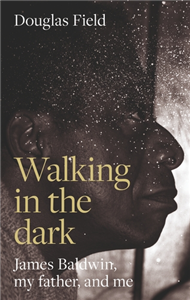
A moving exploration of the life and work of the celebrated American writer, blending biography and memoir with literary criticism. Since James Baldwin's death in 1987, his writing - including The Fire Next Time, one of the manifestoes of the Civil Rights Movement, and Giovanni's Room, a pioneering work of gay fiction - has only grown in relevance. Douglas Field was introduced to Baldwin's essays and novels by his father, who witnessed the writer's debate with William F. Buckley at Cambridge University in 1965. In Walking in the dark, he embarks on a journey to unravel his life-long fascination and to understand why Baldwin continues to enthral us decades after his death. Tracing Baldwin's footsteps in France, the US and Switzerland, and digging into archives, Field paints an intimate portrait of the writer's life and influence. At the same time, he offers a poignant account of coming to terms with his father's Alzheimer's disease. Interweaving Baldwin's writings on family, illness, memory and place, Walking in the dark is an eloquent testament to the enduring power of great literature to illuminate our paths.
Trusted Partner

The right and the recession considers the ways in which conservative activists, groupings, parties and interests in the US and Britain responded to the financial crisis and the 'Great Recession' that followed in its wake. The book looks at the tensions and stresses between different ideas, interests and institutions and the ways in which they shaped the character of political outcomes. In Britain, these processes opened the way for leading Conservatives to redefine their commitment to fiscal retrenchment and austerity. Whereas public expenditure reductions had been portrayed as a necessary response to earlier overspending they were increasingly represented as a way of securing a permanently 'leaner' state. The book assesses the character of this shift in thinking as well as the viability of these efforts to shrink the state and the parallel attempts in the US to cut federal government spending through mechanisms such as the budget sequester. ;
Trusted Partner
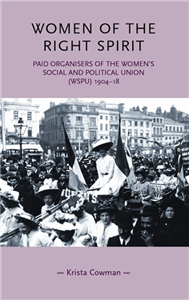
This book is the first investigation on how official organizers built and sustained the national militant campaign of the Women's Social and Political Union between 1903 and 1918. Whilst the overall policy of the Union was devised by an ever-decreasing circle of women, centred around the mother-daughter team of Emmeline and Christabel Pankhurst, much of its actual activity, including its more extreme militant actions such as arson, was devised and implemented by these organizers who worked in the provinces and in London. Women of the right spirit reveals organizers to be a diverse bunch of women, whose class backgrounds ranged from the aristocratic to the extremely impoverished. It describes the ways in which they were recruited and deployed, and the work they undertook throughout Britain. The exhausting pace of their itinerant life is revealed as well as the occasions when organizers fell out with their employers or their own branches. Taking the story of the WSPU's workers up to the end of the First World War, it considers what directions they took when votes for women became a reality. The book will appeal to academics, postgraduates and undergraduates with an interest in women's history, as well as a more general readership wishing to understand the extent of support for the votes for women campaign and the mechanisms through which it organized. ;
Trusted Partner


Do we still need feminism in Europe? Equality or difference feminism? A new generation of feminists has now broken away from the feminism of the 1960s. The old white Cis man has been discredited, by the "#MeToo" movement at the latest. Sexualised violence against women has been outlawed, perpetrators taken to court. So everything’s good? No, of course not. Men still dominate public discourse; men are unchallenged in leadership positions in politics, society and business; male power still prevails in the domestic environment as well. The extent to which men fight back when they feel threatened by feminism is also evident in the revival of authoritarian nationalist politicians in Europe and around the world. The seven authors shed light on feminist struggles in different areas of life, and illustrate the range of feminism today.
Trusted Partner
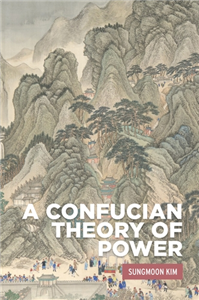
In the book's lead essay, Sungmoon Kim offers a comprehensive analysis of Confucian power. Through a blend of philosophical, political, and historical analysis, Kim challenges the dominant idea that Confucianism is primarily centred on virtue ethics. Instead, he argues that Confucianism perceives power through the prism of responsibility. Kim not only traces this perspective throughout history but also demonstrates its relevance to contemporary society. He contrasts this Confucian perspective with Western political theory's view of power as control. Political theorists and philosophers will offer essay responses to Sungmoon Kim's provocation, offering a dialogue approach to provide a comprehensive analysis of the Confucian conception of power.
Trusted Partner

Backed by Brazil's wealthy agribusiness groups, a growing evangelical movement, and an emboldened military and police force, Jair Bolsonaro took office in 2019. Driven by the former army captain's brand of controversial, aggressive rhetoric, the divisive presidential campaign saw fake news and misinformation shared with Bolsonaro's tens of millions of social media followers. Bolsonaro promised simple solutions to Brazil's rising violent crime, falling living standards and widespread corruption, but what has emerged is Latin America's most right-wing president since the military dictatorships of the 1970s. Famous for his racist, homophobic and sexist beliefs and his disregard for human rights, the so-called 'Trump of the Tropics' has established a reputation based on his polemical, sensationalist statements. Written by a journalist with decades of experience in the field, Beef, Bible and bullets is a compelling account of the origins of Brazil's unique brand of right-wing populism. Lapper offers the first major assessment of the Bolsonaro government and the growing tensions between extremist and moderate conservatives.
Trusted Partner



