
Your Search Results


-
Promoted Content

 August 1998
Auch du kannst dich heilen
Die seelischen Grundlagen von Krankheit und Heilung
by Shealy, C N; Myss, Caroline M
-
Promoted Content

 Biography & True StoriesMay 2026
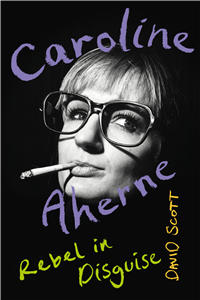
Caroline Aherne
Rebel in disguise
by David Scott
A thoughtful exploration of the work of this unique comedian and writer. Caroline Aherne was one of the most influential and beloved of British comedians. In this book David Scott explores Aherne's comedic artistry and creative legacy, focusing on her iconic characters and ground-breaking TV shows. Scott dives into Aherne's most beloved creations, from the sharp-tongued Mrs Merton to the quietly revolutionary The Royle Family. Drawing on the tales of collaborators and telling behind-the-scenes stories, he provides an intimate glimpse into the creative processes that brought these iconic works to life. At the same time, he examines the social and cultural influences that shaped Aherne's work, from the rich traditions of Northern working-class humour to the experiences of Irish migrants. Aherne's work is celebrated for its sharp wit, warmth and ability to find comedy in adversity. This book offers an exploration and celebration of one of comedy's most inventive minds, revealing how she reshaped the British comedy landscape.
-
 Trusted Partner

 February 1990
Programmieren in C
Mit dem C-Reference Manual in deutscher Sprache
by Kernighan, Brian W.; Ritchie, Dennis M. / Übersetzt von Schreiner, Axel-Tobias; Übersetzt von Janich, Ernst
-
Trusted Partner
 Humanities & Social SciencesJanuary 2026
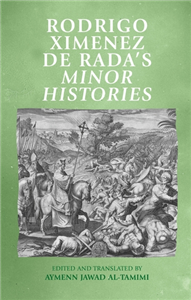
Rodrigo Ximenez de Rada’s Minor Histories
by Aymenn Al-Tamimi
This work provides the first complete English translation of works by Toledan archbishop Rodrigo Ximénez de Rada (1170-1247 CE), whose 'Minor Histories' are sequels to his larger 'Gothic History' and thus round off his grand history of Spain project that he began at the request of King Ferdinand III. The 'Minor Histories' include Rodrigo's 'History of the Arabs' that can be considered the first surviving Western monograph focused on Arab and Islamic history and thus occupies a unique position in the medieval Latin corpus of writings. In addition to the translation, this book provides a thorough and accessible introduction to the life and works of Rodrigo, making sense of the context in which he wrote and his historical method. The translations are thoroughly annotated including cross-references to other Latin and Arabic sources for comparison.
-
Trusted Partner
 Literature & Literary StudiesMay 2026
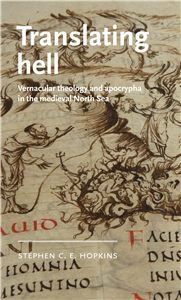
Translating hell
Vernacular theology and apocrypha in the medieval North Sea
by Stephen C. E. Hopkins
In the Middle Ages, hell was useful because it was vaguely defined. Canonical scriptures scarcely mention hell, leaving much to the imaginations of early Christians, who used it to sort out who belonged within the faith. This book explores how hell became a place for literary experiments with local challenges in theology and identity. Following the reception and transformations of two popular hell apocrypha, it argues that they served as this role because of their liminal textual authority. As noncanonical scriptures, apocrypha afforded medieval writers space to revise their hells (since they were not actually scripture), while also encouraging readers to revere those experiments as valid (since they seemed like scripture). The book brings together adaptations from early medieval England, Iceland, Ireland, and Wales, placing the early vernacular theologies of the North Sea in comparative conversation.
-
Trusted Partner

 September 1975
The Best of H. C. Artmann
by H. C. Artmann, Klaus Reichert
Von allen deutschen Autoren, die nach 1945 zu schreiben begannen, ist Artmann ohne jeden Zweifel der vielseitigste, originellste und erfinderischste. So wie Artmann in fast allen Gattungen gearbeitet hat, auch den angeblich antiquierten, und ohne sich um die Tagesparolen der mal reine Dichtung betreibenden, mal engagierten, mal die Literatur totsagenden Kollegen zu kümmern, so hat er seine Quellen, seine Herkunft überall: in der Artusepik, in barocker Schäferpoesie, in den Wörterbüchern und Grammatiken von gut zwei Dutzend Sprachen, in Irland und im England des Sherlock Holmes, bei Villon und dem Wiener Vorstadtdialekt, Lorca, Gomez de la Serna, den Surrealisten und Dadaisten, in den Detektivheftchen der 20er Jahre und den Comic strips von damals bis heute. Unsere Auswahl versucht, nicht nur einen repräsentativen Querschnitt durch das Werk Artmanns zu geben, sondern gleichzeitig Verstreutes, an entlegensten Orten Publiziertes zu sammeln.
-
Trusted Partner

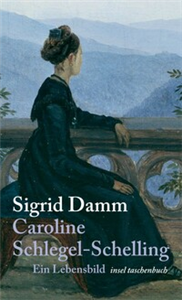 March 2009
Caroline Schlegel-Schelling
Ein Lebensbild in Briefen
by Sigrid Damm, Caroline Schlegel-Schelling, Sigrid Damm
Unter den Frauen der Romantik war Caroline Schlegel-Schelling (1763–1809) eine der faszinierendsten Persönlichkeiten. Eine »politisch-erotische Natur« nennt sie Friedrich Schlegel. An der Seite Georg Forsters erlebte sie die Mainzer Republik, als Ehefrau August Wilhelm Schlegels die Jenaer Frühromantik. Ihr Haus wird zum literarischen Zentrum: Novalis, Brentano, Tieck, Tischbein, Friedrich Schlegel, Goethe und Fichte sind dort ebenso zu Gast wie der junge Philosoph Schelling, dessen Frau sie 1803 wird. Ihre hinterlassenen Briefe sind Zeugnis eines ungewöhnlichen Lebens, das widerspruchsreich, erfüllt und unerfüllt war. Sigrid Damm hat die schönsten Briefe der Caroline Schlegel-Schelling ausgewählt und entwirft in ihrem Essay einfühlsam und voller Sympathie das Porträt einer Frau, die ihr Leben in historisch aufgezwungenen engen Grenzen zu gestalten wußte, die sich schon früh weigerte, im »Hauptzweck des Weibes« für sich den Hauptzweck des Lebens zu sehen.
-
Trusted Partner
-
Trusted Partner
-
Trusted Partner
-
Trusted Partner

 June 2008
Enzyklopädie der Psychologie / Themenbereich C: Theorie und Forschung / Entwicklungspsychologie / Entwicklungspsychologie des Jugendalters
by Herausgegeben von Silbereisen, Rainer K; Herausgegeben von Hasselhorn, Marcus; Herausgegeben von Birbaumer, Niels; Herausgegeben von Frey, Dieter; Herausgegeben von Kuhl, Julius; Herausgegeben von Schneider, Wolfgang; Herausgegeben von Schwarzer, Ralf
-
Trusted Partner
 Literature & Literary StudiesJanuary 2013
Eleventh-century Germany
The Swabian chronicles
by I. Robinson
Three of the most important chronicles of eleventh-century Germany were composed in the south-western duchy of Swabia. The chronicles reveal how between 1049 and 1100 the centripetal attraction of the reform papacy became the dominant fact of intellectual life in German reformed monastic circles. In the abbey of Reichenau Herman 'the Lame' composed a chronicle of the reign of Emperor Henry III (1039-56). His pupil, Berthold of Reichenau, continued his master's work, composing a detailed account of 1076-1079 in Germany. Bernold, a clergyman of Constance, continued the work of Herman and Berthold in a text containing the fullest extant account of 1080-1100. Herman's waning enthusiasm for the monarchy and growing interest in the newly reformed papacy were intensified in Berthold's chronicle, and writing in the new context of the reformed monasteries of south-western Germany, Bernold preached total obedience to the Gregorian papacy. The Swabian chronicles are an indispensable resource to the student of the changing loyalties and conflicts of eleventh-century Germany.
-
Trusted Partner
-
Trusted Partner
 January 2008
Enzyklopädie der Psychologie / Themenbereich C: Theorie und Forschung / Entwicklungspsychologie / Entwicklungspsychologie des Säuglings- und Kindesalters
by Herausgegeben von Hasselhorn, Marcus; Herausgegeben von Silbereisen, Rainer K; Herausgegeben von Birbaumer, Niels; Herausgegeben von Frey, Dieter; Herausgegeben von Kuhl, Julius; Herausgegeben von Schneider, Wolfgang; Herausgegeben von Schwarzer, Ralf
-
Trusted Partner
 February 1990
Das C-Lösungsbuch
zu "Kernighan/Ritchie, Programmieren in C"
by Tondo, Clovis L; Gimpel, Scott E. / Übersetzt von Schreiner, Axel-Tobias; Übersetzt von Albrecht, Elke
-
Trusted Partner
 Literature & Literary StudiesJanuary 2013
The Papal Reform of the Eleventh Century
Lives of Pope Leo IX and Pope Gregory VII
by I. Robinson
The eleventh-century papal reform transformed western European Church and society and permanently altered the relations of Church and State in the west. The reform was inaugurated by Pope Leo IX (1048-54) and given a controversial change of direction by Pope Gregory VII (1073-85). This book contains the earliest biographies of both popes, presented here for the first time in English translation with detailed commentaries. The biographers of Leo IX were inspired by his universally acknowledged sanctity, whereas the biographers of Gregory VII wrote to defend his reputation against the hostility generated by his reforming methods and his conflict with King Henry IV. Also included is a translation of Book to a Friend, written by Bishop Bonizo of Sutri soon after the death of Gregory VII, as well as an extract from the violently anti-Gregorian polemic of Bishop Benzo of Alba (1085) and the short biography of Leo IX composed in the papal curia in the 1090s by Bishop Bruno of Segni. These fascinating narrative sources bear witness to the startling impact of the papal reform and of the 'Investiture Contest', the conflict of empire and papacy that was one of its consequences. An essential collection of translated texts for students of medieval history.
-
Trusted Partner
-
Trusted Partner
 July 2005
Enzyklopädie der Psychologie / Themenbereich C: Theorie und Forschung / Entwicklungspsychologie / Entwicklungspsychologie des mittleren und höheren Erwachsenenalters
by Herausgegeben von Filipp, Sigrun H; Herausgegeben von Staudinger, Ursula M; Herausgegeben von Birbaumer, Niels; Herausgegeben von Frey, Dieter; Herausgegeben von Kuhl, Julius; Herausgegeben von Schneider, Wolfgang; Herausgegeben von Schwarzer, Ralf
-
Trusted Partner
-
Trusted Partner
 Humanities & Social SciencesJanuary 2020
Reform and the papacy in the eleventh century
Spirituality and social change
by S. H. Rigby, Kathleen G. Cushing
This book explores the relationship between the papacy and reform against the backdrop of social and religious change in later tenth and eleventh-century Europe. Placing this relationship in the context of the debate about 'transformation', it reverses the recent trend among historians to emphasise the reform developments in the localities at the expense of those being undertaken in Rome. It focuses on how the papacy took an increasingly active part in shaping the direction of both its own reform and that of society, whose reform became an essential part of realising its objective of a free and independent Church. It also addresses the role of the Latin Church in western Europe around the year 1000, the historiography of reform, the significance of the 'Peace of God' as a reformist movement, the development of the papacy in the eleventh century, the changing attitudes towards simony, clerical marriage and lay investiture, reformist rhetoric aimed at the clergy, and how reformist writings sought to change the behaviour and expectations of the aristocracy. Summarising current literature while presenting a cogent and nuanced argument about the complex nature and development of reform, this book will be invaluable for an undergraduate and specialist audience alike.





