
Humanities & Social Sciences
December 2020


 Trusted Partner


This intrepid hamster plunges into every adventure with full cheeks! Humboldt is a detective, adventurer and – a hamster. His size doesn’t stop him from helping the people of Villy Village out of all sorts of fixes whenever he’s not helping his owner Babs and her daughter Elli in the post office. No problem is too big for him! Only his owner’s money worries leave him flummoxed. But then Babs and Elli win the lottery and are over the moon – until they receive an anonymous postcard. Humboldt’s life is suddenly in dire straits because the unknown blackmailer wants Babs and Elli’s lottery ticket – or he’s going to hurt Humboldt. When the police refuses to get to the bottom of the case, Humboldt decides to take matters into his own paws. He’s keen to put a stop to this lottery villain’s antics! HAMSTER HUMBOLDT. SMALL AND STEADY WINS THE RACE is a detective and adventure story full of animal-entertainment for girls and boys aged 8+.
Trusted Partner


Der »große, unübertroffene Hamlet«, ein Schmierenschauspieler, ein Komödiant, der mit seiner schwindsüchtigen Frau in Schmutz, Hunger und Kälte ein erbärmliches Leben in der Dachstube fristet, geht zugrunde am Alkohol, nachdem er in der Wut sein schreiendes Kind erwürgt hat. In den drei Erzählungen, die sich hinter dem Titel Papa Hamlet verbergen, ist es vor allem der neue Stoff- und Themenbereich, der 1889 bei Erscheinen des Bandes Aufsehen erregte: das soziale Elend des großstädtischen Industrieproletariats und die triste Schattenwelt von Armut und Laster, erzählt mit einer sprachlichen Sensibilität, die fähig war, alle Details der Alltagswelt aufzunehmen.
Trusted Partner

Links acting traditions with cultural milieu.. No other book on Hamlet on the stage covers as much theoretical ground.. Covers a number of foreign productions and pays much attention to the role of scenography . ;
Trusted Partner


»Hamlet« gehört zu den großen Dramen der Weltliteratur. Wenn die Vielfalt der Deutungen, zu denen eine Bühnenschöpfung herausfordert, als Maßstab ihrer künstlerischen Vitalität gelten kann, dann ist dieses Stück gewiß ein lebender Klassiker geblieben.
Trusted Partner

»Hamlet« gehört zu den großen Dramen der Weltliteratur. Wenn die Vielfalt der Deutungen, zu denen eine Bühnenschöpfung herausfordert, als Maßstab ihrer künstlerischen Vitalität gelten kann, dann ist dieses Stück gewiß ein lebender Klassiker geblieben.
Trusted Partner
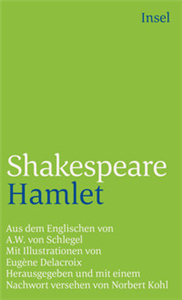
»Hamlet« gehört zu den großen Dramen der Weltliteratur. Wenn die Vielfalt der Deutungen, zu denen eine Bühnenschöpfung herausfordert, als Maßstab ihrer künstlerischen Vitalität gelten kann, dann ist dieses Stück gewiß ein lebender Klassiker geblieben.


Hamlet is Shakespeare's longest play, and is considered among the most powerful and influential works of world literature, with a story capable of "seemingly endless retelling and adaptation by others". The play likely was one of Shakespeare's most popular works during his lifetime, and still ranks among his most performed, topping the performance list of the Royal Shakespeare Company and its predecessors in Stratford-upon-Avon since 1879. It has inspired many other writers—from Johann Wolfgang von Goethe and Charles Dickens to James Joyce and Iris Murdoch—and has been described as "the world's most filmed story after Cinderella"
Trusted Partner

Szilárd Borbély, der vor einigen Jahren mit seinem Roman Die Mittellosen international Aufsehen erregte, gilt als der bedeutendste ungarische Lyriker seit 1989. Erstmals liegen nun zwei Gedichtzyklen auf Deutsch vor: Zustandsbeschreibungen eines wahrnehmungssensiblen Ich, das in ruhigem Parlando über sich und seine Umgebung reflektiert (Berlin-Hamlet), und ein formstrenges Brevier von Trauergedichten, die auf ein ungesühntes Verbrechen eine Antwort suchen (Leichenpomp). Ein mitteleuropäischer Flaneur streift durch das aufgerissene, im Umbruch begriffene Berlin der neunziger Jahre, sein Blick folgt dem Flugzeug über der Hermannstraße im Landeanflug auf Tempelhof, verirrt sich im Gewirr bunter Rohrleitungen über den Ausschachtungen, im Wald der Kräne am Potsdamer Platz. Gattungsbezeichnungen wie Allegorie, Brief, Epilog und Fragment, Zitate aus Shakespeare-Sonetten, aus Benjamins Passagenwerk und Kafkas Briefen an Felice verbannen die Stadtansichten in die Kulisse – es ist ein urbaner metaphysical poet, besessen vom Gedanken der Vergänglichkeit. Der gewaltsame Tod der Eltern, die einem Raubmord zum Opfer fielen, und die Vernichtung der ungarischen Juden wurden zu Borbélys Lebensthema. In Leichenpomp greift er auf dichterische Formen katholischer Frömmigkeit und auf chassidische Legenden zurück, um dem Unerträglichsten einen Ausdruck abzuringen, der jegliche Erlösungsbotschaft verneint.
Trusted Partner

Im Frühjahr 2001 hat Christoph Schlingensief mit seiner Hamlet-Inszenierung am Zürcher Schauspielhaus für öffentliches Aufsehen gesorgt - weil er aussteigewillige Neonazis in seine Theaterarbeit integrierte, weil er bei seinen Straßenaktionen unter anderem zum Verbot der Schweizerischen Volkspartei aufrief, weil er den deutschen Innenminister Otto Schily dazu aufforderte, die Mehrheitsanteile von Torsten Lemmer, dem Produzent und Teilhaber des weltgrößten Vertriebes für rechtsradikale Musik, zu kaufen, und zuletzt, weil er zusammen mit dem Ensemble den Verein „REIN e.V.“ für weitere aussteigewillige Neonazis gründete.
Trusted Partner

This volume is the first ever attempt to unite and translate some of the key texts which informed Johan Huizinga's famous study of the Burgundian court, The Waning of the Middle Ages, a work which has never gone out of print. It combines these texts with sources that Huizinga did not consider, those that illuminate the wider civic world that the Burgundian court inhabited and the dynamic interaction between court and city. Through these sources, and an introduction offering new perspectives on recent historiography, the book tests whether Huizinga's controversial vision of the period still stands. Covering subjects including ceremonial events, such as the spectacles and gargantuan banquets that made the Burgundian dukes the talk of Europe, the workings of the court, and jousting, archery and rhetoric competitions, the book will appeal to students of late medieval and early modern Europe and to those with wider interests in court culture, ritual and ceremony.
Trusted Partner
Trusted Partner
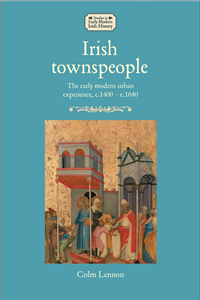
Through a series of innovative perspectives, this book examines how early modern Irish townspeople experienced the urban world through a range of family and associational ties. Migrants inducted through town citizenship and marriage bonded more closely as sisters or brothers of confraternities and guilds, consolidating parish membership. Civic religion saw the integration of religion with town politics and councils, and monastic charity of the friars' hospitals preceded the era of modern municipal welfare. In circumstances of the alienation of the long-settled Catholic townspeople from the state's religious and political Reformation in the seventeenth century, they drew sustenance from the continuity of institutions such as colleges, fraternities and hospitals and forms of coexistence with Protestant fellow-citizens.
Trusted Partner
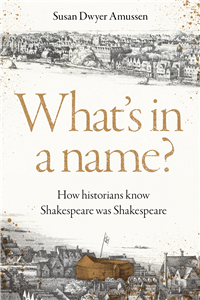
A compelling tour of Shakespeare's England that makes a powerful contribution to the 'authorship question'. How do we know Shakespeare was Shakespeare? Could a glover's son who left school at fifteen really be the author behind such masterpieces as Hamlet, King Lear and The Tempest? Yes! says historian Susan Amussen. She transports readers back to early modern England, to travel the path that carried William Shakespeare from humble origins in Stratford to literary greatness on the London stage. This was a society undergoing rapid change. Grammar schools made education in Latin and Greek available to commoners, while touring players brought the latest dramatic productions to the masses. And in London, a metropolis filled with European visitors, ordinary people had the opportunity to see courtly life up close. No serious historian doubts that Shakespeare was the author of the plays that bear his name. Susan Amussen shares what they know: that Shakespeare's England was a complex and cosmopolitan place, with everything a talented young playwright needed to develop his craft and furnish his imagination.
Trusted Partner
Trusted Partner
Trusted Partner

This book examines the ways in which ideas about children, childhood and Ireland changed together in Irish Protestant writing of the seventeenth and eighteenth centuries. It focuses on different varieties of the child found in the work of a range of Irish Protestant writers, theologians, philosophers, educationalists, politicians and parents from the early seventeenth century up to the outbreak of the 1798 Rebellion. The book is structured around a detailed examination of six 'versions' of the child: the evil child, the vulnerable/innocent child, the political child, the believing child, the enlightened child, and the freakish child. It traces these versions across a wide range of genres (fiction, sermons, political pamphlets, letters, educational treatises, histories, catechisms and children's bibles), showing how concepts of childhood related to debates about Irish nationality, politics and history across these two centuries.
Trusted Partner

Emigration from Scotland has always been very high. However, emigration from Scotland between the wars surpassed all records; more people emigrated than were born, leading to an overall population decline. Why was it so many people left? Marjory Harper, whose knowledge is grounded in a deep understanding of the local records, maps out the many factors which worked together to cause this massive diaspora. After an opening section where the author sets the Scottish experience within the context of the rest of the British Isles, the book then divides the country geographically, starting with the Highlands, then coastal Scotland, and the urban Lowland highlighting in turn the factors that particularly influenced each of these areas. Harper then discusses the organised religious and political movements that encouraged emigration. By interweaving personal stories with statistical evidence Harper brings to life the reality behind the dramatic historical migration.
Trusted Partner



