Tales of EUkraine
Tales of EUkraine (TEUk) will bring books to Ukrainian children refugees while helping the Ukrainian publishing sector with the support of the European Commission
View Rights Portal Trusted Partner

Tales of EUkraine (TEUk) will bring books to Ukrainian children refugees while helping the Ukrainian publishing sector with the support of the European Commission
View Rights Portal
This invigorating study places medieval romance narrative in dialogue with theories and practices of gift and exchange, opening new approaches to questions of storytelling, agency, gender and materiality in some of the most engaging literature from the Middle Ages. It argues that the dynamics of the gift are powerfully at work in romances: through exchanges of objects and people; repeated patterns of love, loyalty and revenge; promises made or broken; and the complex effects that time works on such objects, exchanges and promises. Ranging from the twelfth century to the fifteenth, and including close discussions of poetry by Chaucer, the Gawain-Poet and romances in the Auchinleck Manuscript, this book will prompt new ideas and debate amongst students and scholars of medieval literature, as well as anyone curious about the pleasures that romance narratives bring.
This anthology, presenting new research from fourteen scholars, delves into the interplay between contemporary art and ecological concerns in East and Southeast Asia. Focused on the concept of artistic remediation, the book unravels the diverse capacities of art to combat systemic anthropogenic destruction to the environment and ecology. At its core, the book articulates the ongoing ecological transformation in art and art history that embraces a paradigm shift in human-nature relationships, emphasizing interconnectedness of all life forms of the Earth. Bridging art studies, activism, and environmental studies, the book examines how artistic practices in the region have engaged with ecocritical reflection, biodiversity advocacy, sustainable practices, and environmental justice, among others. Providing a platform for critical and timely analysis of artistic interventions in the face of existential crises, the book acknowledges diverse voices of scholars who have situated their scholarship in the cultural and artistic specificities of various societies, locales, and communities in the region.
Trusted Partner

Ein Fluch, der über einem Ort in der Pampa zu liegen scheint. Eine Heilerin, die vom Tode bedrohte Kinder zu retten versucht. Und zwei exzessiv liebende Mütter, deren Schicksale auf mysteriöse Weise verbunden sind. – Das Gift ist wie ein Alptraum, der sich schleichend entfaltet. Eine hypnotisierende Geschichte. Packende, fantastische Literatur.
Trusted Partner

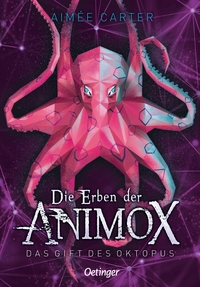
In "Das Gift des Oktopus", dem zweiten Band der spannenden Nachfolge-Reihe "Die Erben der Animox", setzt sich das Abenteuer des mutigen Simon Thorn und seiner Freunde fort. Ein Jahr nach den ereignisreichen Kämpfen, die die Welt der Animox erschüttert haben, führt eine rätselhafte Nachricht Simon und seine Gefährten nach Australien, dem Land der gefährlichsten Tiere. Dort müssen sie einen verlorenen Raubstein finden, der eine entscheidende Rolle im Schicksal aller Animox spielt, indem er den Erben ihre Kräfte raubt. Doch die Mission ist alles andere als einfach. Australien empfängt die Gruppe mit einer Fülle von bisher ungekannten Herausforderungen und Gefahren, die nicht nur ihre physischen, sondern auch ihre emotionalen Grenzen auf die Probe stellen. Währenddessen findet sich Simons Bruder Nolan auf der anderen Seite des Konflikts wieder. Er hat sich dem finsteren Imperium angeschlossen, das die Macht über die Tierreiche an sich reißen will. Zwischen den Brüdern entbrennt ein erbitterter Kampf, der nicht nur ihre Beziehung, sondern das Schicksal der gesamten Animox-Welt bedroht. Während Simon und seine Freunde um das Überleben kämpfen und versuchen, den Raubstein zu sichern, müssen sie gleichzeitig einen Weg finden, Nolan von seinem gefährlichen Pfad abzubringen und ihm zu zeigen, dass es noch Hoffnung auf Versöhnung und einen gemeinsamen Kampf für das Gute gibt. "Das Gift des Oktopus" entführt die Leser in ein atemberaubendes Abenteuer voller Spannung, Magie und der tiefen Bande der Freundschaft, die selbst in der dunkelsten Stunde zu leuchten vermag. Spannendes Fantasy-Abenteuer im beliebten Animox-Universum: Tauche ein in die faszinierende Welt der Tierwandler! Atemberaubende Abenteuer in Australien: Entdecke das Land der giftigsten Tiere durch die Augen der Erben der Animox. Begleite Simon Thorn und seine Freunde auf ihrem Weg, während sie sich neuen Herausforderungen stellen und über sich hinauswachsen. Ein Kampf zwischen Gut und Böse: Erlebe den spannenden Konflikt zwischen Simon und seinem Bruder Nolan, der sich dem dunklen Imperium angeschlossen hat. Action und Emotion in perfekter Balance: Freue dich auf eine Geschichte, die nicht nur mit spannenden Kämpfen, sondern auch mit emotionalen Momenten überzeugt. Lerne die einzigartige Tierwelt Australiens kennen: Nicht nur für junge Leser eine spannende und lehrreiche Reise. Ideal für Fans der Animox-Reihe und neue Leser: Auch ohne Vorkenntnisse der ersten Bücher ein packendes Leseerlebnis. Fortsetzung der erfolgreichen Animox-Reihe: Die Geschichte geht weiter und hält neue, aufregende Wendungen bereit. Für Leser ab 10 Jahren: Ein Buch, das Kinder, Jugendliche und auch erwachsene Fantasy-Fans begeistert. Der Dein SPIEGEL-Bestseller, gelistet bei Antolin. Die Reihe umfasst insgesamt fünf Bände Band 1: Die Beute des FuchsesBand 2: Das Gift des OktopusBand 3: Der Kampf des ElefantenBand 4: Der Verrat des KaimansBand 5: Die Rache des Tigers Entdecke auch das Prequel, "Animox" Band 1: Das Heulen der Wölfe Band 2: Das Auge der Schlange Band 3: Die Stadt der Haie Band 4: Der Biss der Schwarzen Witwe Band 5: Der Flug des Adlers
Trusted Partner

 Trusted Partner
 Trusted Partner
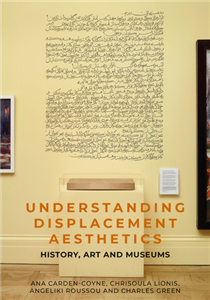
Since the Second World War and the formalisation of the international refugee regime, forced displacement has been marked by a set of aesthetic, practical, and institutional concerns. Understanding Displacement Aesthetics examines how visual culture and art practice constructs and challenges ideas about forced displacement and refugees. The novel framework for 'displacement aesthetics' moves beyond conventional understandings of aesthetics as merely representational, demonstrating the entanglement of visual culture, art practices, and forced displacement in postmigrant contexts. Bringing together the fields of cultural history, art history, and curatorial studies, Understanding Displacement Aesthetics identifies four areas for consideration: visual tropes of refugeedom; language and identity; institutional and artistic responses to displacement; and lived experiences of artists with backgrounds of displacement. Through archival research, visual culture and art, interviews, and collaborative curatorship, Understanding Displacement Aesthetics offers new insight into overcoming the limitations that contexts of displacement can present for artists, art galleries and institutions addressing refugeedom and its legacies.
Trusted Partner

This book explores the ways in which the two leading sensation authors of the 1860s, Mary Elizabeth Braddon and Wilkie Collins, engaged with nineteenth-century ideas about personality formation and the extent to which it can be influenced either by the subject or by others. Innovative readings of seven sensation novels explore how they employ and challenge Victorian theories of heredity, degeneration, inherent constitution, education, upbringing and social circumstance. Far from presenting a reductive depiction of 'nature' versus 'nurture', Braddon and Collins show the creation of character to be a complex interplay of internal and external factors. Drawing on material ranging from medical textbooks, to sociological treatises, to popular periodicals, Creating character shows how sensation authors situated themselves at the intersections of established and developing, conservative and radical, learned and sensationalist thought about how identity could be made and modified.
Trusted Partner
 Trusted Partner


In order to be able to adequately support intellectually gifted children and adolescents, timely diagnostics and sound counseling are indispensable. This book offers a comprehensive and up-to-date overview of the theoretical basics of giftedness as well as of possibilities of diagnostics and support. Due to a clear structuring and didactic preparation of the contents, it is ideal for (self-)study and for professional development. New topics, such as gender differences or the support of gifted students in regular classes, have been included in the 2nd edition. Contents of the volume are various model concepts of giftedness as well as pioneering studies in this field. Furthermore, the development of giftedness as well as characteristics of gifted students are discussed. The authors discuss in detail the possibilities of diagnosing highly gifted children and adolescents and present concrete support opportunities in kindergarten and school.
Trusted Partner
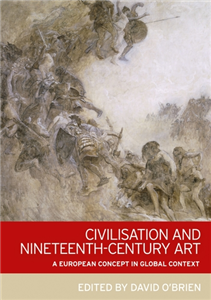
Over the course of the long nineteenth century, Civilisation was the subject of some of the most prominent public mural paintings and sculptures in Europe and the United States, especially those that speculated on the direction of history. It also underpinned Western depictions of non-Western societies and evaluations of social progress and artistic excellence. The essays in this volume explore the ways in which the idea of Civilisation acted as a lens through which Europeans and Americans represented themselves and others, how this concept reshaped understandings of historical and artistic development, and also how it changed and was put to new uses as the century progressed. This collection will prove invaluable to students and academics in both history and art history.
Trusted Partner
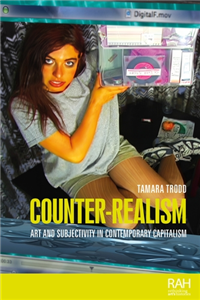
Counter-Realism: Art and subjectivity in contemporary capitalism is an ambitious and original study of key works of film and video art made since 2008 by leading contemporary artists, including William Kentridge, Amalia Ulman, Melanie Gilligan, Lizzie Fitch/Ryan Trecartin and Elizabeth Price. It argues their work should be understood as a reconfigured form of 'realism', expressing economic forces and political pressures across contexts ranging from post-apartheid South Africa, through austerity-era Spain, to contemporary Britain and North America. Supported by original artist interviews and detailed visual analysis of individual works of art, as well as a wide-ranging research base, which synthesises arguments from a variety of disciplines including art history, literary, film and political studies, the book is clearly written, and makes legible the ways in which some of the most vivid and compelling works of contemporary moving-image art engage with historical and contemporary political debates.
Trusted Partner
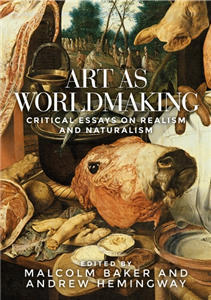
Art as worldmaking is a response to Alex Potts's provocative 2013 book Experiments in modern realism. Twenty essays by leading scholars test Potts's recasting of realism through examinations of art produced in different media and periods, ranging from eighth-century Chinese garden aesthetics to video work by the contemporary Russian collective Radek Community. While the book does not neglect avatars of pictorial realism such as Menzel and Eakins, or the question of nineteenth-century realism's historical antecedents, it is contemporary in orientation in that many contributors are particularly concerned with the questions that sculpture, photography and non-traditional media pose for realism as an aesthetic norm. It will be essential reading for students of art history concerned with art's truth value or more broadly with conceptual problems of representation and the intersections of art and politics.
Trusted Partner
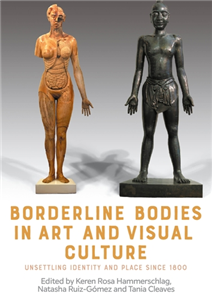
Borderline bodies offers original interpretations of visual representations of human bodies as bounded and unbounded, fortified and permeable, mobile and static-subject to borders and able to traverse and challenge them. It also takes as its focus images and objects that might be considered 'borderline' because they sit at the intersection of disciplines or sit outside accepted notions of what constitutes serious 'art.' By mapping the ways human bodies traverse borders and straddle-even dismantle-categories, this volume's essays approach afresh the relationship of bodies to traditional modes of representation, especially in art and medicine, and encourage us to think anew about how we understand the relationship between human corporeality, identity and place. Critical transdisciplinary and transnational analyses of objects and images from a range of geographies shed new light on the themes of: bodies and identity; typologies of the body; racialised bodies; 'normal' and 'abnormal' bodies; encounters between bodies; bodies in transition; bodies and mobility; and the bounded and unbounded human body. The outcome is a fresh approach to depictions of the human body produced for the purposes of artistic and medical education, aesthetic edification, and scientific and professional advancement, which disrupts assumptions about the normative human body perpetuated through Western image-making traditions.
Trusted Partner
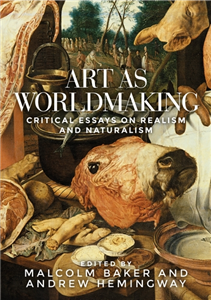
Introduction : Realism and its others in the 21st century: Why Realism won't go away - Andrew Hemingway Part I: Theory 1. The figure as double agent: realism and abstraction in European post-war art - Briony Fer 2. Realism's Credibility Problem - Joshua Shannon 3. If only; only if ... - Adrian Rifkin Part II: Sculpture 4. Confronting the Veristic Sculptural Portrait - Malcolm Baker 5. Sculpture, Realism and the Neo-classical Ideal - Martina Droth 6. Elasticity and Victorian Sculptural Form - Caroline Arscott 7. Image of the People: Charles Ray's Recent Work - Anne M. Wagner Part III: Garden Design 8. Of Gardens and Persons: the English Engagement with China's Garden Design - Martin Powers 9. Traditional Views. Conservative Anti-Naturalism and Landscape Aesthetics in France around 1900 - Neil McWilliam Part IV: Painting and Photography 10. Willem Kalf on Reflexykonst and the Aesthetics of Transformation in Still Life - Celeste Brusati 11. Democratic light: phenomenology and the worldliness of painting - Brendan Prendeville 12. The Visibility of Labor - T.J. Clark 13. Body and Soul in the work of Thomas Eakins and F. Holland Day - Rebecca Zurier Part V: Photography and Conema 14. Photography as counter forensics - Steve Edwards 15. Woman, War and Social Documentary Photography in South Africa - Tamar Garb 16. Antonioni's Blow-Up (1966): photography and film - Lisa Tickner Part VI: Post-Media / Contemporary Practice 17. Peter Dreher's Everyday Realism - Alistair Rider 18. From grey and rainy Vermont - Thomas Crow 19. 'Every day, something happens to us': Realism at the crossroads - Gail Day Index
Trusted Partner
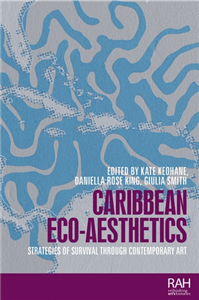
This edited volume reframes the Caribbean as a paradigm of ecological resilience and creativity by bringing together the voices of contemporary artists and scholars who are at the forefront of environmental activism in the region and across its diasporas. While dominant narratives percolating from the environmental sciences to the mainstream press present the Caribbean as a frontier of planetary disaster, the contributors to this volume show how the region offers radical models for overcoming the environmental challenges of the present. At the heart of this argument lies the history of the Caribbean as a centre for grassroots forms of anti-colonial and anti-capitalist resistance founded upon nature-centred cosmologies and practices. Caribbean Eco-Aesthetics shows how contemporary artists are mobilising this radical heritage in a bid to unlock alternative planetary futures.
Trusted Partner
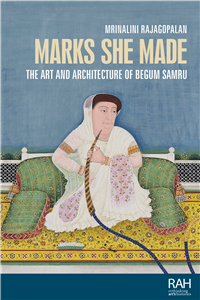
Begum Samru (b. circa 1750-d. 1836) was a north Indian woman ruler who used art and architecture to facilitate her social, political, and financial station in early modern India. Rising from the ranks of courtesans in Mughal Delhi to become the commander of her own mercenary army, she later became the ruler of an independent territory of Sardhana (60 km northwest of Delhi). The begum (Urdu/ Hindustani title for noblewoman) was a trusted ally to the Mughal emperor and the English East India Company, two of the dominant political powers in north India at the time. As a sovereign ruler, she corresponded with two popes and King Louis Philippe of France, exchanging portraits, architectural drawings, and letters with these powerful men in addition to her Mughal counterparts in India. Art and architecture played a key role in establishing Begum Samru as a powerful but non-threatening ruler; as an upholder and patron of the Catholic faith in India; as a political ally to several European and Indian factions that were vying for power; and as ruling matriarch of a cosmopolitan household, court, and army. In narrating the story of a single woman in nineteenth-century India, this book offers a path to think of the creative ways in which women participated in public and political spheres. It also illustrates how women without pedigree, women who did not bear biological children or produce male heirs, and women who lived in contravention of gendered norms found alternative methods of recognition, dignity, power, and sometimes, as in the case of Begum Samru, global visibility.
Trusted Partner
Trusted Partner
Trusted Partner
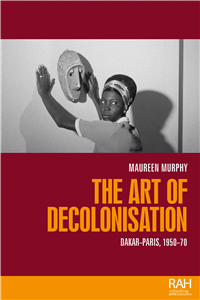
The art of decolonisation examines how artists challenged colonial legacies and reconfigured power through transnational networks of art and diplomacy. Adopting a global and transhistorical perspective, it explores artistic, political, and institutional relations between France and Senegal during decolonisation and the Cold War. From the emergence of a national modern art in Senegal to contested cultural policies and high-profile exhibitions-such as those featuring Picasso and Soulages in Dakar, or contemporary Senegalese art in Paris-this book traces the circulation of artworks, ideas, and influence across borders. It reveals how visual artists and filmmakers shaped a new artistic geopolitics between 1950 and 1970. Reconsidering the accepted chronology of the 'global turn', The art of decolonisation shows that the roots of global art discourse run deeper than the 1990s, and were already forming during the era of independence struggles.