
Thekla Verlag
We are a publisher from Germany with a selected list of children's and young adult books.
View Rights Portal
We are a publisher from Germany with a selected list of children's and young adult books.
View Rights Portal
Theart Press is a South African publisher specialisingin inspirational books - including poetry, children's books and biography.
View Rights Portal

This book offers a unique and timely reading of the early Frankfurt School in response to the recent 'affective turn' within the arts and humanities. Resisting the overly rationalist tendencies of political philosophy, it argues that critical theory actively cultivates a powerful connection between thinking and feeling, and rediscovers a range of often neglected concepts that were of vital importance to the first generation of critical theorists, including melancholia, hope, (un)happiness, objects and mimesis. In doing so, it brings the dynamic work of Walter Benjamin, Theodor Adorno, Ernst Bloch and Siegfried Kracauer into conversation with more recent debates around politics and affect. An important intervention in the fields of affect studies and social and political thought, Critical theory and feeling shows that sensuous experience is at the heart of the Frankfurt School's affective politics.
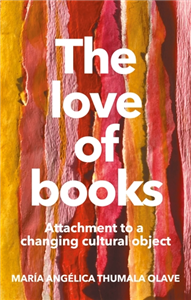
The Love of Books examines the affective bond between people and books in the UK. In the context of the unprecedented abundance of media offering information, storytelling and entertainment, it investigates the attachment to print and digital books amongst readers from a range of backgrounds who read for pleasure, wish to be surrounded by print copies of books, and have trouble discarding books. Unlike existing research, which focuses on prestige, social status, and cultural capital, this study centres on meaning, materiality and emotion. Drawing on interviews and archive material, it shows how attachment emerges from the practical fusion of three elements that have so far been examined separately: the material, surface properties of books, the act of reading, and books' symbolic power.
 Trusted Partner
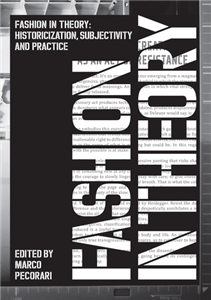
For Spring Summer 2020, Gucci showed a collection questioning identity politics and capitalism. Rather than the usual explanation of the material, shapes or inspirations behind the collection, the press release handed out at the show quoted the philosopher Michel Foucault and questioned the very nature of fashion itself. Gucci's press release reflects the popularization of critical theory in public discourse and fashion in particular. Philosophers, activists and academics are increasingly recruited to collaborate with luxury brands, and main-stream fashion brands have begun to adopt a discourse about politics and critical thinking using, in their communication, concepts such as "resistance", "gender fluidity", "national identity" or "cultural heritage" without accompanying these discourses with any form of political engagement or activism. Based on this intellectualization of the fashion industry and the recent proliferation of critical theory in fashion education, this book stresses the importance of rethinking the relationship between fashion and theory. Drawing together eleven chapters and four conversations by and with philosophers, cultural theorists, historians, anthropologists, activists, performers and designers, the book investigates both the theorization of fashion and the ways in which fashion offers a useful landscape in understanding the current state of critical theory today.
Trusted Partner


Edward Bond wurde 1934 in der Londoner Vorstadt Holloway geboren. 1956 schrieb er erste Gedichte und Stückentwürfe und trat 1960 einer Dramatikergruppe um John Osborne, Arnold Wesker und John Arden bei. 1962 wurde Bonds erstes Stück, The Pope's Wedding (Die Hochzeit des Papstes), in London uraufgeführt. Sein zweites Theaterstück, Saved (Gerettet), provozierte einen der größten Skandale der britischen Theatergeschichte: Das Stück wurde kurz nach seiner Premiere im November 1965 im Royal Court Theatre aufgrund von expliziter Gewaltdarstellung von der Zensur verboten. Die sich anschließende Diskussion um Freiheit der Kunst bewirkte 1968 das Ende der britischen Theaterzensur. Große Erfolge wurden Anfang der 1970er Jahre seine Lear-Bearbeitung und das Stück The Sea (Die See). In den kommenden Jahrzehnten zahlreiche Stücke, Opernlibretti für Hans Werner Henze, Arbeit an Theatern, für den Film (u.a. Mitarbeit am Drehbuch zu Antonionis Film Blow up) und das Fernsehen. Edward Bond lebt in der Nähe von Cambridge. Harald Mueller, geb. am 18. Mai 1934 in Memel, war u. a. Theaterautor und Dramaturg. Für den Suhrkamp Verlag übersetzte er Werke von Bernard Shaw ins Deutsche. Er starb am 27. Dezember 2021.
Trusted Partner

Lukácsian film theory and cinema explores Georg Lukács' writings on film. The Hungarian Marxist critic Georg Lukács is primarily known as a literary theorist, but he also wrote extensively on the cinema. These writings have remained little known in the English-speaking world because the great majority of them have never actually been translated into English - until now. Aitken has gathered together the most important essays and the translations appear here, often for the first time. This book thus makes a decisive contribution to understandings of Lukács within the field of film studies, and, in doing so, also challenges many existing preconceptions concerning his theoretical position. For example, whilst Lukács' literary theory is well known for its repudiation of naturalism, in his writings on film Lukács appears to advance a theory and practice of film that can best be described as naturalist. Lukácsian film theory and cinema is divided into two parts. In part one, Lukács' writings on film are explored, and placed within relevant historical and intellectual contexts, whilst part two consists of the essays themselves. This book will be of considerable interest to scholars and students working within the fields of film studies, literary studies, intellectual history, media and cultural studies. It is also intended to be the final volume in a trilogy of works on cinematic realism, which includes the author's earlier European film theory and cinema (2001), and Realist film theory and cinema (2006).
Trusted Partner
Edward Bond wurde 1934 in der Londoner Vorstadt Holloway geboren. 1956 schrieb er erste Gedichte und Stückentwürfe und trat 1960 einer Dramatikergruppe um John Osborne, Arnold Wesker und John Arden bei. 1962 wurde Bonds erstes Stück, The Pope's Wedding (Die Hochzeit des Papstes), in London uraufgeführt. Sein zweites Theaterstück, Saved (Gerettet), provozierte einen der größten Skandale der britischen Theatergeschichte: Das Stück wurde kurz nach seiner Premiere im November 1965 im Royal Court Theatre aufgrund von expliziter Gewaltdarstellung von der Zensur verboten. Die sich anschließende Diskussion um Freiheit der Kunst bewirkte 1968 das Ende der britischen Theaterzensur. Große Erfolge wurden Anfang der 1970er Jahre seine Lear-Bearbeitung und das Stück The Sea (Die See). In den kommenden Jahrzehnten zahlreiche Stücke, Opernlibretti für Hans Werner Henze, Arbeit an Theatern, für den Film (u.a. Mitarbeit am Drehbuch zu Antonionis Film Blow up) und das Fernsehen. Edward Bond lebt in der Nähe von Cambridge. Harald Mueller, geb. am 18. Mai 1934 in Memel, war u. a. Theaterautor und Dramaturg. Für den Suhrkamp Verlag übersetzte er Werke von Bernard Shaw ins Deutsche. Er starb am 27. Dezember 2021. Klaus Reichert, geboren 1938, emeritierter Professor für Anglistik an der Johann Wolfgang Goethe-Universität Frankfurt am Main, 1964-1968 Lektor in den Verlagen Suhrkamp und Insel, 2002-2011 Präsident der Deutschen Akademie für Sprache und Dichtung in Darmstadt. Autor, Übersetzer und Herausgeber (u. a. der Joyce-Ausgabe des Suhrkamp Verlages). Christian Enzensberger, geboren 1931 in Nürnberg und verstorben 2009 in München, war Professor für Englische Literaturgeschichte an der Universität München. Er übersetzte zahlreiche Werke aus dem Englischen ins Deutsche.
Trusted Partner

'Realist film theory and cinema' embraces studies of cinematic realism and 19th century tradition, the realist film theories of Lukács, Grierson, Bazin and Kracauer, and the relationship of realist film theory to the general field of film theory and philosophy. This is the first book to attempt a rigorous and systematic application of realist film theory to the analysis of particular films. The book suggests new ways forward for a new series of studies in cinematic realism, and for a new form of film theory based on realism. It stresses the importance of the question of realism both in film studies and in contemporary life. Aitken's work will be of interest to scholars and advanced students of film studies, literary studies, media studies, cultural studies and philosophy.
Trusted Partner
The book addresses what is political in critical theory and which aspects, arguments or notions of critical theory maintain political significance for the 20th and the 21st centuries. The collection of essays comprises itself of a series of clear and critical perspectives that analyze the extent to which critical theory relates political argument to modern societies and, thereby, exerts a critique of the multiple social and political phenomena of late modernity. The contributors focus on a multiplicity of universal phenomena such as globalization, multiple crises, late capitalism and the social role of the sciences, and posit some novel criticism of the contemporary social sphere, as it is situated within the wider system of global capitalism. They also present a plurivalent critique that links arguments in Marxism and Freud to all three generations of critical theory.
Trusted Partner

De-centering queer theory seeks to reorient queer theory to a different conception of bodies and sexuality derived from Eastern European Marxism. The book articulates a contrast between the concept of the productive body, which draws its epistemology from Soviet and avant-garde theorists, and Cold War gender, which is defined as the social construction of the body. The first part of the book concentrates on the theoretical and visual production of Eastern European Marxism, which proposed an alternative version of sexuality to that of western liberalism. In doing so it offers a historical angle to understand the emergence not only of an alternative epistemology, but also of queer theory's vocabulary. The second part of the book provides a Marxist, anti-capitalist archive for queer studies, which often neglects to engage critically with its liberal and Cold War underpinnings.
Trusted Partner
Trusted Partner


In recent years, the ancient symbiosis between humans and their pets has entered a new phase, marked by the burgeoning clinical specialty of human-animal therapy. This approach uses the relationship between humans and their (mainly) mammalian pets to support the growth of emotion regulation, social skills, and mental health in children, adolescents, and adults. But how are humans and animals able to develop close bonds at all? What makes it possible for animals to have a therapeutic effect on humans? And how can we best use this understanding in animal-assisted therapy? In this unique book, a team of expert biologists and psychologists integrate and combine sophisticated biological and psychological knowledge to answer these questions. Together they have created a comprehensive, scientific foundation for human-animal therapy, a foundation that will facilitate the development, implementation, and evaluation of effective new interventions. Target Group: For Clinical psychiatrists, psychiatrists, mental health counselors, school psychologists, and other professionals interested in using pets and animals in therapy.
Trusted Partner
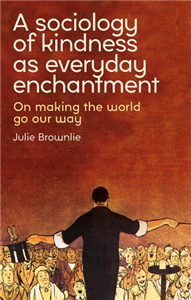
This book asks us to consider how and why the notion of random acts of kindness and the idea of kindness more generally have come to take a hold in many contemporary English-speaking societies. By introducing and mapping the contours of an emergent kindness industry, marshalling empirical research on contemporary framings of everyday kindness and theoretical resources from cultural sociology to the sociology of emotions and relationships, Brownlie makes the case for a critical sociological engagement with the idea of kindness. In doing so, she argues for kindness to be seen as a form of everyday enchantment - one that, like all enchantments, is ultimately ambivalent.
Trusted Partner
Populism is a powerful force today, but its full scope has eluded the analytical tools of both orthodox and heterodox 'populism studies'. This book provides a valuable alternative perspective. It reconstructs in detail for the first time the sociological analyses of US demagogues by members of the Frankfurt School and compares these with contemporary approaches. Modern demagogy emerges as a key under-researched feature of populism, since populist movements, whether 'left' or 'right', are highly susceptible to 'demagogic capture'. The book also details the culture industry's populist contradictions - including its role as an incubator of modern demagogues - from the 1930s through to today's social media and 'Trumpian psychotechnics'. Featuring a previously unpublished text by Adorno on modern demagogy as an appendix, it will be of interest to researchers and students in critical theory, sociology, politics, German studies, philosophy and history of ideas, as well as all those concerned about the rise of demagogic populism today.
Trusted Partner
 Trusted Partner

Film theory: an introduction offers a highly readable account of film theory and is an indispensable resource for students. The discussion ranges from the late 1960s to the present, a period in which a number of conceptual strands, notably politics, semiotics and psychoanalysis were woven together in an ambitious synthesis. In this book, the authors chart the construction of this synthesis and its subsequent fragmentation, and clearly explain the various intellectual currents which have contributed to it. Divided into two parts, the first covers the conceptual background of film theory, dealing with historical materialism, semiotics and psychoanalysis, whilst in the second the authors concentrate on particular topics such as authorship, narrative, realism, the avant-garde and postmodernism. For this new edition, the authors have added a new foreword, a fully updated and expanded bibliography, and a 60-page Retrospect outlining developments within film theory since the book's original publication in 1988. This Retrospect identifies a number of broad readings of Theory, each with a different perspective on the main content of the book. As such, it provides a new and original mapping of the 'post-theory' moment in this complex and often fractured terrain. Accessible and authoritative, this book is essential reading for students of film theory, or indeed anyone seeking a deeper understanding of modern cinema. ;
Trusted Partner
Trusted Partner

The revival of recognition theory has brought new energy to critical theory. In general terms, recognition theory aims to critically evaluate social structures against a standard of social freedom identified with norms of interaction which are freely recognised by all parties. Until now, attention has primarily focused on the categories and forms of recognition theory. However, the influence of contemporary French theory upon the development of theories of recognition has not yet received the consideration it merits. This collection outlines the current state of recognition theory, studies the impact of French theory, and uses French thought to identity aspects of the recognitive process which are often overlooked. Exploring French accounts of agonistic identity construction, vulnerability, power, ethical obligation and reflexive theory construction, this book supports the intentions of critical theory with heightened attentiveness to oppression in all of its forms.
Trusted Partner

Edward Bond wurde 1934 in der Londoner Vorstadt Holloway geboren. 1956 schrieb er erste Gedichte und Stückentwürfe und trat 1960 einer Dramatikergruppe um John Osborne, Arnold Wesker und John Arden bei. 1962 wurde Bonds erstes Stück, The Pope's Wedding (Die Hochzeit des Papstes), in London uraufgeführt. Sein zweites Theaterstück, Saved (Gerettet), provozierte einen der größten Skandale der britischen Theatergeschichte: Das Stück wurde kurz nach seiner Premiere im November 1965 im Royal Court Theatre aufgrund von expliziter Gewaltdarstellung von der Zensur verboten. Die sich anschließende Diskussion um Freiheit der Kunst bewirkte 1968 das Ende der britischen Theaterzensur. Große Erfolge wurden Anfang der 1970er Jahre seine Lear-Bearbeitung und das Stück The Sea (Die See). In den kommenden Jahrzehnten zahlreiche Stücke, Opernlibretti für Hans Werner Henze, Arbeit an Theatern, für den Film (u.a. Mitarbeit am Drehbuch zu Antonionis Film Blow up) und das Fernsehen. Edward Bond lebt in der Nähe von Cambridge. Brigitte Landes, geboren 1946 in Frankfurt/Main. Sie arbeitet freiberuflich als Dramaturgin, Regisseurin und Autorin.
Trusted Partner

The revival of recognition theory has brought new energy to critical theory. In general terms, recognition theory aims to critically evaluate social structures against a standard of social freedom identified with norms of interaction which are freely recognised by all parties. Until now, attention has primarily focused on the categories and forms of recognition theory. However, the influence of contemporary French theory upon the development of theories of recognition has not yet received the consideration it merits. The book takes up this task. With chapters by internationally recognised authors, the collection outlines the current state of recognition theory, studies the impact of French theory, and uses French thought to identity aspects of the recognitive process which are often overlooked. Exploring French accounts of agonistic identity construction, vulnerability, power, ethical obligation and reflexive theory construction, this book supports the intentions of critical theory with heightened attentiveness to oppression in all of its forms. ;
Trusted Partner
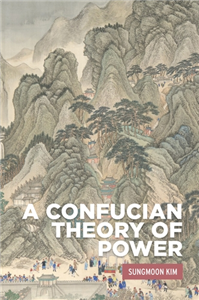
In the book's lead essay, Sungmoon Kim offers a comprehensive analysis of Confucian power. Through a blend of philosophical, political, and historical analysis, Kim challenges the dominant idea that Confucianism is primarily centred on virtue ethics. Instead, he argues that Confucianism perceives power through the prism of responsibility. Kim not only traces this perspective throughout history but also demonstrates its relevance to contemporary society. He contrasts this Confucian perspective with Western political theory's view of power as control. Political theorists and philosophers will offer essay responses to Sungmoon Kim's provocation, offering a dialogue approach to provide a comprehensive analysis of the Confucian conception of power.


