
Your Search Results


-
Promoted Content

 May 2026
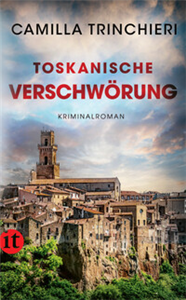
Toskanische Verschwörung
Kriminalroman
by Camilla Trinchieri, Sonja Hauser
Nico Doyle, Ex-Cop im Ruhestand, genießt das ruhige Leben in seinem kleinen toskanischen Dorf – bis ein kleines Mädchen ihn unerwartet um Hilfe bittet. Ihr Vater steht unter Mordverdacht. Auf eigene Faust beginnt er zu ermitteln, folgt den Spuren zwischen seinem Heimatort Gravigna und dem mittelalterlichen Städtchen Pitigliano. Dabei muss er all seine Erfahrung als New Yorker Polizist einsetzen – und schon bald zeigt sich, dass hinter der idyllischen Fassade der Toskana dunkle Geheimnisse lauern. Ein atmosphärischer Kriminalroman voller Lokalkolorit, Spannung und italienischem Flair.
-
Promoted Content

 2024
2024My Italy with Berlusconi
And what has become of it. Essays, conversations, reports
by Michaela Namuth
The political era of media entrepreneur and multi-billionaire Silvio Berlusconi began in 1994. German journalist Michaela Namuth also arrived in Rome at that time. He became prime minister, she became a freelance correspondent for various newspapers. She spent the long period of his government with him. During this time, the populist Berlusconi not only paved the way for a far-right government, he was also an ice-breaker for other right-wing populists in Europe and elsewhere. What else happened during and after Berlusconi's time in power is told in 20 chapters of articles, reports and interviews. The result is a colourful mosaic of contemporary Italy. It is about publishing, design, crime fiction, the mafia, a women's factory, the south and Nutella. Under Berlusconi, the country has changed. Many speak of “Berlusconisation”, by which they mean the gradual weakening of democracy. It is a critical book, but also a declaration of love to a contradictory country whose name still has a special ring to many ears.
-
 Trusted Partner

 Humanities & Social SciencesNovember 2023
Rethinking Norman Italy
Studies in honour of Graham A. Loud
by Joanna Drell, Paul Oldfield
This volume on Norman Italy (southern Italy and Sicily, c. 1000-1200) honours and reflects the pioneering scholarship of Graham A. Loud. An international group of scholars reassesses and recasts the paradigm by which Norman Italy has been conventionally understood, addressing varied subjects across four key themes: historiographies, identities and communities, religion and Church, and conquest. The chapters revise and refine our understanding of Norman Italy in the eleventh and twelfth centuries, demonstrating that it was not just a parochial Norman or Mediterranean entity but also an integral player in the medieval mainstream.
-
Trusted Partner
 Humanities & Social SciencesFebruary 2026
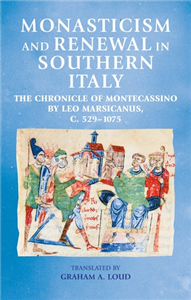
Monasticism and renewal in southern Italy
The Chronicle of Montecassino by Leo Marsicanus, c. 529–1075
by Graham Loud
The chronicle of Leo Marsicanus recounts the history of the abbey of Montecassino from its foundation by St. Benedict in the sixth-century up to 1075. It presents a detailed and compelling story of tribulation and renewal, with the abbey twice destroyed and abandoned in the early Middle Ages and then rebuilt. It concludes with an informative account of the building and dedication of the new abbey church by Abbot Desiderius in 1066-71. The chronicle is also a key source for the more general history of southern Italy in the early Middle Ages, and of the conquest of the region by the Normans during the eleventh century. In addition, Montecassino was one of the great intellectual centres of western Christendom and a major contributor to the reform movement within the Church during the later eleventh century. Leo's chronicle is a crucial witness to that role.
-
Trusted Partner
 Literature & Literary StudiesJanuary 2013
The towns of Italy in the later Middle Ages
by Trevor Dean
The towns of Italy in the later middle ages presents over one hundred fascinating documents, carefully selected and coordinated from the richest, most innovative and most documented society of the European Middle Ages. No other English language sourcebook has the same geographical or chronological range. This collection is carefully structured around the crisis of the fourteenth century and arranged in contrasting groups of texts. By connecting documents in translation to recent scholarship and debates, it addresses five key areas of medieval urban history: the physical environment, civic religion, economy, society and politics. Offers students well-translated and effectively contextualised documents along with some guidance to the secondary work of Italian scholars which is largely inaccessible to undergraduate students.
-
Trusted Partner
 The ArtsJanuary 2019
Cinema - Italy
by Stefania Parigi, Des O'Rawe
A journey to the Italian cinema that overturns established views and opens up new perspectives and interpretations. Its itinerary is organized in four stages. The first is an analysis of the theories of Cesare Zavattini on neorealism which overturns widely accepted positions both on Zavattini and on neorealism. The second confronts a key film of the post-war Italian cinema, Roberto Rossellini's Paisà, by examining the nature of its realism. The third is dedicated to Luchino Visconti: to questions of the use of language exemplified in his La terra trema, the use of settings, costume and light as agents of meaning in his Il Gattopardo and Vaghe stelle dell'Orsa. The final voyage of the film is to the physical and symbolic construction of heaven and earth in the work of Pasolini. Particular attention is given to the representation of the body in his last four films: the grotesque and mythical bodies in popular tradition in his Trilogia di vita and the tortured bodies destroyed by the mass media in Salò.
-
Trusted Partner
 Humanities & Social SciencesJune 2021
Rethinking Norman Italy
by Joanna Drell, Paul Oldfield, C. E. Beneš
-
Trusted Partner
-
Trusted Partner
 Humanities & Social SciencesJune 2022
Internal exile in Fascist Italy
by Piero Garofalo, Elizabeth Leake, Dana Renga
-
Trusted Partner
-
Trusted Partner

 June 2024
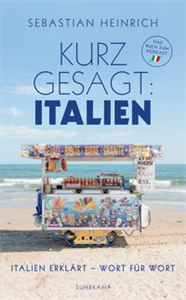
Kurz gesagt: Italien
Italien erklärt - Wort für Wort | Das perfekte Wörterbuch für alle Italien-Liebhaber
by Sebastian Heinrich
Italien erklärt – Wort für Wort Ach, bella Italia : Schon der Espresso am Autogrill gleich hinter der Grenze schmeckt viel besser als jede Edelbohne bei uns. Die Italiener lieben ihren caffè wie ihren Fußball und ihre Pasta. Der Verkehr ist chaotischer als bei uns, die Politik – die Politik … Der deutsche Blick auf Italien ist geprägt von Sehnsucht und Bewunderung. Und von Stereotypen: Berlusconi, Bialetti, Bolognese. Sebastian Heinrich lädt uns ein, hinter die Klischees zu schauen. Anhand einzelner, unübersetzbarer Begriffe bringt er uns das Land Wort für Wort ein Stückchen näher: von den herrlich kitschigen cinepanettoni , die an Weihnachten im Fernsehen laufen, über den berlusconismo bis hin zu papeete und der Frage, warum in Rom eigentlich so oft die Regierung stürzt. Er erklärt, warum der Norden über den Süden die Nase rümpft – und umgekehrt – und weshalb die Städte an ferragosto in einen tiefen Sommerschlaf verfallen. Ein Handwörterbuch für alle Italianità -Liebhaber!
-
Trusted Partner
 Humanities & Social SciencesJuly 1995
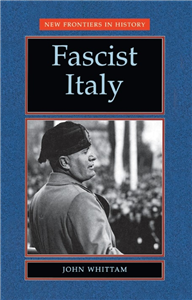
Fascist Italy
by John Whittam
Fascist Italy is a concise introduction to the phenomenon of Italian fascism and its impact. The author balances an up-to-date re-evaluation of political, diplomatic and military developments with a full assessment of the more neglected domestic and cultural dimensions of the subject. With the aid of documents and recent research on the subject, this book presents an analysis of the origins of the movement, the reasons behind its political success and the methods used to construct and consolidate a regime capable of resolving the problems of mass society in the 20th century. Within his broad-ranging analysis, Whittam places particular emphasis on the attempts to exert social control, the interaction of party and state, the tension between revolutionary and conservative tendencies and on the role of Il Duce. Mussolini's triumphs and failures in peace and war and his ultimate responsibility for the disintegration of the regime are discussed objectively. ;
-
Trusted Partner
 Literature & Literary StudiesJanuary 2005
Amy Tan
by Bella Adams, John Thieme
This is the most comprehensive study to date of Amy Tan's work. It offers close readings of her texts in the context of broader debates about the representation of identity, history and reality. In contrast with Tan's own American-born narrators, and mainstream critics, Bella Adams's study looks beyond the stereotypes which appear in Tan's books, and explores the ways in which Chinese immigrants and their American relatives struggle to understand each others 'best qualities' via the Chinese tradition of the 'talk story'. She emphasises Tan's American narrators' process of becoming Chinese and discovering 'real China', and the significance of the ironic staging of these moments. Students will find this study both accessible and probing, and scholars will welcome its contribution to our understanding of a significant figure in contemporary literature. ;
-
Trusted Partner
 The ArtsFebruary 2015
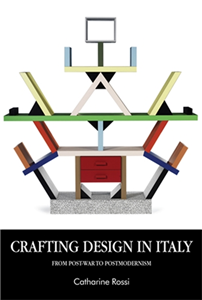
Crafting design in Italy
From post-war to postmodernism
by Catharine Rossi, Christopher Breward, Bill Sherman
Crafting design in Italy is the first book to examine the role that craft played in post-war Italian design, one of the most celebrated design episodes in the twentieth century. Craft was vital to the development of Italian design, and it has been so far overlooked. This book examines the multiple ways craft shaped Italian design from 1945 to the 1980s in the context of bigger socio-economic, cultural and political change; from post-war reconstruction to the economic 'miracle' of the 1960s, to the rise of the countercultural Radical Design movement and advent of postmodernism. It consists of case studies on design areas including product, furniture, fashion, glass and ceramics to bring to light previously unknown makers and objects as well as re-examine design 'icons' such as Gio Ponti's Superleggera chair and Ettore Sottsass's Memphisware. It also offers a model for analysing design and craft's relationship in other contexts, including today. ;
-
Trusted Partner

 FictionOctober 2020
Once upon a time in Italy
by Fulvio, Luca Di
Rome in 1860 - with the exciting age of the Risorgimento as an atmospheric backdropLuca Di Fulvio's new novel is a powerful emotional epic about solidarity, self-discovery, homeland, family, love, and life dreams. The story begins in 1860, with the plot set mainly in Rome during the last phase of the Italian unification movement, the Risorgimento. Luca Di Fulvio creates a highly emotional, mentally cinematic epic with strong, distinctive characters. An orphan boy who wants to use his camera to change the way people see the world. A circus girl with a burning interest in politics. A countess who gives the gift of freedom to others. Three people whom fate brings to Rome in 1870, the pulsating heart of Italy on its path to becoming a nation state. As their paths cross in the midst of this city of promise, their dreams seem to be interwoven with magical bands. But the dazzling city of Rome presents the three with unexpected challenges. One day, when a dramatic event shakes the Eternal City, they are threatened with losing everything they hold dear. A highly emotional epic about three unforgettable characters, and a visually stunning story about new beginnings, the power of love, and a great longing for security in a world where one person stands up for the other. Bursting with life, deeply moving, and full of hope - Luca Di Fulvio's stories are like journeys that you wish would never end Three people and their dream of a better world The new novel by SPIEGEL bestselling author Luca Di Fulvio Set in Rome in 1860 against the atmospheric backdrop of the Italian unification movement
-
Trusted Partner
 Literature & Literary StudiesMay 2000
The towns of Italy in the later Middle Ages
by Rosemary Horrox, Trevor Dean, Simon Maclean
The towns of Italy in the later middle ages presents over one hundred fascinating documents, carefully selected and coordinated from the richest, most innovative and most documented society of the European Middle Ages. No other English language sourcebook has the same geographical or chronological range. This collection is carefully structured around the crisis of the fourteenth century and arranged in contrasting groups of texts. By connecting documents in translation to recent scholarship and debates, it addresses five key areas of medieval urban history: the physical environment, civic religion, economy, society and politics. Offers students well-translated and effectively contextualised documents along with some guidance to the secondary work of Italian scholars which is largely inaccessible to undergraduate students. ;
-
Trusted Partner
 Humanities & Social SciencesApril 2026
Elites in civil society
A comparative perspective
by Niklas Altermark, Malin Arvidson, Jayeon Lee, Roberto Scaramuzzino
Where civil society is often seen as a driving force for equality, this book addresses a challenging topic: civil society elites. Drawing on a comprehensive study of Italy, Poland, Sweden, and the UK, this ground-breaking research investigates the often-overlooked power structures within civil society. By combining elite studies with civil society research, the book uncovers how a distinct civil society elite emerges and how it interacts with leaders in politics and business. The findings reveal a fascinating paradox. While this elite may be a powerful engine for social change, its integration into wider power circles risks reproducing the very inequalities it seeks to dismantle. By exploring how this elite can become disconnected from its grassroots, the book provides essential insights into the future of civil society and its democratic promise.
-
Trusted Partner
 Teaching, Language & ReferenceFebruary 2020
A writer's guide to Ancient Rome
by Carey Fleiner, Jerome de Groot
-
Trusted Partner
-
Trusted Partner
 November 1983
Das Lied der Rachel
Mit einem Nachwort von Miguel Barnet. Aus dem Spanischen übersetzt von Wilhelm Plackmeyer. Das Nachwort von Miguel Barnet übersetzte Monika López aus dem Spanischen
by Miguel Barnet, Wilhelm Plackmeyer, Miguel Barnet
»Rachel«, eine mit allen Wassern gewaschene Varietésängerin, strebt früh nach Höherem, ohne es jedoch zu erreichen. »La bella de Alhambra« schwelgt in Banalitäten und Kitsch, ist – mit liberalen Einschränkungen – Rassistin, weil ihre Kundschaft rassistisch ist, orientiert sich an Horoskopen, beschäftigt sich mit fliegenden Untertassen. Ihr Bericht läßt die stickige Atmosphäre der »belle époque« des vorrevolutionären Cuba nachempfinden, vermischt die Schilderung der klassischen Straßenschlachten zwischen einheimischen und französischen Zuhältern im Viertel San Isidro, des Rassenkrieges von 1912 und der »toten Zeit« zwischen den Zuckerrohrernten mit Kosmetikkniffen, Theaterklatsch und dem täglichen Leben der Unterwelt. Nach der Revolution von 1959 entwickeln sich die Dinge ungünstig für »Rachel«: die »Häuser«, die sie mittlerweile in besagtem Viertel besitzt, werden liquidiert, ihre Karriere als »freie Unternehmerin« ist beendet.



