
Your Search Results


-
Promoted Content

 Industrial / commercial art & designApril 2017
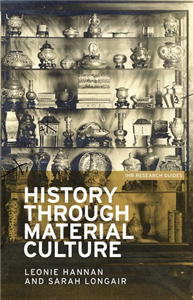
History through material culture
by Series edited by Simon Trafford, Leonie Hannan, Sarah Longair
History through material culture is a unique, step-by-step guide for students and researchers who wish to use objects as historical sources. Responding to the significant, scholarly interest in historical material culture studies, this book makes clear how students and researchers ready to use these rich material sources can make important, valuable and original contributions to history. Written by two experienced museum practitioners and historians, the book recognises the theoretical and practical challenges of this approach and offers clear advice on methods to get the best out of material culture research. With a focus on the early modern and modern periods, this volume draws on examples from across the world and demonstrates how to use material culture to answer a range of enquiries, including social, economic, gender, cultural and global history.
-
Promoted Content
 Humanities & Social SciencesFebruary 2023
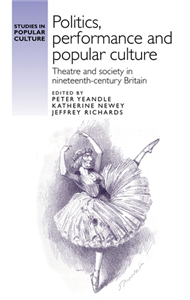
Politics, performance and popular culture
Theatre and society in nineteenth-century Britain
by Peter Yeandle, Katherine Newey, Jeffrey Richards
This collection brings together studies of popular performance and politics across the nineteenth century, offering a fresh perspective from an archivally grounded research base. It works with the concept that politics is performative and performance is political. The book is organised into three parts in dialogue regarding specific approaches to popular performance and politics. Part I offers a series of conceptual studies using popular culture as an analytical category for social and political history. Part II explores the ways that performance represents and constructs contemporary ideologies of race, nation and empire. Part III investigates the performance techniques of specific politicians - including Robert Peel, Keir Hardie and Henry Hyndman - and analyses the performative elements of collective movements.
-
 Trusted Partner
 Humanities & Social SciencesDecember 2024
British culture after empire
Race, decolonisation and migration since 1945
by Josh Doble, Liam Liburd, Emma Parker
British culture after Empire is the first collection of its kind to explore the intertwined social, cultural and political aftermath of empire in Britain from 1945 up to and beyond the Brexit referendum of 2016, combining approaches from the fields of history, English and cultural studies. Against those who would deny, downplay or attempt to forget Britain's imperial legacy, the various contributions expose and explore how the British Empire and the consequences of its end continue to shape Britain at the local, national and international level. As an important and urgent intervention in a field of increasing relevance within and beyond the academy, the book offers fresh perspectives on the colonial hangovers in post-colonial Britain from up-and-coming as well as established scholars.
-
Trusted Partner
 Humanities & Social SciencesFebruary 2025
An unorthodox history
British Jews since 1945
by Gavin Schaffer
A bold, new history of British Jewish life since the Second World War. Historian Gavin Schaffer wrestles Jewish history away from the question of what others have thought about Jews, focusing instead on the experiences of Jewish people themselves. Exploring the complexities of inclusion and exclusion, he shines a light on groups that have been marginalised within Jewish history and culture, such as queer Jews, Jews married to non-Jews, Israel-critical Jews and even Messianic Jews, while offering a fresh look at Jewish activism, Jewish religiosity and Zionism. Weaving these stories together, Schaffer argues that there are good reasons to consider Jewish Britons as a unitary whole, even as debates rage about who is entitled to call themselves a Jew. Challenging the idea that British Jewish life is in terminal decline. An unorthodox history demonstrates that Jewish Britain is thriving and that Jewishness is deeply embedded in the country's history and culture.
-
Trusted Partner
-
Trusted Partner
 Humanities & Social SciencesApril 2022
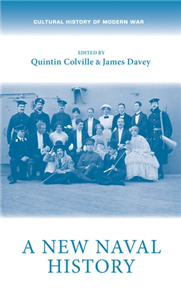
A new naval history
by Quintin Colville, James Davey, Katherine Parker, Elaine Chalus, Evan Wilson, Barbara Korte, Cicely Robinson, Cindy McCreery, Ellie Miles, Mary A. Conley, Jonathan Rayner, Daniel Spence, Emma Hanna, Ulrike Zimmerman, Max Jones, Jan Rüger
A New Naval History brings together the most significant and interdisciplinary approaches to contemporary naval history. The last few decades have witnessed a transformation in how this field is researched and understood and this volume captures the state of a field that continues to develop apace. It examines - through the prism of naval affairs - issues of nationhood and imperialism; the legacy of Nelson; the socio-cultural realities of life in ships and naval bases; and the processes of commemoration, journalism and stage-managed pageantry that plotted the interrelationship of ship and shore. This bold and original publication will be essential for undergraduate and postgraduate students of naval and maritime history. Beyond that, though, it marks an important intervention into wider historiographies that will be read by scholars from across the spectrum of social history, cultural studies and the analysis of national identity.
-
Trusted Partner
 Literature & Literary StudiesOctober 2010
Sanctity and pornography in medieval culture
On the verge
by Bill Burgwinkle, Cary Howie, Anke Bernau
Sanctity and pornography in medieval culture exposes the complexity of bodily exposure in medieval devotion and contemporary pornographic cultures. Through readings of texts and images, sacred and profane, from preimodern France and Italy as well as Anglo-American modernity, the book makes a case for paying closer attention to the surfaces of our bodies and the desires that those surfaces can articulate and arouse. From the Old French life of Saint Alexis to the work of writer-filmmaker Miranda July, from Wakefield Poole to Pietro Aretino, these are texts and images that diminish the distance between premodern Europe and contemporary California, between the sacred and the profane, as they demonstrate how, in the end as in the beginning, the surface of things is never simple. ;
-
Trusted Partner
 The ArtsSeptember 2009
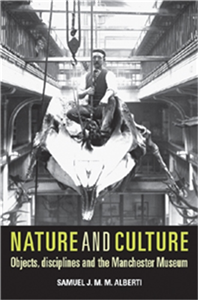
Nature and culture
Objects, disciplines and the Manchester Museum
by Samuel J. M. M. Alberti
This is a vital new work; the first to take the University of Manchester's Museum as its subject. By setting the museum in its cultural and intellectual contexts, Nature and culture explores twentieth-century collecting and display, and the status of the object in the modern world. Beginning with the origins of the Manchester Museum, accounting for its development as an internationally renowned university museum, and concluding at its major expansion at the turn of the millennium, this book casts new light on the history of museums. How did objects become knowledge? Who encountered museum objects on their way to museums? What happened to collections within the museum? How did visitors use and respond to objects? In answering these questions, Nature and culture illuminates not only the history of one institution, but also contributes to wider discussions in the history of science, cultural history and museology. ;
-
Trusted Partner
 Biography & True StoriesMay 2026
Punk rock ruined my life
And other stories
by John Robb
The irresistible story of a one-man cultural phenomenon. Minister for the Counterculture, Mancunian mainstay and alternative national treasure John Robb has lived a life in music. In this book he charts his adventures on the cultural frontline, chronicling the making of a DIY icon. Robb's quest began in his hometown of Blackpool - where punk was a battle against the odds - and went international when he toured the world with his band. The first person to interview Nirvana, he also discovered The Stone Roses for weekly newspaper Sounds and did early interviews with The Jesus and Mary Chain and The Manics, before moving on to legends such as Mark E. Smith, Nick Cave and Patti Smith. Along the way, he became an on-screen commentator and author of bestselling books. Robb's memoir tells of deep friendships with figures from Poly Styrene to Chris Packham. Packed with riotous stories, it provides an alternative account of British musical and cultural history and a triumphant blueprint for a punk rock life.
-
Trusted Partner
Humanities & Social SciencesNovember 2025
Law, society and political culture in late medieval and Reformation Germany
by Duncan Hardy
-
Trusted Partner
 The ArtsMarch 2006
Art history
A critical introduction to its methods
by Michael Hatt, Charlotte Klonk
Art History: A critical introduction to its methods provides a lively and stimulating introduction to methodological debates within art history. Offering a lucid account of approaches from Hegel to post-colonialism, the book provides a sense of art history's own history as a discipline from its emergence in the late-eighteenth century to contemporary debates. By explaining the underlying philosophical and political assumptions behind each method, along with clear examples of how these are brought to bear on visual and historical analysis, the authors show that an adherence to a certain method is, in effect, a commitment to a set of beliefs and values. The book makes a strong case for the vitality of the discipline and its methodological centrality to new fields such as visual culture. This book will be of enormous value to undergraduate and graduate students, and also makes its own contributions to ongoing scholarly debates about theory and method. ;
-
Trusted Partner
 Teaching, Language & ReferenceJanuary 2019
Global humanitarianism and media culture
by Michael Lawrence, Rachel Tavernor, Bertrand Taithe
-
Trusted Partner
 The ArtsAugust 2007
The public culture of the Victorian middle class
Ritual and authority in the English industrial city 1840–1914
by Simon Gunn
The public culture of the Victorian middle class looks at the creation of a distinctive 'high' culture in the industrial cities of Birmingham, Leeds and Manchester in the mid-nineteenth century and its incipient decline from the 1880s. The history of urban bourgeois culture has been relatively unexplored and under-theorised compared to popular culture. This volume therefore represents a significant contribution both to the study of middle-class cultural forms and to an understanding of the relationship between culture and power. In particular, it argues for the importance of ritualised modes of social behaviour in understanding the construction of authority in the nineteenth-century city. As well as many original arguments, the book provides a clear and useful overview of the public cultures of Victorian 'respectability'. The book will be of interest to scholars and students in the areas of social history, cultural history, urban history, cultural studies, urban studies and the sociology of culture. ;
-
Trusted Partner
 Humanities & Social SciencesMay 2000
Smoking in British popular culture 1800–2000
by Matthew Hilton, Jeffrey Richards
A concise history of smoking in British popular culture from the early nineteenth century to the present day.. Provides the historical backdrop to the current debates about the politics of tobacco and health, demonstrating that both pro- and anti-smokers have consistently failed to understand the position of smoking within popular culture.. Important themes explored include: the importance of consumption to constructions of masculinity and femininity, the role of the state in the official regulation of the 'minor vices', the morality of consumption and the position of scientific knowledge within popular culture.. Traces the production, promotion and consumption of tobacco as well as outlining the arguments that have variously opposed this ever-controversial drug.. Genuinely interdisciplinary, combining elements of social, cultural and economic history whilst contributing to debates in sociology and cultural studies, the anthropology of material culture, design history, medical history and public health policy. ;
-
Trusted Partner
 Humanities & Social SciencesMarch 2017
The harem, slavery and British imperial culture
Anglo-Muslim relations in the late nineteenth century
by Diane Robinson-Dunn
This book focuses on British efforts to suppress the traffic in female slaves destined for Egyptian harems during the late-nineteenth century. It considers this campaign in relation to gender debates in England, and examines the ways in which the assumptions and dominant imperialist discourses of these abolitionists were challenged by the newly-established Muslim communities in England, as well as by English people who converted to or were sympathetic with Islam. While previous scholars have treated antislavery activity in Egypt first and foremost as an extension of earlier efforts to abolish plantation slavery in the New World, this book considers it in terms of encounters with Islam during a period which it argues marked a new departure in Anglo-Muslim relations. This approach illuminates the role of Islam in the creation of English national identities within the global cultural system of the British Empire. This book would appeal to those with an interest in British imperial history; Islam; gender, feminism, and women's studies; slavery and race; the formation of national identities; global processes; Orientalism; and Middle Eastern studies.
-
Trusted Partner
 Humanities & Social SciencesJuly 2010
The culture of regionalism
Art, architecture and international exhibitions in France, Germany and Spain, 1890–1939
by Eric Storm
This pioneering book studies the rise, heyday and demise of regionalism from the Belle Époque until the Eve of the Second World War. By using a novel comparative perspective it gives a fresh view of the relationship between cultural regionalism, political regionalism and nationalism. Storm further illuminates how during the first decades of the twentieth century the culture of regionalism slowly lost the battle against its main rival: the avant-garde. Regional identities, like national identities, were created and sometimes even invented; and this was equally the case in France, Germany and Spain. Artists, architects and international exhibitions played a highly influential role in this process. They all appropriated, and in some cases perverted, the regionalist message showing that strong regional identities would ultimately reinforce national unity. This book offers new perspectives to specialists of regionalism and nationalism, but will also be of interest to students of the cultural history of France, Germany and Spain and to specialists from the fields of politics, ethnology, art history, cultural studies and architectural history. ;
-
Trusted Partner
 Lifestyle, Sport & LeisureAugust 2016
Culture in Manchester
Institutions and urban change since 1850
by Janet Wolff, Mike Savage
This book brings together studies of cultural institutions in Manchester from 1850 to the present day, giving an unprecedented account of the city's cultural evolution. These bring to light the remarkable range of Manchester's contribution to modern cultural life, including the role of art education, popular theatre, religion, pleasure gardens, clubs and societies. The chapters show the resilience and creativity of Manchester's cultural institutions since 1850, challenging any simple narrative of urban decline following the erosion of Lancashire's industrial base, at the same time illustrating the range of activities across the social classes. This book will appeal to everyone interested in the cultural life of the city of Manchester, including cultural historians, sociologists and urban geographers, as well as general readers with interests in the city. It is written by leading international authorities, including Viv Gardner, Stephen Milner, Mike Savage, Bill Williams and Janet Wolff.
-
Trusted Partner
 Humanities & Social SciencesMarch 2026
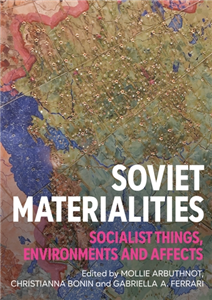
Soviet materialities
Socialist things, environments and affects
by Mollie Arbuthnot, Christianna Bonin, Gabriella Ferrari
Soviet materialities explores how material transforms our understanding of Soviet culture, from the textures of domestic space in 1960s apartment blocks to Gulag labour on the Moscow canal, and from avant-garde literary theory in the 1920s to conceptual art under perestroika. It starts from the ethos that the material world shapes people and society. Taking a material approach-or a range of material approaches-can therefore illuminate aspects of the cultural production and lived experiences of Soviet socialism that are not reflected in other kinds of historical records. This edited volume brings cutting-edge research by emerging scholars together with the established voices who have broken the ground in this sub-field over the last twenty years and promises to make a major intervention in the study of Soviet history and culture.
-
Trusted Partner
 Folk & traditional musicApril 2005
The Kiss in history
by Edited by Karen Harvey
Writers have previously placed the action of kissing into categories: kisses of love, affection, peace, respect and friendship. Each of the essays in this fascinating book take a single kind of kiss and uses it as an index to the past. For rather than offering a simple history of the kiss, this book is about the kiss in history. In this collection, an eminent group of cultural historians have explored this subject using an exceptionally wide range of evidence. They explore the kiss through sources as diverse as canonical religious texts, popular prints, court depositions, periodicals, diaries and poetry. In casting the net so wide, these authors demonstrate how cultural history has been shaped by a broad concept of culture, encompassing more than simply the canons of art and literature, and integrating apparently 'historical' and 'non-historical' sources. Furthermore, this collections shows that by analyzing the kiss and its position - embedded as it is as part of our culture - history can use small gestures to take us to big issues concerning ourselves and others, the past and the present. With an afterword by Sir Keith Thomas, this book will be fascinating reading for cultural historians working on a wide range of different societies and periods.
-
Trusted Partner
 Humanities & Social SciencesSeptember 2022
British culture after Empire
by Josh Doble, Liam Liburd, Emma Parker, Alan Lester


