Your Search Results

      • Paulinas | Editorial Paulinas Colombia

        Somos una congregación de mujeres consagradas a Dios de la Iglesia Católica, para la evangelización con los medios de comunicación social.Sobre las huellas de Pablo, y con su mismo espíritu dedicamos todas nuestras fuerzas para VIVIR y COMUNICAR a Jesucristo en el areópago de la comunicación.

        View Rights Portal
      • Colmena Editores

        Colmena Editores is an independent Peruvian publishing house based in Lima and founded in 2012. Since its inception, it has prioritized the publication of classic authors.

        View Rights Portal
      • Trusted Partner
        Humanities & Social Sciences
        November 2022

        The violence of colonial photography

        by Daniel Foliard

      • Trusted Partner
        Humanities & Social Sciences
        April 2010

        Law, history, colonialism

        The reach of empire

        by Diane Kirkby, Andrew Thompson, Catharine Coleborne, John Mackenzie

        Drawing on the latest contemporary research from an internationally acclaimed group of scholars, Law, history, colonialism brings together the disciplines of law, history and post-colonial studies in a singular exploration of imperialism. In fresh, innovative essays from a range of disciplinary backgrounds, this collection offers exciting new perspectives on the length and breadth of empire. As issues of native title, truth and reconciliation commissions, and access to land and natural resources are contested in courtrooms and legislation of former colonies, the disciplines of law and history afford new ways of seeing, hearing and creating knowledge. Issues explored include the judicial construction of racial categories, the gendered definitions of nation-states, the historical construction of citizenship, sovereignty and land rights, the limits to legality and the charting of empire, constructions of madness among colonised peoples, reforming property rights of married women, questions of legal and historical evidence, and the rule of law. This collection will be an indispensable reference work to scholars, students and teachers. ;

      • Trusted Partner
        Humanities & Social Sciences
        March 2017

        Law, history, colonialism

        The reach of empire

        by Diane Kirkby, Andrew Thompson, Catharine Coleborne, John M. MacKenzie

        Drawing on the latest contemporary research from an internationally acclaimed group of scholars, Law, history, colonialism bring together the disciplines of law, history and postcoloinial studies in a singular exploration of imperialism. In fresh, innovative essays from a range of disciplinary backgrounds, this collection offers exciting new perspectives on the length and breadth of empire. As issues of native title, truth and reconciliation commission, and access to land and natural resources are contested in courtrooms and legislation of former colonies, the disciplines of law and history afford new ways of seeing, hearing and creating knowledge. Issues explored include the judicial construction of racial categories, the gendered definitions of nation-states, the historical construction of citizenship, sovereignty and land rights, the limits to legality and the charting of empire, constructions of madness among colonised peoples, reforming property rights of married women, questions of legal and historical evidence, and the rule of law. This collection will be an indispensable reference work to scholars, students and teachers.

      • Trusted Partner
        Humanities & Social Sciences
        March 2017

        Rethinking settler colonialism

        History and memory in Australia, Canada, Aotearoa New Zealand and South Africa

        by Annie Coombes

        Rethinking settler colonialism focuses on the long history of contact between indigenous peoples and the white colonial communities who settled in Australia, Aotearoa New Zealand, Canada and South Africa. It interrogates how histories of colonial settlement have been mythologised, narrated and embodied in public culture in the twentieth century (through monuments, exhibitions and images) and charts some of the vociferous challenges to such histories that have emerged over recent years. Despite a shared familiarity with cultural and political institutions, practices and policies amongst the white settler communities, the distinctiveness which marked these constituencies as variously, 'Australian', 'South African', 'Canadian' or 'New Zealander', was fundamentally contingent upon their relationship to and with the various indigenous communities they encountered. In each of these countries these communities were displaced, marginalised and sometimes subjected to attempted genocide through the colonial process. Recently these groups have renewed their claims for greater political representation and autonomy. The essays and artwork in this book insist that an understanding of the political and cultural institutions and practices which shaped settler-colonial societies in the past can provide important insights into how this legacy of unequal rights can be contested in the present. It will be of interest to those studying the effects of colonial powers on indigenous populations, and the legacies of imperial rule in postcolonial societies.

      • Trusted Partner
        Humanities & Social Sciences
        May 2026

        Sexual violence in racial capitalism

        by Alison Phipps

        Most texts on sexual violence treat capitalism as backdrop or afterthought. In contrast, political economy is the core of this book. Phipps explores the centrality of sexual violence to racial capitalist processes: the enclosure of bodies, the extraction of labour, the expropriation of land and resources, and the disposal of unwanted populations. Importantly, she argues that both sexual violence and sexual fear create social control and surplus value. Through a framework called the coloniality of sexual violence, Phipps conjoins acts of sexual violence and ideas of sexual threat in an analysis of gendered and raced property relations and the split colonial/modern psyche. She argues that fantasies of sexual danger represent the infolded violence of racial capitalism, which is why fear of revolution is often fear of rape. Revolution, however, is always imminent: violence is necessary because power is incomplete.

      • Trusted Partner
        Humanities & Social Sciences
        March 2017

        Air power and colonial control

        by David Omissi

        Air policing was used in many colonial possessions, but its most effective incidence occurred in the crescent of territory from north-eastern Africa, through South-West Arabia, to North West Frontier of India. This book talks about air policing and its role in offering a cheaper means of 'pacification' in the inter-war years. It illuminates the potentialities and limitations of the new aerial technology, and makes important contributions to the history of colonial resistance and its suppression. Air policing was employed in the campaign against Mohammed bin Abdulla Hassan and his Dervish following in Somaliland in early 1920. The book discusses the relationships between air control and the survival of Royal Air Force in Iraq and between air power and indirect imperialism in the Hashemite kingdoms. It discusses Hugh Trenchard's plans to substitute air for naval or coastal forces, and assesses the extent to which barriers of climate and geography continued to limit the exercise of air power. Indigenous responses include being terrified at the mere sight of aircraft to the successful adaptation to air power, which was hardly foreseen by either the opponents or the supporters of air policing. The book examines the ethical debates which were a continuous undercurrent to the stream of argument about repressive air power methods from a political and operational perspective. It compares air policing as practised by other European powers by highlighting the Rif war in Morocco, the Druze revolt in Syria, and Italy's war of reconquest in Libya.

      • Trusted Partner
        June 2026

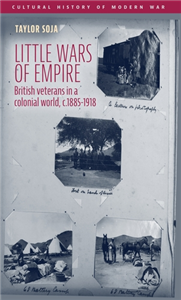
        Little wars of empire

        British veterans in a colonial world, c.1885–1918

        by Taylor Soja

        Little Wars of Empire is a group biography of British veterans who experienced multiple wars across the British empire. Throughout the nineteenth century, Britain was constantly at war in its colonies, defending against anti-colonial resistance or trying to expand its influence. The veterans of these wars did not disappear once they were over, and many of them went on to later experience World War I. By using personal sources such as letters, diaries, and photograph albums, this book works to show how colonial violence and British military history depend upon one another, and argues that colonial war fundamentally shaped the British experience of empire. This was true for all kinds of British veterans, from British Army soldiers and officers to nurses and military families, whose experiences demonstrate the central place of colonial violence to British life.

      • Trusted Partner
        Humanities & Social Sciences
        July 2026

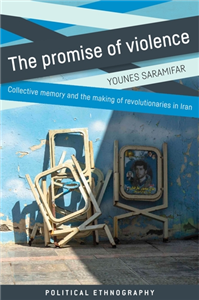
        The promise of violence

        Collective memory and the making of revolutionaries in Iran

        by Younes Saramifar

        Revolutionaries in Iran choose to identify memories of the Iran-Iraq War as their 'collective' memory to mark the war era as the temporal reference in history - the time of times, or sometimes even a time beyond time. Can a sole event and its violence truly become - for some - the all-encompassing, constituting element of history and memory? This book pursues this question and follows revolutionaries in the maze of 'collective' memory to offer a temporal account of the breakdown of happenings - as well as the mending of happenings through the force of remembrance.

      • Trusted Partner
        History of medicine
        May 2017

        Leprosy and colonialism

        Suriname under Dutch rule, 1750–1950

        by Stephen Snelders. Series edited by Professor Keir Waddington

        Leprosy and colonialism investigates the history of leprosy in Suriname within the context of Dutch colonial power and racial conflict, from the plantation economy and the age of slavery to its legacy in the modern colonial state. It explores the relationship between the modern stigmatization and exclusion of people affected with leprosy, and the political tensions and racial fears originating in colonial slave society, exerting their influence until after the decolonization up to the present day. In the book colonial sources are read from shifting perspectives, of the colonial rulers and, 'from below', the ruled. Though leprosy is today a neglected tropical disease, recognizing influences of our colonial heritage in our global management of health and disease, and exploring the perspectives of other cultures are essential in a time in which migration movements make the permeability of boundaries, and transmission of diseases, more common then perhaps ever before.

      • Trusted Partner
        Humanities & Social Sciences
        July 2018

        Savage worlds

        German encounters abroad, 1798–1914

        by Matthew Fitzpatrick, Peter Monteath

        With an eye to recovering the experiences of those in frontier zones of contact, Savage Worlds maps a wide range of different encounters between Germans and non-European indigenous peoples in the age of high imperialism. Examining outbreaks of radical violence as well as instances of mutual co-operation, it examines the differing goals and experiences of German explorers, settlers, travellers, merchants, and academics, and how the variety of projects they undertook shaped their relationship with the indigenous peoples they encountered. Examining the multifaceted nature of German interactions with indigenous populations, this volume offers historians and anthropologists clear evidence of the complexity of the colonial frontier and frontier zone encounters. It poses the question of how far Germans were able to overcome their initial belief that, in leaving Europe, they were entering 'savage worlds'.

      • Trusted Partner
        Humanities & Social Sciences
        September 2024

        Covert colonialism

        by Florence Mok

      • Trusted Partner
        Humanities & Social Sciences
        March 2024

        A savage song

        Racist violence and armed resistance in the early twentieth-century U.S.–Mexico Borderlands

        by Margarita Aragon

        This book examines key moments in which collective and state violence invigorated racialized social boundaries around Mexican and African Americans in the United States, and in which they violently contested them. Bringing anti-Mexican violence into a common analytical framework with anti-black violence, A savage song examines several focal points in this oft-ignored history, including the 1915 rebellion of ethnic Mexicans in South Texas, and its brutal repression by the Texas Rangers and the 1917 mutiny of black soldiers of the 24th Infantry Regiment in Houston, Texas, in response to police brutality. Aragon considers both the continuities and stark contrasts across these different moments: how were racialized constructions of masculinity differently employed? How did African and Mexican American men, including those in uniform, respond to the violence of racism? And how was their resistance, including their claims to manhood and nation, understood by law enforcement, politicians, and the press? Building on extensive archival research, the book examines how African and Mexican American men have been constructed as 'racial problems', investigating, in particular, their relationship with law enforcement and ideas about black and Mexican criminality.

      • Trusted Partner
        Humanities & Social Sciences
        June 2021

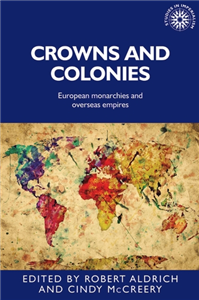
        Crowns and colonies

        European monarchies and overseas empires

        by Robert Aldrich, Cindy McCreery

        Queen Victoria, who also bore the title of Empress of India, had a real and abiding interest in the British Empire, but other European monarchs also ruled over possessions 'beyond the seas'. This collection of original essays explores the connections between monarchy and colonialism, from the old regime empires down to the Commonwealth of today. With case studies drawn from Britain, France, the Netherlands, Germany and Italy, the chapters analyse constitutional questions about the role of the crown in overseas empires, the pomp and pageantry of the monarchy as it transferred to the colonies, and the fate of indigenous sovereigns under European colonial control. Crowns and colonies, with chapters on North America, Asia, Africa and Australasia, provides new perspectives on colonial history, the governance of empire, and the transnational history of monarchies in modern Europe.

      • Trusted Partner
        Humanities & Social Sciences
        September 2011

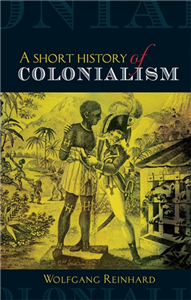
        A short history of colonialism

        by Wolfgang Reinhard

        This well-written and comprehensive book by an outstanding expert provides students of history and the general reader with reliable up-to-date information on an essential part of the history of mankind: the global impact of European colonial expansion from the late Middle Ages to the present. It deals with the discoveries, with Portuguese, Dutch and English trade systems in Asia, with the Spanish, Portuguese, Dutch, French and British Colonies in America, the American plantation economy and the trade in African slaves, with settler colonies in the southern hemisphere, with US-, Russian and Chinese continental imperialism, with western colonial rule in Asia and Africa and the several waves of decolonisation between 1775 and 1989. Twenty-four maps illustrate the narrative. A useful teaching text, it combines traditional and more recent perspectives to produce a final balance sheet of Western colonialism and its global heritage. A carefully selected bibliography encourages further reading. ;

      • Trusted Partner
        Humanities & Social Sciences
        March 2024

        Intimacy and injury

        In the wake of #MeToo in India and South Africa

        by Nicky Falkof, Srila Roy, Shilpa Phadke

        Both India and South Africa have shared the infamy of being labelled the world's 'rape capitals', with high levels of everyday gender-based and sexual violence. At the same time, both boast long histories of resisting such violence and its location in wider cultures of patriarchy, settler colonialism and class and caste privilege. Through the lens of the #MeToo moment, the book tracks histories of feminist organising in both countries, while also revealing how newer strategies extended or limited these struggles. Intimacy and injury is a timely mapping of a shifting political field around gender-based violence in the global south. In proposing comparative, interdisciplinary, ethnographically rich and analytically astute reflections on #MeToo, it provides new and potentially transformative directions to scholarly debates this book builds transnational feminist knowledge and solidarity in and across the global south.

      • Trusted Partner
        Humanities & Social Sciences
        March 2017

        Popular imperialism and the military, 1850-1950

        by John M. MacKenzie

        Colonial war played a vital part in transforming the reputation of the military and placing it on a standing equal to that of the navy. The book is concerned with the interactive culture of colonial warfare, with the representation of the military in popular media at home, and how these images affected attitudes towards war itself and wider intellectual and institutional forces. It sets out to relate the changing image of the military to these fundamental facts. For the dominant people they were an atavistic form of war, shorn of guilt by Social Darwinian and racial ideas, and rendered less dangerous by the increasing technological gap between Europe and the world. Attempts to justify and understand war were naturally important to dominant people, for the extension of imperial power was seldom a peaceful process. The entertainment value of war in the British imperial experience does seem to have taken new and more intensive forms from roughly the middle of the nineteenth century. Themes such as the delusive seduction of martial music, the sketch of the music hall song, powerful mythic texts of popular imperialism, and heroic myths of empire are discussed extensively. The first important British war correspondent was William Howard Russell (1820-1907) of The Times, in the Crimea. The 1870s saw a dramatic change in the representation of the officer in British battle painting. Up to that point it was the officer's courage, tactical wisdom and social prestige that were put on display.

      • Trusted Partner
      • Trusted Partner
        Humanities & Social Sciences
        November 2025

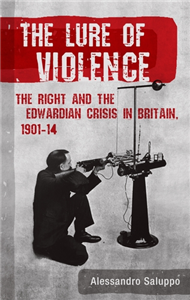
        The lure of violence

        The Right and the Edwardian crisis in Britain, 1901–14

        by Alessandro Saluppo

        This book provides a comprehensive examination of conservative and right-wing responses to the Edwardian crisis in Britain (1901-1914). It stresses how the upsurge of right-wing extremism within and outside the Conservative party was accompanied by the crystallization of a culture of violence. The preparation, instigation or threatening of violent acts against all those who appeared to threaten the organic nature and vigour of the national community found expression in a myriad of ultra-nationalist organisations, citizen policing groups, private military associations, and paramilitary formations. The book innovatively reconstructs the belief system and the practices of those right-wing actors, which pursued the goals of military preparedness, "racial regeneration" and imperial unity, while defending the amorphous goals of authority, order and 'national efficiency' against the forces of radicalism and socialism. The book helps to cast light on the bellicose and authoritarian reflexes that traversed British conservatism in the turbulent prewar years.

      Subscribe to our

      newsletter