
The Endocrine Society
The Endocrine Society is a global organization of 18,000 researchers, educators, and clinicians advancing breakthroughs in hormone science and improving public health.
View Rights Portal
The Endocrine Society is a global organization of 18,000 researchers, educators, and clinicians advancing breakthroughs in hormone science and improving public health.
View Rights Portal
Our publishing company was founded in 1957 by Paolo Boringhieri focusing on science, mythology and ethnology. In 1987 Giulio Bollati joined the company, taking with him his expertise in history, philosophy , and literary fiction.Since then , the two souls of the publisher scientific studies and humanities have followed intertwined paths. In 2009 Bollati Boringhieri was a cquired by Gruppo editoriale Mauri Spagnol (GeMS) a group including 11 publishing companiesand 20 imprints. On the non fiction side, we are strongly interested in every project that shows human comprehensive history. Gems of our list include, among others Edmund de Waal , Jim Al Khalili, Nick Bostrom, Adam Rutherford, Hannah Fry,Jonathan Gottschall , Frank Close, Max Tegmark.
View Rights Portal
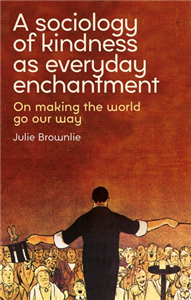
This book asks us to consider how and why the notion of random acts of kindness and the idea of kindness more generally have come to take a hold in many contemporary English-speaking societies. By introducing and mapping the contours of an emergent kindness industry, marshalling empirical research on contemporary framings of everyday kindness and theoretical resources from cultural sociology to the sociology of emotions and relationships, Brownlie makes the case for a critical sociological engagement with the idea of kindness. In doing so, she argues for kindness to be seen as a form of everyday enchantment - one that, like all enchantments, is ultimately ambivalent.
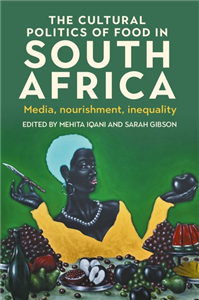
Food is both a material system of nourishment, necessary for human survival, and a communicative system that signifies multiple meanings across human cultures. This book explores the cultural politics of food in the South African context, bringing together a range of disciplinary perspectives on the links between media, nourishment, and inequality. The chapters all highlight the multiplicity of meanings that food has in South African society. These include historical perspectives on the impact of colonialism, migration and apartheid had on food and foodways in South Africa; sociological interventions on food and society; aesthetic practices in relation to food; and mediated food cultures in South Africa. Taken together, the book critically explores the multiple ways in which food is never just food, and always linked to complex and shifting modalities of meaning and knowledge in the South African context.
 Trusted Partner

The sociology of unemployment is an analysis of the experience and governance of unemployment. By considering unemployment as more than just the absence of work; the book explores unemployment as a distinctive experience created by the welfare state. Each chapter explores an aspect of the experience or governance of unemployment; beginning with how people talk about their experience of being unemployed individually and collectively, to the places of unemployment, and on to the processes, policies and forms of the social welfare system. Clear explanations of classic theories are explored and extended, all against the backdrop of new primary research. Chapter by chapter, The sociology of unemployment challenges the 'deprivation theory of unemployment' which dominates sociology, psychology and social policy, by focusing on how governmental power forms the experience of unemployment. As a result, the book is both an introductory text on the sociology of unemployment and a fresh, critical perspective. ;
Trusted Partner
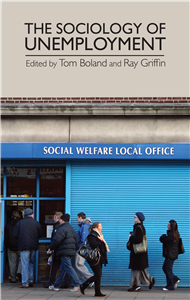
The sociology of unemployment is an analysis of the experience and governance of unemployment. By considering unemployment as more than just the absence of work; the book explores unemployment as a distinctive experience created by the welfare state. Each chapter explores an aspect of the experience or governance of unemployment; beginning with how people talk about their experience of being unemployed individually and collectively, to the places of unemployment, and on to the processes, policies and forms of the social welfare system. Clear explanations of classic theories are explored and extended, all against the backdrop of new primary research. Chapter by chapter, The sociology of unemployment challenges the 'deprivation theory of unemployment' which dominates sociology, psychology and social policy, by focusing on how governmental power forms the experience of unemployment. As a result, the book is both an introductory text on the sociology of unemployment and a fresh, critical perspective.
Trusted Partner
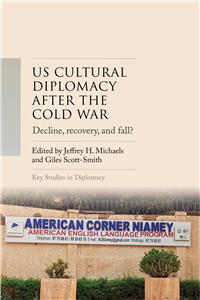
In the decades following the USSR's collapse, the US has gone from unrivalled hegemon to a position of relative decline. With America 'triumphant' after 1991, its culture, like its diplomatic, military and economic power, remained unmatched. Such favourable circumstances seemed to undercut the need for cultural diplomacy. Why should the US government sell a product that was already selling so well? After 9/11, however, it was apparent the US image was less popular than previously assumed. To reverse this negative image, cultural diplomacy was revived. Despite being beset by internal and external challenges, US officials supported various cultural initiatives and partnerships to promote the American brand globally. Along the way, cultural diplomacy has made use of new forms of expression to promote American culture and build positive foreign relations. The arrival of the second Trump administration in 2025 has clearly signalled an end to using cultural diplomacy to further causes of empowerment and diversity, making the future uncertain for this field of activity.
Trusted Partner
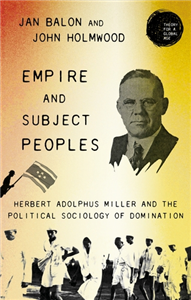
The book outlines the sociological arguments and political activities of the US pragmatist sociologist, Herbert Adolphus Miller (1875-1951). Miller was part of the milieu of Chicago sociology and involved in its studies of race and immigration. He took a distinctly more radical approach and developed a novel political sociology of domination in which he set out a critique of empires, the plight of subject minorities and the risks associated with the inevitable nationalist responses. Where others have identified with the 'internationalisation' of nationalism, Miller sought to make the nation 'international'. He was actively involved in movements for racial justice, Czechoslovakian independence, the formation of the Mid-European Union of subject peoples, as well as support for Korean and Indian independence. He was dismissed by Ohio State University for his activism in 1932.
Trusted Partner
Trusted Partner

The Love of Books examines the affective bond between people and books in the UK. In the context of the unprecedented abundance of media offering information, storytelling and entertainment, it investigates the attachment to print and digital books amongst readers from a range of backgrounds who read for pleasure, wish to be surrounded by print copies of books, and have trouble discarding books. Unlike existing research, which focuses on prestige, social status, and cultural capital, this study centres on meaning, materiality and emotion. Drawing on interviews and archive material, it shows how attachment emerges from the practical fusion of three elements that have so far been examined separately: the material, surface properties of books, the act of reading, and books' symbolic power.
Trusted Partner
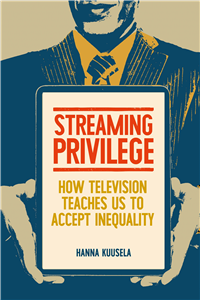
Streaming Privilege examines how today's serial television plays a powerful role in legitimating the 'new Gilded Age' of extreme inequality. Through a sharp cultural analysis, the book reveals popular culture's obsession with wealth and dynastic families - and how it helps to sustain economic divides. Focusing on four major series - Downton Abbey, The Crown, Succession and Yellowstone - the book explores what today's most-watched television dramas reveal about contemporary attitudes toward wealth. At the heart of the book is a concern with the intersection of family, wealth and morality. As dynastic structures once again dominate economy, stories of wealthy families offer a cultural lens through which audiences make sense of economic disparities. The book shows how television does not merely reflect inequality but actively shapes our understandings of it. Streaming Privilege is essential reading for scholars and students in media studies, cultural studies and economic sociology - as well as for general readers interested in how popular culture influences our perceptions of inequality.
Trusted Partner

Beyond the Happening uncovers the heterogeneous, uniquely interdisciplinary performance-based works that emerged in the aftermath of the early Happenings. By the mid-1960s Happenings were widely declared outmoded or even 'dead', but this book reveals how many practitioners continued to work with the form during the late 1960s and 1970s, developing it into a vehicle for studying interpersonal communication that simultaneously deployed and questioned contemporary sociology and psychology. Focussing on the artists Allan Kaprow, Marta Minujín, Carolee Schneemann and Lea Lublin, it charts how they revised and retooled the premises of the Happening within a wider network of dynamic international activity. The resulting performances directly intervened in the wider discourse of communication studies, as it manifested in the politics of countercultural dropout, soft power and cultural diplomacy, alternative pedagogies, sociological art and feminist consciousness-raising.
Trusted Partner
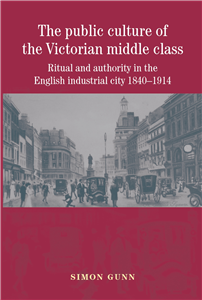
The public culture of the Victorian middle class looks at the creation of a distinctive 'high' culture in the industrial cities of Birmingham, Leeds and Manchester in the mid-nineteenth century and its incipient decline from the 1880s. The history of urban bourgeois culture has been relatively unexplored and under-theorised compared to popular culture. This volume therefore represents a significant contribution both to the study of middle-class cultural forms and to an understanding of the relationship between culture and power. In particular, it argues for the importance of ritualised modes of social behaviour in understanding the construction of authority in the nineteenth-century city. As well as many original arguments, the book provides a clear and useful overview of the public cultures of Victorian 'respectability'. The book will be of interest to scholars and students in the areas of social history, cultural history, urban history, cultural studies, urban studies and the sociology of culture. ;
Trusted Partner
A concise history of smoking in British popular culture from the early nineteenth century to the present day.. Provides the historical backdrop to the current debates about the politics of tobacco and health, demonstrating that both pro- and anti-smokers have consistently failed to understand the position of smoking within popular culture.. Important themes explored include: the importance of consumption to constructions of masculinity and femininity, the role of the state in the official regulation of the 'minor vices', the morality of consumption and the position of scientific knowledge within popular culture.. Traces the production, promotion and consumption of tobacco as well as outlining the arguments that have variously opposed this ever-controversial drug.. Genuinely interdisciplinary, combining elements of social, cultural and economic history whilst contributing to debates in sociology and cultural studies, the anthropology of material culture, design history, medical history and public health policy. ;
Trusted Partner
 Trusted Partner
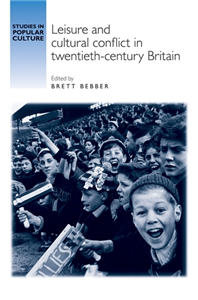
This collection of essays addresses research trends in the history of British leisure while also presenting a wide range of articles on cultural conflict and leisure in the twentieth century. It includes innovative research on a number of topics, including television, cinema, the circus, women's leisure, dance, football and drug culture. It provides an excellent entry to leisure studies and history, while addressing the contributions of other disciplines and exploring key historiographical trends. Three broad topics structure the collection; cultural contestation and social conflict in leisure; regulation and standardisation; and national identity embodied in leisure and popular culture. The book will be useful to students and educators of twentieth-century and British history, as it offers accessible and topical studies that pique historical curiosity. In addition, historians, sociologists and cultural analysts of the twentieth century will find it essential for understanding pleasure and recreation in twentieth-century British society.
Trusted Partner
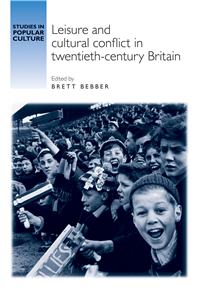
This collection of essays addresses research trends in the history of British leisure while also presenting a wide range of articles on cultural conflict and leisure in the twentieth century. It includes innovative research on a number of topics, including television, cinema, the circus, women's leisure, dance, football and drug culture. It provides an excellent entry to leisure studies and history, while addressing the contributions of other disciplines and exploring key historiographical trends. Three broad topics structure the collection; cultural contestation and social conflict in leisure; regulation and standardisation; and national identity embodied in leisure and popular culture. The book will be useful to students and educators of twentieth-century and British history, as it offers accessible and topical studies that pique historical curiosity. In addition, historians, sociologists and cultural analysts of the twentieth century will find it essential for understanding pleasure and recreation in twentieth-century British society. ;
Trusted Partner
British culture after Empire is the first collection of its kind to explore the intertwined social, cultural and political aftermath of empire in Britain from 1945 up to and beyond the Brexit referendum of 2016, combining approaches from the fields of history, English and cultural studies. Against those who would deny, downplay or attempt to forget Britain's imperial legacy, the various contributions expose and explore how the British Empire and the consequences of its end continue to shape Britain at the local, national and international level. As an important and urgent intervention in a field of increasing relevance within and beyond the academy, the book offers fresh perspectives on the colonial hangovers in post-colonial Britain from up-and-coming as well as established scholars.
Trusted Partner


Culture and diversity are both challenge and opportunity. This volume looks at what psychologists are and can be doing to help society meet the challenges and grasp the opportunities in education, at work, and in clinical practice. The increasingly international and globalized nature of modern societies means that psychologists in particular face new challenges and have new opportunities in all areas of practice and research. The contributions from leading European experts cover relevant intercultural issues and topics in areas as diverse as personality, education and training, work and organizational psychology, clinical and counselling psychology, migration and international youth exchanges. As well as looking at the new challenges and opportunities that psychologists face in dealing with people from increasingly varied cultural backgrounds, perhaps more importantly they also explain and discuss how psychologists can deepen and acquire the intercultural competencies that are now needed in our professional lives. Target Group: psychotherapists / clinical psychologists / mental health professionals
Trusted Partner
Trusted Partner
 Trusted Partner

The politics of old age in the twenty first century is contentious, encompassing ideological debates about the rights and welfare entitlements of individuals in later life. An important aspect is the manner in which older people and their representative groups are given the opportunity to articulate their interests in the policy-making process. Drawing upon key literature in political science, social gerontology and cultural sociology, The politics of old age explores the relationship between ageing, politics and representation. It reveals the complexity of older people's representation and how the power the organisations exercise, their legitimacy and existence remain highly contingent on government policy design, political opportunity structures and the prevailing cultural and socioeconomic milieu. This book is essential reading for policymakers and organisations interested in ageing, policy and the political process and for students of ageing, social policy and political sociology.

