
Groundwood Books
Livres Canada Books
View Rights Portal

Discover our JUNGLE list: comic series for kids, teens and YA. Jungle recently published best-selling comic series, adapted from teens novels such as The Enola Holmes Mysteries (now on Netflix) and The Diary of an 8-bit warrior (Cube Kid). Discover our STEINKIS list: graphic documentaries and graphic adaptation for adults. Steinkis essentially publishes non-fiction graphic books (memoirs, docu-fiction, investigations) and also published graphic adaptation of literary works.
View Rights Portal

A practical and up-to-date handbook that provides an introduction to the theory and practice of integrative body psychotherapy. The systematic focus on the body makes Integrative Body Psychotherapy unique and is something that is increasingly being regarded as an indispensable addition to and enrichment of the theory and practice of psychotherapy. This manual provides information on: • Basic humanistic concepts (presence, awareness, personal space, grounding, gestalt work) • Psychodynamic principles (developmental psychology, developmental personality model) • Stress model (disorders of stress regulation, implications for psychotherapy) • Breathing and body work (energetic approach, blockages, high-charge breathing, working with touch, self-relaxation techniques) • Working with sexuality in psychotherapy With concrete case studies and clear instructions for physical exercises (with diagrams) it makes for a comprehensive guide for any psychotherapist. Target Group: psychotherapists, coaches


Can drawing — sound, honest representation of the world as the eye sees it, not tricks with the pencil or a few "effects" — be learned from a book? One of the most gifted draftsmen, who is also one of the greatest art critics and theorists of all time, answers that question with a decided "Yes." He is John Ruskin, the author of this book, a classic in art education as well as a highly effective text for the student and amateur today. The work is in three parts, cast in the form of letters to a student, successively covering "First Practice," "Sketching from Nature," and "Colour and Composition." Starting with the bare fundamentals (what kind of drawing pen to buy; shading a square evenly), and using the extremely practical method of exercises which the student performs from the very first, Ruskin instructs, advises, guides, counsels, and anticipates problems with sensitivity. The exercises become more difficult, developing greater and greater skills until Ruskin feels his reader is ready for watercolors and finally composition, which he treats in detail as to the laws of principality, repetition, continuity, curvature, radiation, contrast, interchange, consistency, and harmony. All along the way, Ruskin explains, in plain, clear language, the artistic and craftsmanlike reasons behind his practical advice — underlying which, of course, is Ruskin's brilliant philosophy of honest, naturally observed art which has so much affected our aesthetic. Three full-page plates and 48 woodcuts and diagrams (the latter from drawings by the author) show the student what the text describes. An appendix devotes many pages to the art works which may be studied with profit.
 Trusted Partner

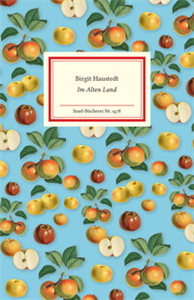
Apfelbäume, so weit das Auge reicht, idyllische Fachwerkdörfer hinter dem Deich und am Horizont die Elbe: Das Alte Land ist eine uralte Kulturlandschaft am Wasser, die ihren eigenen Charakter bewahrt hat. Prächtige Bauernhöfe und Backsteinkirchen mit kostbaren Barockorgeln zeugen noch heute vom frühen Wohlstand der Altländer. Birgit Haustedt erzählt von den Anfängen im Mittelalter, von Deichbau und Sturmfluten, vom Alltag der kleinen Leute und von großer Handwerkskunst, von stolzen Bauern und mutigen Schiffern. Dazu ein Exkurs, welche Rolle das Alte Land in Lessings Leben und Goethes Faust spielte.
Trusted Partner


From reason to practice in bioethics brings together original contributions from some of the world's leading scholars in the field of bioethics. With a particular focus on, and critical engagement with, the influential work of Professor John Harris, the book provides a detailed exploration of some of the most interesting and challenging philosophical and practical questions raised in bioethics. The book's broad range of chapters will make it a useful resource for students, scholars, and practitioners interested in the field of bioethics, and the relationship between philosophical and practical ethics. The range of contributors and topics afford the book a wide international interest. ;
Trusted Partner


Advising patients, dispensing, preparing and checking drugs – that is the essence of pharmacy practice and – at the same time – a broad field. This workbook enables knowledge about legal and regulatory requirements concerning the dispensing of drugs, the use of particular dosage forms, specific risks of drugs as well as the handling of medical devices or hazardous substances to be deepened – and in an amusing and entertaining way, thanks to a varied range of exercises! It is the ideal complement to the textbook Pharmacy Practice of the Deutschen Apotheker Verlag and the perfect preparation for the final examination. But quite apart from that, it guarantees fun for all prospective and active pharmaceutical technicians, returnees and pharmacy interns when learning and revising. It provides valuable ideas and support for pharmaceutical technician schools and pharmacies with teaching and training.
Trusted Partner

This widely successful title supports the reader in working with groups through a variety of exercises and group-dynamic work models. People who work with groups and teams in a wide variety of fields such as health and education, human resources, and team building will find many exercises as well as models showing different phases and the development of group dynamics. The book’s 10 chapters cover many different aspects and stages of group processes such as the beginning of a seminar, training of observational skills, communicative competence and feedback, cooperation and competition, group decisions and group conflicts, and many more. Each chapter contains an introduction to the topic, eight main exercises (with many variants) and working papers. On the enclosed CD-ROM, numerous materials that can be used in performing the exercises are provided for printing. For:• psychologists• medical professionals• social scientists• social workers• coaches
Trusted Partner

Evidence-based-nursing and caring, a method that relies on scientifically verifiable data from an outside perspective (“external evidence”) as well as the individual needs of those cared for as well as the caretakers (“internal evidence”). This title offers a detailed insight into external and internal evidence in nursing care and shows in a 6-step-approach how to • make shared decision • analyse and describe problems • find literature and relevant studies • critically evaluate nursing studies and their quality • change nursing practice and • evaluate nursing care. Target Group: Nursing Students, Nurse Educators.
Trusted Partner
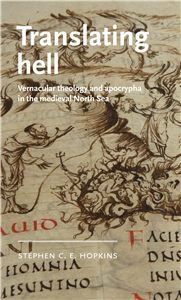
In the Middle Ages, hell was useful because it was vaguely defined. Canonical scriptures scarcely mention hell, leaving much to the imaginations of early Christians, who used it to sort out who belonged within the faith. This book explores how hell became a place for literary experiments with local challenges in theology and identity. Following the reception and transformations of two popular hell apocrypha, it argues that they served as this role because of their liminal textual authority. As noncanonical scriptures, apocrypha afforded medieval writers space to revise their hells (since they were not actually scripture), while also encouraging readers to revere those experiments as valid (since they seemed like scripture). The book brings together adaptations from early medieval England, Iceland, Ireland, and Wales, placing the early vernacular theologies of the North Sea in comparative conversation.
Trusted Partner


Three quarters of the world’s population live in cities. One in eight people lives in a metropolitan area. Megacities swallow up land, energy and resources – and at the same time are particularly hard hit by the current climate crisis that they fuel. However, in the metropolises of the overcrowded world plenty of committed people have heard the warning signals and establish networks to use the potential of cities to reorganize the participative and social-ecological activity that is urgently needed. The contributions to this Yearbook for Ecology focus on the present and future of cities from wide-ranging viewpoints and highlight perspectives for their creative transformation towards liveable sustainability.
Trusted Partner
Expertise alone does not guarantee a successful consulta- tion – what matters is how it is conveyed to the customer. Here the tools for successful communication in everyday pharmacy practice can be found: clear technical and legal principles, practical tips and a wealth of realistic exercises. The training covers the safe use of digital media, conducting consultations on a wide range of indications and essential communication skills – from active listening to targeted conversation techniques. Whether self-medication, prescription delivery or medical devices: this textbook provides optimal preparation for delivering competent, clear and customer-oriented advice in everyday pharmacy practice. It is also the ideal companion for pharmaceutical technician training in the subject „Exercises in Delivery and Consultation using Digital Technologies.“ Practical, comprehensive and directly applicable – for training, exams and professional practice! Target group: Pharmaceutical technicians in training, returning pharmaceutical technicians and pharmacists, pharmacy interns
Trusted Partner

From insects to fish as well as birds and primates: the use of tools is amazingly widespread in the animal kingdom. It’s a misnomer to presume that humans are distinguished by tool use and conscious capacity. So where is culture initiated? The biologist Peter-René Becker has evaluated numerous studies and cites plenty of evidence for the use of the hammer and anvil, lances, bait or sponges. Animals also use “tools as social implements”. Ultimately, the depth of man’s conscience singles him out from other animals.
Trusted Partner

After pharmacy studies have ended, the fascinating world of the pharmacy awaits – simultaneously varied and challenging. This is no problem with this well-established standard work to hand! The 7th edition, with a new editor and new structure, goes through the various stages of pharmacy operation. Beginning with the social mandate to supply medicines and then considering the organisational and economic orientation of a pharmacy, one delves ever deeper into its inner workings. In every area, the appropriate specific information can be found about pharmaceutical law and practice – whether this concerns the back office, over-the-counter medicines, dispensary and dispensing, or the supply of care homes, or preparation of cytotoxic drugs. In addition to the important topic “Dispensing of drugs and medical devices on prescription”, particular attention is paid to the principal activity in the pharmacy – giving advice on self-medication. The contents are based on the regulations for registration of pharmacists and the guidelines of the Federal Chamber of Pharmacists for the practical training of pharmacy interns in the pharmacy. The Practice of Pharmacy safely navigates the user through the practical training year and is the ideal preparation for the 3rd State Examination! Returnees, pharmacies that provide training and pharmacists of many years’ experience, will also benefit from this textbook and reference work.
Trusted Partner

In this book Tatjana van Strien, the author of the Dutch Eating Behavior Questionnaire (DEBQ), presents a scientific alternative for all the ‘miracle solutions’ to lose weight. Based on more than 25 years of scientific research, she offers a self-test-method which enables readers to explore what is the cause of their eating problem, what they can do about it, and ultimately lose weight and keep it off. Target Group: people who want to lose weight, dieticians, doctors, psychologists.
Trusted Partner
An archaeology of innovation is the first monograph-length investigation of innovation and the innovation process from an archaeological perspective. It interrogates the idea of innovation that permeates our popular media and our political and scientific discourse, setting this against the long-term perspective that only archaeology can offer. Case studies span the entire breadth of human history, from our earliest hominin ancestors to the contemporary world. The book argues that the present narrow focus on pushing the adoption of technical innovations ignores the complex interplay of social, technological and environmental systems that underlies truly innovative societies; the inherent connections between new technologies, technologists and social structure that give them meaning and make them valuable; and the significance and value of conservative social practices that lead to the frequent rejection of innovations.

A pioneering work in the movement to free art from its traditional bonds to material reality, this book is one of the most important documents in the history of modern art. Written by the famous nonobjective painter Wassily Kandinsky (1866–1944), it explains Kandinsky's own theory of painting and crystallizes the ideas that were influencing many other modern artists of the period. Along with his own groundbreaking paintings, this book had a tremendous impact on the development of modern art. Kandinsky's ideas are presented in two parts. The first part, called "About General Aesthetic," issues a call for a spiritual revolution in painting that will let artists express their own inner lives in abstract, non-material terms. Just as musicians do not depend upon the material world for their music, so artists should not have to depend upon the material world for their art. In the second part, "About Painting," Kandinsky discusses the psychology of colors, the language of form and color, and the responsibilities of the artist. An Introduction by the translator, Michael T. H. Sadler, offers additional explanation of Kandinsky's art and theories, while a new Preface by Richard Stratton discusses Kandinsky's career as a whole and the impact of the book. Making the book even more valuable are nine woodcuts by Kandinsky himself that appear at the chapter headings. This English translation of Über das Geistige in der Kunst was a significant contribution to the understanding of nonobjectivism in art. It continues to be a stimulating and necessary reading experience for every artist, art student, and art patron concerned with the direction of 20th-century painting.
Trusted Partner


Wenn Licht und Schatten füreinander kämpfen … Ren hat bewiesen, dass in ihr die Magie einer Himmelsfee schlummert, und nimmt nun ihren Platz als rechtmäßige Erbin der Schwebenden Welt ein. Doch nicht alle sind ihr wohlgesinnt und der Krieg gegen Volmar bringt einen neuen, mächtigen Feind mit sich. Derweil kämpft Sunho gegen den Dämon in seinem Inneren, zu dem er im Mithril-Labor gemacht wurde. Um ihre Welt und den Jungen, den sie liebt, zu retten, muss Ren sich ihrer Herkunft stellen – und lernen, an sich selbst zu glauben. Das Finale der mitreißenden Romantasy-Dilogie basierend auf einer koreanischen Sage Der Junge aus dem Reich der Schatten ist der emotionsgeladene Abschluss der Floating World-Dilogie von New York Times-Bestsellerautorin Axie Oh, inspiriert von einer koreanischen Sage. Ein mitreißendes Romantasy-Highlight über Liebe, Loyalität, Macht und Verantwortung. Koreanische Mythologie: eine außergewöhnliche Neuerzählung basierend auf der Sage Der Holzfäller und die Himmelsfee Beliebte Tropes: Grumpy x Sunshine, Hidden Identity sowie eine abgewandelte Form von Enemies to Lovers, Found Family Spannungsgeladener Plot voller Action, Geheimnisse und Intrigen: Ren muss sich als Erbin der Schwebenden Welt und Himmelsfee behaupten, als ein mächtiger Feind auf den Plan tritt. Märchenhafte Liebesgeschichte: Eine Himmelsfee und ein Dämon verlieben sich ineinander und kämpfen gemeinsam für ihre Welten und eine Zukunft. Originelles Setting: Schwebende Welt vs. UnterweltErstauflage mit opulentem Farbschnitt und exklusiver Charakterpostkarte - Nur in der 1. Auflage!
Trusted Partner

Cinesonica: sounding film and video explores previously neglected and under-theorised aspects of film and video sound, drawing on detailed case study analyses of Hollywood cinema, art cinema, animated cartoons, and avant-garde film and video. Adopting an interdisciplinary approach to the study of the soundtrack, and breaking away from the focus on narrative and signification that has tended to dominate the study of film sound, the book examines the way in which sound's materiality figures within audiovisual experience. Through a close examination of sound-image relations in a range of film and video forms and genres - including Warner Bros. cartoons, scratch video, and artist's film and video - Cinesonica recasts the film and video text as the meeting point of audio and visual materialities, cultural practices and perceptual activity. The interdisciplinary approach adopted by the book makes its discussion of sound of interest to those studying and working in a range of subject disciplines, including film studies, sound studies, sonic arts, cultural studies, music and art history.
Trusted Partner
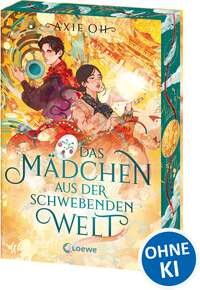
Wenn Licht auf Schatten trifft ... Seit Jahren verbirgt Ren ihre Lichtmagie – bis ihre Familie von einem Dämon angegriffen wird. Da bricht das Licht aus ihr heraus; so hell, dass es selbst ihre Feinde sehen. Doch Ren hat noch andere Sorgen: Ihr Onkel wurde durch den Dämon vergiftet und sie muss dringend ein Heilmittel finden. Auf ihrer Suche begegnet ihr ausgerechnet Sunho – ein Kopfgeldjäger, der auf sie angesetzt wurde. Sunho ahnt nicht, wer Ren wirklich ist. Und wie sehr ihre Schicksale miteinander verwoben sind ... Der Auftakt einer fesselnden Romantasy-Dilogie basierend auf einer koreanischen Sage Axie Ohs New York Times -Bestseller ist eine außergewöhnliche Neuerzählung einer koreanischen Sage voller Spannung und Geheimnissen , Liebe und märchenhafter Atmosphäre . Ein Muss für alle Romantasy-Fans! Band 1 einer fesselnden Romantasy-Dilogie Koreanische Mythologie : basierend auf der Sage Der Holzfäller und die Himmelsfee Beliebte Tropes : Grumpy x Sunshine, Hidden Identity, Found Family sowie eine abgewandelte Form von Enemies to Lovers Spannende Komibantion : Action, Geheimnisse und Intrigen treffen auf märchenhafte Momente, die an Studio-Ghibli-Filme erinnern Originelles Setting : Schwebende Welt vs. Unterwelt vs. idyllische Berglandschaft Über den Kampf mit den eigenen Dämonen und den Glauben an das innere Licht Erstauflage mit opulentem Farbschnitt und exklusiver Charakterpostkarte - Nur in der 1. Auflage!
Trusted Partner
In an age when engraving and photography were making artistic images available to a much wider public, artists were able to influence public attitudes more powerfully than ever before. This book examines works of art on military themes in relation to ruling-class ideologies about the army, war and the empire. The first part of the book is devoted to a chronological survey of battle painting, integrated with a study of contemporary military and political history. The chapters link the debate over the status and importance of battle painting to contemporary debates over the role of the army and its function at home and abroad. The second part discusses the intersection of ideologies about the army and military art, but is concerned with an examination of genre representations of soldiers. Another important theme which runs through the book is the relation of English to French military art. During the first eighty years of the period under review France was the cynosure of military artists, the school against which British critics measured their own, and the place from which innovations were imported and modified. In every generation after Waterloo battle painters visited France and often trained there. The book shows that military art, or the 'absence' of it, was one of the ways in which nationalist commentators articulated Britain's moral superiority. The final theme which underlies much of the book is the shifts which took place in the perception of heroes and hero-worship.
Trusted Partner

Lust, a mortal sin? These times are over. In today's public perception, it is more likely for a boring sex life to be categorised as that. In statistical terms, people have never had as little sex with each other as they do today. And yet tips for a good sex life are to be found on every (digital) corner. Sex has mutated into a lifestyle product, and terms like 'fuckability' and 'MILF' trip lightly off our tongues. Henriette Hell takes a closer look at the thing about sex. She traces the history and genesis of 'sexual liberation', and sheds light on the 'cheating gene' and the #metoo debate. The author asks (and answers) the question of whether sex is becoming more and more antisocial and what actually still turns us on today. In doing so, she focuses on the former mortal sin of lust, which is inseparably linked to the systematic suppression of female lust (and its liberation).

