
Breakwater Books
Livres Canada Books
View Rights Portal

Founded in Washington State, USA, Bregdan Publishing is run by author/publisher Ginny Dye.
View Rights Portal

This book analyses the world of selective reproduction by a critical analysis of three modes of controlling birth, namely contraception, reproductive violence, and repro-genetic technologies. All population control policies target and vilify women (Black women in particular), and coerce them into subjecting their bodies to state and medical surveillance; Birth controlled argues that assisted reproductive technologies and repro-genetic technologies employ a similar and stratified burden of blame and responsibility based on gender, race, class and caste. The book draws on gender studies, sociology, medical anthropology, politics, science and technology studies, theology, public health and epidemiology to provides a critical, interdisciplinary and cutting-edge dialogue around the interconnected issues that shape reproductive politics in an ostensibly 'post-population control' era.

Bordering social reproduction explores what happens when migrants subject to policies that seek to deny them the means of life nonetheless endeavour to make and sustain meaningful lives. Developing innovative theorisations of welfare bordering, the volume provides rich ethnographic insights into the everyday lives of destitute mothers and children who are denied mainstream welfare support in the United Kingdom due to their immigration status. This book shows how enforced destitution and debt work alongside detention and deportation as part of a tripartite of exclusionary technologies of the racial state. It advances the novel concept of weathering to comprehend mother's and children's life-making practices under duress - arguing that these are neither acts of heroic resilience nor solely symptomatic of lives rendered disposable, but indications of the fragilities of repressive migration regimes and, on occasion, refusals to accept their terms of existence.
 Trusted Partner


This book, the world's first biography of Paul Watzlawick, written by his great-niece, describes the life of this philosopher, therapist, and best-selling author. Paul Watzlawick had a talent for languages and he led an adventurous life, from his childhood in Villach to studying in Venice after the war, to analyst training under C. G. Jung in Zurich, an attempt at establishing himself in India and then in El Salvador as a therapist, and finally to the Mental Research Institute (MRI) in the United States, headed by Don D. Jackson, a venerable scientist. This marked the beginning of the second half of his life, his amazing career as a communication researcher, a pioneer of systemic therapy, a radical constructivist, and a great thinker regarding the divisions between East and West. With many letters, lectures, interviews, and statements from contemporary witnesses and family members, this book makes Paul Watzlawick accessible as a human being and as a spiritually inspired, leading 20th century thinker. It includes a variety of unpublished material from Watzlawick, and introduces a comprehensive and exciting picture of the scientist and cosmopolitan person, Paul Watzlawick. Target Group: For people interest in Paul Watzlawick, communication sciences, systemic therapy, and constructivism.
Trusted Partner
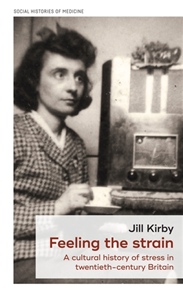
Examining the popular discourse of nerves and stress, this book provides a historical account of how ordinary Britons understood, explained and coped with the pressures and strains of daily life during the twentieth century. It traces the popular, vernacular discourse of stress, illuminating not just how stress was known, but the ways in which that knowledge was produced. Taking a cultural approach, the book focuses on contemporary popular understandings, revealing continuity of ideas about work, mental health, status, gender and individual weakness, as well as the changing socio-economic contexts that enabled stress to become a ubiquitous condition of everyday life by the end of the century. With accounts from sufferers, families and colleagues it also offers insight into self-help literature, the meanings of work and changing dynamics of domestic life, delivering a complementary perspective to medical histories of stress.
Trusted Partner
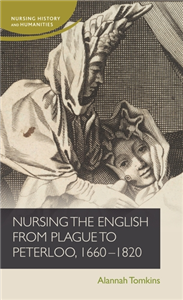
This book studies the negative stereotypes around the women who worked as sick nurses in this period and contrasts them with the lived experience of both domestic and institutional nursing staff. Furthermore, it integrates nursing by men into the broader history of care as a constant if little-recognised presence. It finds that women and men undertook caring work to the best of their ability, and often performed well, despite multiple threats to nurse reputations on the grounds of gender norms and social status. Chapters consider nursing in the home, in general hospitals, in specialist institutions like the Royal Chelsea Hospital and asylums, plus during wartime, illuminated by multiple accounts of individual nurses. In these settings, it employs the sociological concept of 'dirty work' to contextualise the challenges to nurses and nursing identities.
Trusted Partner
Critical theory and Independent Living explores intersections between contemporary critical theory and disabled people's struggle for self-determination. The book highlights the affinities between the Independent Living movement and studies of epistemic injustice, biopower, and psychopower. It discusses in depth the activists' critical engagement with welfare-state paternalism, neoliberal marketisation, and familialism. This helps develop a pioneering comparison between various welfare regimes grounded in Independent Living advocacy. The book draws on the activism of disabled people from the European Network on Independent Living (ENIL) by developing case studies of the ENIL's campaigning for deinstitutionalisation and personal assistance. It is argued that this work helps rethink independence as a form of interdependence, and that this reframing is pivotal for critical theorising in the twenty-first century.
Trusted Partner


Assisted suicide has been the subject of much passionate debate in many societies. The philosopher and theologian Jean-Pierre Wils does not deny autonomy, but asks – on the basis of his profound historical and ethical knowledge – about the social consequences. Does the right to assisted suicide not in the long run lead to the obligation to decide for or against it? And does not the pressure towards a supposedly reasonable decision increase, as soon as the causation of one‘s own death is seen as a final act of self-realisation and emancipation, or even commended as such? Wils makes a strong plea for the debate to be held in a broader context, to remove our finiteness from cultural amnesia – and in doing so, lays the foundation for a contemporary discussion on assisted suicide.
Trusted Partner

In times of the coronavirus pandemic many people have certainly condemned them, but Professor Ernst-Ludwig Winnacker has dedicated his life to researching them and is intrigued by viruses – even if sometimes he is keenly aware of their fatal effects. To mark his 80th birthday the biochemist describes the co-evolution and co-existence as well as the eternal ‘battle’ between humans and viruses. Winnacker takes up the cause of these ‘biological elements between animate and inanimate nature’ because they play an important role in fundamental research and genetic technology, and without them human beings would not be what they are.
Trusted Partner
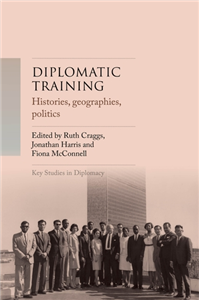
Despite the essential role diplomatic training plays in the everyday workings of international relations, international law and in the various multilateral organisations, this practice has received little critical attention in the humanities, social and political sciences. Bringing together detailed accounts of the histories, development and contemporary practices of diplomatic training with insights from key practitioners, this edited collection places training centrally within our understanding of international relations. It argues that diplomatic training both reflects and reproduces hegemonic power relations, whilst at the same time offering opportunities to contest them, and imagine alternative futures. The book includes a substantive introduction, nine full-length chapters from a range of disciplinary and regional perspectives drawing on archival research, oral history, interviews, and ethnographic methods, and four 'interventions': reflection pieces from trainers and directors of training programmes. It offers a globe-spanning, interdisciplinary account of the politics of diplomatic training and appeals to both scholarly and practitioner audiences.
Trusted Partner


The Ordinance on the Operation of a Pharmacy states that a plausibility check must be undertaken for each new formulation. The tabular compilations of this book help pharmacists to complete this task quickly and reliably. All the information required for the check is clearly laid out and easy to find. New in the 6th edition: Many new active substance – ointment base combinations with demonstrated compatibility | more than 50 new ointment bases | 30 new active substances Bonus: The information about standard doses for paediatric dermatology enables pharmacists to also prepare paediatric formulations. | References to the Ziegler Rezepturbibliothek® (Ziegler Formulation Library), where completely formulated manufacturing instructions for the named active substance – ointment base – combinations can be found. This makes it even easier to supply patients with tested standard preparations. The set includes 50-sheet pads of the complementary form Plausibility Check. The form makes documentation easier and enables rapid and reliable navigation through the tables. This allows both the prescriber’s treatment concept and also possible incompatibilities to be checked in less than no time.
Trusted Partner
This book is a collection of articles by anthropologists and social scientists concerned with gendered labour, care, intimacy and sexuality, in relation to mobility and the hardening of borders in Europe. Interrogating the relation between physical, geopolitical borders and ideological, conceptual boundaries, it offers a range of vivid and original ethnographic case studies that will capture the imagination of anyone interested in gendered migration, policies of inclusion and exclusion, and regulation of reproduction and intimacy. The book presents ethnographic and phenomenological discussions of people's changing lives as they cross borders, how people transgress and reshape moral boundaries of proper gender and kinship behaviour, and moral economies of intimacy and sexuality. It also focuses on migrants' navigation of social and financial services in their destination countries, putting questions about rights and limitations on citizenship at the core.
Trusted Partner
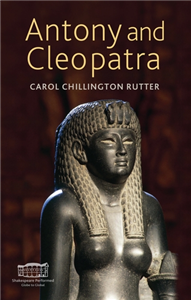
This book writes a performance history of Antony and Cleopatra, Shakespeare's most ambiguous play, from 1606 to the present. It observes the choices that actors, directors, designers, musicians and adapters have made each time they have brought the play's thoughts on power, race, masculinity, regime change, exoticism, love, dotage and delinquency into alignment with a new present. Informed by close attention to theatre records - promptbooks, stage managers' reports, reviews - it offers in-depth analyses of fifteen international productions by (among others) the Royal Shakespeare Company, Citizens Theatre Glasgow, Northern Broadsides, Berliner Ensemble and Toneelgroep Amsterdam. It ends seeing Shakespeare's black Egyptian Queen Cleopatra - whited-out in performance for centuries - restored to the contemporary stage. Written in a lively and accessible style, this book will be of interest to students, academics, actors, directors and general readers alike.
Trusted Partner
Aid for Dominance addresses the analytic weaknesses of mainstream analysis of foreign aid, which often focuses on its material dimensions. The book underscores the constitutive relationship between foreign aid as a material resource and the diplomatic discourses and practices that constitute complex bilateral relations between donor and recipient states. Written by two leading scholars of contemporary United States and Chinese foreign policies in the Global South, Aid for Dominance offers a pioneering, theoretically conscious, and empirically rich account of the two great powers' grand strategies in the global development sector. By deploying a multidisciplinary and comparative analysis, this book draws from a wide range of evidentiary materials from primary sources, including data from fieldwork interviews, government documents, local and international newspapers, speeches by high-ranking government officials and diplomats, and secondary data from scholarly publications and policy papers.
Trusted Partner
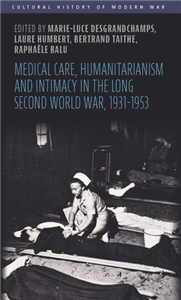
This book offers a micro-global history of humanitarianism and medical care during the 'long' Second World War, which challenges the traditional and Eurocentric chronological boundaries of 1939/1945. It takes as its starting point the Japanese invasion of Manchuria in 1931, which led to the progressive dislocation of the League of Nations, with the Japanese, German and Soviet departures in the 1930s. It ends with the termination of the Korean War in 1953, and the subsequent dismantlement of the first United Coalition and UN Peace enforcement operation. It considers the slow, messy and ambivalent transformation of humanitarian actors' relations to the suffering of distant others through a study of humanitarian encounters, practices, spaces and affects. Paying close attention to a variety of actors, such as French colonial doctors, Swiss ICRC delegates, Egyptian relief workers, Chinese-style physicians, Peruvian and Ecuadorian nurses or American member of the Unitarian Service Committee, the book provides a more holistic story of humanitarianism.
Trusted Partner

This book provides a careful and systematic analysis of Anthony Ascham's career and writings for the first time in English. During the crucial period between the Second Civil War and the establishment of the English Republic, when he served as official pamphleteer of the Parliament and the republican government, Ascham put forward a complex argument in support of Parliament's claims for obedience which drew on the political thought of Grotius, Hobbes, Selden, Filmer and Machiavelli. He combined ideas taken from these authors and turned them into a powerful instrument of propaganda to be deployed in the service of the political agenda of his Independent patrons in Parliament. This investigation of Ascham's works brings together an intellectual analysis of his political thought and an exploration of the interaction between politics, propaganda and political ideas.
Trusted Partner


The assessment of nursing and care needs and the organisation and quality assurance of nursing care are key tasks performed by nursing staff. This also includes administering medication, something which requires sound organisation, control, implementation and documentation. Nurses observe whether medication is taken consistently, has the desired effect, and whether undesirable side effects occur. The drug product as a „special commodity“ – whether in inpatient long-term care, in outpatient care, or in hospital – requires special knowledge concerning - correct storage, - the pharmacological effect, and - appropriate application. This book is geared towards the diseases and symptoms of people requiring nursing or care. All the important facts concerning the use of medicines are presented here in an understandable manner, focusing on the essentials. Numerous illustrations and practical tips provide the link to everyday nursing care. It is the ideal textbook and reference work for nursing and care assistants as well as nursing professionals.
Trusted Partner

Die fünfbändige Ausgabe Mark Twains Abenteuer präsentiert den großen amerikanischen Erzähler mit seinen Abenteuerromanen Tom Sawyers Abenteuer, Huckleberry Finns Abenteuer und Ein Yankee am Hofe des Königs Artus ebenso wie den Reiseschriftsteller, der aus der Perspektive des Arglosen im Ausland auch einen Bummel durch Europa unternommen hat.
Trusted Partner
The book focuses on people who, in addition to their gainful employment, are also responsible for caring for sick, impaired, or very old relatives - in other words, “work & care”. This topic is at the intersection of two scarce resources - the private unpaid care potential for loved ones on the one hand and the employment potential of family members on the other. The author examines what the professional, operational, and political consequences are for nursing science and practice as well as for service providers and payers. She makes suggestions for the development of personal, family, and organizational compatibility competence on the levels of action time-out and regeneration, knowledge and empowerment, coordination and organization, exchange and accompaniment. Finally, she offers options for action for nursing science and sheds light on the field of activity of scientific policy advice.
Trusted Partner
Trusted Partner


How Environmental Destruction Caused the Corona Pandemic and Why Ecological Medicine Can Save Us The corona crisis can repeat itself at any time. A book about the disease-causing mechanisms of environmental pollution, and an innovative guide out of the health crisis Clemens Arvay is an expert in the field of medical ecology. In WE CAN DO BETTER, he takes the current corona crisis as an opportunity to look far beyond and work out exactly why negative environmental factors are responsible for an increasing deterioration of public health. Yet the author also points the way out of the calamity, explaining how we ourselves and future generations can improve our health through a different approach to nature.It was only because of environmental factors that COVID-19 was able to become a pandemic. Thus, for Clemens Arvay the corona crisis represents a symptom of a much larger problem, namely, a natural habitat that is making humans sick. It is already known today that fine particulate matter intensifies not only corona but also influenza infections, thereby killing hundreds of thousands of people worldwide every year. Light pollution leads to a rapid increase in cancer, and even the abrasion of automobile tires inhibits our immune system. Clemens Arvay makes himself clear: this is our last chance to take control of the situation. After the corona crisis, we must never allow things to return to the way they were before. Arvay therefore calls for nothing less than an eco-medical revolution in healthcare; a different, less global and industrialized lifestyle. And he shows each and every one of us how we can utilize factors in our environment to protect our health, strengthen our immune system, and stay well. For readers of shinrin-yoku by Annette Lavrijsen

