Your Search Results

      • Trusted Partner
        December 2024

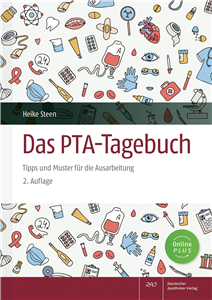
        The Pharmaceutical Technician Diary

        Tips and templates for drafting

        by Heike Steen

        Pharmaceutical technician students have nearly made it: The first phase of training has been completed, numerous exams have been successfully passed and they are now beginning their six-month internship at their chosen pharmacy. The next milestone on the path to becoming a qualified pharma- ceutical technician: the internship diary! The content is determined by the training and examination regulations for pharmaceutical technicians. It is a prerequisite for admis- sion to the second part of the examination and serves as a vital foundation for the oral exam in pharmacy practice. This book provides the crucial inspiration for their own, individual pharmaceutical technician diary. It gives tips on how to generate coherent, error-free and well-structured contents and present them in an optically perfect manner. An addi- tional support and source of inspiration come from complete sample reports on specimen formulations and bulk prepara- tions, on testing starting materials and on selected pharma- cy topics. New in the 2nd edition: With the implementation of the Pharmaceutical Technician Reform Act in January 2023, changes have been introduced to pharmaceutical technician training. Part one of the book outlines the new legal regula- tions, including the updated guidelines from the Federal Chamber of Pharmacists on pharmaceutical technician practical training. It also provides detailed information on the training contract and plan. Target group: Pharmaceutical technician interns/students, pharmacy managers, pharmaceutical technician schools

      • Trusted Partner
        2022

        Pharmacy Practice for Pharmaceutical Technicians

        by Rainer Neukirchen, Dr. Holger Herold, Dr. Wolfgang Kircher, Annegret Lehmann, Rainer Neukirchen, Rika Prager, Anke Schichte, Heike Steen and Dr. Markus Zieglmeier

        This completely redesigned book provides concise knowledge about the main topics of over-the-counter sales. It provides the most important facts about: - Areas of the law relevant to pharmacies and regulations on hazardous materials, - The most important issues concerning self-medication and correct use of dosage forms, - Medical devices such as bandages and dressings, blood pressure meters and incontinence products, - Specific subjects such as interactions and the misuse of drugs. Text boxes, revised to improve learning, highlight important information; diagrams and pictures illustrate the facts, and QR codes allow access to additional online material. This standard work can be used as a textbook in class, to prepare for the final examination and as a reference work in everyday professional life. The book also brings together all that is important for returnees.

      • Trusted Partner
        September 2025

        Chemistry for Pharmaceutical Technicians

        by Marion Romer, Silke Dittmar, Dorothee Famulla-Weber, Claudia Huppertz, Doris Grimm

        Chemistry is all about smells and explosions – but real understanding often gets left behind. This textbook keeps you on track by reviewing the fundamentals, strengthening chemical understanding and guiding students towards independent learning. Thanks to the pharmaceutical context, chemistry is understood as the foundation of medicinal substances. Practical examples, mnemonics and summaries enhance the structure and make the content easier to digest. The book sparks pharmaceutical technicians’ interest in medicinal substances – an ideal foundation for mastering everyday chemistry in both study and practice. Target group: Pharmaceutical technicians in training and on the job, teachers at pharmaceutical technician schools, students of pharmacy

      • Trusted Partner
        2023

        Chemistry Workbook

        by Marion Romer, Silke Dittmar, Dr. DorotheeFamulla-Weber and Claudia Huppertz

        We all have been there: you understand everything in the textbook, but then face a total blackout during the exam. But that’s over now! In more than 600 exam-proven crossword, syllable or picture puzzles, word search games, gap texts or riddles on inorganic and organic chemistry, the authors bundle what you have learned in order to apply it to new problems. And they do so in a highly entertaining way: variety is guaranteed due to the diversity of tasks! The section „Well connected, safely remembered“ helps to link knowledge. „Now it is getting tricky“ encourages you to deal with the subject matter even more intensively, and „Playfully repeated“ offers tips and suggestions for learning in a group. With this workbook, you can check your knowledge, consolidate the contents, and find the gaps in your knowledge well before the exam. This way you‘ll be one hundred percent fit when it counts. The workbook is suitable for accompanying consolidation of the contents of the authors‘ textbook „Chemistry for Pharmaceutical Technicians“, but is also ideally suited for independent study. Includes solutions to download

      • Trusted Partner
        2023

        Subject-related Mathematics for Pharmaceutical Technicians

        by Claudia Brüchert

        Maths is not everyone’s cup of tea. This may change from now on! This textbook explains the most important types of arithmetic quite simply. One learns ■ what basic arithmetic methods there are, ■ why stoichiometry is important, and ■ how to perform complex calculations for the medicinal formula. The price determination of medicinal products is also included. Videos demonstrate and explain the calculation steps exactly and comprehensibly via QR code, so that nothing can go wrong. A collection of formulas provides the pharmacy-specific calculation methods that can be quickly looked up. You can deepen your knowledge with the help of exercises. The solutions are available via QR code.

      • Trusted Partner
        2022

        Pharmacy Practice Workbook

        practise, consolidate, revise

        by Annette Thomas / Nadine Sprecher

        Advising patients, dispensing, preparing and checking drugs – that is the essence of pharmacy practice and – at the same time – a broad field. This workbook enables knowledge about legal and regulatory requirements concerning the dispensing of drugs, the use of particular dosage forms, specific risks of drugs as well as the handling of medical devices or hazardous substances to be deepened – and in an amusing and entertaining way, thanks to a varied range of exercises! It is the ideal complement to the textbook Pharmacy Practice of the Deutschen Apotheker Verlag and the perfect preparation for the final examination. But quite apart from that, it guarantees fun for all prospective and active pharmaceutical technicians, returnees and pharmacy interns when learning and revising. It provides valuable ideas and support for pharmaceutical technician schools and pharmacies with teaching and training.

      • Trusted Partner
        2021

        Chemistry for Pharmaceutical Technicians

        by Marion Romer, Silke Dittmar, Dr. Dorothee Famulla-Weber and Claudia Huppertz

        Chemistry is all about smells and bangs – but what if you’ve lost sight of what is actually going on? This textbook keeps PTA students on course: it refreshes the basics, consolidates chemical knowledge and leads to independent working. The 10th edition is presented in a completely new design and with an even clearer layout. With reference to the pharmaceutical arena, chemistry is shown to be the basis of drug substances. Practical examples, call-outs and summaries break up the text and make it easier to work with the subject matter. This book will awaken the interest of pharmaceutical technicians in drug substances – the best precondition for mastering everyday chemistry at school and at work.

      • Trusted Partner
        2022

        Medical Device Information for Pharmaceutical Technicians

        by Founded by Friedlinde Wilson and Baldur Kohm.Edited by Dr. Anette Vasel-Biergansand Hannelore Eitel-Hirschfeld

        Ranging from eyebaths and compression stockings to electronic cigarettes, the variety of medical aids available is huge. Every day, expert advice on these is needed at the pharmacy. The authors have summarised these aids in a practically oriented way. They provide background information, specifics about the materials, application descriptions, practical tips and product examples. Colourful illustrations show how they are used on or by the patient. Fully updated, the new edition of the book contains not only conventional medical devices but also those asked for at a contemporary community pharmacy. This 11th edition, which has been completely revised, contains: - definitions enabling rapid familiarisation with the topic, - tables that provide an overview, - illustrations and advice tips to help with practical use, - mnemonics and practice questions which help reinforce the knowledge Bonus: QR codes take the user to additional digital material! The ideal companion in training and on the job!

      • Trusted Partner
        2023

        German for Pharmaceutical Practice

        Communicate, research, present

        by Nadine Yvonne Sprecher, Annette Thomas, Annegret Lehmann and Anke Schichte. In collaboration with Christiane Schneider

        In the pharmacy, the staff communicate with customers, colleagues, the medical profession, sales representatives and nursing home staff. Pharmacy employees produce written information based on well-chosen sources and represent the pharmacy to the outside world through presentations, on social media, or with the help of flyers, posters and other promotional materials. All this presupposes the confident use of language, and is best trained in advance. Part A of this work provides assistance for the most diverse communicative requirements in the pharmacy. A short theoretical explanation is always followed by several tasks so that you can immediately put what you have learned into practice and try it out. The „Brief overview of grammar and language knowledge“ boxes point out linguistic stumbling blocks. Those who are not yet sure of the technical terms can make themselves fit in Part B. Here one learns how to conduct a good counselling interview according to the BAC guideline. Extensive lists of technical terms and their explanations suitable for everyday use – all arranged according to organ systems – contain the most important vocabulary for everyday pharmacy work. A totally practical German lesson!

      • Trusted Partner
        October 2025

        Exercises in Dispensing and Consulting in Pharmacy Practice

        Prescription delivery, self-medication and use of digital media

        by Annette Thomas, Nadine Yvonne Sprecher

        Expertise alone does not guarantee a successful consulta- tion – what matters is how it is conveyed to the customer. Here the tools for successful communication in everyday pharmacy practice can be found: clear technical and legal principles, practical tips and a wealth of realistic exercises. The training covers the safe use of digital media, conducting consultations on a wide range of indications and essential communication skills – from active listening to targeted conversation techniques. Whether self-medication, prescription delivery or medical devices: this textbook provides optimal preparation for delivering competent, clear and customer-oriented advice in everyday pharmacy practice. It is also the ideal companion for pharmaceutical technician training in the subject „Exercises in Delivery and Consultation using Digital Technologies.“ Practical, comprehensive and directly applicable – for training, exams and professional practice! Target group: Pharmaceutical technicians in training, returning pharmaceutical technicians and pharmacists, pharmacy interns

      • Trusted Partner
        2021

        Botany and Pharmacognosy Workbook

        by Nadine Sprecher and Annette Thomas

        Dealing with medicinal plants and knowledge of their constituents and therapeutic effects is an ancient pharmaceutical skill. The associated treasure chest of knowledge is as deep and colourful as the world of plants itself. Just as varied and stimulating is the Botany and Pharmacognosy Workbook, in which the diverse and stimulating tasks are a real joy! The mission and passion of the authors is to impart, deepen and link knowledge in a fun way, with pharmacy practice always in mind. The workbook is intended as a supplement to the textbook Botany and Pharmacognosy for Pharmaceutical Technicians. However, it can also be used independently and guarantees fun for all prospective and active pharmaceutical technicians, returnees and pharmacy interns when learning and revising. For pharmaceutical technician schools and pharmacists, it offers valuable stimulation and support in education and training.

      • Trusted Partner
        2022

        Formulation Plausibility Check

        In accordance with § 7 German Ordinanceon the Operation of a Pharmacy

        by Dr. Andreas S. Ziegler

        The Ordinance on the Operation of a Pharmacy states that a plausibility check must be undertaken for each new formulation. The tabular compilations of this book help pharmacists to complete this task quickly and reliably. All the information required for the check is clearly laid out and easy to find. New in the 6th edition: Many new active substance – ointment base combinations with demonstrated compatibility | more than 50 new ointment bases | 30 new active substances Bonus: The information about standard doses for paediatric dermatology enables pharmacists to also prepare paediatric formulations. | References to the Ziegler Rezepturbibliothek® (Ziegler Formulation Library), where completely formulated manufacturing instructions for the named active substance – ointment base – combinations can be found. This makes it even easier to supply patients with tested standard preparations. The set includes 50-sheet pads of the complementary form Plausibility Check. The form makes documentation easier and enables rapid and reliable navigation through the tables. This allows both the prescriber’s treatment concept and also possible incompatibilities to be checked in less than no time.

      • Trusted Partner
        2021

        Practical Guide to Compounding and Dispensing

        Step-by-step instructions for the pharmacy

        by Dr. Annina Bergner

        The requirements concerning the preparation of extemporaneous formulations in the pharmacy are high. In her book the author explains which current guidelines must be observed in the production of semi-solid and liquid preparations, capsules or eyedrops. The reader will learn, - Which points are important when checking the plausibility of a medical prescription - How to store formulations correctly and how to specify the expiry date after opening - Why preparation of the workspace is so important. The individual manufacturing steps are described and explained in a readily understandable way. In addition, the book contains many valuable tips for pharmaceutical practice. With the aid of a training centre, the reader’s knowledge can also be deepened. This guide is an invaluable help to everyone who undertakes compounding and dispensing – whether a pharmaceutical technician or a fully qualified pharmacist!

      • Trusted Partner
        2022

        The Practice of Pharmacy

        Textbook for pharmacy interns Handbook for the pharmacy

        by Dr. Michael Sax, founded by Dr. Herbert Gebler and Dr. Gerd Kindl

        After pharmacy studies have ended, the fascinating world of the pharmacy awaits – simultaneously varied and challenging. This is no problem with this well-established standard work to hand! The 7th edition, with a new editor and new structure, goes through the various stages of pharmacy operation. Beginning with the social mandate to supply medicines and then considering the organisational and economic orientation of a pharmacy, one delves ever deeper into its inner workings. In every area, the appropriate specific information can be found about pharmaceutical law and practice – whether this concerns the back office, over-the-counter medicines, dispensary and dispensing, or the supply of care homes, or preparation of cytotoxic drugs. In addition to the important topic “Dispensing of drugs and medical devices on prescription”, particular attention is paid to the principal activity in the pharmacy – giving advice on self-medication. The contents are based on the regulations for registration of pharmacists and the guidelines of the Federal Chamber of Pharmacists for the practical training of pharmacy interns in the pharmacy. The Practice of Pharmacy safely navigates the user through the practical training year and is the ideal preparation for the 3rd State Examination! Returnees, pharmacies that provide training and pharmacists of many years’ experience, will also benefit from this textbook and reference work.

      • Trusted Partner
        2023

        Compulsory Training. Preparing and blistering

        Pursuant to Art. 34 ApBetrO

        by Manuela Queckenberg

        If medicines are prepared or blistered in advance, this not only saves time during the course of nursing care but also prevents medication errors. Section 34 of the German Ordinance on the Operation of a Pharmacy (ApBetrO) regulates the procedure and at the same time stipulates staff training. This is the perfect tool to use! The whole field of preparing and blistering, presented on 43 slides: - Basics: definitions and statutory requirements - Requirements: rooms, staff, hygiene, and occupational safety and health - Prerequisites: quality and plausibility - Drug products: whitelist and blacklist - Manufacture: from deblistering to labelling The content of the 2nd edition has been updated. The volume now contains many new photos and illustrations. Training slides, explanatory text and the form for documenting the training can be found as usual on the tabletop display and for download. Whether new employees or old hands – everyone benefits!

      • Trusted Partner
        2023

        AMTS (Drug Therapy Safety) and Medication Analysis

        Extended medication counselling for polymedication

        by Stefanie Brune

        Taking five or more medications – this is part of the daily routine of many, especially elderly people. But polymedication increases the risk of drug-related problems. This is where the pharmaceutical service „Extended medication counselling for polymedication“ comes in. This comprehensive guide shows how to establish and implement such knowledge in the pharmacy: ■ Part A explains the legal and contractual basis of the service. In addition, the publication highlights the risks of polymedication, drug-related problems and goals, and the benefits of the service for the stakeholders involved in the pharmacy, the doctor‘s practice, and for the patients themselves. ■ Part B is dedicated to the organisation in the pharmacy: team preparation, quality management, required documents, consulting and workplaces, and staff qualification. Aspects such as time management, patient recruitment and public liability are also considered. ■ Part C describes the individual process steps flanked by aids such as work tables, checklists, sample texts (for download at www.Online-PlusBase.de) and a comparison table for supporting AMTS software tools, including screenshots. ■ Part D offers case studies, including the initiation of extended medication counselling, the pharmaceutical AMTS review (software-supported), solution paths and communication (including formulation examples) with the various stakeholders involved. A medication analysis promotes drug therapy safety, strengthens customer loyalty and creates new opportunities for interdisciplinary cooperation with the medical profession – good reasons for starting immediately!

      • Trusted Partner
        December 2024

        Parents in the Pharmacy

        Expert guidance on childhood and adolescent illnesses

        by Albrecht Boeck

        Parents often feel uncertain about their children‘s health. Is the symptom clinically significant or is it completely harmless? Is everything progressing as expected or could there be a developmental disorder? Parents seek guidance not only from paediatricians but also from pharmacists. Here, you can gain insights directly from the author, an experienced paediatrician. He provides valuable insights into common childhood illnesses, developmental disorders and modern therapeutic options. The topics cover everything from nutrition and infant care to the most relevant infections, emergencies and vaccinations in children and adolescents. Here, the balance between conventional medicine and naturopathy is increasingly being explored as a valuable complement. An indispensable guide for pharmacy professionals seeking to support parents and their children with care and sensitivity. Target group: Pharmacists, pharmaceutical technicians, pharmacy interns, returnees, pharmaceutical technicians in training

      • Trusted Partner
        Humanities & Social Sciences
        March 2006

        EU pharmaceutical regulation

        The politics of policy-making

        by Govin Permanand, Dimitris Papadimitriou, Simon Bulmer, Andrew Geddes, Peter Humphreys, Caroline Wilding

        This book provides an analysis of European Union pharmaceutical regulation from a policy-making perspective. The focus is on how the often conflicting agendas of the pharmaceutical industry, the EU member states, the European Commission, and consumer interests are reconciled within the context of regulatory outcomes having to serve public health, healthcare and industrial policy needs within the single market. Breaking with more traditional approaches which stress the economic determinants of pharmaceutical policy, different strands of public policy analysis, regulatory and European integration and policy-making theories are invoked in developing a new conceptual approach to frame the analysis. In-depth case-studies in three key policy areas: patent protection, market authorisation, and pricing and reimbursement, provide substantive support. In providing a unique perspective on how and why EU pharmaceutical policy is made, the book will be of interest to academics, students and policy-practitioners interested in EU policy-making, regulation and public policy analysis. ;

      Subscribe to our

      newsletter