Your Search Results

      • Trusted Partner
        2024

        Where is Russia Heading?

        by Jens Siegert

        Vladimir Putin has been ruling Russia for 25 years. There is no end in sight to his dictatorship. He relies on repression at home and is waging a war of destruction against a neighbouring country. The conflict with the West has long become a systemic conflict between an illiberal-autocratic ideology and liberal-democratic principles. Nothing will change as long as Putin remains in power. Nevertheless, as far as can be ascertained under unfree conditions, the majority of the population seems to be supporting Putin. Does this mean that too many people in Russia do not want democracy or peace? Will everything remain the same after Putin? Or is there a chance that Russia will eventually take a different, more democratic path? Whatever the outcome of the war in Ukraine, Russia is not going to disappear. We will still have to deal with our big neighbour in the east. This makes it all the more important to focus on longer-term developments. As a recognised expert on Russian history and society, the author outlines what the post-Putin era might look like. His in-depth analysis makes it clear that Russia is partly Putin, but Putin is not everything about Russia.

      • Trusted Partner
        Humanities & Social Sciences
        October 2022

        Germany's Russia problem

        The struggle for balance in Europe

        by John Lough

        The relationship between Germany and Russia is Europe's most important link with the largest country on the continent. But despite Germany's unparalleled knowledge and historical experience, its policymakers struggle to accept that Moscow's efforts to rebalance Europe at the cost of the cohesion of the EU and NATO are an attack on Germany's core interests. This book explains the scale of the challenge facing Germany in managing relations with a changing Russia. It analyses how successive German governments from 1991 to 2014 misread Russian intentions, until Angela Merkel sharply recalibrated German and EU policy towards Moscow. The book also examines what lies behind efforts to revise Merkel's bold policy shift, including attitudes inherited from the GDR and the role of Russian influence channels in Germany.

      • Trusted Partner
        Humanities & Social Sciences
        February 2025

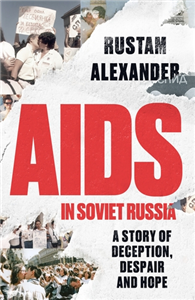
        Red closet

        by Rustam Alexander

      • Trusted Partner
      • Trusted Partner
        Humanities & Social Sciences
        April 2024

        The new politics of Russia

        by Andrew Monaghan

      • Trusted Partner
        Humanities & Social Sciences
        June 2021

        Germany's Russia problem

        by John Lough, Andrew Monaghan

      • Trusted Partner
        Humanities & Social Sciences
        October 2020

        The European Union and its eastern neighbourhood

        Europeanisation and its twenty-first-century contradictions

        by Mike Mannin, Paul Flenley

        This volume is timely in that it explores key issues which are currently at the forefront of the EU's relations with its eastern neighbours. It considers the impact of a more assertive Russia, the significance of Turkey, the limitations of the Eastern Partnership with Belarus and Moldova, the position of a Ukraine in crisis and pulled between Russia and the EU, security and democracy in the South Caucasus. It looks at the contested nature of European identity in areas such as the Balkans. In addition it looks at ways in which the EU's interests and values can be tested in sectors such as trade and migration. The interplay between values, identity and interests and their effect on the interpretation of europeanisation between the EU and its neighbours is a core theme of the volume.

      • Trusted Partner
        Humanities & Social Sciences
        October 2009

        Regional politics in Russia

        by Cameron Ross

        This innovative, multi-contributed book, now available in paperback, argues convincingly that Russia will never be able to create a viable democracy as long as authoritarian regimes are able to flourish in the regions. The main themes covered are democratisation at the regional level, and the problems faced by the federal states in forging viable democratic institutions in what is now a highly assymetrical Federation. A major strength of the book lies in its combination of thematic chapters with case studies of particular regions and republics. Very little has been published to date on the actual processes of democratisation in particular republics and regions. The book takes into account the literature available on the 'new institutionalism' and outlines the importance of institutions in developing and maintaining democracy. It looks at the importance of sovereignty, federalism and democratic order, and considers the distinct problems of party-building in Russia's regions. Electoral politics are also considered fully, before the book goes on to consider the whole issue of regional politics and democratisation in five particular areas of Russia - Novgorod, the Komi Republic, Russia's Far East, Tatarstan and Bashkortostan. The authors, the majority of whom are internationally recognised experts in their field, have been drawn from Britain, the USA, Russia and Germany, giving the book a truly global perspective. ;

      • Trusted Partner
        Humanities & Social Sciences
        November 2024

        US public diplomacy in socialist Yugoslavia, 1950–70

        Soft culture, cold partners

        by Carla Konta

        The first comprehensive account of the public and cultural diplomacy campaigns carried out by the US in Yugoslavia during the height of the Cold War, this book examines the political role of culture in US-Yugoslav bilateral relations and the fluid links between information and propaganda. Tito allowed the US Information Agency and the State Department's cultural programmes to enter Yugoslavia, liberated from Soviet control. The exchange of intellectual and political personnel helped foster the US-Yugoslav relationship, yet it posed severe ideological challenges for both sides. By providing new insights into porous borders between freedom and coercion in Tito's regime, this book shows how public diplomacy acted as an external input for Yugoslav liberalisation and dissident movements. Using extensive archival research and interviews, Konta analyses the links between information and propaganda, and the unintended effects of propaganda beyond the control of producers and receivers.

      • Trusted Partner
        Humanities & Social Sciences
        September 2021

        A precarious equilibrium

        Human rights and détente in Jimmy Carter's Soviet policy

        by Umberto Tulli

        Human rights and détente inextricably intertwined during Carter's years. By promoting human rights in the USSR, Carter sought to build a domestic consensus for détente; through bipolar dialogue, he tried to advance human rights in the USSR. But, human rights contributed to the erosion of détente without achieving a lasting domestic consensus.

      • Trusted Partner
        Humanities & Social Sciences
        October 2006

        Securitising Russia

        The domestic politics of Vladimir Putin

        by Bettina Renz, Edwin Bacon, Julian Cooper

        Securitising Russia shows the impact of twenty-first-century security concerns on the way Russia is ruled. It demonstrates how President Putin has wrestled with terrorism, immigration, media freedom, religious pluralism, and economic globalism, and argues that fears of a return to old-style authoritarianism oversimplify the complex context of contemporary Russia. The book focuses on the internal security issues common to many states in the early twenty-first-century, and places them in the particular context of Russia. Detailed analysis of the place of security in Russia's political discourse and policy-making reveals nuances often missing from overarching assessments of Russia today. To characterise the Putin regime as the 'KGB-resurgent' is to miss vital continuities, contexts, and on-going political conflicts which make up the contemporary Russian scene. Securitising Russia draws together current debates about whether Russia is a 'normal' country developing its own democratic and market structures, or a nascent authoritarian regime returning to the past. ;

      • Trusted Partner
        Humanities & Social Sciences
        July 2005

        Late Imperial Russia

        Problems and prospects

        by Ian Thatcher

        This volume offers a detailed examination of the stability of the late imperial regime in Russia. Students and scholars will appreciate the lively summaries of the latest scholarship in political, economic, social, cultural, and international history. Accessible yet insightful, contributions cover the historiography of complex topics such as peasants, workers, revolutionaries, foreign relations, and Nicholas II. In addition, there are original studies of some of the leading intellectuals of the time. The late imperial economy is examined through the writings of Tugan-Baranovsky. There is an account of M. N. Pokrovskii's radical interpretation of late imperial Russia's historical path of development. The state of the Russian theatre is studied through the lives of theatrical impresarios. Each chapter also highlights a unique interpretation, suggesting new lines of inquiry and research. This book will be compulsory reading for students of Russian and European history of the late nineteenth and early twentieth centuries seeking to better understand why Tsarism collapsed in 1917. ;

      • Trusted Partner
        Humanities & Social Sciences
        August 2021

        The Red and the Black

        The Russian Revolution and the Black Atlantic

        by David Featherstone, Christian Høgsbjerg

        The Russian Revolution of 1917 was not just a world-historical event in its own right, but also struck powerful blows against racism and imperialism, and so inspired many black radicals internationally. This edited collection explores the implications of the creation of the Soviet Union and the Communist International for black and colonial liberation struggles across the African diaspora. It examines the critical intellectual influence of Marxism and Bolshevism on the current of revolutionary 'black internationalism' and analyses how 'Red October' was viewed within the contested articulations of different struggles against racism and colonialism. Challenging European-centred understandings of the Russian Revolution and the global left, The Red and the Black offers new insights on the relations between Communism, various lefts and anti-colonialisms across the Black Atlantic - including Garveyism and various other strands of Pan-Africanism. The volume makes a major and original intellectual contribution by making the relations between the Russian Revolution and the Black Atlantic central to debates on questions relating to racism, resistance and social change.

      • Trusted Partner
        Humanities & Social Sciences
        February 2000

        Churchill and the Soviet Union

        by David Carlton

        In the already vast literature on Churchill, no single work has focused on his changing attitude towards the Soviet Union. This is the first project to isolate just one major theme in Churchill's lifeExplores whether or not Churchill was consistent through forty years and examines the possibility that perceptions of domestic political advantage may have shaped his course more than high-monded and disinterested evaluations of evolving Soviet intentions and capabilitiesChurchill still arouses a great deal of general interest, and a work which challenges a number of preconceptions, as this book does, will undoubtedly appeal to the general readerA clearly argued, revisionist study of Churchill's views about and dealings with the Soviet Union. It will be part of the growing historical literature that seeks to reassess Churchill. ;

      • Trusted Partner
        The Arts
        January 2026

        Stiliagi and Soviet masculinities, 1945–2010

        Fashion as dissent

        by Alla Myzelev

        This book provides an in-depth analysis of the Stiliagi, the Soviet Union's pioneering youth subculture from the late 1940s to the early 1960s. Characterized by their distinctive Western-influenced fashion, affinity for jazz, and resistance to Soviet ideological conformity, the Stiliagi represented a significant cultural shift in post-war Soviet society. The book examines how this subculture, through its embrace of alternative masculinities and nonconformist behaviours, challenged prevailing social norms and influenced Soviet cinema, theatre, and broader cultural discourse. Drawing on rigorous research, the book situates the Stiliagi within the broader context of Soviet and Post-Soviet history, arguing that their legacy persisted well beyond their absorption into mainstream culture. Essential reading for scholars of Soviet history, cultural studies, and subcultural movements, this work offers a nuanced understanding of the Stiliagi's enduring impact on Soviet identity and cultural resistance.

      • Trusted Partner
        Humanities & Social Sciences
        May 2025

        The Caucasus Emirate

        Ideology, identity, and insurgency in Russia’s North Caucasus

        by Mark Youngman

        Insurgency has plagued the North Caucasus since the collapse of the Soviet Union. Between 2007 and 2015, rebels waged their struggle under the banner of the Caucasus Emirate (Imarat Kavkaz, IK). This book systematically examines the IK's ideology to explain what the group claimed to be fighting for and against and how it sought to mobilise people behind its cause. It reveals a group with a weakly developed political programme, which aligned itself with global jihadism but consistently prioritised local concerns. It demonstrates the priority rebel leaders afforded to shaping local identities, but also their failure to forge a unified movement or revitalise armed struggle. Re-evaluating the IK's ideology helps us better understand the past and future of armed struggle in the North Caucasus.

      • Trusted Partner
        Literature & Literary Studies
        May 2026

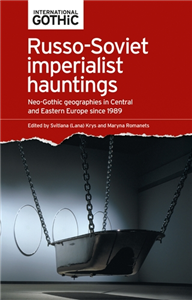
        Russo-Soviet imperialist hauntings

        Neo-Gothic geographies in Central and Eastern Europe since 1989

        by Svitlana Krys, Maryna Romanets

        Russo-Soviet imperialist hauntings attempts to capture some of the ghosts of the colonial and totalitarian past that have been proliferating in international political and cultural landscapes after the collapse of the USSR. By conflating postcolonial, post-totalitarian, postcommunist, and Gothic discourses, it maps virtually untouched aspects of cultural decolonization, focusing on unsettling "hauntings" of unresolved memory traces of Russo-Soviet domination in the former Eastern Bloc countries and Soviet republics. Operating within a vast intertextual field of social, cultural, and ideological discourses, the volume enables a productive exchange across distinct (inter)disciplinary boundaries and represents a range of voices from Europe and North America. The contributors' diverse interests draw on transmedia (literature, visual arts, and film), transnational, and translingual (diasporic literature) approaches, providing insights into a variety of forms that the Gothic has taken in the (late) twentieth and twenty-first centuries, and demonstrating its consistent engagement with history, ideology, and politics.

      • Trusted Partner
        Humanities & Social Sciences
        November 2025

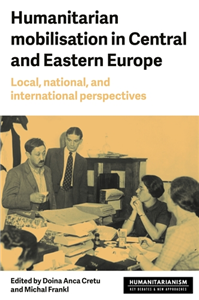
        Humanitarian mobilisation in Central and Eastern Europe

        Local, national, and international perspectives

        by Doina Anca Cretu, Michal Frankl

        By focusing on aid Central and Eastern Europe, the volume adds to the existent scholarly explorations of modern humanitarianism, its actors and practices. In the twentieth century, aid workers assisted victims of war and earthquakes, delivered food, supported health care, provided childcare, or sheltered refugees. The contributors not only reconstruct these diverse histories and their protagonists, but also bring international, national, and local actors together: from grassroots activists to private associations to state-driven "socialist humanitarians" to large Western aid organizations. In doing so, they challenge the often unidirectional, from West-to-East, and asymmetrical perspective on donor-recipient relationships in humanitarian processes.

      Subscribe to our

      newsletter