
The Endocrine Society
The Endocrine Society is a global organization of 18,000 researchers, educators, and clinicians advancing breakthroughs in hormone science and improving public health.
View Rights Portal
The Endocrine Society is a global organization of 18,000 researchers, educators, and clinicians advancing breakthroughs in hormone science and improving public health.
View Rights Portal

Bourgeois Consumption looks at how the middle classes in late nineteenth-century London and Paris used food and dining as forms of social expression and identity. This engaging treatise about how class and gender informed people's eating habits focuses on the complex interactions between bodies, ritual and identity. Forgoing the traditional food history territory of recipes and ingredients in favor of how people ate in different circles, Bourgeois Consumption explores the role of real and imagined meals in shaping Victorian lives. The perception of the middle classes as rigid and upright, found in the extensive pages of their etiquette books, is contrasted with a more flexible and spontaneous bourgeoisie, gleaned from the pages of their own colorful memoirs, diaries and letters, leading us on a lively journey into eating spaces, mealtimes, manners, and social interactions between diners. Further, contrasting Paris with London reveals some of the ways each city shaped its inhabitants but, more surprisingly, throws up a range of similarities that suggest the middle classes were, in fact, a transnational class. Rachel Rich's work will be of interest to anyone intrigued by the history of food, consumption and leisure, as well as to a broader audience curious about how the Victorian middle classes distinguished themselves through daily life and manners. ;

Where civil society is often seen as a driving force for equality, this book addresses a challenging topic: civil society elites. Drawing on a comprehensive study of Italy, Poland, Sweden, and the UK, this ground-breaking research investigates the often-overlooked power structures within civil society. By combining elite studies with civil society research, the book uncovers how a distinct civil society elite emerges and how it interacts with leaders in politics and business. The findings reveal a fascinating paradox. While this elite may be a powerful engine for social change, its integration into wider power circles risks reproducing the very inequalities it seeks to dismantle. By exploring how this elite can become disconnected from its grassroots, the book provides essential insights into the future of civil society and its democratic promise.
 Trusted Partner

This book provides scholars and students alike with a set of texts that can deepen their understanding of the culture and society of the twelfth-century German kingdom. The sources translated here bring to life the activities of five noblemen and noblewomen from Rome to the Baltic coast and from the Rhine River to the Alpine valleys of Austria. To read these five sources together is to appreciate how interconnected political, military, economic, religious and spiritual interests could be for some of the leading members of medieval German society-and for the authors who wrote about them. Whether fighting for the emperor in Italy, bringing Christianity to pagans in what is today northern Poland, or founding, reforming and governing monastic communities in the heartland of the German kingdom, the subjects of these texts call attention to some of the many ways that noble life shaped the world of central medieval Europe.
Trusted Partner
This book shows that Max Horkheimer's program of critical theory and his research throughout his career as a university professor and thinker are rooted in the cogency of philosophical questions and an in-depth knowledge of the historical development of philosophical problems in their close correlation with the socio-economic framework which shaped the 'bourgeois society' and the Modern Era. Indeed, his analyses of modern philosophers allows us to understand how the bourgeoisie seeks legitimisation and consolidation of its position, partly through the voices of its thinkers. In this way, in his investigation of early modern philosophy problems, and through constant dialogue with his colleagues Adorno, Marcuse, Pollock and Fromm, Horkheimer expresses a profound awareness of the critical force inherent in thought which, admittedly, is ever vulnerable to crisis and weakening, but which can always be reactivated.
Trusted Partner

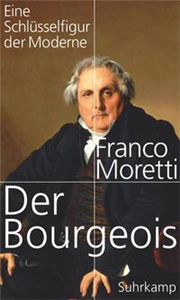
Die industrielle Revolution hat keinen Stein auf dem anderen gelassen. Sie hat alle »altehrwürdigen Vorstellungen und Anschauungen« aufgelöst, alles »Ständische und Stehende verdampft, alles Heilige« entweiht, konstatieren Marx und Engels im »Kommunistischen Manifest«. Die Protagonisten dieser Umwälzung sind die Bürger, die Kaufleute und Industriekapitäne. Die Figur des Bourgeois hat nicht nur Max Weber, Werner Sombart und Joseph Schumpeter fasziniert, sie spielt auch eine Hauptrolle in den großen Werken der Weltliteratur: bei Defoe und Goethe, Balzac und Dickens, bei Thomas Mann und Henrik Ibsen. Franco Moretti rekonstruiert die Mentalität dieser Ära durch das Fenster Literatur: Warum hört Robinson Crusoe auch dann nicht auf zu arbeiten, als sein Überleben auf der paradiesischen Insel längst gesichert ist? Was verraten Ton, Schlüsselwörter und Grammatik der großen Romane des 19. Jahrhunderts über den Geist des Kapitalismus? Und was haben uns die Stücke Ibsens heute, das heißt in unseren postbürgerlichen Zeiten, noch zu sagen, in denen die Wachstumsideologie ebenso hinterfragt wird wie die Integrität von Bankern, Beratern und Analysten?
Trusted Partner

The Conservative Party and the Constitution examines the profound influence on Britain's constitutional framework over nearly two centuries. Through rigorous analysis, it traces how Tory leaders navigated parliamentary reform, devolution, and Brexit, balancing tradition with pragmatic adaptation. Drawing on exclusive interviews, archival records, and historical sources, the book reveals the Party's statecraft and offers fresh insights into the Conservatives' role in shaping modern governance. Essential for historians, political scientists, and those engaged with British politics, this study illuminates the dynamic interplay of power, ideology, and constitutional change, making it a vital contribution to understanding Britain's constitutional history.
Trusted Partner


Sooner or later everything is thrown away. In the consumer society, however, usable and serviceable products that may be as good as new are also thrown away. Such behaviour is the result of a long-term process that has developed over a period of one-and-a-half centuries. The change was led by the USA, and the Federal Republic of Germany followed. It started at the turn of the last century with personal hygiene: articles such as toilet paper, sanitary towels, nappies and paper handkerchiefs. After the Second World War, a large number of other disposable articles were soon added, such as paper cups and plastic dishes, nylon stockings and pens, razor blades, beverage cans and much more besides. Wolfgang König shows how business and consumers have together made throwing things away perfectly normal – and discusses how the throwaway society may be overcome.


This 1926 survey, written by a distinguished social and economic historian, examines the role of religion in the rise of capitalism. Arguing that material acquisitiveness is morally wrong and a corrupting social influence, the author draws upon his profound knowledge of labor and politics to show how concentrated wealth distorts economic policies. Colorful but credible, this study offers a timeless vision of alternative means toward a just economic, social, and intellectual order.
Trusted Partner
French society in revolution aims to retrieve the social history of the French Revolution from unjustified neglect. This study examines both the structural and cultural elements behind the breakdown of the eighteenth-century monarchic state and its aris. . . . ;
Trusted Partner

This book, newly available in paperback, reveals the Conservative Party's relationship with the extreme right between 1945 and 1975. For the first time, this book shows how the Conservative Party, realising that its well known pre-Second World War connections with the extreme right were now embarrassing, used its bureaucracy to implement a policy of investigating extreme right groups and taking action to minimise their chances of success. The book focuses on the Conservative Party's investigation of right-wing groups, and shows how its perception of their nature determined the party bureaucracy's response. The book draws a comparison between the Conservative Party machine's negative attitude towards the extreme right and its support for progressive groups. It concludes that the Conservative Party acted as a persistent block to the external extreme right in a number of ways, and that the Party bureaucracy persistently denied the extreme right within the party assistance access to funds and representation within party organisations. It reaches a climax with the formulation of a 'plan' threatening its own candidate if he failed to remove the extreme right from the Conservative Monday Club.
Trusted Partner
 Trusted Partner

This volume is the first ever attempt to unite and translate some of the key texts which informed Johan Huizinga's famous study of the Burgundian court, The Waning of the Middle Ages, a work which has never gone out of print. It combines these texts with sources that Huizinga did not consider, those that illuminate the wider civic world that the Burgundian court inhabited and the dynamic interaction between court and city. Through these sources, and an introduction offering new perspectives on recent historiography, the book tests whether Huizinga's controversial vision of the period still stands. Covering subjects including ceremonial events, such as the spectacles and gargantuan banquets that made the Burgundian dukes the talk of Europe, the workings of the court, and jousting, archery and rhetoric competitions, the book will appeal to students of late medieval and early modern Europe and to those with wider interests in court culture, ritual and ceremony.
Trusted Partner
 Trusted Partner

This book provides an accessible collection of translated legal sources through which the exploits of criminals and developments in the English criminal justice system (c.1215-1485) can be studied. Drawing on the wealth of archival material and an array of contemporary literary texts, it guides readers towards an understanding of prevailing notions of law and justice and expectations of the law and legal institutions. Tensions are shown emerging between theoretical ideals of justice and the practical realities of administering the law during an era profoundly affected by periodic bouts of war, political in-fighting, social dislocation and economic disaster. Introductions and notes provide both the specific and wider legal, social and political contexts in addition to offering an overview of the existing secondary literature and historiographical trends. This collection affords a valuable insight into the character of medieval governance as well as revealing the complex nexus of interests, attitudes and relationships prevailing in society during the later Middle Ages.
Trusted Partner

This collection, dealing with case studies drawn from South Africa, Zimbabwe, Mozambique and Mauritius, examines the relationship between scientific claims and practices, and the exercise of colonial power. It challenges conventional views that portray science as a detached mode of reasoning with the capacity to confer benefits in a more or less even-handed manner. That science has the potential to further the collective good is not fundamentally at issue, but science can also be seen as complicit in processes of colonial domination. Not only did science assist in bolstering aspects of colonial power and exploitation, it also possessed a significant ideological component: it offered a means of legitimating colonial authority by counter-poising Western rationality to native superstition and it served to enhance the self-image of colonial or settler elites in important respects. This innovative volume ranges broadly through topics such as statistics, medicine, eugenics, agriculture, entomology and botany.
Trusted Partner
American society today provides a balanced introduction to the defining features of contemporary American society. Includes the ways in which the US can be considered 'exceptional' - the character of the 'American dream', the role of ethnicity and race, and the differences between the regions. Considers in depth a number of contemporary debates including the claim that the US economy has lost its capacity to generate wealth and stimulate mobility, that there has been a process of civic disengagement as voluntary organisations have lost members, and that the traditional family is in decline. Includes a thorough investigation of the effects of the terrorist attacks of September 11 and their aftermath. Looks at the arguments put forward by those who assert that a common American identity has given way to a multitude of conflicting identities structured around factors such as race, ethnicity, gender and sexuality. ;
Trusted Partner
 Trusted Partner

This book outlines and evaluates the political thought of the Conservative Party through a detailed examination of its principal thinkers from Harold Macmillan to the present. Traditionally, the Conservative Party has been regarded as a vote-gathering machine rather than a vehicle for ideas. This book redresses the balance through a series of biographical essays examining the thought of those who have contributed most to the development of ideas within the party. The chapters benefit from archival research and interviews with leading Conservatives. The recent revival of Conservative fortunes makes the book particularly timely. The book begins with an introductory chapter explaining the role of ideology in the Conservative Party. It then traces the political thought of the Conservative Party through its principal theorists since the 1930s. These are Harold Macmillan, R. A. Butler, Quintin Hogg, Enoch Powell, Angus Maude, Keith Joseph, the 'traditionalists' (Maurice Cowling, T. E. 'Peter' Utley, Peregrine Worsthorne, Shirley Letwin and Roger Scruton), Ian Gilmour, John Redwood and David Willetts. The book concludes with an overall assessment of the political thought of the Conservative Party and the relevance of past debates for contemporary Conservatism. The book will be of considerable interest to academics and non-academics alike; for those who have a special interest in the Conservative Party but also for any student of contemporary British Politics. ;
Trusted Partner
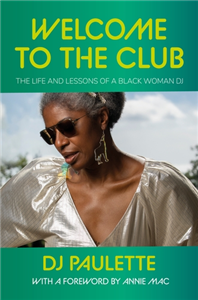
In Welcome to the club, Manchester legend DJ Paulette shares the highs, lows and lessons of a thirty-year music career, with help from some famous friends. One of the Haçienda's first female DJs, Paulette has scaled the heights of the music industry, playing to crowds of thousands all around the world, and descended to the lows of being unceremoniously benched by COVID-19, with no chance of furlough and little support from the government. Here she tells her story, offering a remarkable view of the music industry from a Black woman's perspective. Behind the core values of peace, love, unity and respect, dance music is a world of exclusion, misogyny, racism and classism. But, as Paulette reveals, it is also a space bursting at the seams with powerful women. Part personal account, part call to arms, Welcome to the club exposes the exclusivity of the music industry while seeking to do justice to the often invisible women who keep the beat going.
Trusted Partner


People are living longer, and people are developing dementia. But our consumer society, which is optimised for working silently, is helpless in the face of those who have gone mad from its midst. The burden of caring for them is borne largely by their dependants and by carers from Eastern Europe. In his extremely stirring book, Professor Thomas Klie argues that we should include people with dementia as part of our lives and recognise that it is possible to live a happy and fulfilled life even with dementia – under the right conditions. Especially in the light of societal conflicts over income distribution fuelled by the corona pandemic, Klie is convinced that the dominant culture is measured by how it treats the subject of dementia.


