
Your Search Results
-

-

Egyptian Office for Publishing & Distribution
Founded Egyptian Office For Publishing & Distribution in 1992 and until now . our goal is to provide culture for all segments of society and raise the level of public awareness and knowledge and the development of intellectual and creative possibilities for each . Over the past years we have published more than 1,000 cultural educational titles for the whole family through enlist the best authors in Egypt and the Arab world.
View Rights Portal
-
Promoted Content
-
Promoted Content
-
 Trusted Partner
-
Trusted Partner
-
Trusted Partner
-
Trusted Partner

 Humanities & Social SciencesMarch 2017
Imperialism and the natural world
by John M. MacKenzie
Imperial power, both formal and informal, and research in the natural sciences were closely dependent in the nineteenth century. This book examines a portion of the mass-produced juvenile literature, focusing on the cluster of ideas connected with Britain's role in the maintenance of order and the spread of civilization. It discusses the political economy of Western ecological systems, and the consequences of their extension to the colonial periphery, particularly in forms of forest conservation. Progress and consumerism were major constituents of the consensus that helped stabilise the late Victorian society, but consumerism only works if it can deliver the goods. From 1842 onwards, almost all major episodes of coordinated popular resistance to colonial rule in India were preceded by phases of vigorous resistance to colonial forest control. By the late 1840s, a limited number of professional positions were available for geologists in British imperial service, but imperial geology had a longer pedigree. Modern imperialism or 'municipal imperialism' offers a broader framework for understanding the origins, long duration and persistent support for overseas expansion which transcended the rise and fall of cabinets or international realignments in the 1800s. Although medical scientists began to discern and control the microbiological causes of tropical ills after the mid-nineteenth century, the claims for climatic causation did not undergo a corresponding decline. Arthur Pearson's Pearson's Magazine was patriotic, militaristic and devoted to royalty. The book explores how science emerged as an important feature of the development policies of the Colonial Office (CO) of the colonial empire.
-
Trusted Partner
 Literature & Literary StudiesMay 2026
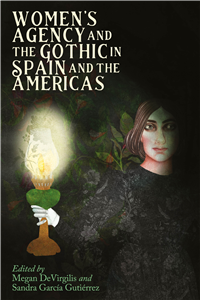
Women’s Agency and the Gothic in Spain and the Americas
by Megan DeVirgilis, Sandra García Gutiérrez
This volume has emerged to fulfill two main purposes: Primarily, to constitute the first collaborative work that traces the relationship between the Gothic and Women in Spain and the Americas, but also, to surpass the term 'Female Gothic,' coined by Ellen Moers, by transferring the focus towards women and their agency as writers, readers and characters. This volume functions as a manifesto per se to open new avenues into understanding how women have interacted with the Gothic between the nineteenth and twenty-first centuries in Spain and the Americas. The question, we determine, is not simply about identity, but rather about agency. We define women's agency as the total capacity of characters, authors and readers to act freely within a social framework in relation to gothic texts. In our exploration of authorship, we reject the claim that the Gothic is a simplistic literary genre, instead sustaining that the plasticity of the Gothic has enabled it to survive for centuries; by shifting from a genre to a mode, it has surpassed literary forms and invaded all kinds of media: from film to music and merchandise such as clothing and pop culture collectables, fostering an authentic goth fandom.
-
Trusted Partner
 Humanities & Social SciencesJuly 2021
Post-everything
An intellectual history of post-concepts
by Herman Paul, Adriaan van Veldhuizen
Postmodern, postcolonial and post-truth are broadly used terms. But where do they come from? When and why did the habit of interpreting the world in post-terms emerge? And who exactly were the 'post boys' responsible for this? Post-everything examines why post-Christian, post-industrial and post-bourgeois were terms that resonated, not only among academics, but also in the popular press. It delves into the historical roots of postmodern and poststructuralist, while also subjecting more recent post-constructions (posthumanist, postfeminist) to critical scrutiny. This study is the first to offer a comprehensive history of post-concepts. In tracing how these concepts found their way into a broad range of genres and disciplines, Post-everything contributes to a rapprochement between the history of the humanities and the history of the social sciences.
-
Trusted Partner
Humanities & Social SciencesMarch 2017
Air power and colonial control
by David Omissi
Air policing was used in many colonial possessions, but its most effective incidence occurred in the crescent of territory from north-eastern Africa, through South-West Arabia, to North West Frontier of India. This book talks about air policing and its role in offering a cheaper means of 'pacification' in the inter-war years. It illuminates the potentialities and limitations of the new aerial technology, and makes important contributions to the history of colonial resistance and its suppression. Air policing was employed in the campaign against Mohammed bin Abdulla Hassan and his Dervish following in Somaliland in early 1920. The book discusses the relationships between air control and the survival of Royal Air Force in Iraq and between air power and indirect imperialism in the Hashemite kingdoms. It discusses Hugh Trenchard's plans to substitute air for naval or coastal forces, and assesses the extent to which barriers of climate and geography continued to limit the exercise of air power. Indigenous responses include being terrified at the mere sight of aircraft to the successful adaptation to air power, which was hardly foreseen by either the opponents or the supporters of air policing. The book examines the ethical debates which were a continuous undercurrent to the stream of argument about repressive air power methods from a political and operational perspective. It compares air policing as practised by other European powers by highlighting the Rif war in Morocco, the Druze revolt in Syria, and Italy's war of reconquest in Libya.
-
Trusted Partner
Humanities & Social SciencesMarch 2017
Colonial frontiers
by Andrew Thompson, John M. MacKenzie, Kim Latham
Colonial frontiers explores the formation, structure and maintenance of boundaries and frontiers in settler colonies. Drawing on the work of anthropologists, historians, archaeologists and post-colonial theorists, the authors in this fascinating collection explore the importance of cross-cultural interactions in the settler colonies of Australia, New Zealand, South Africa and America. Taking key historical moments to illuminate the formation of new boundaries and the interaction between the settler societies and the indigenous groups, this book raises many important questions about how the empire worked 'on the ground'. Importantly, the collection attempts to theorise the indigenous experience. As we move towards globalisation, borders and boundaries have begun to fall away. This book reminds us that not long ago the frontiers and boundaries were the key sites for cross-cultural interaction. This collection, which includes chapters by John K. Noyes, Nigel Penn, Kay Schaffer and Ian McNiven, is broad in scope and presents an exciting new approach to the issues surrounding group interaction in colonial settings. Students and academics, from backgrounds such as imperial history, anthropology and post-colonial studies, will find this collection extremely valuable.
-
Trusted Partner
-
Trusted Partner
 Humanities & Social SciencesMarch 2026
The dilemma of Authority
by Allyn Fives
The moral problem of authority is the challenge of reconciling legitimate authority (the right to rule) with the demands of freedom and rationality. In this book, I argue that authority can have legitimacy, but when it does it generates a moral dilemma, where the obligation to obey comes at some cost to freedom and reason. Hence, not only do I depart from the views of those who insist that authority can never have legitimacy, but also those who maintain that insofar as authority is legitimate it simply satisfies the demands of freedom or rationality. My focus here will be on both what it is that justifies authority (in particular focusing on membership, and the goods of membership) as well what type of reason an authoritative directive is, how it can come into conflict with others reasons, and how those conflicts are resolved.
-
Trusted Partner
Humanities & Social SciencesMay 2021
Disciplined agency
Neoliberal precarity, generational dispossession and call centre labour in Portugal
by Patrícia Alves de Matos
Since the mid-2000s, the harsh reality of call centre employment for a generation of young workers in Portugal has been impossible to ignore. With its endless rows of small cubicles, where human agents endure repetitive telephone conversations with abusive clients under invasive modes of technological surveillance, discipline and control, call centre work remains a striking symbol of labour precarity, a condition particularly associated with the neoliberal generational disenchantment that 'each generation does better than its predecessor'. This book describes the emergence of a regime of disciplined agency in the Portuguese call centre sector. Examining the ascendancy of call centres as icons of precarity in contemporary Portugal, this book argues that call centre labour constitutes a new form of commodification of the labouring subject. De Matos argues that call centres represent an advanced system of non-manual labour power exploitation, due to the underestimation of human creativity that lies at the centre of the regimented structures of call centre labour. Call centres can only guarantee profit maintenance, de Matos argues, through the commodification of the human agency arising from the operators' moral, relational and social embedded agentive linguistic interventions of creative improvisation, decision-making, problem-solving and ethical evaluation.
-
Trusted Partner
 Humanities & Social SciencesJanuary 2025
The four dimensions of power
Understanding domination, empowerment and democracy
by Mark Haugaard
In this accessible and sophisticated exploration of the nature and workings of social and political power, Haugaard examines the interrelation between domination and empowerment. Building upon the perspectives of Steven Lukes, Michel Foucault, Amy Allen, Hannah Arendt, Anthony Giddens, Pierre Bourdieu and others, he offers a clear theoretical framework, delineating power in four interrelated dimensions. The first and second dimensions of power entail two different types of social conflict. The third dimension concerns tacit knowledge, uses of truth and reification. Drawing upon genealogical theory and accounts of slavery as social death, the fourth dimension of power concerns the power to create social subjects. The book concludes with an original normative pragmatist power-based account of democracy. Offering lucid and entertaining illustrations of complex theoretical perspectives, this book is essential reading for scholars and activists.
-
Trusted Partner
Humanities & Social SciencesMarch 2017
Popular imperialism and the military, 1850-1950
by John M. MacKenzie
Colonial war played a vital part in transforming the reputation of the military and placing it on a standing equal to that of the navy. The book is concerned with the interactive culture of colonial warfare, with the representation of the military in popular media at home, and how these images affected attitudes towards war itself and wider intellectual and institutional forces. It sets out to relate the changing image of the military to these fundamental facts. For the dominant people they were an atavistic form of war, shorn of guilt by Social Darwinian and racial ideas, and rendered less dangerous by the increasing technological gap between Europe and the world. Attempts to justify and understand war were naturally important to dominant people, for the extension of imperial power was seldom a peaceful process. The entertainment value of war in the British imperial experience does seem to have taken new and more intensive forms from roughly the middle of the nineteenth century. Themes such as the delusive seduction of martial music, the sketch of the music hall song, powerful mythic texts of popular imperialism, and heroic myths of empire are discussed extensively. The first important British war correspondent was William Howard Russell (1820-1907) of The Times, in the Crimea. The 1870s saw a dramatic change in the representation of the officer in British battle painting. Up to that point it was the officer's courage, tactical wisdom and social prestige that were put on display.
-
Trusted Partner
 The ArtsSeptember 2024
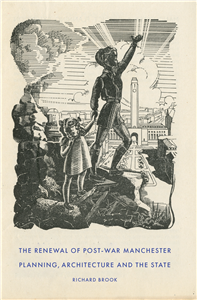
The renewal of post-war Manchester
Planning, architecture and the state
by Richard Brook
A compelling account of the project to transform post-war Manchester, revealing the clash between utopian vision and compromised reality. Urban renewal in Britain was thrilling in its vision, yet partial and incomplete in its implementation. For the first time, this deep study of a renewal city reveals the complex networks of actors behind physical change and stagnation in post-war Britain. Using the nested scales of region, city and case-study sites, the book explores the relationships between Whitehall legislation, its interpretation by local government planning officers and the on-the-ground impact through urban architectural projects. Each chapter highlights the connections between policy goals, global narratives and the design and construction of cities. The Cold War, decolonialisation, rising consumerism and the oil crisis all feature in a richly illustrated account of architecture and planning in post-war Manchester.
-
Trusted Partner
-
Trusted Partner

 September 2014
Dein Crack ist in der Post
Wie das Internet die Welt der Drogen revolutioniert
by Power, Mike
-
Trusted Partner
 Humanities & Social SciencesApril 2026
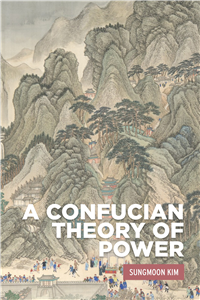
A Confucian theory of power
by Sungmoon Kim
In the book's lead essay, Sungmoon Kim offers a comprehensive analysis of Confucian power. Through a blend of philosophical, political, and historical analysis, Kim challenges the dominant idea that Confucianism is primarily centred on virtue ethics. Instead, he argues that Confucianism perceives power through the prism of responsibility. Kim not only traces this perspective throughout history but also demonstrates its relevance to contemporary society. He contrasts this Confucian perspective with Western political theory's view of power as control. Political theorists and philosophers will offer essay responses to Sungmoon Kim's provocation, offering a dialogue approach to provide a comprehensive analysis of the Confucian conception of power.
-
Trusted Partner
 Humanities & Social SciencesFebruary 2018
How to save politics in a post-truth era
by Ilan Zvi Baron



