Your Search Results

      • Trusted Partner
        Humanities & Social Sciences
        January 2025

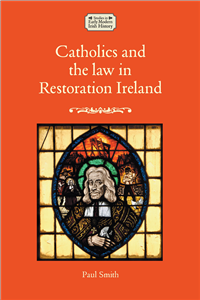
        Catholics and the law in Restoration Ireland

        by Paul Smith

        In 1660 Charles II was restored to the thrones of England, Scotland and Ireland, but his hold on power was precarious. In particular, Ireland was fundamentally unstable - Catholics formed the majority of the population in a country where Protestantism was the established religion, a state of affairs unique in Europe. It was through the law that the restored Stuart monarchy governed its subjects and its colonial dependencies, and this book examines how Catholics engaged with and experienced English common law primarily through the eyes of Catholic clerics and Gaelic poets. It also examines how Catholics engaged with the Courts and the particular challenges they faced as lawyers. The book draws on an extensive body of primary source materials, including Irish-language poetry and little-used archival material relating to elite Catholic families.

      • Trusted Partner
        Literature & Literary Studies
        February 2023

        Imagining the Irish child

        Discourses of childhood in Irish Anglican writing of the seventeenth and eighteenth centuries

        by Jarlath Killeen

        This book examines the ways in which ideas about children, childhood and Ireland changed together in Irish Protestant writing of the seventeenth and eighteenth centuries. It focuses on different varieties of the child found in the work of a range of Irish Protestant writers, theologians, philosophers, educationalists, politicians and parents from the early seventeenth century up to the outbreak of the 1798 Rebellion. The book is structured around a detailed examination of six 'versions' of the child: the evil child, the vulnerable/innocent child, the political child, the believing child, the enlightened child, and the freakish child. It traces these versions across a wide range of genres (fiction, sermons, political pamphlets, letters, educational treatises, histories, catechisms and children's bibles), showing how concepts of childhood related to debates about Irish nationality, politics and history across these two centuries.

      • Trusted Partner
        Biography & True Stories
        March 2026

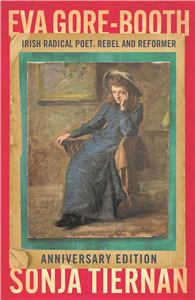
        Eva Gore-Booth: Irish radical poet, rebel and reformer

        Anniversary edition

        by Sonja Tiernan

        An acclaimed biography of poet, pacifist and political firebrand Eva Gore-Booth. The Irish poet and activist Eva Gore-Booth (1870-1926) led a life defiantly at odds with her aristocratic origins. Choosing to live and work among the poor of Manchester, she campaigned on behalf of barmaids, circus performers, flower sellers and pit-brow lasses, her partner, Esther Roper, at her side. Gore-Booth was tireless in her pursuit of justice. She was a militant pacifist during the First World War, a champion of Irish independence and a pioneering thinker on gender and sexuality. She was also a prolific author, publishing nineteen volumes of poetry and prose that reflect the full force of her radical convictions. Featuring a new preface that situates Gore-Booth's life and work in the context of our current political climate, this biography reclaims her place as a significant figure of Anglo-Irish letters and an unsung hero of LGBT+ history.

      • Trusted Partner
      • Trusted Partner
        Humanities & Social Sciences
        August 1998

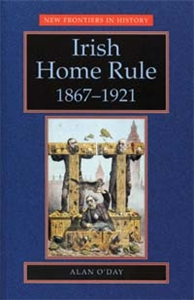
        Irish Home Rule

        by Alan O'Day, Mark Greengrass

        Irish Home Rule considers the pre-eminent issue in British politics during the late nineteenth and early twentieth-centuries. It is the first account to explain the various self-government plans, to place these in context and examine the motives for putting the schemes forward. The book distinguishes between moral and material home rulers, making the point that the first appealed especially to outsiders, some Protestants and the intelligentsia, who saw in self-government a means to reconcile Ireland's antagonistic traditions. In contrast, material home rulers viewed a Dublin Parliament as a forum of Catholic interests. This account appraises the home rule movement from a fresh angle, distinguishing it from the usual division drawn between physical force and constitutional nationalists It maintains that an ideological continuity runs from Young Ireland, the Fenians, the early home rulers including Isaac Butt and Charles Stewart Parnell, to the Gaelic Revivalists to the Men of 1916. These nationalists are distinguishable from material home rulers not on the basis of methods or strategy but by a fundamental ideological cleavage. ;

      • Trusted Partner
        Literature & Literary Studies
        March 2009

        Irish Literature Since 1990

        by Michael Parker, Scott Brewster

      • Trusted Partner
        Humanities & Social Sciences
        December 1999

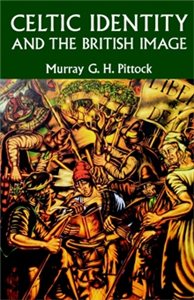
        Celtic Identity and the British Image

        by Murray Pittock

        This work explores the idea of the Celt and the definition of the so-called "Celtic Fringe" over the last 300 years. It is an in-depth study of the literary and cultural representation of Ireland, Scotland and Wales over this period, and is based on a wide-ranging grasp of issues of national identity and state formation. The idea of the Celt and Celticism is once again highly fashionable. Is there such a common Celtic heritage? What is the place of the "Celtic Fringe" in British identity? Pittock begins by assessing the term "Celtic" itself, by questioning its validity, going on to examine its historic uses and heroic notions of Scotland's past. The Celtic Revival of the late 19th century is examined in detail together with its impact on Irish nationalism. Pittock asks how far the "Celtic" experience in Britain can be described as a colonial one, and examines the importance of the Celtic languages in preserving a sense of identity. Contemporary issues such as the literary language of the Troubles in Northern Ireland and the growth of modern Scottish nationalism are also considered. ;

      • Trusted Partner
        Humanities & Social Sciences
        January 2017

        The West must wait

        County Galway and the Irish Free State, 1922–32

        by Una Newell

        The West must wait presents a new perspective on the development of the Irish Free State. It extends the regional historical debate beyond the Irish revolution and raises a series of challenging questions about post-civil war society in Ireland. Through a detailed examination of key local themes - land, poverty, politics, emigration, the status of the Irish language, the influence of radical republicans and the authority of the Catholic Church - it offers a probing analysis of the socio-political realities of life in the new state. This book opens up a new dimension by providing a rural contrast to the Dublin-centred views of Irish politics. Significantly, it reveals the level of deprivation in local Free State society with which the government had to confront in the west. Rigorously researched, it explores the disconnect between the perceptions of what independence would deliver and what was achieved by the incumbent Cumann na nGaedheal administration.

      • Trusted Partner
      • Trusted Partner
        Humanities & Social Sciences
        January 2023

        Democracy and dissent in the Irish Free State

        by Jason Knirck

      • Trusted Partner
        Humanities & Social Sciences
        November 2014

        Are the Irish different?

        by Tom Inglis

        This book examines the extent and nature of Irish social and cultural difference. It is a collection of twenty-three short essays written in a clear and accessible manner by human scientists who are international experts in their area. The essays cover topics covered include the nature of Irish nationalism and capitalism, the Irish political elite, the differences and similarities of the Irish family, the upsurge in immigration, Northern Ireland, the Irish diaspora, the Irish language, sport, music and many other topics. The book will be bought by those who have an academic and personal interest in Irish Studies. It will be attractive to those who are not familiar with the theories and methods of the human sciences and how they can shine a light on the transformations that have taken place in Ireland. Tom Inglis, the editor of the collection, is a sociologist who has written extensively on Irish culture and society. ;

      • Trusted Partner
        Cultural studies
        November 2014

        Are the Irish different?

        by Edited by Tom Inglis

        This book examines the extent and nature of Irish social and cultural difference. It is a collection of twenty-three short essays written in a clear and accessible manner by human scientists who are international experts in their area. The topics covered include the nature of Irish nationalism and capitalism, the Irish political elite, the differences and similarities of the Irish family, the upsurge in immigration, Northern Ireland, the Irish diaspora, the Irish language, sport, music and many other topics. The book will be bought by those who have an academic and personal interest in Irish Studies. It will be attractive to those who are not familiar with the theories and methods of the human sciences and how they can shine a light on the transformations that have taken place in Ireland. Tom Inglis, the editor of the collection, is a sociologist who has written extensively on Irish culture and society.

      • Trusted Partner
        Humanities & Social Sciences
        April 2026

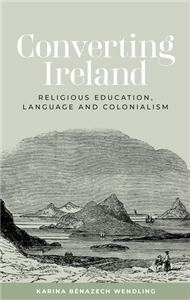
        Converting Ireland

        Religious education, language and colonialism

        by Karina Bénazech Wendling

        Karina Bénazech Wendling offers a re-assessment of 'souperism'-the long-debated claim that food was used to convert Irish Catholics to Protestantism during the Great Famine. Focusing on the Irish Society for Promoting the Education of the Native Irish through their Own Language, the first group labeled 'soupers' in 1841, she uncovers a more complex picture. Rather than a mere tool of British cultural imperialism, the Society had a deep engagement with the Irish language and Bible translation, while also encouraging religious conversions in the West. The book explores the Society's role in Ireland's religious and political landscape, the rise of Catholic counter-missions, and nationalist resistance. Offering fresh insights into Ireland's religious history and global missionary movements, this book is essential for scholars of Irish studies, interdenominational relations, and education in Ireland.

      • Trusted Partner
      • Trusted Partner
        Humanities & Social Sciences
        March 2008

        The Irish voter

        The nature of electoral competition in the Republic of Ireland

        by Michael Marsh, Richard Sinnott, John Garry, Fiachra Kennedy

        This pioneering analysis uses the results from the first ever Irish election study to provide a comprehensive survey of the motives, outlook and behaviour of voters in the Republic of Ireland. Building on the foundations laid down by previous work on comparative electoral behaviour, it explores long-term influences on vote choice, such as party loyalties and enduring values, as well as short-term ones, such as the economy, the party leaders and the candidates themselves. It also examines how people use their vote and why so many people do not vote at all. Many features of Irish elections make such a detailed study particularly important. The single transferable vote system allows voters an unusual degree of freedom to pick the candidates they prefer, while electoral trends observed elsewhere can be found in a more extreme form in Ireland. For example, attachment to parties is very low, differences between them are often obscure, candidate profiles are very high and turnout is falling rapidly. However, Irish elections defy international trends in other respects, most notably in the degree of personal contact parties and candidates make with their voters. Findings are presented in a manner that is highly accessible to anyone with an interest in elections, electoral systems and electoral behaviour. The book is essential reading for anyone interested in Irish politics and is an important text for students of European Politics, Parties and Elections, Comparative Politics and Political Sociology. ;

      • Trusted Partner
        Humanities & Social Sciences
        February 2017

        Scottishness and Irishness in New Zealand since 1840

        by Angela McCarthy, Andrew Thompson, John M. MacKenzie

        This book examines the distinctive aspects that insiders and outsiders perceived as characteristic of Irish and Scottish ethnic identities in New Zealand. When, how, and why did Irish and Scots identify themselves and others in ethnic terms? What characteristics did the Irish and the Scots attribute to themselves and what traits did others assign to them? Did these traits change over time and if so how? Contemporary interest surrounding issues of ethnic identities is vibrant. In countries such as New Zealand, descendants of European settlers are seeking their ethnic origins, spurred on in part by factors such as an ongoing interest in indigenous genealogies, the burgeoning appeal of family history societies, and the booming financial benefits of marketing ethnicities abroad. This fascinating book will appeal to scholars and students of the history of empire and the construction of identity in settler communities, as well as those interested in the history of New Zealand.

      • Trusted Partner
        Humanities & Social Sciences
        January 2019

        The post-crisis Irish voter

        Voting behaviour in the Irish 2016 general election

        by Michael Marsh, David M. Farrell, Theresa Reidy

        This is the definitive study of the Irish general election of 2016 - the most dramatic election in a generation, which resulted in the worst electoral outcome for Ireland's established parties, the most fractionalized party system in the history of the state, and the emergence of new parties and groups. These outcomes follow a pattern seen across a number of Western Europe's established democracies in which the 'deep crisis' of the Great Recession has wreaked havoc on party systems. The objective of this book is to assess this most extraordinary of Irish elections both in its Irish and wider cross-national context. With contributions from leading scholars on Irish elections, and using a unique dataset - the Irish National Election Study 2016 - this volume explores voting patterns at Ireland's first post crisis election and it considers the implications for the electoral landscape and politics in Ireland.

      • Trusted Partner
        Humanities & Social Sciences
        March 2017

        'An Irish empire'?

        Aspects of Ireland and the British Empire

        by Sally Visick

        This volume, which explores aspects of the experience of Ireland and Irish people within the British Empire, addresses a central concern of modern Irish scholarship. Much academic writing about Ireland, its history and culture is dominated by the vocabulary of imperialism. Engels described Ireland as England's first colony. Contemporary observers frequently characterise it as having a post-colonial society. Ireland, on the other hand, was also part of the metropolitan core of the Empire and supplied many of its soldiers, settlers and administrators. The paradox that Ireland was both 'imperial' and 'colonial' lies at the heart of this book which includes studies of Irish service in the Empire as well as the impact of imperial concerns in Ireland. Concentrating on the period since the mid-nineteenth century, the scope of the volume is impressively broad. Popular culture, sport and film are investigated, as well as business history and the military and political 'sinews of Empire'. The book will be of particular value to institutions teaching Irish and British history to degree level and the growing number of Irish studies courses being offered in Great Britain and North America.

      Subscribe to our

      newsletter