
Your Search Results
-

-

Phileas Fogg Agency
Agency representing picture books projects, Foreign rights for publishers of picture books, representation of portfolios, contract consultancies.
View Rights Portal
-
Promoted Content

 2020
2020History of the German Language
A textbook for German studies; Part 1: Introduction, prehistory and history; Part 2: Old High German, Middle High German and Early New High German
by Wilhelm Schmidt, Edited by Dr. Elisabeth Berner and Prof. Dr. Dr. h.c. Dr. h.c. Norbert Richard Wolf
The 12th revised and updated version of the History of the German language – long regarded as an indispensable standard work for German Studies, has just been published. From now on, this comprehensive textbook on the history of the language is divided into two volumes. In addition to introducing questions about historical linguistics, the first volume provides a detailed account of the prehistory and history of German right up to the present day. Based on extensive source analyses, the focus is on aspects of culture and social history; only the chapters on the Indo-Germanic and Germanic language include key information about structural history. The second part contains concise, but readily understandable accounts of Old, Middle and Early New High German in terms of phonology, graphemics, morphology and syntax. Not only are synchronous descriptions given of the particular language period, but also the development of German language construction at all structural levels is explained. The association of grammatical synchrony and structural diachrony is a particular characteristic of this second part of Schmidt’s work on the history of language.
-
Promoted Content
 May 2023
How Philosophers Fail Themselves
The somewhat different historyof philosophy
by Otto A. Böhmer
— Philosophy for beginners — For philosophy enthusiasts — A pleasant read This truly brilliant book tells of the sometimes sublime, sometimes exhilarating efforts of philosophers to maintain their attitude in everyday life without forgetting the meaning of their own words – and how they ultimately failed to do so. The minor, sometimes bizarre events in the lives of the great philosophers fit so aptly in the picture of the respective philosophy that one has to assume they could have been conceived to keep the associated intellectual giant in a strange and memorable mood. A book of cheerful science, full of wit, narrative and linguistic eloquence.
-
 Trusted Partner

 Literature & Literary StudiesOctober 2023
Reading David Foster Wallace between philosophy and literature
by Allard den Dulk, Pia Masiero, Adriano Ardovino
-
Trusted Partner
 Humanities & Social SciencesJuly 2026
Modernity and philosophy in Max Horkheimer
On the contemporary relevance of critical theory
by Raffaele Carbone
This book shows that Max Horkheimer's program of critical theory and his research throughout his career as a university professor and thinker are rooted in the cogency of philosophical questions and an in-depth knowledge of the historical development of philosophical problems in their close correlation with the socio-economic framework which shaped the 'bourgeois society' and the Modern Era. Indeed, his analyses of modern philosophers allows us to understand how the bourgeoisie seeks legitimisation and consolidation of its position, partly through the voices of its thinkers. In this way, in his investigation of early modern philosophy problems, and through constant dialogue with his colleagues Adorno, Marcuse, Pollock and Fromm, Horkheimer expresses a profound awareness of the critical force inherent in thought which, admittedly, is ever vulnerable to crisis and weakening, but which can always be reactivated.
-
Trusted Partner
 Humanities & Social SciencesMarch 2017
The language of empire
Myths and metaphors of popular imperialism, 1880-1918
by Robert Macdonald
The debate about the Empire dealt in idealism and morality, and both sides employed the language of feeling, and frequently argued their case in dramatic terms. This book opposes two sides of the Empire, first, as it was presented to the public in Britain, and second, as it was experienced or imagined by its subjects abroad. British imperialism was nurtured by such upper middle-class institutions as the public schools, the wardrooms and officers' messes, and the conservative press. The attitudes of 1916 can best be recovered through a reconstruction of a poetics of popular imperialism. The case-study of Rhodesia demonstrates the almost instant application of myth and sign to a contemporary imperial crisis. Rudyard Kipling was acknowledged throughout the English-speaking world not only as a wonderful teller of stories but as the 'singer of Greater Britain', or, as 'the Laureate of Empire'. In the last two decades of the nineteenth century, the Empire gained a beachhead in the classroom, particularly in the coupling of geography and history. The Island Story underlined that stories of heroic soldiers and 'fights for the flag' were easier for teachers to present to children than lessons in morality, or abstractions about liberty and responsible government. The Education Act of 1870 had created a need for standard readers in schools; readers designed to teach boys and girls to be useful citizens. The Indian Mutiny was the supreme test of the imperial conscience, a measure of the morality of the 'master-nation'.
-
Trusted Partner
 April 2021
On the Purposes of Life and Whether They Exist
A philosophical fitting
by Axel Braig
The musician, doctor and philosopher Axel Braig considers philosophy a little like the weather: he looks for the right clothes for every situation. Braig is primarily concerned with practical, effective things from the two-and-a-half millennia fund of (Western) thinking, such as helpful approaches in existential crises. In this book, he introduces us to philosophical thinkers from Plato to Montaigne to Levinas and Feyerabend. Braig not only shares his own philosophical biography, but above all encourages us to philosophise ourselves.
-
Trusted Partner
 The ArtsJune 2026
What is a thoughtful life?
by Kélina Gotman
In fresh readings of Theodor W. Adorno, Giorgio Agamben, Hannah Arendt, Judith Butler, Barbara Cassin, Michel Foucault, Werner Hamacher, Martin Heidegger, and many more, Gotman rearticulates the foundations of broadly western philosophical thinking to carve out a shadowy space of recalcitrant thought 'in dark times'. At once indebted to the legacy of critique and enmeshed in affective and performative approaches to language, anti-theatricality, critical race theory and gender studies, she weaves a poetic mesh of intimate fragments, reflections on what it means to think and to write, as she puts it, after spectacle. Almost but not quite a straight work of philosophy, distinctly literary and performative in its anti-genre, this book twists and turns, swerves and cuts, to show the work of thinking as an intimate act - a theatre of angles and openings, adjacencies and reverberations.
-
Trusted Partner
 Humanities & Social SciencesMarch 2026
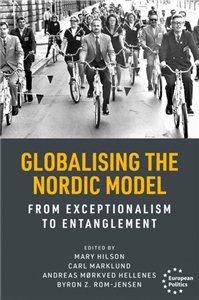
Globalising the Nordic Model
From exceptionalism to entanglement
by Mary Hilson
The five Nordic countries - Denmark, Finland, Iceland, Norway and Sweden - frequently attract attention as examples of a 'Nordic model'. The meanings of the term vary, but especially since the global financial crisis of 2008-9 the Nordic countries have often been portrayed positively, as examples of economic dynamism, innovation and social equality. Studies of these images of the Nordic countries and Nordic region and their international circulations are now a well-established field of research. This volume explores how the Nordic model has been shaped by global entanglements, in exchange not only with Western Europe and North America, but also with the Global South. Drawing on selected case studies, the volume offers new perspectives on the meanings of the Nordic model and Nordic exceptionalism in a global context during the half century since c. 1970.
-
Trusted Partner

 December 2021
Critical Philosophy of Race
Ein Reader
by Kristina Lepold, Marina Martinez Mateo
Welche Art von Realität hat race? Welche Rolle spielen Wahrnehmungs- und Wissensformen bei ihrer Konstruktion? Was ist und wie funktioniert Rassismus? Das sind die zentralen Fragen, denen sich seit zwei Jahrzehnten das Forschungsfeld der Critical Philosophy of Race widmet, welches insbesondere in den USA wirkmächtige akademische und außerakademische Debatten angestoßen hat. Aber auch hierzulande ist die philosophische Beschäftigung mit race und Rassismus wichtig geworden, wie aktuelle Ereignisse und Diskussionen zeigen. Der Band stellt die noch junge Disziplin vor und präsentiert – zum Teil in deutscher Erstübersetzung – die einschlägigen Texte, u. a. von Kimberlé Crenshaw, Kwame Anthony Appiah, Tommie Shelby, Linda Martín Alcoff und Sally Haslanger.
-
Trusted Partner

 2023
2023German for Pharmaceutical Practice
Communicate, research, present
by Nadine Yvonne Sprecher, Annette Thomas, Annegret Lehmann and Anke Schichte. In collaboration with Christiane Schneider
In the pharmacy, the staff communicate with customers, colleagues, the medical profession, sales representatives and nursing home staff. Pharmacy employees produce written information based on well-chosen sources and represent the pharmacy to the outside world through presentations, on social media, or with the help of flyers, posters and other promotional materials. All this presupposes the confident use of language, and is best trained in advance. Part A of this work provides assistance for the most diverse communicative requirements in the pharmacy. A short theoretical explanation is always followed by several tasks so that you can immediately put what you have learned into practice and try it out. The „Brief overview of grammar and language knowledge“ boxes point out linguistic stumbling blocks. Those who are not yet sure of the technical terms can make themselves fit in Part B. Here one learns how to conduct a good counselling interview according to the BAC guideline. Extensive lists of technical terms and their explanations suitable for everyday use – all arranged according to organ systems – contain the most important vocabulary for everyday pharmacy work. A totally practical German lesson!
-
Trusted Partner
 Humanities & Social SciencesApril 2026
Visions for Europe
Debating the future of the European Union with great political thinkers
by João Labareda
This book offers a fresh look at some of the most challenging dilemmas of European integration and proposes innovative solutions to them by building on perspectives and insights from twelve classical authors in the history of political thought. The book simultaneously offers an original introduction to critical debates in EU studies and makes key political thinkers more accessible to contemporary readers by presenting present-day policy applications of their doctrines. While each chapter discusses a specific challenge for the EU, five key themes appear recurrently throughout the book: (i) the prospects for peace in Europe; (ii) the conditions for an inclusive EU democracy; (iii) socioeconomic inequalities in the EU; (iv) strategies to promote political change in Europe; and (v) the requisites for a fully-fledged EU citizenship. The authors discussed are Plato, Aristotle, Augustine, Machiavelli, Hobbes, Rousseau, Kant, Wollstonecraft, Marx, Arendt, Rawls and hooks.
-
Trusted Partner
 Literature & Literary StudiesJanuary 2021
Language and imagination in the Gawain poems
by J. Anderson
This major new literary study offers a fresh view of the significance of the famous group of fourteenth-century poems, 'Pearl', 'Cleanness', 'Patience' and 'Sir Gawain and the Green Knight'. It is a comprehensive study which puts the poems themselves firmly at its centre, though it is always alert to relevant aspects of their literary and cultural context. John Anderson builds his discussions of the poems' ideas on an examination of the anonymous poet's superb Shakespeare-like language. He finds that the great fourteenth-century struggle, between religious and secular forces for control of men's minds, underlies all the poems. This title is the first in the new Manchester Medieval Literature series, which makes readability a priority. Accordingly, despite its wide range of reference and the radicalism of some of its leading ideas, this book is written in a jargon-free style designed to appeal to specialist, non-specialist and student readers alike.
-
Trusted Partner
 Literary studies: classical, early & medievalMarch 2005
Language and imagination in the Gawain poems
by J. J. Anderson
This major new literary study offers a fresh view of the significance of the famous group of fourteenth-century poems, 'Pearl', 'Cleanness', 'Patience' and 'Sir Gawain and the Green Knight'. It is a comprehensive study which puts the poems themselves firmly at its centre, though it is always alert to relevant aspects of their literary and cultural context. John Anderson builds his discussions of the poems' ideas on an examination of the anonymous poet's superb Shakespeare-like language. He finds that the great fourteenth-century struggle, between religious and secular forces for control of men's minds, underlies all the poems. This title is the first in the new Manchester Medieval Literature series, which makes readability a priority. Accordingly, despite its wide range of reference and the radicalism of some of its leading ideas, this book is written in a jargon-free style designed to appeal to specialist, non-specialist and student readers alike.
-
Trusted Partner

 July 2021
The World of the North
Between Ragnarok and welfare utopia: A cultural-historical deconstruction
by Bernd Henningsen
— Analysis of how we view Europe's North and how this image emerged — An outsider's perspective on Nordic societies and their self image — Serves as an introduction into Northern European culture and society Our image of Northern Europe has been shaped by projections and desires in the long history of encounters: berserkers and war atrocities, bad weather, beautiful nature, stable political systems, social welfare, equality and prosperity, peacefulness, low corruption, hygge and Bullerby – all this is part of the Nordic narrative. But what about the religious, linguistic and ethnic homogeneity, what about the muchvaunted Nordic cooperation? How do politics "work" in the North? Why are Northern Europeans the happiest people?
-
Trusted Partner
Literature & Literary StudiesJune 2026
The politics of Middle English parables
Fiction, theology, and social practice
by Mary Raschko
The politics of Middle English parables examines the dynamic intersection of fiction, theology and social practice in late-medieval England. Parables occupy a prominent place in Middle English literature, appearing in dream visions and story collections as well as in lives of Christ and devotional treatises. While most scholarship approaches the translated stories as stable vehicles of Christian teaching, this book highlights the many variations and points of conflict across Middle English renditions of the same story. In parables related to labour, social inequality, charity and penance, the book locates a creative theological discourse through which writers attempted to re-construct Christian belief and practice. Analysis of these diverse retellings reveals not what a given parable meant in a definitive sense but rather how Middle English parables inscribe the ideologies, power structures and cultural debates of late-medieval Christianity.
-
Trusted Partner

 2023
2023Food Composition Table for the Practice
The small Souci/Fachmann/Kraut
by Founded by S.W. Souci, W. Fachmann and H. Kraut. Revised by Dr. Petra Steinhaus. Edited by the Leibniz Institute of Food Systems Biology at the Technical University of Munich.
■ How many omega-3 fatty acids does salmon contain? ■ Which dairy product contains the most calcium? ■ How iron-rich is spinach, really? Whether calories, vitamins or amino acids – whether in field beans, bananas, eggs, chicken, parmesan cheese or onion – it is all here. The compact edition of the time-tested „large SFK [Souci/Fachmann/Kraut]“ offers tested data on over 70 ingredients in more than 360 foods, systematically structured according to food groups. This edition with thousands of values has been completely revised and updated by the Leibniz Institute of Food Systems Biology at the Technical University of Munich. Extra: 32 summary tables cover more than 300 other, less common foods and allow for targeted, clear comparisons. 16 orientation tables provide information about foods with particularly high or low amounts of ingredients. Nutritional values, energy content, main components and ingredients displayed in uniform systematics and a practical format – just look it up!
-
Trusted Partner
 Business, Economics & LawOctober 2023
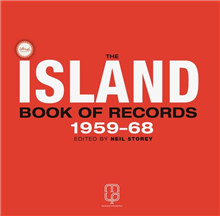
The Island Book of Records Volume I
1959-68
by Neil Storey
The Island Book of Records brings the early years of this iconic record label to life. A fifteen-year labour of love, the volumes will fully document the analogue era of Island. Offering a comprehensive archive of album cover design and photography, together with the voices of the musicians, designers, photographers, producers, studio engineers and record company personnel that worked on each project, the volumes show in unique depth the workings of the label, covering every LP. Featuring material from recent interviews and from media interviews of the time, and each including a comprehensive discography of 45s, the books are lavishly illustrated with gig adverts (very many at venues which no longer exist), concert tickets, flyers, international LP variants, labels, LP and 45 adverts and other ephemera. These LP-sized editions are a collector's dream, offering a truly unparalleled resource for those interested in music history and a perfect gift for any music lover.
-
Trusted Partner
-
Trusted Partner
March 2012
Human Rights, Language and Law
Proceedings of the 24th World Congress of the International Association for Philosophy of Law and Social Philosophy, Beijing, 2009. Vol. 2
by Herausgegeben von Bustamante, Thomas; Herausgegeben von Onazi, Oche
-
Trusted Partner
 Humanities & Social SciencesNovember 2022
Freedom of speech, 1500–1850
by Robert Ingram, Jason Peacey, Alex W. Barber, Alastair Bellany, Peter Lake

