
Wolters Kluwer Legal & Regulatory U.S.
Wolters Kluwer Law & Business delivers expert content and solutions in the areas of law, corporate compliance, health compliance, reimbursement, and legal education.
View Rights Portal
Wolters Kluwer Law & Business delivers expert content and solutions in the areas of law, corporate compliance, health compliance, reimbursement, and legal education.
View Rights Portal
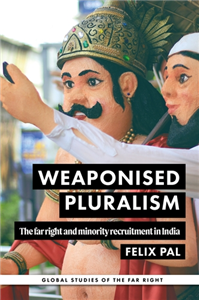
Weaponised pluralism takes a fine-grained lens to understand why far-right organisations recruit from the very minorities they oppose. Why do these organisations seek to appear like pluralists? Building on his time with the Muslim wing of the Hindu far-right in India, Felix Pal proposes that bigots can strategically use what he calls weaponised pluralism. This political strategy counterintuitively uses progressive political performances to bolster bigoted political agendas. Basing his analysis in an Indian context, Weaponised pluralism nonetheless reveals much about contexts as varied as Palestinian soldiers in the Israeli army, Indigenous Australians on far-right television, and Black congressional candidates in the American Republican Party. Drawing on rare access to the Hindu far-right and its Muslim wing, Pal paints an evocative picture of the complexities of how far-right organising extends far beyond the pointy end of traditional bigotry.

This volume presents the first systematic account of Japanese international legal theory; edited by Japanese scholars, the volume traces thirteen influential scholars and spans over a century. It examines how theorists positioned outside international law's Western centre developed sophisticated frameworks to address tensions between Western modernity and their own experiences. The book's central contribution proposes 'conversation'-continuous engagement that respects differences between legal traditions-as an alternative to 'dialogue', which often reproduces existing hierarchies by assuming all perspectives can be reconciled. Through detailed intellectual biographies across six historical periods, contributors reveal how Japanese scholars strategically employed legal positivism, articulated transcivilizational perspectives, and developed concepts of normative multilateralism. Addressed at scholars of international law, legal theory, and comparative legal traditions, this volume demonstrates that the discipline's future requires genuinely reciprocal exchange where diverse perspectives can coexist productively.
 Trusted Partner

This volume collects and revises the key essays of Gunther Teubner, one of the world's leading sociologists of law. Written over the past twenty years, these essays examine the 'dark side' of functional differentiation and the prospects of societal constitutionalism as a possible remedy. Teubner's claim is that critical accounts of law and society require reformulation in the light of the sophisticated diagnoses of late modernity in the writings of Niklas Luhmann, Jacques Derrida and select examples of modernist literature. Autopoiesis, deconstruction and other post-foundational epistemological and political realities compel us to confront the fact that fundamental democratic concepts such as law and justice can no longer be based on theories of stringent argumentation or analytical philosophy. We must now approach law in terms of contingency and self-subversion rather than in terms of logical consistency and rational coherence.
Trusted Partner

Latin America has been a complex laboratory for the development of international investment law. While some governments and non-state actors have remained true to the Latin American tradition of resistance towards the international investment law regime, other governments and actors have sought to accommodate said regime in the region. Consequently, a profusion of theories and doctrines, too often embedded in clashing narratives, has emerged. In Latin America, the practice of international investment law is the vivid amalgamation of the practice of governments sometimes resisting and sometimes welcoming mainstream approaches; the practice of lawyers assisting foreign investors from outside and within the region; and the practice of civil society, indigenous peoples and other actors in their struggle for human rights and sustainable development. Latin America and international investment law describes the complex roles that governments have played vis-à-vis foreign investors and investments; the refreshing but clashing forces that international organizations, corporations, civil society, and indigenous peoples have brought to the field; and the contribution that Latin America has made to the development of the theory and practice of international investment law, notably in fields in which the Latin American experience has been traumatic: human rights and sustainable development. Latin American scholars have been contributing to the theory of international investment law for over a century; resting on the shoulders of true giants, this volume aims at pushing this contribution a little further.
Trusted Partner


We all know that audio engineering is more than just acronyms. But what do they all mean? This practical textbook is designed to meet the special needs of events technicians. The textbook stands out from the crowd because it is designed specifically with the university curriculum and professional needs in mind, making it not only an excellent companion in the classroom, but a useful reference for on the job as well. The author, himself an instructor for special events technicians, covers the ground from physical fundamentals of acoustics and electronics to setting up mixing consoles and sound systems, providing a multitude of useful tips without confusing the reader with extraneous details. A chapter on video technology rounds off the book. Sample calculations put the material in a practical context, and sample problems at the end of each chapter (with solutions in the appendix) help review what has been learned and inspire further thought. Entertaining guest essays provide a broader perspective.
Trusted Partner
 Trusted Partner
 Trusted Partner
 Trusted Partner
Trusted Partner
Trusted Partner

This book provides an accessible collection of translated legal sources through which the exploits of criminals and developments in the English criminal justice system (c.1215-1485) can be studied. Drawing on the wealth of archival material and an array of contemporary literary texts, it guides readers towards an understanding of prevailing notions of law and justice and expectations of the law and legal institutions. Tensions are shown emerging between theoretical ideals of justice and the practical realities of administering the law during an era profoundly affected by periodic bouts of war, political in-fighting, social dislocation and economic disaster. Introductions and notes provide both the specific and wider legal, social and political contexts in addition to offering an overview of the existing secondary literature and historiographical trends. This collection affords a valuable insight into the character of medieval governance as well as revealing the complex nexus of interests, attitudes and relationships prevailing in society during the later Middle Ages.
Trusted Partner
Trusted Partner
Trusted Partner
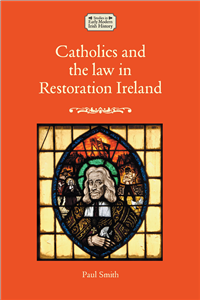
In 1660 Charles II was restored to the thrones of England, Scotland and Ireland, but his hold on power was precarious. In particular, Ireland was fundamentally unstable - Catholics formed the majority of the population in a country where Protestantism was the established religion, a state of affairs unique in Europe. It was through the law that the restored Stuart monarchy governed its subjects and its colonial dependencies, and this book examines how Catholics engaged with and experienced English common law primarily through the eyes of Catholic clerics and Gaelic poets. It also examines how Catholics engaged with the Courts and the particular challenges they faced as lawyers. The book draws on an extensive body of primary source materials, including Irish-language poetry and little-used archival material relating to elite Catholic families.


In The Path of the Law, Holmes discusses his personal philosophy on legal practice. The Common Law is a series of lectures that established Holmes's reputation as a witty and articulate writer.
Trusted Partner

This collection brings together historians, political theorists and literary scholars to provide historical perspectives on the modern debate over freedom of speech, particularly the question of whether limitations might be necessary given religious pluralism and concerns about hate speech. It integrates religion into the history of free speech and rethinks what is sometimes regarded as a coherent tradition of more or less absolutist justifications for free expression. Contributors examine the aims and effectiveness of government policies, the sometimes contingent ways in which freedom of speech became a reality and a wide range of canonical and non-canonical texts in which contemporaries outlined their ideas and ideals. Overall, the book argues that while the period from 1500 to 1850 witnessed considerable change in terms of both ideas and practices, these were more or less distinct from those that characterise modern debates.
Trusted Partner
The moral problem of authority is the challenge of reconciling legitimate authority (the right to rule) with the demands of freedom and rationality. In this book, I argue that authority can have legitimacy, but when it does it generates a moral dilemma, where the obligation to obey comes at some cost to freedom and reason. Hence, not only do I depart from the views of those who insist that authority can never have legitimacy, but also those who maintain that insofar as authority is legitimate it simply satisfies the demands of freedom or rationality. My focus here will be on both what it is that justifies authority (in particular focusing on membership, and the goods of membership) as well what type of reason an authoritative directive is, how it can come into conflict with others reasons, and how those conflicts are resolved.
Trusted Partner
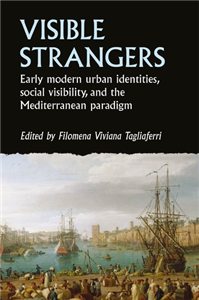
Visible strangers is a collection of essays on the nature of cultural pluralism in the Mediterranean and the different ways in which this was managed in various cities during the early modern period. The book's nine chapters considers new case studies, where authors offer a diachronic view of the nature of the co-presence of minorities in different urban spaces, investigated through the lens of the fascinating relationship between visibility and identity. The considered case studies cover different areas of the Mediterranean space: the Adriatic, the Ottoman empire between Asia and Africa, the Italian and Iberian peninsulas, the island of Malta, at the centre of the Mare Nostrum and host to many of its influences. The analysis of the way cultural pluralism expressed itself wishes to overcome the bias induced by 'Mediterraneanism', that has led to the Mediterranean as an area of study hardening into a conceptual category.
Trusted Partner
Trusted Partner

In postwar Britain, journalists and politicians prophesised that the class system would not survive a consumer culture where everyone had TVs and washing machines, and where more and more people owned their own homes. They were to be proved entirely wrong. In good taste charts how class culture, rather than being destroyed by mass consumption, was remade from flat-pack furniture, Mediterranean cuisine and lifestyle magazines. Novelists, cartoonists and playwrights satirised the tastes of the emerging middle classes, and sociologists claimed that an entire population was suffering from status anxiety, but underneath it all, a world was being constructed out of duvets, quiches and mayonnaise, easy chairs from Habitat, white emulsion paint and ubiquitous well-scrubbed, second-hand pine kitchen tables. This was less a world of symbolic goods and more an intimate environment alive with new feelings and attitudes.
Trusted Partner

Charitable Hatred offers a challenging new perspective on religious tolerance and intolerance in early modern England. Setting aside traditional models charting a linear progress from persecution to toleration, it emphasises instead the complex interplay between these two impulses in the sixteenth and seventeenth centuries. The book examines the intellectual assumptions that underpinned attitudes towards religious minorities and the institutional structures and legal mechanisms by which they were both repressed and accommodated. It also explores the social realities of prejudice and forbearance, hostility and harmony at the level of the neighbourhood and parish. Simultaneously, it surveys the range of ways in which dissenting churches and groups responded and adapted to official and popular intolerance, investigating how the experience of suffering helped to forge sectarian identities. In analysing the consequences of the advancing pluralism of English society in the wake of the Reformation, this study illuminates the cultural processes that shaped and complicated the conditions of coexistence before and after the Act of Toleration of 1689. ;



