
Literati Media
Literati Media represents independent authors seeking to expand into subsidiary rights, including foreign rights, translation and audio rights.
View Rights Portal
Literati Media represents independent authors seeking to expand into subsidiary rights, including foreign rights, translation and audio rights.
View Rights Portal

Medieval film explores theoretical questions about the ideological, artistic, emotional and financial investments inhering in cinematic renditions of the medieval period. What does it mean to create and watch a 'medieval film'? What is a medieval film and why are they successful? This is the first work that attempts to answer these questions, drawing, for instance, on film theory, postcolonial theory, cultural studies and the growing body of work on medievalism. Contributors investigate British, German, Italian, Australian, French, Swedish and American film, exploring topics such translation, temporality, film noir, framing and period film - and find the medieval lurking in inexpected corners. In addition it provides in-depth studies of individual films from different countries including The Birth of a Nation to Nosferatu, and Robin Hood: Prince of Thieves. Medieval Film will be of interest to medievalists working in disciplines including literature, history, to scholars working on film and in cultural studies. It will also be of interest to undergraduates, postgraduates and to an informed enthusiast in film or/and medieval culture.

Medieval film explores theoretical questions about the ideological, artistic, emotional and financial investments inhering in cinematic renditions of the medieval period. What does it mean to create and watch a 'medieval film'? What is a medieval film and why are they successful? This is the first work that attempts to answer these questions, drawing, for instance, on film theory, postcolonial theory, cultural studies and the growing body of work on medievalism. Contributors investigate British, German, Italian, Australian, French, Swedish and American film, exploring topics such translation, temporality, film noir, framing and period film - and find the medieval lurking in unexpected corners. In addition it provides in-depth studies of individual films from different countries including The Birth of a Nation to Nosferatu, and Robin Hood: Prince of Thieves. Medieval film will be of interest to medievalists working in disciplines including literature, history, art history, to scholars working on film and in cultural studies. It will also be of interest to undergraduates, postgraduates and to an informed enthusiast in film or/and medieval culture.
 Trusted Partner
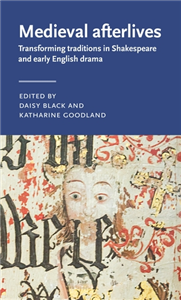
A collection of essays which show how early drama traditions were transformed, recycled, re-used and reformed across time to form new relationships with their audiences. Medieval afterlives brings new insight to the ways in which peoples in the sixteenth century understood, manipulated and responded to the history of their performance spaces, stage technologies, characterisation and popular dramatic tropes. In doing so, this volume advocates for a new understanding of sixteenth-seventeenth century theatre makers as highly aware of the medieval traditions that formed their performance practices, and audiences who recognised and appreciated the recycling of these practices between plays.
Trusted Partner
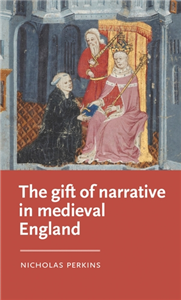
This invigorating study places medieval romance narrative in dialogue with theories and practices of gift and exchange, opening new approaches to questions of storytelling, agency, gender and materiality in some of the most engaging literature from the Middle Ages. It argues that the dynamics of the gift are powerfully at work in romances: through exchanges of objects and people; repeated patterns of love, loyalty and revenge; promises made or broken; and the complex effects that time works on such objects, exchanges and promises. Ranging from the twelfth century to the fifteenth, and including close discussions of poetry by Chaucer, the Gawain-Poet and romances in the Auchinleck Manuscript, this book will prompt new ideas and debate amongst students and scholars of medieval literature, as well as anyone curious about the pleasures that romance narratives bring.
Trusted Partner

This book provides a detailed analysis of women's involvement in litigation and other legal actions within their local communities in late-medieval England. It draws upon the rich records of three English towns - Nottingham, Chester and Winchester - and their courts to bring to life the experiences of hundreds of women within the systems of local justice. Through comparison of the records of three towns, and of women's roles in different types of legal action, the book reveals the complex ways in which individual women's legal status could vary according to their marital status, different types of plea and the town that they lived in. At this lowest level of medieval law, women's status was malleable, making each woman's experience of justice unique.
Trusted Partner
Middle English literature is intimately concerned with sleep and the spaces in which it takes place. In the medieval English imagination, sleep is an embodied and culturally determined act. It is both performed and interpreted by characters and contemporaries, subject to a particular habitus and understood through particular hermeneutic lenses. While illuminating the intersecting medical and moral discourses by which it is shaped, sleep also sheds light on subjects in favour of which it has hitherto been overlooked: what sleep can enable (dreams and dream poetry) or what it can stand in for or supersede (desire and sex). This book argues that sleep mediates thematic concerns and questions in ways that have ethical, affective and oneiric implications. At the same time, it offers important contributions to understanding different Middle English genres: romance, dream vision, drama and fabliau.
Trusted Partner
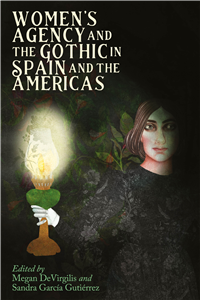
This volume has emerged to fulfill two main purposes: Primarily, to constitute the first collaborative work that traces the relationship between the Gothic and Women in Spain and the Americas, but also, to surpass the term 'Female Gothic,' coined by Ellen Moers, by transferring the focus towards women and their agency as writers, readers and characters. This volume functions as a manifesto per se to open new avenues into understanding how women have interacted with the Gothic between the nineteenth and twenty-first centuries in Spain and the Americas. The question, we determine, is not simply about identity, but rather about agency. We define women's agency as the total capacity of characters, authors and readers to act freely within a social framework in relation to gothic texts. In our exploration of authorship, we reject the claim that the Gothic is a simplistic literary genre, instead sustaining that the plasticity of the Gothic has enabled it to survive for centuries; by shifting from a genre to a mode, it has surpassed literary forms and invaded all kinds of media: from film to music and merchandise such as clothing and pop culture collectables, fostering an authentic goth fandom.
Trusted Partner
 Trusted Partner
Suicide and the Gothic is the first protracted study of how the act of self-destruction recurs and functions within one of the most enduring and popular forms of fiction. Comprising eleven original essays and an authoritative introduction, this collection explores how the act of suicide has been portrayed, interrogated and pathologised from the eighteenth century to the present. The featured fictions embrace both canonical and the less-studied texts and examine the crisis of suicide - a crisis that has personal, familial, religious, legal and medical implications - in European, American and Asian contexts. Featuring detailed interventions into the understanding of texts as temporally distant as Thomas Percy's Reliques and Patricia Highsmith's crime fictions, and movements as diverse as Wertherism, Romanticism and fin-de-siècle decadence, Suicide and the Gothic provides a comprehensive and compelling overview of this recurrent crisis in fiction and culture.
Trusted Partner
Rereading Chaucer and Spenser is a much-needed volume that brings together established and early career scholars to provide new critical approaches to the relationship between Geoffrey Chaucer and Edmund Spenser. By reading one of the greatest poets of the Middle Ages alongside one of the greatest poets of the English Renaissance, this collection poses questions about poetic authority, influence, and the nature of intertextual relations in a more wide-ranging manner than ever before. With its dual focus on authors from periods often conceived as radically separate, the collection also responds to current interests in periodisation. This approach will engage academics, researchers and students of Medieval and Early Modern culture.
Trusted Partner
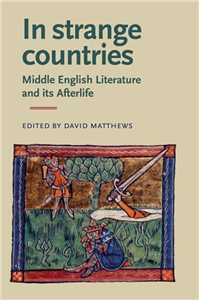
These essays by senior scholars in medieval studies celebrate the career of J.J. Anderson, editor, critic, and co-founder of the Manchester Medieval Literature and Culture series, who taught in medieval studies at the University of Manchester for forty years. The essays are rooted in medieval literature but frequently range beyond the confines of the Middle Ages. They reflect the breadth of Anderson's own scholarly interests, especially in drama and Arthurian literature. There is a particular focus on Sir Gawain and the Green Knight and Pearl, poems which preoccupied him throughout his scholarly life. There are also new reconsiderations of La?amon's Brut, Mirk's Festial, the Passion plays, and the manuscripts of the Pore Caitif. Moving beyond the traditional purview of medieval literature, several contributors trace the afterlives of medieval themes in later literature. These essays include a consideration of the twinned trajectories of the medieval heroes Robin Hood and King Arthur from medieval literature to modern television, a comparison of La?amon's Brut and Tennyson's Idylls of the King, and a recreation of the Bishop Blase procession which took place in industrial Bradford. Contributors are Rosamund Allen, Ralph Elliott, Alexandra Johnston, Stephen Knight, Peter Meredith, Susan Powell, Gillian Rudd, Alan Shelston, and Kalpen Trivedi. ;
Trusted Partner

Nordic Gothic traces Gothic fiction in the Nordic region from its beginnings in the nineteenth century, with a main focus on the development of Gothic from the 1990s onwards in literature, film, TV and new media. The volume gives an overview of Nordic Gothic fiction in relation to transnational developments and provides a number of case studies and in-depth analyses of individual narratives. It creates an understanding of this under-researched cultural phenomenon by showing how the narratives make visible cultural anxieties haunting the Nordic countries, their welfare systems, identities and ideologies. Nordic Gothic examines how figures from Nordic folklore function as metaphorical expressions of Gothic themes and Nordic settings are explored from perspectives such as ecocriticism and postcolonialism. The book will be of interest to researchers and post- and- undergraduate students in various fields within the Humanities.
Trusted Partner
This unique and exciting collection, inspired by the scholarship of literary critic Stephanie Trigg, offers cutting-edge responses to the writings of Geoffrey Chaucer for the current critical moment. The chapters are linked by the organic and naturally occurring affinities that emerge from Trigg's ongoing legacy; containing diverse methodological approaches and themes, they engage with Chaucer through ecocriticism, medieval literary and historical criticism, and medievalism. The contributors, trailblazing international specialists in their respective fields, honour Trigg's distinctive and energetic mode of enquiry (the symptomatic long history) and intellectual contribution to the humanities. At the same time, their approaches exemplify shifting trends in Chaucer scholarship. Like Chaucer's pilgrims, these scholars speak to and alongside each other, but their essays are also attentive to 'hearing Chaucer speak' then, now and in the future.
Trusted Partner
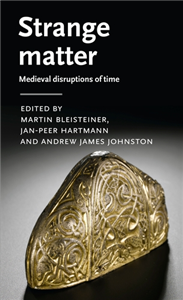
Medieval and early modern texts reflect a fascination with material objects, from ancient heirlooms to ingenious automata. Often imbued with power or beauty, these objects carry an uncanny sense of otherness, their mysterious origins evoking wonder and suggesting temporal and spatial distance. Acting as repositories of temporal alterity, such artefacts bridge the past and present in profound ways. This volume, featuring contributions from experts in literature and art history, explores how texts from these periods use material objects to engage with temporal otherness. From everyday items to marvellous creations, objects challenge distinctions between human and material, natural and cultural. Whether examining the hybrid status of Hector's body in Lydgate's Troy Book or the temporal agency of humble bubbles, the chapters illuminate the vibrant networks connecting people and objects. By highlighting the 'hybridity' of matter, the book offers fresh insights into Bruno Latour's critique of nature-culture divides.
Trusted Partner
Trusted Partner
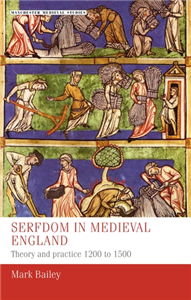
Serfdom was a coercive relationship between a landowner and peasant, which was widespread across medieval and early modern Europe. Itfeatures prominently in major historical debates, such as the origins of capitalism and the divergent pathways of western and eastern Europe to modernity. Scholars have paid particular attention to English serfdom, which is usually portrayed as highly oppressive and a major cause of the Peasants' Revolt in 1381. This comprehensive survey draws on a vast scholarship and new research to show how, in reality, English serfdom was weak, casting new light on the nature of its society and economy when the Black Death struck in 1348-9. The pandemicnow assumesa central role in the rapid decline of serfdom, as illustrated in a case study of the estate of one of England's harshest landowners, St Albans abbey.
Trusted Partner
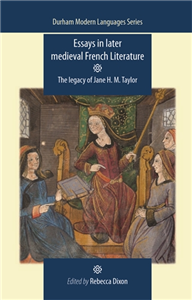
Over the course of a career spanning five decades, Jane Taylor has shown a commitment to the rehabilitation of the more neglected aspects of later medieval French literature. This volume brings together original contributions from scholars who have worked alongside Taylor and directly or indirectly benefitted from her example. The chapters demonstrate their authors' link to this legacy, and concomitantly underline the vibrancy and breadth of approach which is the hallmark of current later medieval studies. The essays in the collection centre on a number of key issues in the field: notions of literary self-consciousness and what it means to come after an avatar; issues of intertextuality and the appeal to past models in the creation of a new literary aesthetic (or a new literary criticism); and interdisciplinary questions of translation, reworking, and continuation. Essays in later medieval French literature seeks not only to illustrate the buoyant state of later medieval French literary studies but also, in so doing, to show how in broader terms responding to the legacy of an illustrious predecessor has not pejorative but positive consequences. ;
Trusted Partner
 Trusted Partner

The documents in this stimulating volume span from 1245 to 1424 but focus on the 'contagion of rebellion' from 1355 to 1382 that followed in the wake of the plague. They comprise a diversity of sources and cover a variety of forms of popular protest in different social, political and economic settings. Their authors range across a wide political and intellectual horizon and include revolutionaries, the artistocracy, merchants and representatives from the church. They tell gripping and often gruesome stories of personal and collective violence, anguish, anger, terror, bravery, and foolishness. Of over 200 documents presented here, most have been translated into English for the first time, providing students and scholars with a new opportunity to compare social movements across Europe over two centuries, allowing a re-evaluation of pre-industrial revolts, the Black Death and its consequences for political culture and action. This book will be essential reading for those seeking to better understand popular attitudes and protest in medieval Europe.
Trusted Partner



