
All Things Women
Find your focus and strengths in times of crisis.
View Rights Portal

BCSis committed to making IT good for society and has over 70,000 members,including students, teachers, professionals and practitioners. Through a wide range of global communities, we foster links between experts from industry, academia and business to promote new thinking, education and knowledge sharing. BCSpromotes continuing professional development through a series of respected IT qualifications, professional certifications and apprenticeships, and provides practical support and information services for its customers around the world.
View Rights Portal
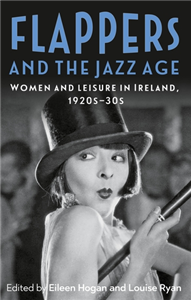
People's ordinary, everyday lives - and more specifically, their leisure activities - are often obscured within existing academic research on 1920s-30s Ireland. This book seeks to redress that neglect by exploring the relationship between identity, recreation, and culture both North and South of the border, with particular attention to women's lived experiences. Leisurely pursuits during this period were commonly overshadowed by religious influence and the nation-building projects in post-partition Ireland. Nevertheless, there existed alternative spaces, where people enjoyed dancing, singing, listening to music, shopping, glamour, reading magazines, swimming, travelling, and going to the cinema. Such activities reflected international trends beyond national borders. This book documents those activities and spaces through a feminist lens and intersectional analysis of gender, class, religion and rural/urban identities. It brings together multi-disciplinary perspectives including cultural studies, architecture, geography, fashion, and musicology. In so doing, we present new insights and advance understanding of this under-researched aspect of Irish history.

Recent years have seen a rennaissance of scholarly interest in the fin-de-siecle fiction of the New Woman. New Woman Strategies offers a new approach to the subject by focusing on the discursive strategies and revisionist aesthetics of the genre in the writings of three of its key exponents: Sarah Grand, Olive Schreiner and Mona Caird. ;
 Trusted Partner
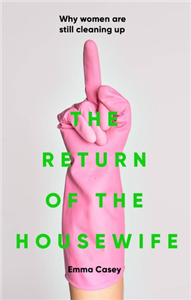
An illuminating look at the world of cleanfluencers that asks why the burden of housework still falls on women. Housework is good for you. Housework sparks joy. Housework is beautiful. Housework is glamorous. Housework is key to a happy family. Housework shows that you care. Housework is women's work. Social media is flooded with images of the perfect home. TikTok and Instagram 'cleanfluencers' produce endless photos and videos of women cleaning, tidying and putting things right. Figures such as Marie Kondo and Mrs Hinch have placed housework, with its promise of a life of love and contentment, at the centre of self-care and positive thinking. And yet housework remains one of the world's most unequal institutions. Women, especially poorer women and women of colour, do most low-paid and unpaid domestic labour. In The return of the housewife, Emma Casey asks why these inequalities matter and why they persist after a century of dramatic advances in women's rights. She offers a powerful call to challenge the prevailing myths around housework and the 'naturally competent' woman homemaker.
Trusted Partner
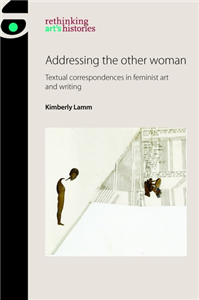
This book analyses how three artists - Adrian Piper, Nancy Spero and Mary Kelly - worked with the visual dimensions of language in the 1960s and 1970s. These artists used text and images of writing to challenge female stereotypes, addressing viewers and asking them to participate in the project of imagining women beyond familiar words and images of subordination. The book explores this dimension of their work through the concept of 'the other woman', a utopian wish to reach women and correspond with them across similarities and differences. To make the artwork's aspirations more concrete, it places the artists in correspondence with three writers - Angela Davis, Valerie Solanas, and Laura Mulvey - who also addressed the limited range of images through which women are allowed to become visible.
Trusted Partner

How do feminist movements develop and organise in ethno-nationally divided societies? How does this challenge our understandings of contemporary fourth wave feminism? Women's Troubles sets out to answer these questions using rich empirical data and analysis in an examination of feminist activism after the Northern Irish peace agreement. Utilising feminist frameworks and debates on movement building, policymaking, abortion rights, gender-based violence and the UN women, peace and security agenda, Claire Pierson interrogates the opportunities and challenges in articulating a feminist voice and creating feminist spaces in the conflict transformational politics and society. Capturing the complexities of contemporary feminist movement building in a divided society, Women's Troubles contributes to ongoing analysis of contemporary global feminisms.
Trusted Partner
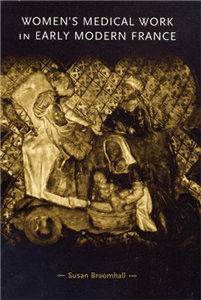
Women have long been crucial to the provision of medical services, both in the treatment of sickness and in maintaining health. In this study, Susan Broomhall situates the practices and perceptions of women's medical work in France in the context of the sixteenth century and its medical evolution and innovations. She argues that early modern understandings of medical practice and authority were highly flexible and subject to change. She furthermore examines how a focus on female practitioners, who cut across most sectors of early modern medical practice, can reveal the multifaceted phenomenon of these negotiations for authority. This new paperback edition of Women's medical work in early modern France skilfully combines detailed research with a clear presentation of the existing literature of women's medical work, making it invaluable to students of gender and medical history.
Trusted Partner

The turn of the twenty-first century has witnessed the striking advance of pornography into the Western cultural mainstream. Symptomatic of this development has been the use by writers, artists, and film-makers of the imagery and aesthetics of pornography, in works which have, often on this basis, achieved considerable international success. Amongst these artists are a number of French authors and directors - such as Michel Houellebecq, Catherine Breillat, Virginie Despentes, or Catherine Millet - whose work has often been dismissed as trashy or exploitative, but whose use of pornographic material may in fact be indicative of important contemporary concerns. In this, the first study of this significant trend, the authors explore how the reference to pornography encodes diverse political, cultural, and existential questions, including relations between the sexes, the collapse of avant-garde politics, gay sexualities in the time of AIDS, the anti-feminist backlash, the relation to the body and illness, the place of fantasy, and the sexualisation of children. It will be of interest to undergraduates, graduates, and researchers in the fields of French culture, gender, film and media studies.
Trusted Partner

The turn of the twenty-first century has witnessed the striking advance of pornography into the Western cultural mainstream. Symptomatic of this development has been the use by writers, artists, and film-makers of the imagery and aesthetics of pornography, in works which have, often on this basis, achieved considerable international success. Amongst these artists are a number of French authors and directors - such as Michel Houellebecq, Catherine Breillat, Virginie Despentes, or Catherine Millet - whose work has often been dismissed as trashy or exploitative, but whose use of pornographic material may in fact be indicative of important contemporary concerns. In this study of a very significant trend, the authors explore how the reference to pornography encodes diverse political, cultural, and existential questions, including relations between the sexes, the collapse of avant-garde politics, gay sexualities in the time of AIDS, the anti-feminist backlash, the relation to the body and illness, the place of fantasy, and the sexualisation of children. It will be of interest to undergraduates, graduates, and researchers in the fields of French culture, gender, film and media studies.
Trusted Partner

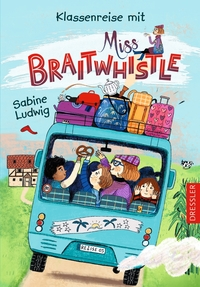
"Klassenreise mit Miss Braitwhistle" ist ein humorvolles Kinderbuch, das von einer ungewöhnlichen Klassenfahrt erzählt. Die Klasse 4a, auch bekannt als "A wie Albtraum", bricht zusammen mit ihrer etwas anderen Lehrerin Miss Braitwhistle zu einem Bauernhof auf. Was als eine verheißungsvolle Reise beginnt, wird schnell zu einem Abenteuer voller Missgeschicke und Überraschungen. Miss Braitwhistle, deren magische Fähigkeiten immer wieder für unvorhergesehene Wendungen sorgen, unterstützt die Klasse dabei, die Herausforderungen des Landlebens zu meistern und dabei wertvolle Lektionen über Freundschaft, Zusammenhalt und das Leben auf dem Land zu lernen. Einzigartige Lehrerin als Heldin: Miss Braitwhistle ist keine durchschnittliche Lehrerin. Ihre magischen Fähigkeiten und unkonventionellen Lehrmethoden bringen nicht nur Spaß, sondern auch wertvolle Lektionen für ihre Schülerinnen und Schüler. Humor und Abenteuer: Die Klassenfahrt steckt voller humorvoller Missgeschicke und unerwarteter Abenteuer, die junge Leserinnen und Leser von der ersten bis zur letzten Seite fesseln. Lektionen über Freundschaft und Zusammenhalt: Durch die gemeinsam erlebten Abenteuer lernen die Kinder, was es bedeutet, zusammenzuhalten und füreinander da zu sein. Einblick ins Landleben: Die Geschichte bietet einen unterhaltsamen Einblick in das Leben auf einem Bauernhof und die damit verbundenen Herausforderungen und Freuden. Bedeutungsvolle Themen: Trotz des Humors behandelt das Buch Themen wie Verantwortung, Mut und Selbstvertrauen, die junge Leserinnen und Leser zum Nachdenken anregen. Farbenfrohe Illustrationen: Die Illustrationen von Andrea Stegmaier bereichern die Geschichte und machen das Buch zu einem visuellen Vergnügen für junge Leserinnen und Leser ab 8 Jahren. Literarische Qualität: Sabine Ludwig, bekannt für ihre Fähigkeit, humorvolle und tiefgründige Geschichten zu weben, hat sich als eine meisterhafte Erzählerin im Bereich der Kinder- und Jugendliteratur etabliert.
Trusted Partner


Mit Meisterin Sabine Ludwig auf Klassenreise. Franz und Aki haben es tatsächlich in die fünfte Klasse geschafft! Doch gibt es da nicht noch eine Geschichte der chaotischen 4a, die nie erzählt wurde? Na klar: die von ihrer Klassenfahrt! Miss Braitwhistle zusammen mit der 4a auf Reisen? Das kann ja nur durcheinander gehen. Und dann war da noch dieser peinliche Vorfall, an den Franz auf keinen Fall denken möchte. »Sprecher Jens Wawrczeck ist pures Hörvergnügen!« Hamburger Morgenpost In der Geschichte "Klassenreise mit Miss Braitwhistle" vermittelt die beliebte Lehrerin aus der Feder von Sabine Ludwig Werte ohne erhobenen Zeigefinger.
Trusted Partner
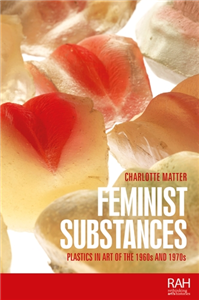
Numerous women artists engaged with industrial materials such as plastics in the 1960s and 1970s, contrary to what the discourse of the time would have us believe. As Feminist substances shows, their works offered unique approaches to plastics in art, introducing new material meanings through a feminist lens. With a focus on Europe and Latin America, the book discusses the practices of Carla Accardi, Lea Lublin and Alina Szapocznikow, combining close readings of selected artworks with broader considerations of their social contexts. It explores their use of Sicofoil, plexiglass, plastic inflatables, polyester resin and polyurethane foam to address key concerns of feminist thought in relation to social reproduction, motherhood, memory, desire and illness. Beyond commonplaces of plastics as generic bad materials, Feminist substances considers more complex ways of engaging with synthetic matter, taking into account our messy relationships with these controversial materials.
Trusted Partner
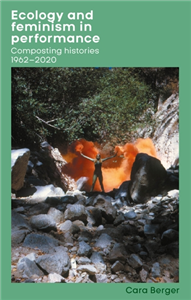
This book provides a vital new history of feminist performance through an ecological lens. It argues that from the 1960s to the present, artists have used performance to challenge the linked oppression of women and nature. Proposing 'composting' as a new method for writing feminist history, the study moves beyond linear narratives to trace regenerative connections between generations of practitioners. It provides sustained analysis of genres from land art to postdramatic theatre, re-evaluating the work of canonical figures while examining how contemporary artists continue to address these urgent themes. By placing ecofeminism in dialogue with feminist new materialism, queer ecology, and transecological thought, this study demonstrates how performance has been a crucial site for imagining more just and sustainable futures in an age of environmental crisis.
Trusted Partner

Sexually transgressive, politically astute and determined to claim educational and employment rights equal to those enjoyed by men, the new woman took centre stage in the cultural landscape of late-Victorian Britain. By comparing the fictional representations with the lived experience of the new woman, Ledger's book makes a major contribution to an understanding of the 'woman question' at the fin de siecle. She alights on such disparate figures as Eleanor Marx, Gertrude Dix, Dracula, Oscar Wilde, Olive Schreiner and Radclyffe Hall. Focusing mainly on the last two decades of the nineteenth century, the book's later chapters project forward into the twentieth century, considering the relationship between new woman fiction and early modernism as well as the socio-sexual inheritance of the 'second generation' new woman writers. ;
Trusted Partner


New York City in the sixties: the city that never sleeps, because they have plenty of pills for that. And in between, a girl from West Berlin. Mona is young, pretty and recently moved to New York to make a career for herself. The city that never sleeps hasn't been waiting for her. Although she does quickly meet two men: East Coast aristocrat Sidney, and dark-haired bohemian Adam. Torn between the two, Mona drifts through a world that is supplied with "vitamin injections" by Max Jacobson, aka Dr Feelgood, who fled from the Nazis in Berlin. And so a second thread weaves its way into the story: star photographer Mark Shaw, one of Dr Feelgood’s patients, is found dead in his apartment one day. A coroner starts investigating. There is a lot to be examined, and it involves the rich and beautiful and powerful all the way to the White House …
Trusted Partner
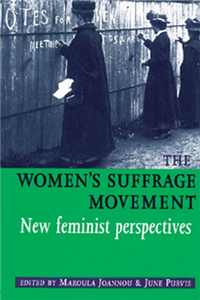
Available in paperback for the first time, this important collection of essays illustrates the complexity, richness and diversity of the suffrage movement. Combining historical reappraisal with lively accounts of the culture of the women's suffrage movement, this volume offers a unique focus. It includes studies of the fascinating, but neglected groups that participated in the campaign: the Women's Franchise League; the Women's Freedom League; the Women's Tax Resistance League and the United Suffragists. This is accompanied by feminist research on the poetry, fiction and drama that emerged from women's struggle for the vote. In addition there are reappraisals of two leading figures in the Pankhursts' Women's Social and Political Union, an illuminating analysis of the relationship between suffrage and sexuality, and a discussion of what happened away from the metropolis, as well as of the little known campaign to extend the vote after 1918. ;
Trusted Partner
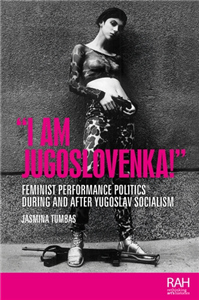
"I am Jugoslovenka" argues that queer-feminist artistic and political resistance were paradoxically enabled by socialist Yugoslavia's unique history of patriarchy and women's emancipation. Spanning performance and conceptual art, video works, film and pop music, lesbian activism and press photos of female snipers in the Yugoslav wars, the book analyses feminist resistance in a range of performative actions that manifest the radical embodiment of Yugoslavia's anti-fascist, transnational and feminist legacies. It covers celebrated and lesser-known artists from the 1970s to today, including Marina Abramovic, Sanja Ivekovic, Vlasta Delimar, Tanja Ostojic, Selma Selman and Helena Janecic, along with music legends Lepa Brena and Esma Redzepova. "I am Jugoslovenka" tells a unique story of women's resistance through the intersection of feminism, socialism and nationalism in East European visual culture.
Trusted Partner
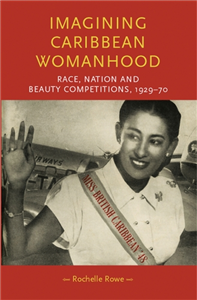
Over fifty years after Jamaican and Trinidadian independence, Imagining Caribbean womanhood examines the links between beauty and politics in the Anglophone Caribbean, providing a first cultural history of Caribbean beauty competitions, spanning from Kingston to London. It traces the origins and transformation of female beauty contests in the British Caribbean from 1929 to 1970, through the development of cultural nationalism, race-conscious politics and decolonisation. The beauty contest, a seemingly marginal phenomenon, is used to illuminate the persistence of racial supremacy, the advance of consumer culture and the negotiation of race and nation through the idealised performance of cultured, modern beauty. Modern Caribbean femininity was intended to be politically functional but also commercially viable and subtly eroticised.
Trusted Partner
 Trusted Partner

This book marks an important new intervention into a vibrant area of scholarship, creating a dialogue between the histories of imperialism and of women and gender. By engaging critically with both traditional British imperial history and colonial discourse analysis, the essays demonstrate how feminist historians can play a central role in creating new histories of British imperialism. Chronologically, the focus is on the late eighteenth to early twentieth centuries, while geographically the essays range from the Caribbean to Australia and span India, Africa, Ireland and Britain itself. Topics explored include the question of female agency in imperial contexts, the relationships between feminism and nationalism, and questions of sexuality, masculinity and imperial power.
Trusted Partner

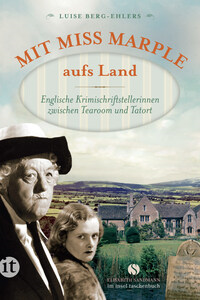
Das beschauliche englische Landleben ist, wenn man Agatha Christie und P. D. James glauben darf, immer wieder in Gefahr. Doch zum Glück gibt es couragierte Damen wie Miss Marple oder souveräne Ermittler wie Inspector Barnaby, die zwischen Teestunde, Picknick und einer Runde Cricket, beim geübten Blick über die Rosenhecke oder beim Plausch mit dem Pfarrer den entscheidenden Indizien zur Lösung des Falles auf die Spur kommen. Luise Berg-Ehlers nimmt ihre Leser mit zu Schauplätzen krimineller Energie, auf eine Reise durch englische Dörfer, Universitätsstädte und zu herrschaftlichen Landsitzen, sie erzählt von den »Queens of Crime« und ihren unvergesslichen Heldinnen und Helden, von Land und Leuten und deren zuweilen skurrilen englischen Eigenheiten.

