
Sell Out
Sell Out is a generalist imprint with strong commercial catalog.
View Rights Portal

Sell Out Kids is a series of our imprint Sell Out, for children and YA titles.
View Rights Portal
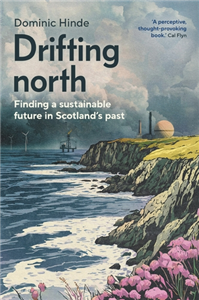
Scotland's past and future collide in this engaging journey through climate change, fossil capitalism and the struggle for a sustainable world. Scotland's history and future are entangled with climate change and the story of the modern world. This small country on the fringes of northern Europe pioneered fossil capitalism and played a key role in its spread across the planet. It is a living museum of the crisis of the west, of deindustrialisation, stagnation and the struggle to build a better future from the ashes. Journalist and sociologist Dominic Hinde travels from the treeless Highlands to the lowland cities, struggling to balance memories with aspiration. Through this journey he finds that his own sensory turmoil, shaped by recovery from a near fatal accident, mirrors the disarray of the fossil fuel transition - an uncertain passage between what was and what must be. Part memoir, part environmental history, part travelogue, this is a compelling narrative of connections - to place, energy and the possibility of renewal. Through the lens of one country, it asks a vital question: can the lessons of the past help us build a more sustainable future?
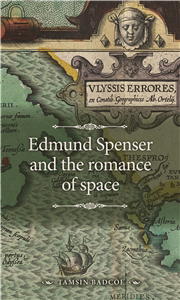
Edmund Spenser and the romance of space advances the exploration of literary space into new areas, firstly by taking advantage of recent interdisciplinary interests in the spatial qualities of early modern thought and culture, and secondly by reading literature concerning the art of cosmography and navigation alongside imaginative literature with the purpose of identifying shared modes and preoccupations. The book looks to the work of cultural and historical geographers in order to gauge the roles that aesthetic subjectivity and the imagination play in the development of geographical knowledge: contexts ultimately employed by the study to achieve a better understanding of the place of Ireland in Spenser's writing. The study also engages with recent ecocritical approaches to literary environments, such as coastlines, wetlands, and islands, thus framing fresh readings of Spenser's handling of mixed genres.
 Trusted Partner
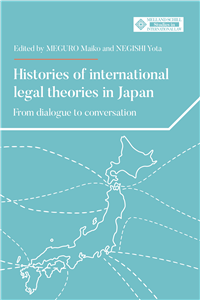
This volume presents the first systematic account of Japanese international legal theory; edited by Japanese scholars, the volume traces thirteen influential scholars and spans over a century. It examines how theorists positioned outside international law's Western centre developed sophisticated frameworks to address tensions between Western modernity and their own experiences. The book's central contribution proposes 'conversation'-continuous engagement that respects differences between legal traditions-as an alternative to 'dialogue', which often reproduces existing hierarchies by assuming all perspectives can be reconciled. Through detailed intellectual biographies across six historical periods, contributors reveal how Japanese scholars strategically employed legal positivism, articulated transcivilizational perspectives, and developed concepts of normative multilateralism. Addressed at scholars of international law, legal theory, and comparative legal traditions, this volume demonstrates that the discipline's future requires genuinely reciprocal exchange where diverse perspectives can coexist productively.
Trusted Partner

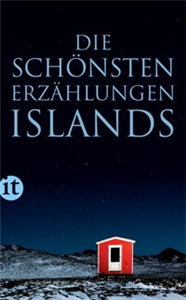
Die vorliegende Anthologie vermittelt dem Leser ein neues Bild von Island, eines, das weit über die alten Mythen von Elfen und über stolze Wikingersagen hinausgeht. Halldór Laxness, Steinunn Sigurðardóttir, Hallgrímur Helgason, Kristín Marja Baldursdóttir und Sjón, um nur einige der besten Erzähler Islands zu nennen, präsentieren das moderne Island des 20. Jahrhunderts und erzählen uns vom Land der Sagen und Wunder, seiner Natur, vor allem aber von seinen Bewohnern und ihren Geschichten.
Trusted Partner

Island: Land der Trolle und der Geysire, der Gletscher und Vulkane. Immer mehr Reisende entdecken die sagenumwobene Vulkaninsel am Polarkreis. Die Hauptstadt Reykjavík präsentiert sich als aufstrebende junge Metropole mit einer lebendigen Kulturszene. Isländische Musik und Filme wurden internationale Exportschlager. In diesem Band lädt der Autor – selbst Isländer – ein, seine Heimat zu entdecken. Auf den Spuren der großen isländischen Sagas und einheimischer wie internationaler Autoren führt er uns durch ein faszinierendes Land.
Trusted Partner

This book examines how Ireland's relationship with the EU was affected by a succession of crises in both the Republic of Ireland and Northern Ireland. The financial crisis, the Brexit crisis and the migration crisis were not of equal significance on the island of Ireland. The financial crisis was a huge issue for the Republic but not Northern Ireland, Brexit had a major impact in both polities, the migration and populism issues were less controversial, while foreign policy challenges had a minimal impact. The book provides a summary of the main features of each of the crises to be considered, from both the EU and the Irish perspective. Ireland and the European Union is the first volume of its kind to provide a comprehensive analysis on British-Irish relations in the context of Brexit. It assesses the Withdrawal Agreement and Protocol on Ireland/Northern Ireland, the devolution settlement and the 1998 Agreement, as well as the European dimension to Northern Ireland's peace process. The contributors explore a number of policy areas that are central to the understanding of each of the crises and the impact of each for Ireland. Chapters examine issues such as security, migration and taxation as well as protest politics, political parties, the media, public opinion and the economic impact of each of these crises on Ireland's relationship with the EU.
Trusted Partner
In 2019, Solomon Islands made international headlines when the country severed its decades-old alliance with Taiwan in exchange for a partnership with Beijing. The decision prompted international condemnation and terrified Australian security experts, who feared Australia's historical Pacific advantage would come unstuck. This development is often framed as another example of China's inevitable capture of the region - but this misrepresents how and why the decision was made, and how Solomon Islanders have skilfully leveraged global angst over China to achieve extraordinary gains. Despite Solomon Islands' importance to Australia, local readers know little about the country, a fragile island-nation stretching over a thousand islands and speaking seventy indigenous languages. In Divided Isles, Edward Cavanough explains how the switch played out on the ground and its extraordinary potential consequences. He speaks with the dissidents and politicians who shape Solomon Islands' politics, and to the ordinary people whose lives have been upended by a decision that has changed the country - and the region - forever.
Trusted Partner
This book is an enthralling account of a legal scandal, which erupted in colonial Senegal in 1890 and reached the French metropolitan press and the parliament. The murder of a colonial administrator, Abel Jeandet, by one of his soldiers led to the brutal and illegal executions without trial of the killer and two local dignitaries. The volume follows the fascinating story of Ndiereby Ba, the widow of one of the dignitaries, who with the help of powerful métis men in the capital Saint Louis sued the French administrators who had supervised the executions for the murder of her husband. Through this captivating tale the book articulates the French expansion into West Africa, the resistance to colonial rule both violent and non-violent, and the lack of interest on the part of French politicians in the brutal conquest of a territory they know nothing about.
Trusted Partner

This book examines the distinctive aspects that insiders and outsiders perceived as characteristic of Irish and Scottish ethnic identities in New Zealand. When, how, and why did Irish and Scots identify themselves and others in ethnic terms? What characteristics did the Irish and the Scots attribute to themselves and what traits did others assign to them? Did these traits change over time and if so how? Contemporary interest surrounding issues of ethnic identities is vibrant. In countries such as New Zealand, descendants of European settlers are seeking their ethnic origins, spurred on in part by factors such as an ongoing interest in indigenous genealogies, the burgeoning appeal of family history societies, and the booming financial benefits of marketing ethnicities abroad. This fascinating book will appeal to scholars and students of the history of empire and the construction of identity in settler communities, as well as those interested in the history of New Zealand.
Trusted Partner
The second volume of this highly collectable series, covering the pivotal years of 1969-70. The Island Book of Records Volume II documents the years 1969-70, during which Island sought to build on its success with the Spencer Davis Group by seeking out new British rock talent. By the end of the period, Island was emerging as a major British label, one that could boast releases from Jethro Tull, Nick Drake, King Crimson, John and Beverley Martyn, Fairport Convention and Cat Stevens. Featuring material from recent interviews and from media interviews of the time, and including a comprehensive discography of 45s, The Island Book of Records Volume II is lavishly illustrated with gig adverts (very many at venues that no longer exist), concert tickets, flyers, international LP variants, labels, LP and 45 adverts and other ephemera collector's dream.
Trusted Partner
In 1660 Charles II was restored to the thrones of England, Scotland and Ireland, but his hold on power was precarious. In particular, Ireland was fundamentally unstable - Catholics formed the majority of the population in a country where Protestantism was the established religion, a state of affairs unique in Europe. It was through the law that the restored Stuart monarchy governed its subjects and its colonial dependencies, and this book examines how Catholics engaged with and experienced English common law primarily through the eyes of Catholic clerics and Gaelic poets. It also examines how Catholics engaged with the Courts and the particular challenges they faced as lawyers. The book draws on an extensive body of primary source materials, including Irish-language poetry and little-used archival material relating to elite Catholic families.
Trusted Partner
In Singapore and Malaysia, the inversion of Chinese Underworld traditions has meant that Underworld demons are now amongst the most commonly venerated deities in statue form, channelled through their spirit mediums, tang-ki. The Chinese Underworld and its sub-hells are populated by a bureaucracy drawn from the Buddhist, Taoist and vernacular pantheons. Under the watchful eye of Hell's 'enforcers', the lower echelons of demon soldiers impose post-mortal punishments on the souls of the recently deceased for moral transgressions committed during their prior incarnations. Chinese religion in contemporary Singapore, Malaysia and Taiwan offers an ethnography of contemporary Chinese Underworld traditions, where night-time cemetery rituals assist the souls of the dead, exorcised spirits are imprisoned in Guinness bottles, and malicious foetus ghosts are enlisted to strengthen a temple's spirit army. Understanding the religious divergences between Singapore and Malaysia (and their counterparts in Taiwan) through an analysis of socio-political and historical events, Fabian Graham challenges common assumptions about the nature and scope of Chinese vernacular religious beliefs and practices. Graham's innovative approach to alterity allows the reader to listen to first-person dialogues between the author and channelled Underworld deities. Through its alternative methodological and narrative stance, the book intervenes in debates on the interrelation between sociocultural and spiritual worlds, and promotes the destigmatisation of spirit possession and discarnate phenomena in the future study of mystical and religious traditions.
Trusted Partner
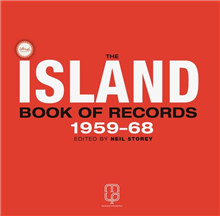
The Island Book of Records brings the early years of this iconic record label to life. A fifteen-year labour of love, the volumes will fully document the analogue era of Island. Offering a comprehensive archive of album cover design and photography, together with the voices of the musicians, designers, photographers, producers, studio engineers and record company personnel that worked on each project, the volumes show in unique depth the workings of the label, covering every LP. Featuring material from recent interviews and from media interviews of the time, and each including a comprehensive discography of 45s, the books are lavishly illustrated with gig adverts (very many at venues which no longer exist), concert tickets, flyers, international LP variants, labels, LP and 45 adverts and other ephemera. These LP-sized editions are a collector's dream, offering a truly unparalleled resource for those interested in music history and a perfect gift for any music lover.
Trusted Partner

This edited collection surveys how non-Western states have responded to the threats of domestic and international terrorism in ways consistent with and reflective of their broad historical, political, cultural and religious traditions. It presents a series of eighteen case studies of counterterrorism theory and practice in the non-Western world, including countries such as China, Japan, India, Pakistan, Egypt and Brazil. These case studies, written by country experts and drawing on original language sources, demonstrate the diversity of counter-terrorism theory and practice and illustrate how the world 'sees' and responds to terrorism is different from the way that the United States, the United Kingdom and many European governments do. This volume - the first ever comprehensive account of counter-terrorism in the non-Western world - will be of interest to students, scholars, students and policymakers responsible for developing counter-terrorism policy.
Trusted Partner
Any reader who has ever visited Asia knows that the great bulk of Western-language fiction about Asian cultures turns on stereotypes. This book, a collection of essays, explores the problem of entering Asian societies through Western fiction, since this is the major port of entry for most school children, university students and most adults. In the thirteenth century, serious attempts were made to understand Asian literature for its own sake. Hau Kioou Choaan, a typical Chinese novel, was quite different from the wild and magical pseudo-Oriental tales. European perceptions of the Muslim world are centuries old, originating in medieval Christendom's encounter with Islam in the age of the Crusades. There is explicit and sustained criticism of medieval mores and values in Scott's novels set in the Middle Ages, and this is to be true of much English-language historical fiction of the nineteenth and early twentieth centuries. Even mediocre novels take on momentary importance because of the pervasive power of India. The awesome, remote and inaccessible Himalayas inevitably became for Western writers an idealised setting for novels of magic, romance and high adventure, and for travellers' tales that read like fiction. Chinese fictions flourish in many guises. Most contemporary Hong Kong fiction reinforced corrupt mandarins, barbaric punishments and heathens. Of the novels about Japan published after 1945, two may serve to frame a discussion of Japanese behaviour as it could be observed (or imagined) by prisoners of war: Black Fountains and Three Bamboos.
Trusted Partner
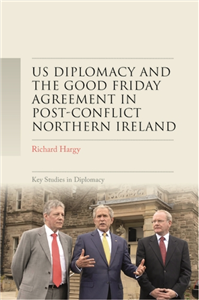
Richard Haass and Mitchell Reiss, as autonomous diplomats in the George W. Bush State Department, were able to alter US intervention in Northern Ireland and play critical roles in the post-1998 peace process. Their contributions have not been fully appreciated or understood. The restoration of Northern Ireland's power-sharing government in 2007 was made possible by State Department-led intervention in the peace process. There are few references to Northern Ireland in work examining the foreign policy legacy of the George W. Bush presidency. Moreover, the ability to control US foreign policy towards the region brought one of George W. Bush's Northern Ireland special envoys into direct diplomatic conflict with the most senior actors inside the British government. This book will uncover the extent of this fall-out and provide original accounts on how diplomatic relations between these old allies became so fraught.
Trusted Partner
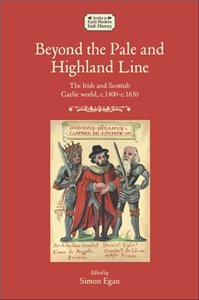
This book offers important new insights into the history and culture of the Gaelic-speaking world from the mid-fifteenth century through to the reign of James VI and I. Throughout this period, the reach of the English and Scottish crowns within these western regions was limited. The initiative lay with local communities and royal power was contingent upon negotiating with well-established and largely autonomous aristocratic lineages. Moreover, events within this western world could exert a powerful, often unpredictable, influence upon the affairs of the wider archipelago. Using a series of case studies, this collection examines the evolving relationship between Ireland and Scotland in rich detail. It demonstrates how this world interacted with the encroaching English and Scottish states and underlines the importance of paying closer attention to this neglected area of Irish and British history.
Trusted Partner
Seine bedeutenderen Werke sind neben dem ›Dictionary‹ die Essays in den moralischen Wochenschriften »The Rambler« (1750-52) und The Idler (1758-62), der Roman »Rasselas« (1759), die »Journey to the Western Islands of Scotland« (1775) sowie die »Lives of the English Poets« (1781). In der englischsprachigen Welt ist Johnson nach Shakespeare der meistzitierte englische Autor. In Deutschland hatte er es immer schwer. Die Reisen nach Schottland erschienen bereits im Jahre 1775 in der vorliegenden Übersetzung, wurden aber danach nie mehr neu aufgelegt. Daß im 20. Jahrhundert keine neue Übersetzung erschien, ist unter anderem Boswell zuzuschreiben. Er hatte mit seinem »Journal of a Tour to the Hebrides« (1785) eine konventionelle Beschreibung dieser Reise geliefert, deren persönlich-subjektive Note wohl eher ein breites Leserinteresse ansprach als der vielschichtige und intellektuell anspruchsvollere Text Johnsons.
Trusted Partner

The West must wait presents a new perspective on the development of the Irish Free State. It extends the regional historical debate beyond the Irish revolution and raises a series of challenging questions about post-civil war society in Ireland. Through a detailed examination of key local themes - land, poverty, politics, emigration, the status of the Irish language, the influence of radical republicans and the authority of the Catholic Church - it offers a probing analysis of the socio-political realities of life in the new state. This book opens up a new dimension by providing a rural contrast to the Dublin-centred views of Irish politics. Significantly, it reveals the level of deprivation in local Free State society with which the government had to confront in the west. Rigorously researched, it explores the disconnect between the perceptions of what independence would deliver and what was achieved by the incumbent Cumann na nGaedheal administration.
Trusted Partner

This book is an in-depth examination of the relations between Ireland and the former East Germany between the end of the Second World War and the fall of the Berlin Wall. It explores political, diplomatic, economic, media and cultural issues. The long and tortuous process of establishing diplomatic relations is unique in the annals of diplomatic history. Central in this study are the activities of the Stasi. They show how and where East German intelligence obtained information on Ireland and Northern Ireland and also what kind of information was gathered. A particularly interesting aspect of the book is the monitoring of the activities of the Irish Republican Army and the Irish National Liberation Army and their campaigns against the British army in West Germany. The Stasi had infiltrated West German security services and knew about Irish suspects and their contacts with West German terrorist groups. East German Intelligence and Ireland, 1949-90 makes an original contribution to diplomatic, intelligence, terrorist and Cold War studies. ;

